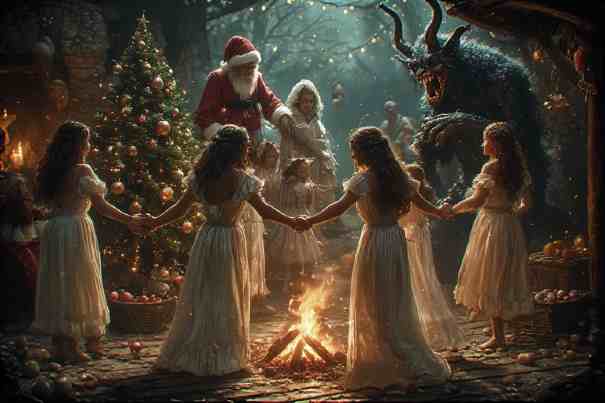
Seasonal festivals existed long before Christianity shaped the Western calendar. Ancient societies watched the sun’s movement out of necessity. The pagan origins of Christian holidays and festivals show their connections.
In the not-too-distant past, people’s lives revolved around the agricultural cycle. These natural turning points became the first holidays and festivals. They marked survival, renewal, harvest, and the return of light.
Over time, these festivals developed stories, symbols, and rituals. They reflected the needs of the land and the communities that relied on it. When Christianity spread across Europe, these seasonal observances were already rooted. Instead of replacing them, the Church often reinterpreted their meaning.
Emotional Readiness Notice:
This article discusses religion, religious history, and beliefs that may be important to you or your family. Some of the material may bring up strong feelings or defensiveness. Emotional balance can help you examine the evidence and competing explanations clearly. If the material becomes upsetting, pause and return when you feel calm and steady.
The significance of the seasons
For early agricultural societies, seasons were crucial. They affected food, safety, and the timing of work. People wanted to know when winter would end, when animals would have their young, and when to plant fields. The sky became the first calendar, and the sun’s path across the horizon marked the year’s major transitions.
These transitions became communal gatherings. Fires were lit in midwinter. In spring, they blessed the fields. People celebrated the harvests in late summer. As winter came, they honored the dead. Each festival showed a real change in nature. They helped communities get ready for what was next.
Modern life is not tied to these cycles as it once was. Still, many of our holidays and festivals follow the same seasonal pattern. Their symbols include evergreens, eggs, bonfires, and candles. Each carries a meaning from early celebrations with pagan origins.
How to read the evidence presented
Not every connection between pagan and Christian holidays and festivals rests on the same level of evidence. Some are recorded in ancient and medieval sources. Others are reasonable inferences, scholarly debates, or modern revivals. Each section is graded so you can see how certain each connection is.
- Documented: Supported by historical sources.
- Plausible: A reasonable inference from the evidence, but not directly recorded.
- Disputed: Scholars disagree, and the evidence supports more than one reading.
- Modern reconstruction: A modern revival or synthesis, often inspired by older traditions.
The pagan origins of Christian holidays and festivals
The wheel of the year
Evidence:
Eight-point Wheel of the Year — Modern reconstruction
Names Litha, Ostara, Mabon — Modern reconstruction
Individual festivals — graded in each section
The modern Wheel of the Year divides the year into eight key points: the two solstices, the two equinoxes, and the four midpoints between them. It was assembled in the twentieth century from older seasonal festivals that came from different cultures, mainly Celtic and Germanic. Each point marks a visible or practical change in the natural world.
- Yule — Winter Solstice → Christmas
- Imbolc — Midwinter Cross‑Quarter → St. Brigid’s Day
- Ostara — Spring Equinox → Easter
- Beltane — Spring/Summer Cross‑Quarter → May Day / Walpurgis Night
- Litha — Summer Solstice → St. John’s Day
- Lughnasadh — First Harvest → Lammas
- Mabon — Autumn Equinox → Michaelmas
- Samhain — Final Harvest → Halloween / All Saints / All Souls
Each festival marked a change: the return of light, the first signs of spring, the peak of summer, the first harvest, the last harvest, or the coming of winter. These were practical markers of survival long before they became religious celebrations.
Christmas — Yule and the winter solstice
Evidence:
Yule as a midwinter festival — Documented
Yule log as an ancient custom — Plausible
December 25 chosen to match a solstice festival — Disputed
Yule customs absorbed into Christmas — Documented
The pagan festival
Yule is well documented as a Germanic midwinter festival. Yule celebrated the Winter Solstice. This marks the longest night of the year. After this, daylight starts to return slowly. In northern climates, this moment carried enormous weight. Winter was harsh, food was limited, and the sun’s gradual return signaled hope for survival.
Fire became the central symbol of the festival. Large bonfires and burning a special Yule log at home symbolized the rebirth of light. The Yule log itself is first recorded in the 1600s, though it likely continues older midwinter fire customs. Evergreen branches were brought inside. They stay alive while other plants die. This makes them symbols of endurance and protection.
Feasting also played a practical role. Animals that couldn’t be fed in winter were slaughtered. This led to a rare supply of fresh meat. Communities gathered to share warmth, food, and ritual during the darkest part of the year.
The Christian replacement
The origins of Christian holidays and festivals center around the avatar Jesus. By the 330s, the Church in Rome was celebrating Jesus’s birth on December 25. Why that date was chosen is debated. Some scholars link it to Roman solstice celebrations such as the feast of Sol Invictus, the Unconquered Sun. Others argue it was calculated from the date assigned to Jesus’s conception.
When Christianity later reached northern Europe, it met Yule. Instead of dismantling the midwinter gathering, the Church reframed its meaning. The returning sun became associated with Christ as a bringer of spiritual light, not the pagan origins. In Scandinavia, Christmas is still called Jul.
This change let the well-known seasonal celebration go on with a new religious story.
Traditions that survived
Many modern Christmas customs reflect older traditions:
- Evergreen trees and wreaths symbolize life in the midst of winter.
- Candles and lights echo the ancient fires that welcomed the sun’s return.
- Large winter feasts continue the tradition of gathering for warmth and abundance.
Although the story attached to the festival changed, the season and many of the symbols remain rooted in the solstice celebration. The Christmas celebrations harken back to the pagan origins of Christian holidays and festivals.
Imbolc — St. Brigid’s Day
Evidence:
Imbolc as an Irish festival — Documented
Goddess Brigid became Saint Brigid — Disputed
Kildare perpetual flame — Documented
Surviving customs — Documented
The pagan festival
Imbolc marked the first signs that winter was loosening its hold. Held in early February, it matched the lambing season. Ewes started producing milk, and fresh food returned after months of shortage. The lengthening days and rising sun signaled that spring was approaching.
The pagan origins of this festival honored the goddess Brigid, associated with fire, healing, poetry, and craftsmanship. She embodied inspiration and the returning vitality of the land. Fire rituals—like candles and hearth flames—symbolized the sun’s strong light. In some traditions, there’s also a sacred perpetual fire.
Homes were cleaned and tools prepared for the coming agricultural season. Families created a “Brigid’s bed,” placing a small figure of the goddess in a basket to invite her blessing. Brigid’s crosses, woven from rushes or straw, were hung in homes for protection during the year ahead.
Imbolc mixed practical tasks with spiritual refreshment. It signaled a quiet but clear move toward spring.
➡ For more, see: Exploring The Ritual Causation Formula
The Christian replacement
When Christianity spread through Ireland, the Church did not eliminate Imbolc or its pagan origins. Instead, the figure of Brigid became Saint Brigid of Kildare, one of Ireland’s most revered saints. Her feast day was placed on February 1, the same date as the older festival.
Scholars still debate whether Saint Brigid was a historical woman who absorbed the goddess’s traditions or a Christianized form of the goddess herself. Either way, the shared name, date, and fire symbolism are striking.
The sacred flame associated with the goddess continued in Christian form. Nuns at Kildare cared for a fire that honored Saint Brigid, which Gerald of Wales described in the 1100s. This fire symbolized light and protection, adding a Christian meaning to its significance.
Traditions that survived
Many Imbolc customs remain part of St. Brigid’s Day:
- Brigid’s crosses are still woven and placed in homes for protection.
- Cloth or ribbons are left outside on the eve of the festival to receive Brigid’s blessing.
- Candles and small fires continue the theme of returning light.
Although the religious story changed, its pagan origins remain. The festival still marks the moment when winter begins to give way to spring.
Easter — Ostara and the Spring Equinox
Evidence:
Easter date tied to Passover — Documented
Eostre as a goddess — Disputed
Name Ostara — Modern reconstruction
Eggs and hare as pagan fertility symbols — Disputed
The pagan festival
In Europe, spring holidays and festivals celebrated the balance of light and dark. They signaled the land waking up after winter. The Spring Equinox marked the return of warmth, workable soil, and the start of the farming year. After months of scarcity, this shift represented renewal and the promise of growth.
In Germanic areas, a spring goddess known as Eostre was linked to this season. Our only source for her is a single passage by the English monk Bede, written in the 700s. The form Ostara was proposed by Jacob Grimm in the 1800s. Historical references to her are few, but her festival themes are common: fertility, rebirth, and life returning to the land.
Eggs symbolized potential and new beginnings. Rabbits, known for rapid reproduction, became natural emblems of fertility. Communities decorated eggs, held feasts, and lit fires to welcome the season’s return. These rituals celebrated the earth’s reawakening and the start of planting. The Easter hare itself is first recorded in Germany in the 1600s.
The Christian replacement
Easter celebrates Jesus’ resurrection, and its date grew out of the Jewish Passover. In most languages, the holiday’s name comes from Pascha, the Greek and Latin word for Passover. The English name Easter is one of the few exceptions. Early Church leaders came to set Easter as the first Sunday after the first full moon that comes after the Spring Equinox. This placed the holiday firmly within the traditional season of renewal.
The Christian message of resurrection fits well with what people notice in nature: life comes back after winter’s sleep. The seasonal symbolism strengthened the religious story rather than competing with it.
Traditions that survived
Many Easter customs reflect older spring themes:
- Decorated eggs continue to symbolize new life.
- The Easter bunny echoes ancient fertility symbols.
- Spring flowers, bright colors, and images of young animals reflect the season’s renewal.
Although the religious meaning changed, the celebration still falls in the same season. It is the moment when the natural world begins its yearly return to life.
Beltane — May Day and Walpurgis Night
Evidence:
Beltane fires and driving cattle between fires — Documented
Walpurgis replacing Beltane — Disputed
May Day customs — Documented
The pagan festival
Beltane marked the beginning of summer and the moment when warmth fully returned to the land. Celebrated around May 1, it fell halfway between the Spring Equinox and the Summer Solstice. Fields were greening, animals were moved to open pastures, and the long season of outdoor work began.
Fire defined the festival. Large bonfires were lit on hills or in open fields to honor the strengthening sun. Cattle were driven between two fires so the smoke could bless and protect them for the grazing season. People also passed through the smoke or leapt over small flames for luck, health, and fertility.
Beltane was lively and communal. Music, dancing, and feasting continued late into the night. In later traditions, the maypole became a key symbol. It was decorated with ribbons and flowers. This represented the season’s fertility and vitality.
The festival celebrated the full return of life and the energy needed for the months of growth ahead.
The Christian replacement
Saint Walpurga’s feast falls on May 1, the date associated with her canonization. The night before became known as Walpurgis Night, especially in Germanic and Scandinavian regions. Beltane was a Gaelic festival, while Walpurgis Night grew up in Germanic lands, so the Christian feast did not replace Beltane directly. Instead, it coincided with and absorbed the May fire customs of its own region.
Communities continued lighting bonfires, but the meaning was reframed. The fires weren’t about celebrating seasonal fertility. Instead, they were seen as shields against evil spirits and harmful forces. The seasonal gathering remained, but its explanation shifted.
➡ For more, see: The Rebranding of Magic by Religious Authority
Traditions that survived
Many Beltane customs continue in modern May Day and Walpurgis Night celebrations:
- Bonfires still mark the arrival of summer in parts of Europe.
- Maypole dances preserve the older themes of fertility and renewal.
- Flowers, outdoor gatherings, and seasonal festivities echo the ancient celebration of returning warmth.
Although the religious story changed, the festival still honors the moment when the land moves fully into summer.
Litha — Midsummer and St. John’s Day
Evidence:
Midsummer fires — Documented
June 24 chosen to absorb midsummer — Disputed
Name Litha — Modern reconstruction
Surviving customs — Documented
The pagan festival
Litha marked the Summer Solstice, the longest day of the year and the height of the sun’s power. Crops were growing strongly, animals were thriving in the fields, and the land was at its most fertile. Although the main harvest was still ahead, midsummer showed whether the year’s growth would be successful.
In Europe, ancient sites like Stonehenge line up with the sunrise or sunset during the solstice. This shows how closely early societies watched this special time. The solstice was not just symbolic—it was a practical marker for the agricultural cycle.
Fire rituals dominated the celebration. Bonfires were lit on hilltops to honor the sun at its peak. People jumped over flames for luck or walked through the smoke for protection. Livestock were sometimes guided through the smoke to safeguard them from illness. Herbs gathered at midsummer were believed to hold heightened potency because they grew under the strongest light of the year.
Litha celebrated abundance, vitality, and the fullness of life at the height of summer.
The Christian replacement
The Church set the feast of John the Baptist on June 24, right after the solstice. The date was calculated from Christmas, because the Gospel of Luke places John’s birth six months before Jesus’s. Whether the Church also intended it to absorb midsummer is debated. Either way, the familiar midsummer celebration continued under a Christian name. The focus moved from celebrating the sun to honoring a biblical figure, but the seasonal gathering continued as planned.
Traditions that survived
Many midsummer customs continue today:
- Bonfires remain central to St. John’s Day celebrations in parts of Europe.
- People still leap over flames or pass through smoke for luck and protection.
- Flower crowns, outdoor dancing, and communal feasts echo the older solstice rituals.
Although the religious meaning changed, the celebration still marks the moment when the sun reaches its highest point in the sky.
Lughnasadh — Lammas and the First Harvest
Evidence:
Lughnasadh and Lugh — Documented
Lammas as a renamed Lughnasadh — Disputed
Lammas bread blessing — Documented
The pagan festival
Lughnasadh marked the beginning of the harvest season. Celebrated around August 1, this time marked when grain crops ripened. It was when people could gather the first food of the new season. This was the moment communities discovered if the year’s growth could last them through winter.
The festival honored Lugh, the god of skill, craftsmanship, and leadership. Irish tradition says he started the celebration for his foster mother, Tailtiu. She cleared the land to help agriculture grow. Lughnasadh focused on hard work and gratitude. It showed how much effort is needed to feed a community.
Gatherings often included feasting, athletic competitions, storytelling, and markets. These events, known as Lughnasadh games, united people to celebrate the season’s first fruits. The initial sheaf of grain held symbolic importance, and bread baked from the new harvest was treated as a blessing for the months ahead.
Climbing hills and mountains was another tradition. It mixed ritual with a physical bond to the land that supported the community.
The Christian replacement
In Anglo-Saxon England, the start of the harvest was marked by Lammas Day. This means “Loaf Mass.” Bread made from the first grain harvest was brought to the church to be blessed. Lammas was a parallel English festival, not a direct renaming of the Irish Lughnasadh, but both honored the first fruits at the same time of year. Lammas kept that tradition and gave it a Christian meaning of gratitude.
The timing matched. However, the focus was different. Where Lughnasadh honored a god of craftsmanship and harvest, Lammas made the first harvest a Christian act of offering.
Traditions that survived
Many Lughnasadh customs continue in modern harvest celebrations:
- Baking and sharing bread remain central to Lammas observances.
- Late‑summer fairs and gatherings echo the older communal games and feasts.
- Hilltop walks and seasonal festivals preserve the connection between people and the land at the start of the harvest season.
The festival still celebrates the first harvest. It marks the start of gathering food for the year, even though its religious meaning has changed.
Mabon — Michaelmas and the Autumn Equinox
Evidence:
An ancient equinox harvest festival — Modern reconstruction
Name Mabon — Modern reconstruction
Michaelmas date — Documented
Michaelmas customs — Documented
The pagan festival
Mabon marked the Autumn Equinox. This is when day and night are equal. After this, the year leans toward darkness. By this time, the main harvest was complete. Grain got stored, fields cleared, and communities got ready for the cold months ahead. The name Mabon was given to this festival in the 1970s, and there is little direct evidence for a major ancient equinox festival in northern Europe.
Today, the equinox is observed with a quieter tone than the first harvest at Lughnasadh. Modern practitioners treat it as a time for thanks and reflection, noting the abundance of the year and the end of the warm season. Seasonal foods like apples, root vegetables, and preserved goods shape the meals shared at this time.
Because the equinox stands for balance, the modern festival often symbolizes harmony between light and dark, as well as growth and rest. Many people hold small ceremonies of thanks and protection as they prepare for the long winter. These practices draw on real end-of-harvest customs, even though the equinox festival itself is a modern creation.
The Christian replacement
Michaelmas, the feast of Archangel Michael, is celebrated on September 29. The date comes from the dedication of a church to Saint Michael near Rome in the 400s, not from the equinox. Still, it fell close to the seasonal change, and it became an important date in the Christian calendar. It also had practical uses in rural life. It was the time for paying rents, renewing contracts, and setting up labor plans for the next year.
Traditions that survived
Many end-of-harvest customs continued within Michaelmas:
- Seasonal feasts remained central, often featuring goose as a symbol of prosperity.
- Harvest fairs and markets persisted, allowing people to trade goods gathered during the growing season.
- The timing still reflects the completion of the harvest and the transition into the darker half of the year.
The festival still marks the end of the harvest and the start of winter preparations, even though its religious framing has changed.
Samhain — Halloween and the Beginning of Winter
Evidence:
Samhain as the start of winter — Documented
Samhain as the Celtic new year — Disputed
Ancestors returning, thin veil — Plausible
Costumes and guising — Documented
All Saints set to replace Samhain — Disputed
The pagan festival
Samhain marked the end of the harvest and the beginning of winter. It is often described as the Celtic New Year, though historians debate how strong the evidence is. Fields were empty, animals were brought in from summer pastures, and people prepared for the long, uncertain months ahead.
Because this moment represented a major shift in the year, Samhain carried strong spiritual meaning. It was believed that the boundary between the living and the dead grew thin, allowing ancestors to return home. Families left food or offerings to welcome them, honoring the connection between generations. Most of what we know about these beliefs comes from later folklore, recorded centuries after the festival began.
At the same time, people feared harmful spirits that might wander during this liminal night. Bonfires were lit to provide protection and light. The flames and smoke were thought to ward off danger and bless the community for the coming winter.
Costumes and disguises emerged as another protective practice. By wearing masks or animal skins, people hoped to confuse or avoid wandering spirits. Divination rituals were also common, as Samhain was considered a powerful time for seeking insight into the year ahead.
Samhain blended remembrance, protection, and preparation for winter’s hardships.
The Christian replacement
In the 700s, Pope Gregory III fixed November 1 in Rome as All Saints’ Day, which honors Christian saints. November 2 later became All Souls’ Day, a day for praying for the dead. Whether this timing was meant to replace Samhain is disputed. Some historians see no link, since the date was set in Rome. Others point to Irish and English influence on the Church at the time.
The night before All Saints’ Day turned into All Hallows’ Eve. Over time, it got shortened to Halloween. In Celtic lands, old ways of honoring ancestors shifted toward Christian remembrance. Still, the timing and many customs stayed the same.
Traditions that survived
Many Samhain customs continue in modern Halloween:
- Costumes reflect the older practice of disguising oneself from spirits.
- Bonfires and lanterns echo the protective fires of the festival.
- Carved turnips—and later pumpkins—served as lights to ward off harmful forces.
- Ghosts and the supernatural are linked to the belief that the boundary between worlds opens on this night.
The religious framing changed, but the celebration still marks winter’s arrival and honors the dead.
Why the Church rebranded pagan festivals
Seasonal festivals were woven into everyday life. Families had kept them for generations, and whole communities gathered around them. Erasing them would have caused resistance. Redirecting them was easier.
So the Church kept the gatherings and changed their meaning. Sacred sites were rededicated instead of destroyed. Over time, the older practices were labeled superstition or heresy, which discouraged people from returning to them.
The clearest evidence comes from the Church itself. In 601, Pope Gregory the Great wrote to Mellitus, a missionary heading to England. He instructed that pagan temples should not be destroyed. Instead, they should be purified and turned into churches, so that people would keep coming to familiar places. He also advised that the old feasts be replaced with Christian celebrations held at the same sites. The English monk Bede preserved this letter in his history of the English Church.
This was part of a larger pattern of religious consolidation, in which institutions keep ritual forms while taking control of what they mean.
➡ For more, see: The Rebranding of Magic by Religious Authority
The Catholic Encyclopedia on borrowed traditions
Even traditional Catholic scholarship acknowledges that Christian ritual drew on practices that were already widespread.
…The Church has borrowed without hesitation from the common stock of significant actions known to all periods and all nations. In such matters as these, Christianity claims no monopoly or originality. ― The Catholic Encyclopedia and International Work, Vol. 14 (1907)
Fire is the clearest example in the festival calendar. Bonfires marked midwinter, midsummer, May Day, and Samhain long before Christianity arrived. When Christian worship adopted candles and ceremonial lights, the meaning changed, but the action stayed the same.
The pattern for rebranding
Keep the date, change the story. This pattern appears repeatedly in the Christian calendar.
The date remains the same.
The seasonal gathering continues.
The story changes.
Winter solstice becomes Christmas.
Spring fertility festivals become Easter.
Samhain becomes All Hallows’ Eve and Halloween.
The strategy can be summarized simply:
Keep the date.
Change the story.
Redirect the devotion.
Christianity spread by reshaping festivals instead of erasing them. This approach helped it fit into the seasonal rhythm people already knew. The pattern is clearest where the evidence is documented, such as Gregory’s instructions to Mellitus and the continuity of Imbolc and St. Brigid’s Day. For holidays like Christmas and Easter, the overlap is real, but how deliberate it was is still debated.
FAQ about the pagan origins of Christian holidays
Why did Christianity adopt or absorb pagan festivals?
Christian leaders kept existing festival dates and attached Christian meaning. Erasing long-standing traditions was harder than redirecting them.
Is it wrong for Christians to celebrate holidays and festivals with pagan roots?
That is a personal choice. Most Christians today focus on the Christian meaning, even though the date and some customs come from earlier traditions. Knowing the history does not require giving up the holiday. Many people find that understanding its older roots makes the celebration richer.
Why do Christian holidays and festivals align with solstices, equinoxes, and harvest seasons?
Ancient cultures based their calendars on the sun and farming cycles. Some Christian holy days were placed on these moments deliberately. Others landed near them for different reasons and absorbed local seasonal customs over time.
How much of the original symbolism survives under Christian rebranding?
Many seasonal symbols stay with us because they show natural cycles. These include winter lights, evergreens, spring eggs and rabbits, and harvest foods.
Did early Christians know these were pagan dates?
In some cases, yes. Pope Gregory’s letter to Mellitus shows that missionaries changed festivals on purpose, keeping familiar places and gatherings while changing their meaning. For other holidays, such as Christmas, historians still debate how much the timing was chosen to match older festivals.
Why didn’t the Church simply ban these festivals?
Seasonal festivals were key to farming and community. Changing them worked better than getting rid of them.
Final thoughts
Seasonal festivals existed long before organized religions created formal calendars. Ancient communities built their lives around the movement of the sun, the changing seasons, and the rhythms of agriculture. The origins of Christian holidays and festivals draw from this rich tradition.
When Christianity spread through Europe, these celebrations were not erased. They were reinterpreted and woven into the Christian calendar.
Today, people celebrate Christmas, Easter, and Halloween. They keep traditions that began thousands of years ago with the changing seasons. These holidays and festivals are one visible part of a much older pattern of borrowing.
➡ For more, see: Comparing Christian Beliefs to Pagan and New Age Traditions
➡ For more, see: The Ancient Mystery Religions
References
- An Illustrated Encyclopedia of Traditional Symbols. J.C. Cooper, 1987.
- Joseph Campbell, Occidental Mythology, The Masks of God.
- Mystery Babylon the Great, The Mother of Harlots and Abominations of the Earth. Darrell W. Conder, 1973.
- Myths and Legends of Babylonia and Assyria. Lewis Spence, 1916.
- The Two Babylons or Papal Worship. Rev. Alexander Hislop, 1858.
- Bulfinch’s Mythology. Three Volumes: The Age of Fable, Age of Chivalry, and Legends of Charlemagne.
- The Gallic Wars, Book VI. Julius Caesar, Loeb Classical Library translation by H.J. Edwards.
- The Golden Bough: A Study in Magic and Religion. James George Frazer.
- The Stations of the Sun: A History of the Ritual Year in Britain. Ronald Hutton, 1996.
- The Reckoning of Time. Bede, translated by Faith Wallis, 1999.
- Ecclesiastical History of the English People, Book I, Chapter 30. Bede.
- The Origins of the Liturgical Year. Thomas J. Talley, 1986.
About this project
The Seeker Project 4 Spiritual Exploration (SP4SE) is a project of Americans In Alliance. The mission of SP4SE is spiritual education. The mission of Americans In Alliance is environmental conservancy. Click the links below to learn more and support our efforts.