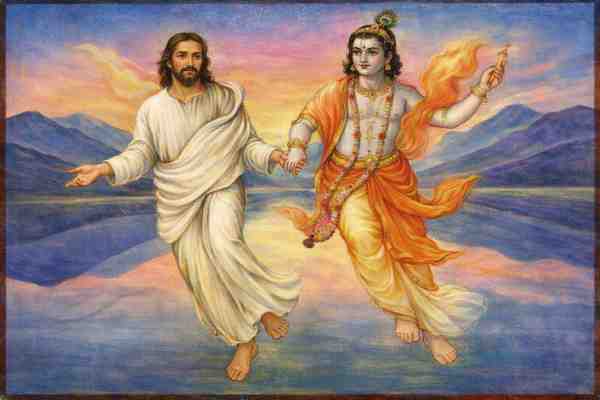
Most people learn their beliefs about God and spirituality when they are young. Family, culture, and religion often decide what you are taught. You may have never stopped to ask, “Do I really believe this?” or “Where did these ideas come from?”
Comparing Christian, Pagan, and New Age traditions. Shows three important characteristics. It shows how they are similar, how they are different, and where they all came from.
By the end, you will be able to see your beliefs more clearly. You can decide if your faith is something you truly chose, or something you simply inherited.
When you slow down and look at what you were taught, you start to notice the places where your beliefs came from habit, fear, or family expectations. This kind of noticing is quiet, but it changes how you see your own story. It helps you separate what you inherited from what you actually believe.
Inner Work Gate Notice:
It encourages readers to examine inherited beliefs, religious identity, cultural conditioning, and long-held assumptions through direct comparison of competing spiritual frameworks. Some discomfort may occur as familiar beliefs, loyalties, and worldview structures are questioned or reevaluated. This article supports conscious self-examination, critical reflection, and intentional psychological change
Understanding the three spiritual paths
When comparing Christian beliefs to others, one must be able to confront contradictions in one’s own beliefs. The process of comparison reveals patterns. Each tradition uses different language, symbols, and stories, but many of the underlying ideas repeat across cultures.
Seeing these patterns helps you compare the systems more clearly without getting pulled into labels or old assumptions. You may notice cultural influences more clearly when comparing Christian beliefs.
Christianity
Christianity is a religion based on the life and teachings of Jesus Christ. Christians believe Jesus is the Son of God and the Savior of the world. They believe there is one God who exists as the Father, the Son, and the Holy Spirit. This is called the Trinity.
Christians believe that Jesus died on the cross for the sins of humanity and rose from the dead. They believe that faith in Jesus brings salvation and eternal life in heaven. They also believe that without salvation, a person is doomed to an eternity in hell.
The Bible is the main holy book in Christianity. It includes the Old Testament (based on Jewish scriptures) and the New Testament (about Jesus and the early church). Christians see the Bible as the word of God and the main source of truth.
The Church is also very important. It is seen as the “Body of Christ,” a community of believers. Different denominations have different rules and teachings, but they all claim to follow Jesus.
Pagan teachings
Pagan beliefs and practices come from ancient nature‑based religions that existed long before Christianity. These traditions honor the earth, the seasons, and the cycles of life and death. They often use gods and goddesses as symbols or metaphors for the powers of nature, like the sun, moon, storms, and fertility.
Pagan paths are usually polytheistic, which means they honor many gods and goddesses. These deities are often linked to natural forces, animals, or human roles like mother, warrior, or healer.
Pagan practices include rituals, seasonal festivals, magic, and deep respect for the land. Many Pagan paths celebrate the solstices, equinoxes, and other key points in the year. These celebrations mark planting, harvest, and the turning of the seasons.
New age traditions
New Age teachings are not one single religion. Instead, they are a large umbrella that covers many spiritual ideas and practices outside of traditional Western religion. Many people only start comparing Christian beliefs after they learn about Pagan and New Age history. New Age paths often mix ideas from Eastern religions, indigenous traditions, and mystical or occult systems.
New Age spirituality focuses on personal growth, healing, and connection to a higher power or universal energy. It often teaches that everything is connected and that people can grow spiritually through inner work, meditation, and energy practices.
New Age systems include things like astrology, crystal healing, chakra work, past‑life regression, and channeling spirit guides. Many New Age practitioners believe in reincarnation, the Law of Attraction, and the idea that thoughts and energy shape reality.
The shared roots of Abrahamic religions
Mystery religion origins
The Abrahamic religions—Judaism, Christianity, and Islam—did not appear out of nowhere. They grew out of older mystery religions in the Mediterranean region. These mystery religions go back about 15,000 years and were found in places like Assyria, Babylon, Egypt, and Persia.
These older religions used myths, rituals, and symbols to explain life, death, and the divine. They often had secret teachings, initiation rites, and stories about gods who died and came back to life.
Judaism is the oldest branch of the Abrahamic family. It began by gathering and organizing writings from these older mystery cults. These writings became the Torah, the Talmud, and other sacred texts.
Christianity is a later branch. It uses a version of the Jewish scriptures (the Old Testament) as its base. It then adds the New Testament, which includes stories about Jesus and teachings from early Christian leaders. Christianity also draws heavily from “dying‑god” cults—religions where a god dies and rises again, symbolizing rebirth and renewal.
Islam is the most recent branch. It builds on Jewish and Christian ideas but adds its own holy book, the Qur’an, based on the teachings of the Prophet Muhammad.
Even though these three religions often claim to be unique and separate, they share deep roots in the same ancient mystery traditions. These are also reflected in Pagan and Occult practices that predate the Abrahamic tree. What we call New Age traditions are really old age practices that are being restored.
When you understand where these religions came from, the pieces start to fit together. You begin to see how older symbols were carried forward, renamed, or reshaped. This kind of understanding softens rigid thinking and opens space for a more honest view of how traditions evolve.
Fairy tales that existed before these organized religions did not disappear; they are retained in cultural myths.
Roman rebranding and consolidation
As Christianity spread through the Roman Empire, it did not simply replace older religions. Instead, it absorbed many of their beliefs and practices. Roman leaders wanted a unified religion that could help control and stabilize the empire.
To do this, they took rituals, symbols, and festivals from older religions and gave them new Christian names and meanings. This was a large‑scale rebranding effort. The same actions continued, but under a new label.
For example, many Christian holidays line up with older Pagan festivals. Rituals like lighting candles, burning incense, using holy water, and holding processions were already common in older religions. The early church kept these practices but said they were now done “for Christ.”
This rebranding helped Christianity spread across the Mediterranean world. It also brought in money, power, and land. Over time, this wealth and influence helped create the Vatican as a powerful city‑state.
Evidence from the Catholic Encyclopedia
The 1907 Catholic Encyclopedia openly admits that the church borrowed many rituals from older religions. It says:
Symbolism in a greater or lesser degree is essential to every kind of external worship, and we need not shrink from the conclusion that in the matter of baptisms and washings, of genuflection’s and other acts of reverence, of lights and sweet-smelling incense, of flowers and white vestitures, of spiritual unction’s and the imposing of hands, of sacrifice and the rite of the Communion banquet, the Church has borrowed without hesitation from the common stock of significant actions known to all periods and all nations. In such matters as these, Christianity claims no monopoly or originality.
This quote is important because it shows that Christian leaders knew their rituals were not unique. They understood that many Christian practices came from older religions. The difference was not in the actions themselves, but in the names and meanings given to them.
Core Christian beliefs and practices
List of core beliefs
- One God: There is one eternal, all‑powerful God.
- Jesus as Son of God: Jesus is fully human and fully divine.
- The Trinity: God exists as Father, Son, and Holy Spirit, but is still one God.
- Death and Resurrection: Jesus died for the sins of humanity and rose from the dead.
- Salvation by Faith: Salvation is a gift from God received through faith in Jesus.
- The Bible: The Bible is God’s authoritative word.
- Second Coming: Jesus will return to judge the living and the dead.
- The Church: Believers are united as the Body of Christ.
Mitigated dualism
Christianity uses a form of dualism that comes from Assyrian thought. Dualism is the idea that there are two main forces in the universe. In some systems, like Yin and Yang, these forces are equal and balance each other.
Christianity uses a different kind of dualism. It teaches that there is one major God (the Good God) and one lesser being (the Devil). The Devil is powerful but not equal to God. This is called “mitigated dualism” because the two sides are not balanced. God is always stronger.
This way of thinking shapes how Christians see good and evil, heaven and hell, and the battle between God and the Devil.
Salvation and fear of hell
In Christianity, salvation is central. Christians believe that people are born with a sinful nature. Without salvation, they are doomed to an eternity in hell.
To be saved, a person must:
– Admit they are a sinner
– Believe that Jesus is the Son of God and their Savior
– Accept Jesus’ death and resurrection as payment for their sins
– Often, they must also follow church teachings and stay in good standing with their church
The fear of losing salvation can be very strong. It can shape how people live, what they believe, and how they see other religions. This fear also gives churches a lot of control over believers, because the church is seen as the guardian of salvation.
Denominations and divisions
Christianity is not one single group. It has more than 20,000 denominations and sects. These include Catholics, Orthodox Christians, Protestants, Evangelicals, and many more.
Each group has its own way of reading the Bible, its own rituals, and its own rules. Many of these groups disagree strongly with each other. Some even claim that other Christian groups are not “true Christians.”
One of the biggest historical divides is between the Catholic Church and the Protestant churches. This split has led to wars, persecution, and long‑lasting conflict.
New Age beliefs and practices
Focus on personal growth and spiritual energy
New Age teachings focus on personal growth, healing, and spiritual awakening. They often teach that a universal energy or consciousness connects everything. People can learn to work with this energy to heal themselves, grow spiritually, and change their lives.
New Age paths are usually flexible. People often mix and match practices that feel right to them. There is no single holy book or central authority.
Common New Age practices
- Astrology (modern psychological or soul-centered forms)
- Tarot and Oracle Cards
- Crystal Healing
- Chakra Balancing and Energy Centers
- Meditation and Guided Visualization (Shamanic Journey and Creative Visualization)
- Energy Healing (Reiki, pranic healing, aura cleansing)
- Sacred Geometry
- Numerology
- Past-Life Regression
- Pendulum Dowsing
- Manifestation and Law of Attraction
- Channeling and Spirit Guides
- Sound Healing (singing bowls, tuning forks, frequency meditation)
Pagan beliefs and practices
Focus on nature, cycles, and magic
Pagan traditions honor nature as sacred. They see the earth, the moon, the sun, and the elements as living and powerful. Many Pagan paths follow the cycles of the seasons and the phases of the moon.
Pagan practices often include magic, which is seen as working with natural and spiritual forces to create change. Magic is usually tied to intention, symbols, and ritual actions.
Common pagan practices
- Ritual Magic and Spellwork
- Herbalism (spiritual and medicinal use of plants)
- Shamanic Journeying and Spirit Animal Work
- Seasonal Festivals and Sabbats (solstices, equinoxes, cross-quarter days)
- Ancestor Veneration
- Polytheistic Worship (honoring multiple gods/goddesses)
- Nature Worship (sacred groves, rivers, moon phases)
- Divination (runes, bones, scrying)
- Handfasting and Pagan Marriage Rites
- Crafting Ritual Tools (wands, athames, altars)
- Moon Magic (full moon/new moon rites)
- Elemental Magic (earth, air, fire, water rituals)
Comparing Christian beliefs
Core similarities
Here is a clear look at the major similarities between Christianity, New Age traditions, and Pagan practices. These similarities show how all three paths respond to the same human needs for meaning, connection, and spiritual practice.
Once you see the history and the shared patterns, it becomes easier to notice what feels true for you. Some ideas may feel familiar, and others may not fit your life anymore. This kind of clarity helps you choose your beliefs on purpose instead of out of fear or habit.
| Shared theme | How each tradition expresses it |
|---|---|
| Prayer and invocation | Christians pray to God, Jesus, or saints. Pagans call on gods, goddesses, or ancestors. New Age practitioners speak with spirit guides, angels, or the universe. |
| Sacred spaces and objects | Churches, crosses, and altars mirror Pagan stone circles, home altars, crystals, and ritual tools. New Age spaces use crystals, candles, and meditation altars. |
| Purification practices | Christian baptism and fasting match Pagan cleansing baths and smudging, and New Age aura cleansing and sound clearing. |
| Music and symbols | Christian hymns and symbols like the cross echo Pagan chants, spirals, and elemental symbols, and New Age mantras and mandalas. |
| Moral and ethical guidance | Christians follow the Ten Commandments and Jesus’ teachings. Pagans follow “harm none.” New Age paths follow karma and personal responsibility. |
| Life after death | Christian heaven and resurrection parallel Pagan reincarnation or Summerland, and New Age reincarnation or spirit realms. |
| Healing practices | Christian laying on of hands mirrors Pagan herbal healing and New Age energy work like Reiki and chakra balancing. |
| Community and fellowship | Church groups, covens, drum circles, retreats, and workshops all provide belonging and shared spiritual practice. |
Core differences
Here are the major differences between the three paths. These differences shape how each tradition understands God, life, and the purpose of being human.
| Topic | How each tradition differs |
|---|---|
| View of God | Christianity teaches one personal God. New Age sees God as universal energy. Pagan paths honor many gods and goddesses. |
| View of Jesus | Christians see Jesus as the Son of God. New Age sees him as an enlightened teacher. Pagans see him as similar to older dying‑and‑rising gods. |
| Purpose of life | Christianity focuses on salvation. New Age focuses on awakening. Pagan paths focus on living within nature’s cycles. |
| Sources of authority | Christianity relies on the Bible and church teachings. New Age relies on intuition and spiritual messages. Pagan paths rely on myth, nature, and community wisdom. |
| Worship style | Christians worship in churches. New Age groups meditate and do energy work. Pagans gather in circles and celebrate seasonal festivals. |
| View of creation | Christianity teaches creation from nothing. New Age teaches that everything is divine and connected. Pagan paths see creation as a repeating cycle. |
| Moral framework | Christians follow scripture. New Age follows karma and intention. Pagans follow “harm none” and respect for nature. |
Ritual parallels
Here are the clearest examples of how Christian rituals match older Pagan forms and New Age practices. These parallels show that the actions are the same, even when the names and meanings have changed.
| Christian ritual | Parallel in Pagan and New Age traditions |
|---|---|
| Baptism | Matches Pagan cleansing baths and New Age purification rituals that use water, herbs, or energy clearing. |
| Communion | Matches ancient ritual feasts and sacred meals used to honor gods, ancestors, or seasonal cycles. |
| Anointing with oil | Matches New Age and Pagan use of sacred oils and herbs for blessing, healing, and spiritual protection. |
| Laying on of hands | Matches New Age energy healing (Reiki, pranic healing) and Pagan healing touch rituals. |
| Incense and candles | Matches Pagan temple incense, candle magic, and New Age cleansing with smoke or light. |
| Altars | Matches Pagan home altars and New Age meditation altars used for focus, offerings, and intention. |
Comparing Christian beliefs with Pagan and New Age traditions shows how many rituals forms overlap.
Frequently asked questions
Can learning about different spiritual paths help people get along?
Learning about different spiritual paths helps people understand each other better. When you see that many paths teach kindness, community, and living a good life, it becomes easier to respect others, even when you disagree with their beliefs.
Why do some Christians say New Age and Pagan beliefs are evil?
Some Christian groups teach that New Age and Pagan practices are evil or dangerous. This is often a tactic to keep people from exploring these systems. If followers learned how much Christianity borrowed from older religions, they might start asking hard questions. Calling other paths “evil” can be a way to control what people read, think, and explore.
How can I explore these beliefs for myself?
You can read books and sacred writings from different traditions. You can visit churches, Pagan circles, or New Age groups as a respectful guest. You can talk with people who practice these paths and listen to their experiences. Seeing things for yourself helps you move beyond myths, fear, and half‑truths.
Is the difference between Christian, Pagan, and New Age only about religion?
No. It is also about culture, history, and power. Over time, powerful groups used Christianity to shape laws, societies, and empires. Older nature‑based systems were often pushed aside, banned, or renamed. Many Pagan practices were labeled “witchcraft” or “idolatry,” even when they were simply older forms of worship.
How do I know if my beliefs are really mine?
Ask yourself where your beliefs came from. Were they taught to you by family, school, or church when you were young? Have you ever studied other paths and made your own choice? If your beliefs were never questioned, they may be inherited rather than chosen. Exploring different systems can help you decide what truly fits your experience and values.
How has history shaped these paths?
Christianity grew through church councils, official rules, and support from empires. It became tied to governments, kings, and laws. This gave it power but also tied it to politics and control.
New Age and Pagan paths come from older spiritual practices that focused on nature, personal experience, and many deities. These paths were often pushed underground or hidden to avoid persecution. Today, they are re‑emerging as people look for more direct, personal spiritual experiences.
Why do some Christian practices resemble Pagan beliefs and practices?
Because many Christian traditions, holidays, symbols, and rituals come from older religions, the early church often kept the same actions but gave them new names or meanings. Christmas lines up with winter solstice festivals. Easter lines up with spring fertility festivals. Saints sometimes took the place of older gods and goddesses. The church did not invent these patterns from nothing. It rebranded them.
Conclusion
Comparing Christian beliefs to modern spiritual ideas shows how old patterns still shape new systems. You see a shared human search for meaning, connection, and purpose. All three paths try to answer big questions: Who are we? Why are we here? What happens when we die? How should we live?
Each path offers its own view of God, the afterlife, and the right way to live. Christianity focuses on one God, salvation through Jesus, and the authority of the Bible. New Age teachings focus on personal growth, universal energy, and inner guidance. Pagan traditions focus on nature, cycles, many gods and goddesses, and respect for the earth.
Understanding both the similarities and the differences helps you see that no path exists in a vacuum. Christianity did not appear out of nowhere. It grew from older mystery religions and borrowed many of their practices, even when it tried to hide this fact.
Your spiritual journey is too important to leave on autopilot. You do not have to accept beliefs just because they were handed to you. You can read, explore, question, and decide for yourself.
Ask: Are my beliefs truly mine, or are they simply inherited? The more you learn about Christian beliefs, New Age teachings, and Pagan practices, the more clearly you can walk your own path—with open eyes and an informed heart.
References
-
- The Catholic Encyclopedia and International Work, Vol. 14 (1907). Archive.
- The World’s Sixteen Crucified Saviors. Kersy Graves. Wikipedia.
- Religions of the Ancient Near East. Wikipedia.
- Abrahamic Religions. Wikipedia.
- Zoroastrianism. Wikipedia.
- Crystal Healing. Wikipedia.
- Paganism Versus the New Age Movement. Cauldron & Brew.
- Religion and Esotericism among Students: A Cross-Cultural Comparative Study. Journal of Contemporary Religion.
- The Influence of the Mystery Religions on Christianity. Wikipedia.
- Religion and Esotericism among Students: A Cross-Cultural Comparative Study. Journal of Contemporary Religion.
- A Christian Reflection on the New Age. Wikipedia.
- Ethno-religious practices: Shared ancestral customs in Mediterranean Judaism and paganism. Religions (Open Access).
- The Influence of the Mystery Religions on Christianity. Essay by Martin Luther King Jr.
- The Pagan Middle Ages. An academic anthology exploring pagan beliefs absorbed into Christian Europe.
- Living Religion between Orthodox Christianity and New Age Spirituality in Greece: Gender and Power. Insaniyat: Journal of Islam and Human Understanding (Open Access).
- A Text Mining Discovery of Similarities and Dissimilarities Among Sacred Scriptures. ArXiv—computational analysis of shared themes across sacred texts
About this project
The Seeker Project 4 Spiritual Exploration (SP4SE) is a project of Americans In Alliance. The mission of SP4SE is spiritual education. The mission of Americans In Alliance is environmental conservancy. Click the links below to learn more and support our efforts.