Achieving wholeness doesn’t mean going back to childhood innocence. It comes through integration and growth: healing what was split apart and pushing past the limits that hold you back. Here is what each one takes, and why the work never quite ends.

Seeker Project 4 Spiritual Exploration (SP4SE)
Techniques for exploring consciousness
Guidance for the seeker’s journey. Explore spiritual growth, its stages, its ups and downs, and how to find your own way without a guru.
Achieving wholeness doesn’t mean going back to childhood innocence. It comes through integration and growth: healing what was split apart and pushing past the limits that hold you back. Here is what each one takes, and why the work never quite ends.

Influential spiritual teachers offer many paths to a deeper life. Some teach quiet meditation. Others teach self-inquiry, service, or a sense of wonder. Each one can provide a path and tools for useful practice, but none of them can replace your own judgment.

Spiritual ebb and flow is like the waves of the ocean. Life is like the ocean, and we are floating on it. The water is always moving, yet we tend to forget that, so the big waves catch us off guard. Learning to read those waves like a surfer, and then learning to trust them, … Continue reading The Five Phases of Spiritual Ebb and Flow

The continuum of awareness stretches from enchantment to enlightenment. It illustrates the different levels of clarity and insight within our mental states. Where we live on this continuum explains why we think and do the things we do.
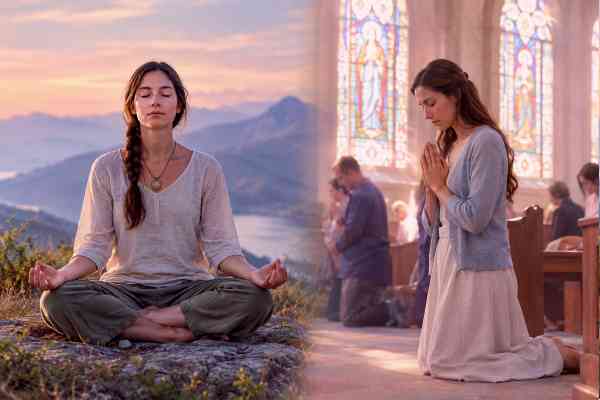
The follower mindset and the seeker mindset are two different agency orientation strategies. Most people move between the two without noticing the dynamics of what they are changing. Once you see what each orientation contains, you can decide which orientation is best.

Religious and spiritual language often uses the same words for different ideas. Words such as faith, spirit, truth, God, sacred, and belief seem straightforward. But often, two people realize they mean different things.

Practicing without an agenda means trusting the process instead of demanding a certain result. Spiritual practice usually begins for a reason. Having a reason is not the problem. Trouble begins when hope for a result turns into an expectation.

Most of us think we can spot propaganda, deception, and weak arguments. Yet these tactics work every day because they often sound reasonable at first. Practical axioms give us simple warning signs that tell us when to look closer.

Lawyers practice law. Doctors practice medicine. Musicians rehearse. Scientists test and revise their ideas. They keep practicing because mastery is never finished. The art of living life as an artistic process works the same way: we learn, adjust, and refine as we go.

People talk about authentic faith as if everyone agrees on what it means. They do not. There are different perspectives on authentic faith. Learning to spot these different perspectives helps us understand what someone means when they use the term.