Seeking God can mean more than deciding whether a higher power exists. Reason, philosophy, faith, and experience give us four ways to explore the question and see how our beliefs take shape.
Seeker Project 4 Spiritual Exploration (SP4SE)
Techniques for exploring consciousness
Seeking God can mean more than deciding whether a higher power exists. Reason, philosophy, faith, and experience give us four ways to explore the question and see how our beliefs take shape.
There are two ways to determine truth: truth by faith and truth by fact. To find out what is true, we must weigh claims carefully. We must examine how they are supported and accept uncertainty when evidence is incomplete. This article explores how people decide what is true.
When belief mimics facts, it results in substituting metaphor and analogy for factual truths rather than tools to describe concepts. This article looks closely at how faith operates as truth, examining how belief itself is used to justify what is accepted as true.
Seeking truth beyond religion often begins when beliefs no longer make sense. Living without certainty makes the individual responsible for their decisions. It begins when inherited beliefs no longer match reality.
The impact of evidence-driven decisions is sometimes overlooked. We make choices every day that reshape the world. When decisions are tested against outcomes and corrected when they fail, progress accumulates. What if decisions for humanity were implemented by what they produced for humanity rather than profit?
The social cost and systemic harm of organized religion appear in laws, education systems, family structures, and public policy across the world. This article examines those costs at the system level, focusing on repeated outcomes and measurable harm rather than personal belief, private faith, or individual morality.
What you face when you leave a religion isn’t just about changing beliefs. Doubt triggers fear, identity loss, and social consequences that are deeper and more disruptive than expected. What looks like an intellectual shift often becomes a personal and relational upheaval that touches every part of life.
The concept of God can be understood in different ways. It can be taken as a literal being, or as a metaphor for the unknown. Finally, it can become a linguistic placeholder without belief in an actual God. That shift can change what the word God means in your life.
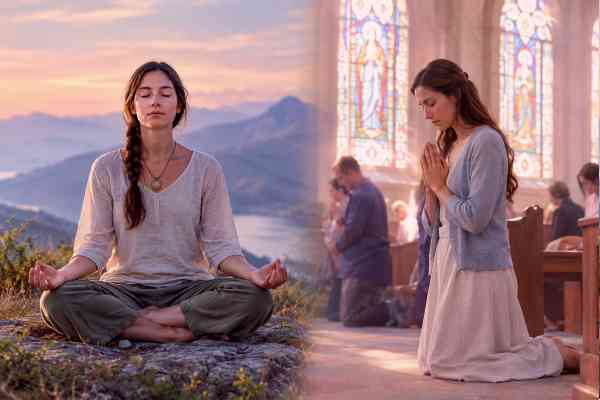
Inward and outward disciplines appear in many traditions. The practices may look similar, but the spiritual context can change their meaning. Knowing the difference helps you make a more informed decision about which to use.
Becoming a freethinker is a process of internal growth. It enables you to form your own beliefs instead of accepting those shaped by others. It matters because most of us begin forming a worldview long before we are able to question it.