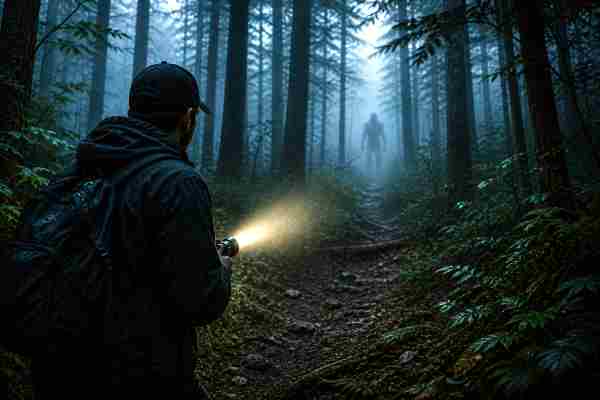
Unknown creature incidents are not random. Incidents rise when cultures feel pressure. This pattern explains why cryptid sightings and reports rise at various times. Each wave of sightings opens the door to a deeper story about fear and belief.
When people face fear, uncertainty, or chaos, they report more strange creatures, unusual lights, and unexplained events. These sightings reveal how humans react when the world feels unstable.
People have always told stories about strange creatures. In ancient times, these stories helped explain the unknown. Dragons, sea serpents, and other mythical animals came from real experiences that people could not understand. Without modern tools, travelers often misidentified animals they had never seen before.
The psychology behind cryptid sightings
The brain does not like unanswered questions. When people see something strange or hear a confusing story, the mind starts searching for explanations. This creates a strong desire to “fill in the gaps.” Scientists call this an information gap. The mind keeps working until it finds an answer that feels complete.
People are also rewarded for discovery. Solving mysteries can feel exciting because the brain releases chemicals linked to learning and reward. This is one reason why mysteries, strange sightings, and unexplained events become so interesting. The search itself becomes enjoyable.
Humans are also natural pattern-seekers. This natural inclination helped people survive for thousands of years. Early humans needed to recognize danger, predict weather, and track animals.
These mental systems become even stronger during stressful times. Fear, uncertainty, and social pressure can make people more likely to believe unusual explanations.
A rustling sound in the forest might be a deer.
But during stressful times, the same sound might feel like something unknown.
People are not trying to deceive anyone. They are trying to understand what they see.
Historical roots of cryptid sightings
During the Age of Exploration, sailors and explorers described creatures that sounded impossible. Many of these reports came from quick sightings, poor lighting, or fear. A whale became a sea monster. A large fish became a serpent. A primate became a “wild man.” These stories grew because people were trying to make sense of a world they did not yet understand.
The reason why cryptid sightings and reports appear in certain places is connected to local stories and myths, like the Loch Ness Monster. Some stories come from exaggeration, folklore, misidentification, or people seeking attention.
Outside of these intentional fabrications, there is a deeper pattern across history. This pattern shows that mysterious sightings are a response to cultural and social stress. They are part of how humans respond to uncertainty.
Modern stress is stronger and more constant.
Today’s world creates a different kind of stress. Political tension, social conflict, economic instability, and public health crises all raise the baseline level of anxiety. News cycles run nonstop. Social media spreads fear quickly. People feel pressure even when nothing is happening around them.
This constant stress affects entire cultures. When people feel overwhelmed, they become more alert and more sensitive to anything unusual. This sets the stage for more sightings of strange creatures and unexplained events.
How stress changes perception
Long-term stress changes how the brain works. It increases hypervigilance. It makes people jumpy. It makes them more likely to misread what they see. The mind tries to protect itself by noticing every possible threat.
A noise in the woods becomes a creature.
A shadow becomes a sign.
A normal animal becomes something mysterious.
This does not mean people are foolish. It means they are human. The brain fills in gaps when the world feels unsafe. During calm times, people ignore these details. During stressful times, they pay attention to everything.
Why social stress increases sightings
In recent years, reports of mysterious creatures and unexplained events have increased. Two major forces shaped this rise. One was the COVID-19 pandemic. The other is the ongoing political and social conflict centered in the United States of America. The social tension of these events creates fear, confusion, and uncertainty across entire populations.
History shows the same pattern. Strange sightings rise during wars, economic downturns, and major cultural shifts. When life feels unpredictable, people look for meaning. The increase in these sightings correlates with the rise during times of social stress. It becomes a way to express that fear and confusion.
Why UFO, cryptid sightings and unknown creature incidents rise
Cryptid creature sightings often rise alongside UFO reports. This is not a coincidence. Both come from the same psychological and cultural pressure. When people feel stressed, they look outward for answers. A strange light in the sky becomes a spacecraft. A normal aircraft becomes something unknown.
Stress makes ordinary events feel extraordinary.
Why pseudoscientific medical claims also rise
During stressful times, people also turn to unproven medical ideas. They want simple answers when life feels confusing. They want explanations that feel clear and comforting. Fear makes people more open to quick solutions, rumors, and misinformation.
This is the same mechanism that drives sightings. Stress pushes people toward ideas that promise control, and incidents rise alongside that uncertainty.
Social media spreads sightings faster.
Social media plays a major role in the rise of cryptid sightings and unknown creature incidents. A blurry photo can go viral within hours. A single story can reach millions of people. This creates a feedback loop. More people see the story. More people look for similar signs. More people report new sightings.
Social media rewards dramatic content. Strange creatures and mysterious lights get more attention than ordinary news. This encourages people to share first and verify later.
Why new cultural myths have not formed yet
Modern society moves quickly. Stories spread fast, but they also fade fast. This makes it harder for new long-term myths to form. There has not been enough time for creatures like Bigfoot or the Loch Ness Monster to develop modern equivalents.
Without strong cultural myths to guide interpretation, people fill in the gaps with whatever feels mysterious. This leads to more misidentification.
Misidentification during stressful times
Many cryptid sightings come from misidentified animals. A shadow in the forest might be a bear. A splash in the water might be a large fish. Stress makes these mistakes more likely. People see something real, but they do not recognize it. Their minds turn it into something unknown.
Misidentification is not a failure. It is a normal human response to stress. As stress rises, sightings and incidents rise as well.
Why people turn to mystery during hard times
When life feels uncertain, people look for stories that help them make sense of the world. Cryptid sightings and reports offer mystery, excitement, and a break from everyday stress. They also give people something to talk about and share with others. This creates a sense of community.
Some people enjoy the adventure. Others enjoy the idea that the world still holds secrets. These feelings grow stronger during stressful times. Mystery becomes a way to escape fear and confusion.
Conclusion
Cryptid sightings and unknown creature incidents rise during times of social stress because people are searching for meaning. Stress changes how people see the world. It makes them more alert and more likely to misread what they see. Political tension, cultural chaos, and constant pressure amplify this effect. Social media spreads these stories quickly.
These sightings show how humans respond to fear and uncertainty. They reveal how the mind tries to create order during chaos. And they remind us that even in modern times, people still look for answers in the unknown.
Explore related topics
→ What’s the Answer: Is cryptozoology science or pseudoscience?
→ The Mechanisms Behind Cryptozoology Research and Conspiracy Theories
References
- The Demon-Haunted World: Science as a Candle in the Dark, Carl Sagan.
- Why People Believe Weird Things, Michael Shermer.
- The Believing Brain, Michael Shermer.
- Thinking, Fast and Slow, Daniel Kahneman.
- Abominable Science!: Origins of the Yeti, Nessie, and Other Famous Cryptids, Daniel Loxton & Donald R. Prothero.
- Mass Hysteria and Collective Behavior, National Institutes of Health.
- Stress, Hypervigilance, and Threat Perception, National Institute of Mental Health.
- Pattern Recognition and Cognitive Bias, National Library of Medicine.
- Social Media and the Spread of Misinformation, National Institutes of Health.
- Folklore and Mythology, Stanford Encyclopedia of Philosophy.
- Cryptozoology, Wikipedia.
- Loch Ness Monster, Wikipedia.