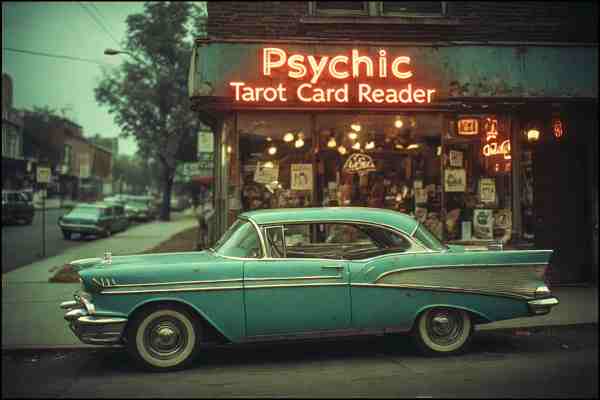
Understanding clairvoyance abilities, signs, and symptoms is important. This topic has always created curiosity and debate. Some people believe these abilities are real. Others think they are illusions or tricks. Understanding clairvoyance abilities, signs, and symptoms requires an open mind.
Many stories, traditions, and modern claims keep the topic alive. This article explores the topic from several angles so you can decide what is real and what is not.
We will look at the history of clairvoyance abilities and how showmanship shapes the psychic industry. We will also examine how to judge evidence and review the many abilities linked to clairvoyance. By the end, you will have the information you need to form your own opinion.
Understanding clairvoyance abilities
Perspectives on clairvoyance
Different groups view clairvoyance in different ways. Each perspective adds a piece to the puzzle. The source of the information often determines the perspective. The weight you give to your perspective can alter your opinion significantly. Using multiple sources and perspectives is the recommended approach.
| Perspective | What it means |
|---|---|
| Scientific perspective | Scientists look for repeatable, controlled evidence. Attempts to prove clairvoyance abilities have failed, so it is considered a pseudoscience. |
| Parapsychological perspective | Parapsychologists test psychic claims using scientific-like methods. Some results seem positive at first, but are often challenged. |
| Mystical perspective | Mystical traditions see clairvoyance as a natural human ability that can grow through meditation and spiritual practice. |
| Religious perspectives | Some Christian groups reject clairvoyance abilities, while some branches of Hinduism and Buddhism accept it as part of spiritual growth. |
| Cultural perspective | Many cultures include stories of people with special sight, such as the Oracle of Delphi and Native American shamans. |
| Philosophical perspective | Philosophers explore whether humans can know things beyond normal senses and what that means for reality and consciousness. |
| Skeptical perspective | Skeptics believe clairvoyant powers are tricks or coincidences. Magicians like James Randi exposed many psychic claims. |
| Literary perspective | Writers use clairvoyant characters to explore fate, destiny, and mystery, keeping these ideas alive in popular culture. |
Assessing data reliability
Data reliability is a key factor in making accurate conclusions about unproven claims.
Clairvoyance abilities, signs, and symptoms are clues. Each one needs to be handled both as a separate event and in the larger surrounding context.
These tasks must be applied consistently in order to arrive at the most accurate conclusions. Here are the key principles and actions that affect the reliability of the subject matter.
| Principle | What it means |
|---|---|
| Replication | Look for studies repeated with the same results. |
| Peer review | Check if experts reviewed and critiqued the research. |
| Controlled conditions | Make sure tests remove outside influences. |
| Independent verification | Look for confirmation from other researchers or institutions. |
| Consistency | Compare reports from different sources and contexts. |
| Source credibility | Ask who is making the claim and why. |
| Bias and objectivity | Watch for emotional or financial motives. |
| Historical context | Understand the background of the claim. |
| Logical coherence | Check if the explanation makes sense. |
| Critical thinking | Ask questions and stay open to natural explanations. |
The history of clairvoyance and spiritualism
The word “clairvoyance” comes from French. “Clair” means clear, and “voyance” means vision. So, it translates to “clear vision”. People have claimed special sight for hundreds of years. Many traditions, stories, and cultural practices include people who say they can see beyond normal senses.
The heritage of Spiritualists dates back to the 1600s. The gypsy and traveler cultures of Europe included groups known as the Roma, Sinti, Cale, Romnichels, Ludar, Irish Travelers, and Scottish Travelers. Some Roma made their living as grifters. They took odd jobs to gather information about people. This helped them find targets for their next con.
Spiritualists claimed to have supernatural powers. They used titles like clairvoyant, psychic, medium, fortuneteller, and now life coach. Some people used these titles honestly. Others used them to trick people.
By the 1800s, clairvoyance abilties became part of the Modern Spiritualist Movement. This movement created a new market for psychic shows. Performers used showmanship to amaze audiences. They used sleight of hand, misdirection, and clever engineering. Trapdoors, hidden levers, and props made illusions look real.
The Fox Sisters became famous for their performances. They traveled among wealthy merchants and made a fortune. Their con-artist success inspired many copycats. Esther Hicks later made channeling a profitable offshoot of these tactics.
Séances and automatic writing became popular sideshows. These acts showed that both men and women could use psychological tricks to fool audiences.
Showmanship, grifters, and the psychic industry
Showmanship is the engine that drives the psychic industry. Understanding this helps explain why clairvoyance abilities remains popular.
The internet made it even easier. Spiritualists now research clients online. They gather personal information and use it to seem psychic. They pretend to connect with the dead, predict the future, or create miracles for a fee.
Many start by learning magic tricks. They practice sleight of hand and misdirection. They use cold reading, warm reading, and hot reading to gather clues. They use props like tarot cards, crystal balls, and spirit boards.
Christian faith leaders also adopted these tactics. They linked clairvoyance signs and symptoms to their own power. They promised healing and wealth in exchange for donations. Many used paid actors to fake miracles.
Several well-known Christian teachers built empires using these methods:
- Smith Wigglesworth (1859–1947)
- Aimee Semple McPherson (1890–1944)
- Johanna Kuhlman (1907–1976)
- Granville Oral Roberts (1918–2009)
- Hugh Marjoe Ross Gortner (born 1944)
Marjoe Gortner became a minister at age four. He made his family a fortune on the revival circuit. Later, he exposed the tricks used in these shows. He explained how prayer cards collected personal information. He revealed how actors pretended to be healed. His documentary showed how easy it was to fool people who wanted to believe.
James Randi, a magician and skeptic, also exposed many psychic tricks. He used his knowledge of illusions to debunk claims of clairvoyant psychic powers. He revealed how psychics used props, misdirection, and staged performances. He exposed everything from horoscopes to psychic surgery.
This is why understanding clairvoyance abilities as a form of entertainment and shamanism gives us a different perspective on the experience.
Assessing data reliability
| Principle | What it means |
|---|---|
| Replication | Look for studies repeated with the same results. |
| Peer review | Check if experts reviewed and critiqued the research. |
| Controlled conditions | Make sure tests remove outside influences. |
| Independent verification | Look for confirmation from other researchers or institutions. |
| Consistency | Compare reports from different sources and contexts. |
| Source credibility | Ask who is making the claim and why. |
Clairvoyance signs and symptoms
Common signs people report
- Strong gut feelings: A sudden sense of knowing something without being told.
- Vivid mental images: Pictures in the mind that feel sharper than normal imagination.
- Dreams that feel important: Dreams that seem symbolic or connected to real events.
- Sudden emotional shifts: Strong emotions that do not match the moment.
- Feeling watched or guided: A sense of presence or communication.
- Random thoughts that feel “not your own”: Ideas that seem to appear from nowhere.
- Heightened awareness: Noticing details or patterns others miss.
Physical sensations people associate with clairvoyance
- Pressure in the forehead: A feeling in the area often called the “third eye.“
- Tingling or warmth: Sensations in the hands, head, or spine.
- Sudden chills: A shiver that feels meaningful.
- Lightheadedness: A floaty or airy feeling.
Why are these signs confusing
Many of these signs can come from normal brain activity. The mind is good at creating patterns and filling in gaps. Strong emotions, memories, stress, or imagination can create experiences that feel supernatural. When someone wants to believe in clairvoyance, these signs can feel even stronger.
Grifters and performers also use these signs to fool people. They watch body language, ask guiding questions, and use general statements. This makes people think the psychic “knew” something special.
How to evaluate these experiences
- Look for patterns: Ask if the sign happens often or only once.
- Check for other causes: Consider stress, emotion, or memory.
- Write down the experience: Notes help separate imagination from reality.
- Compare with reality: See if the sign leads to accurate information.
- Use critical thinking: Ask questions and stay grounded.
Why this matters
By understanding clairvoyance abilities, signs, and symptoms, you avoid being misled. It also helps you stay grounded if you feel something unusual. These signs do not prove clairvoyance, but they show how powerful the mind can be. When you combine awareness with strong data reliability measures, you can explore these experiences with clarity and confidence.
Clairvoyant abilities and what they mean
Seeing the unseen
Divination
Divination is the skill of trying to see the future with a tool. People use cards, runes, bones, sticks, or symbols. The tool does not make the vision. It only gives a structure so the person can interpret what they think they see.
Precognition
Precognition is the ability to sense the future. It is the core idea behind fortunetelling and divination. Nostradamus is the most famous example. His book from 1555 has 942 short poems that many people believe predict events.
Retrocognition or post‑cognition
Retrocognition is the ability to see past events or past lives. Real memory work can help recall true memories, but imagination can twist them. When people push too hard, they can stretch real memories into things that never happened.
Psychometry or psychoscopy
Psychometry is the claim that someone can learn information by touching an object or person. It becomes a scam when the performer gathers personal details ahead of time. Peter Popoff used a radio earpiece to receive private information about people from his wife. Even after being exposed, he kept performing.
Fortunetelling
Fortunetelling is predicting the future through supernatural means. Many fortunetellers use questions and vague statements to guide their target. They often research people ahead of time. It is one of the most well‑known psychic abilities in popular culture.
Dowsing
Dowsing is the art of finding water, ore, or gemstones with a tree branch. The first written account is from 1568. St. Teresa of Spain wrote about Friar Antonio using a twig to find water. Some people think the type of wood used for the rod matters.
Telesthesia or remote viewing
Remote viewing is the claim that someone can sense far‑off places without being there. They say they can see distant objects, places, or events using extrasensory perception.
Reaching or contacting with the mind
Telepathy
Telepathy is the ability to read or send thoughts. It is related to psychometry and often appears in stories about psychic communication.
Mediumship and channeling
Mediumship and channeling are about talking to the spirits of the dead. These practices are common in the spiritualist world. Many performers use acting, props, and psychological tricks. All they need is someone who wants to believe and some skill in mind games.
Automatic writing
Automatic writing is writing without conscious control. It is used to open the subconscious mind. Anyone can try it by following the steps. People use it to explore intuition, memory, or symbolic thinking.
Astral projection
Astral projection is the idea of sending your awareness outside your body. It is not the same as a near‑death experience. In this practice, you stay in control of the journey. Some Siddhi practitioners say it is a natural step in growing awareness.
Healing or altering the body
Energy medicine
Energy medicine uses life force or chi for healing. It is also called pranic healing. It is a touchless method similar to Reiki. Practitioners say they can sense or adjust the energy field around a person to help them feel balanced.
Psychic surgery
Psychic surgery is a staged trick. The performer pretends to operate with bare hands through an “energy cut” that closes right away. Magicians use sleight‑of‑hand to hide and reveal fake blood or tissue. A skilled performer can make it look real.
Changing the physical world
Psychokinesis or telekinesis
Psychokinesis is the claim that a person can move objects with the mind. Uri Geller made this famous with spoon‑bending shows in the 1970s. Investigators later exposed the tricks he used.
Levitation
Levitation is the idea of floating in the air through mystical power. Some Eastern mystics claim this ability. In the Siddhis, there is a Sutra that describes becoming lighter than air.
Teleportation
Teleportation is an illusion where an object seems to vanish. Magicians use trapdoors, mirrors, and hidden spaces to make people or objects disappear and reappear.
Conclusion — clairvoyance abilities, signs, and symptoms
Grifters and showmen have damaged the reputation of people who seek real spiritual growth. Many people want to believe in clairvoyance, which makes them easy targets. The best way to avoid being fooled is to stay skeptical of anyone who claims to be a psychic, medium, or life coach.
Watching magic shows can help you understand how illusions work. Many tricks look like real psychic abilities, but they are not. Understanding clairvoyant abilities means learning the signs, questioning the evidence, and using strong data reliability measures.
If you have experienced something unusual or met someone with these abilities, your story may help others understand this topic better. Understanding clairvoyance abilities, signs, and symptoms is an ongoing process. New experiences and different perspectives can sway your opinion.
References
- The Demon-Haunted World: Science as a Candle in the Dark, Carl Sagan.
- Why People Believe Weird Things, Michael Shermer.
- The Believing Brain, Michael Shermer.
- Flim-Flam!: Psychics, ESP, Unicorns, and Other Delusions, James Randi.
- Parapsychology: A Handbook for the 21st Century, Etzel Cardeña, John Palmer & David Marcusson-Clavertz.
- Thinking, Fast and Slow, Daniel Kahneman.
- Cognitive Bias and Pattern Recognition, National Institute of Mental Health.
- Hallucinations and Perception, National Institutes of Health.
- Extrasensory Perception, Stanford Encyclopedia of Philosophy.
- Clairvoyance, Wikipedia.
- Cold Reading, Wikipedia.