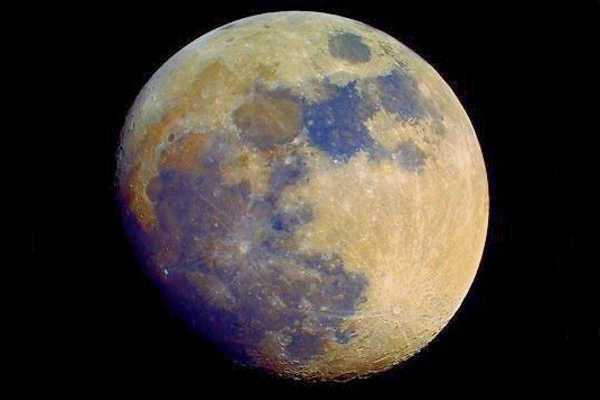
We take our lunar partner for granted. We gaze at it casually without a second thought. But if we stop and study it closely, we find it is full of strange lunar curiosities. Time to ponder the interesting observations about the Moon.
We have been studying our closest celestial neighbor for thousands of years. While science has disclosed many facts, many mysteries remain unexplained. The more we know about our moon, the more questions it raises. Some strange lunar curiosities defy known scientific principles.
Myths about the Moon
Ancient cultures developed elaborate lunar myths and mysteries to explain their observations. Narratives about our lunar partner are found in every culture. We may not use mythology to explain them, but we aren’t much further along in answering the big questions about it.
For example, the ancient Greeks associated our lunar partner with the Goddess Selene. She is the daughter of two mythological giants, Hyperion and Theia. They are often depicted either riding sidesaddle or riding a chariot. She brings us the light of her celestial reflection.
The Romans associated it with the goddess Luna, from which we derive the word’s modern meaning. Many indigenous cultures worship the Moon as a god or goddess with power over the night sky and the tides.
From myth to science
As time passed, some thinkers wanted to understand the Moon using careful study instead of stories. The ancient Greeks were among the first to do this. Aristotle believed the Moon was a solid object and studied how its shape changed. Hipparchus measured its distance and movement.
In the 1600s, Galileo used a telescope to look at the Moon. He saw mountains and craters no one had seen before. This changed how people understood the Moon. Around the same time, Johannes Kepler studied how the Moon orbits the Earth.
One of the most interesting observations about the Moon leads us to the term lunacy. This comes from folklore, which claims the full moon causes people to lose their minds. It’s more likely that moonlight allows people to see better at night so they can act mischievously.
These early scientists helped move the world from myth to science. Their work opened the door to many other discoveries and questions.
Interesting observations about the Moon
Some of the biggest questions about our lunar partner seem simple:
- Where did it come from?
- How did it get there?
- What is it made of?
- How does it affect the Earth?
These questions have led to many discoveries, but also additional questions that puzzle scientists today.
How Did the Moon Get There?
One of the most important questions is how it ended up in Earth’s orbit. The most common idea is the impact theory. It says the Moon formed after a huge collision between Earth and another planet‑sized object. The leftover material came together to form the Moon.
Another idea says the Moon formed somewhere else during the Big Bang and was later captured by Earth’s gravity.
These theories have problems. Unfortunately, the Moon is too large compared to the Earth to have been captured by the Earth’s gravitational pull. The big band theory explains why planets with a higher density are closer to the Sun, while the lighter ones are farther away. This means that the Earth and the Moon should have similar density. Since planets are spherical, we can estimate density by their diameter.
What in blazes is our moon doing way out there? It’s too far out to be a satellite of Earth. It is too big to have been captured by the Earth. If the moon is neither a true satellite of the Earth nor a captured one, what is it? How did it get there? ― Isaac Asimov
When we can answer how it got there, it will illuminate all the other unanswered questions.
What is the Moon made of?
The Moon’s outer surface contains various hard metals, which is interesting. Minerals like rutile, ilmenite, and sphene are on the surface. These materials do not occur naturally. You must process them from an ore to get them, implying that these elements result from mining. Other rocks contain metals, such as brass and mica. They also found two unusual elements on the surface, uranium 236 and neptunium 237. Why is it unusual?
Uranium 236 is a long-lived radioactive nuclear waste material. It is a leftover element from atomic fuel reprocessed from uranium. Neptunium 237 is a by-product of nuclear reactors using plutonium. So, how did nuclear reactor waste get on the Moon?
They have discovered unknown iron particles impervious to rust. None of these metals and elements occurs by any known natural process. They are, however, consistent with mining and milling operations. Analysis of these celestial curiosities deserves more attention.
Six Apollo missions were conducted between 1969 and 1972. These missions brought back 382 kilograms, or 842 pounds, of lunar rocks, core samples, pebbles, sand, and dust. These six space flights represent 2,200 separate samples from six different sites. As of 2019, NASA claims to have 85% of these samples.
However, NASA admits that 180 moon rock samples are missing. So, 180 samples, or approximately 126 pounds, are in private collections. A comprehensive study of the rock samples would give us valuable insight into some of these unanswered questions. Many of the lunar myths and mysteries surround how these samples were lost.
How Old Is the Moon?
How old is it? Another simple question that hasn’t really been answered. And, it’s one of the interesting observations about the Moon, which is also a bit scary.
Moon rocks are magnetized, yet our Moon has no magnetic field. How does this occur? Is it possible that the magnetic field collapsed? Could this have happened when it broke off the Earth? Or perhaps it never had one? There is no information on which to date the age of the Moon.
How else could we date our lunar partner? We could use carbon dating. Radioactive decay for all particles is constant, no matter the atmosphere. Each particle has a unique decay rate.
For example, the decay of potassium-40 to argon-40 is often helpful for dating rocks older than 20,000 years. The decay of uranium-238 to lead-206 helps date rocks older than 1 million years. Carbon 14 and 12 are better for dating organic material.
Here’s the problem. The oldest moon rocks, dated by carbon dating, show that the Moon is a billion years older than the Earth. What?
The Harvard Astronomy Journey of 1973 reports one moon rock dated back 5.3 billion years, which is older than the estimated age of our solar system. How did this occur? Many think this is the most troublesome of all the strange lunar curiosities. If the Moon is much older than the Earth, many theories about how the galaxy formed are obsolete.
What does the data tell us about the Moon?
We can estimate the density of a sphere by measuring its radius. The radius is the distance from the surface to the center. If the object is spherical, we can calculate volume using radius, then divide mass by the volume of the sphere to get density. Our lunar partner appears to be spherical.
Experts calculate the Moon’s density as 3.34, whereas the Earth’s is 5.5. What does this mean? It means the numbers don’t add up. If the Moon were a piece of the Earth, it would have a similar density. Mars has a density of 3.9, which is closer to Earth’s.
We could confirm these calculations by taking appropriately sized soil and rock samples. Unfortunately, the rock data from all our lunar missions is too small for this calculation.
All we know for sure is that the seven-mare basalt samples are lighter than similar rocks on Earth. It makes you wonder why the data for the other rock samples is unavailable. Many of the stones are now in private collections, so we cannot analyze these rocks. These rocks are NOT just celestial curiosities but clues to our immediate universe.
Lunar sample analysis shows the moon surface is made of depleted iron. This is consistent with a lower density of 3.34 grams per cubic centimeter. The question of the moon’s core is of debate. ― Space in the 21st Century by Richard S. Lewis
If the astronomical data are reduced, it is found that the data require that the interior of the moon is more hollow than a homogeneous sphere. ― Dr. Gordon MacDonald, NASA scientist 1962
The lunar orbiter experiments vastly improve our knowledge of the moon’s gravitational field, indicating the frightening possibility that the moon might be hollow. ― Dr. Sean C. Solomon, MIT 1969
A natural satellite cannot be a hollow object. Therefore, the moon appears to not be a natural satellite at all. ― Dr. Carl Sagan
Some of the most startling evidence comes from the crash of Apollo 13. Seismic instruments record reverberations lasting for three hours and twenty minutes. This vibration level indicates the crust has a depth of around 2 miles, leading researchers to conclude the crust is unusually light.
To put this in perspective, earthquake reverberations over 6.0 on the Richter Scale last only a few minutes because of the Earth’s density. The length of the reverberation indicates the Moon is exceptionally light or perhaps even hollow. What if it has a cavern inside? It’s another of the strange lunar curiosities.
How does the Moon affect Earth?
Here’s something you may not have considered. Astronomers have determined that our Moon is necessary to control the Earth’s rotation speed and angle. Because of the Moon, the Earth rotates at 22.5 degrees from vertical. This exact placement creates the four seasons in both hemispheres. Our lunar partner has profoundly affected the evolution of life on the planet.
It would adversely affect the Earth if it were farther away or in a slightly different orbit. The angle of the Moon also affects the weather patterns on Earth. It influences the largest living thing on the planet, the ocean. Its lunar cycles influence tides far more than the Sun. The different moon phases are constant. They complete a complete revolution every 28 days.
What about the dark side of the Moon?
The Moon rotates at the same speed it orbits Earth. This means we always see the same side. For a long time, no one knew what the far side looked like. The Soviet Union took the first pictures in 1959. Apollo 8 astronauts saw it in 1968. China landed a craft there in 2019.
Even though the Moon is close, we have explored it far less than many other objects in space.
What do the Moon’s alignments mean?
The Earth and Moon have many surprising mathematical relationships. Some numbers match in ways that seem too exact to be random. These alignments make some people wonder if there is a deeper pattern behind the Earth‑Moon‑Sun system.
The Earth rotates 400 times faster than the Moon and turns 40,000 kilometers on its axis in a day, while the Moon turns 400. The Earth spins 366.259 times during one orbit of the Sun, and the Earth’s polar circumference is 366.175 times larger than the Moon’s.
Multiply the Moon’s circumference by the Earth; the result is 436,669,140 kilometers; this is 99.9% of the Sun’s circumference. Divide the Sun’s circumference, 4.379 million km, by the Moon’s, 10,921 km, to get 400.970. Multiply by 10, and you get the circumference of the Earth. When you divide the Sun’s size by the size of the Earth and multiply by 100, you get the Moon’s size; that is some coincidence.
Are all these mathematical alignments just coincidences? The number of alignments involved in the Earth-Moon-Sun system is nothing less than staggering. The Moon is a perfectly balanced and aligned sphere, completing a unique triune relationship with the Sun and the Earth.
These lunar curiosities raise questions about how everything fits together.
Other Questions About the Moon
Here are some simple questions and answers about our lunar partner:
- The Moon has more craters than Earth because it has no atmosphere.
- The word “moon” comes from the Roman goddess Luna.
- The Moon always shows the same face to Earth.
- The Moon is about 238,855 miles from Earth.
- Michael Collins stayed in orbit during Apollo 11.
- The “Moon illusion” makes the Moon look bigger near the horizon.
- The near side of the Moon has the dark areas called “mare.”
- Neil Armstrong’s first step left a footprint in the lunar soil.
- A red Moon during an eclipse is called a “blood moon.”
- Gene Cernan was the last person to walk on the Moon.
In conclusion — strange lunar curiosities
All our observations about the Moon lead to more questions. Even with modern science, we have more questions than answers. Many ancient cultures used the Moon to guide time, and some used a 13‑month calendar based on its cycles. As we continue to study the Moon, we may discover even more interesting observations that change how we understand our place in the universe.
References
- The Moon: A History for the Future, Oliver Morton.
- Introduction to Planetary Science: The Geological Perspective, Gunter Faure & Teresa M. Mensing.
- Cosmos, Carl Sagan.
- A Brief History of Time, Stephen Hawking.
- The Origin of the Moon and the Giant Impact Hypothesis, National Aeronautics and Space Administration.
- Lunar Rocks and Apollo Missions, National Aeronautics and Space Administration.
- Moon Formation and Evolution, National Institutes of Health.
- Lunar Geology and Surface Composition, National Library of Medicine.
- Moon, Stanford Encyclopedia of Philosophy.
- Moon, Wikipedia.
- Moon Illusion, Wikipedia.