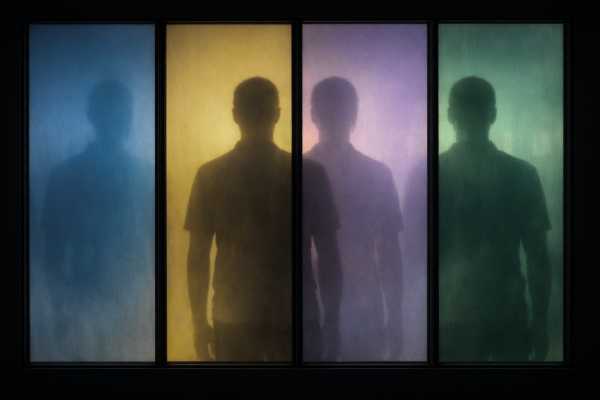
We can best understand the ego, soul, and self through the four disciplines or the four lenses we use to frame reality. These disciplines shape how we interpret our thoughts, reactions, and identity. Know how the lens works, and you can change your thinking.
Perspectives form from habit, emotion, memory, and the stories carried over time. These patterns shape how the inner world is organized and how meaning is created.
Recognizing the four lenses creates distance between experience and interpretation. Distance allows the mind to observe its own movement instead of being pulled into it.
Inner Work Gate Notice:
It may increase discomfort before resolution. The exercises are designed to examine and restructure belief patterns, identity structures, or emotional resistance. Emotional stability should be established before engaging this material. This article is not designed for immediate calming. It is designed for transformation.
Understand the ego, soul, and self as systems
Defining the three systems
The ego is your default setting. It is made of habits, reactions, and the ways you learned to survive. It helps you handle daily life and solve problems.
The soul is the quiet part inside you that watches without judging. It holds your deeper values, your calm, and your sense of truth. This is the observer.
The self is the bridge between the ego and the soul. It is the sense of identity. It brings everything together so you can feel whole.
Instead of framing self, soul, and ego as things, see them as systems—machinery with different functions. There are four distinct disciplines that give us different ways to describe this machinery.
The four lenses that shape how we see ourselves
People understand the ego, soul, and self through different disciplines or lenses. These four lenses shape how they explain their thoughts, feelings, and identity. Each lens shows a different part of the truth. Knowing your main lens helps you understand your beliefs and the way you make sense of the world.
The psychological lens
The ego helps you manage daily life, emotions, and identity. The soul is the observer that provides values and purpose. The self is the identity shaped by your experiences, memories, and relationships.
The philosophical lens
The ego can be seen as a mask or illusion. The soul is the moral or lasting part of a person. The self is the “I” that thinks, or in some traditions, something that changes and does not last.
The spiritual lens
The ego is the false self that reacts from fear, pride, or separation. The soul is the true self that is loving and peaceful. The self is the higher self that brings ego and soul into harmony.
The scientific lens
The ego is a survival system created by the brain. The soul is not defined because it cannot be measured. The self is built from brain processes, memories, and experiences.
Each of the disciplines is correct based on the boundaries of the lens. Whether we know it or not, we choose how to define the soul, ego, and self through the four lenses.
| Disciplines or the four lenses of understanding | |||
|---|---|---|---|
| Perspective | Ego | Soul | Self |
| Psychological | Manages reality, emotions, and identity. | Sometimes seen as deep values or purpose. | Identity shaped by experience and relationships. |
| Philosophical | Seen as an illusion or a mask blocking deeper truth. | The moral or eternal essence of a person. | “I” in Western thought; illusion in Eastern thought. |
| Spiritual | The false self, driven by fear and pride. | The true self connected to Source or Spirit. | The higher self that integrates ego and soul. |
| Scientific | A brain-based survival mechanism. | Not defined in scientific terms. | Shaped by brain processes and experience. |
Seeing the lens vs. seeing through the lens
When you see through a lens, you believe the world is exactly how it appears. You do not question your reactions, your beliefs, or the meaning you assign to events. The lens feels like the truth, not a filter. This is why people argue, defend their views, and feel threatened when someone disagrees. They are not defending ideas. They are defending the lens that shapes their identity.
Seeing the lens is different. It means you step back and notice the filter itself. You notice how your mind interprets things, how your emotions color your thoughts, and how your past shapes your reactions. You begin to see that your beliefs are not the world. They are your interpretation of the world.
When you see the lens, you gain freedom. You can question your assumptions. You can explore new ideas without feeling unsafe. You can understand why someone else sees things differently without feeling attacked. You can shift perspectives instead of being trapped inside one.
This shift is the beginning of self-awareness. It is the moment when the mind becomes flexible instead of rigid. It is the moment when growth becomes possible.
Forming the self through the four lenses
Our own lens forms slowly as the mind adapts to its surroundings. Each influence leaves a trace, shaping how experience is organized and how meaning is assigned. Over time, these traces become the filters you look through without noticing.
If we are lucky, we get a well-rounded education about the four lenses so we can choose what we think is best. Many people do not get a complete and unbiased education. They are exposed to mental conditioning. Many children do not have a choice; they are indoctrinated into the beliefs of the family. But the family is only one of the sources that influence our lens.
These sources can vary in the level of healthy or unhealthy information they promote. These influences include family, culture, education, religion, science, politics, and personal experience.
- Family shows you what is normal, what feels safe, and what others expect.
- Culture shapes what seems valuable, what brings shame, and what feels possible.
- School builds how you think, how you behave, and how you work toward success.
- Religion defines what is sacred, what is forbidden, and what gives meaning.
- Science explains what can be measured, what is real, and what can be proven.
- Politics influences what you see as fair, how power works, and how decisions are made.
- Trauma shapes what you fear, what you avoid, and what you try to protect.
- Success and failure shape what you believe you can or cannot do.
These influences shape the structure of your inner world. Seeing them clearly makes it easier to understand why your lens formed the way it did.
How the four lenses distort perception
Every lens highlights certain details and hides others. The mind relies on shortcuts to stay efficient, but these shortcuts can bend perception without being noticed.
- Emotional bias treats your feelings as if they are facts.
- Cognitive bias filters your attention toward what fits your beliefs.
- Identity bias drives you to defend ideas that protect your self-image.
- Cultural bias frames your worldview as the “normal” one.
- Confirmation bias leads you to seek information that agrees with you.
- Fear bias pushes you away from ideas that feel unsafe or unfamiliar.
These distortions are automatic, but they lose their power when the lens becomes visible.
How your dominant lens shapes identity and choices
Your lens affects how you explain your emotions, your struggles, and your strengths. It shapes how you judge yourself and others. It influences what you believe is real and what you believe matters.
Two people with different lenses can look at the same event and walk away with completely different stories. This makes it easier to see the patterns behind your reactions, which sets the stage for identifying the lens you rely on most.
How to identify your default lens
Think about what you trust most: science, logic, faith, feelings, or deep questions about life. Notice what kinds of explanations feel natural to you.
Pay close attention to the words you use when you talk about yourself. Record them in a journal and look for patterns over time.
Ask yourself which of the four lenses you use the most and which one you use the least. You may use more than one lens at the same time. This is normal.
When we learn our primary lens, we are better able to understand the ego, soul, and self connection.
How to shift your lens consciously
A lens becomes flexible when the mind has enough space to observe itself. This means you are not fully caught inside your thoughts or emotions. Instead, you can step back and notice them as they happen.
Small shifts in awareness can begin to loosen old patterns, especially the ones that feel automatic. Over time, this creates room for new ways of understanding your experiences.
1. Pause before reacting. When something triggers you, your first response is often fast and automatic. This reaction usually comes from an old pattern or belief.
By pausing, even for a few seconds, you interrupt that pattern. This pause gives your brain time to shift from an emotional reaction to a more thoughtful response. In that space, you can begin to see the lens instead of acting through it without awareness.
2. Ask what another lens would say. Your first interpretation of a situation often feels like the only truth, but it is only one perspective.
When you ask how someone else might see the same moment, you stretch your thinking. This reduces the grip of your initial reaction and helps your brain build flexibility. Over time, this practice weakens rigid thinking and makes it easier to hold multiple viewpoints at once.
3. Notice your triggers. Strong emotional reactions are rarely random. They usually point to something deeper, such as a past experience, fear, or belief. When you feel anger, anxiety, or defensiveness rise quickly, it often means your lens is trying to protect you.
Paying attention to these triggers helps you identify where your thinking is rigid or shaped by past pain. This awareness is the first step toward change.
4. Practice curiosity. Curiosity shifts your mind out of judgment and into exploration. Instead of asking, “Why is this wrong?” you begin to ask, “What else could this mean?”
This simple shift lowers defensiveness in the brain and reduces fear-based thinking. Curiosity opens the door to new interpretations and helps you stay engaged instead of shutting down.
5. Reflect on past experiences.
Your lens was shaped by repeated experiences, especially the ones that carried strong emotions. Taking time to look back helps you see patterns in how you learned to think, react, and interpret the world. This reflection builds self-awareness. It helps you understand why certain situations affect you so strongly today.
6. Talk to people with different lenses. Other people see the world in ways that may feel unfamiliar or even uncomfortable. Engaging with different perspectives challenges your assumptions and reveals blind spots in your thinking.
When done with openness, these conversations can expand your view of reality and reduce bias. Over time, this makes your lens more flexible and less reactive.
7. We find the observer or true self through silence. Meditation brings about a finite understanding of who we are.
Shifting lenses is not about replacing one view with another or deciding that one is right and another is wrong. It is about building enough awareness and mental space to move between perspectives. This flexibility allows you to respond more thoughtfully instead of reacting automatically.
Inner work tools for balancing ego, soul, and self
These tools help you notice your patterns, question old beliefs, and build a healthier sense of self.
- The Enneagram: A map of nine personality types that shows your habits, fears, and strengths so you can see your blind spots.
- Cultural Values Test: Helps you find the messages you learned from family, media, religion, and politics that still shape how you see the world.
- Comparative Analysis Process: A way to compare different belief systems so you can see where ideas come from and decide what you truly believe.
- Repetitive Question Exercise: You repeat one question and write new answers each time to uncover hidden beliefs and scripts in your mind.
- Personal Transformation Tools: Practices like self-observation, journaling, mantras, and affirmations that help you replace harmful thoughts with healthier ones.
How these tools support the process
These tools give you ways to work with all four lenses at once. You can notice your psychology, question your beliefs, explore your spiritual values, and stay honest about what is real in everyday life. Over time, they help your ego, soul, and self work together instead of pulling you in different directions.
Why understanding the four lenses matters
When you know your lens, you can see your blind spots more clearly. You can understand why you react the way you do and why certain ideas feel true or false. You can also understand other people better because you can see the lens they are using. This makes it easier to grow, learn, and make choices that match your real values. Understanding the four lenses is the first step toward building a stronger sense of identity and a more balanced inner life.
References
- The Ego and the Id, Sigmund Freud.
- Man and His Symbols, Carl G. Jung.
- The Archetypes and the Collective Unconscious, Carl G. Jung.
- The Varieties of Religious Experience, William James.
- Being and Nothingness, Jean-Paul Sartre.
- The Republic, Plato.
- The Power of Now: A Guide to Spiritual Enlightenment, Eckhart Tolle.
- Thinking, Fast and Slow, Daniel Kahneman.
- Self and Identity in Cognitive Science, National Institutes of Health.
- Cognitive Bias and Perception, National Institute of Mental Health.
- Meditation and Self-Awareness, National Library of Medicine.
- Self, Stanford Encyclopedia of Philosophy.
- Ego, Wikipedia.
About this project
The Seeker Project 4 Spiritual Exploration (SP4SE) is a project of Americans In Alliance. The mission of SP4SE is spiritual education. The mission of Americans In Alliance is environmental conservancy. Click the links below to learn more and support our efforts.