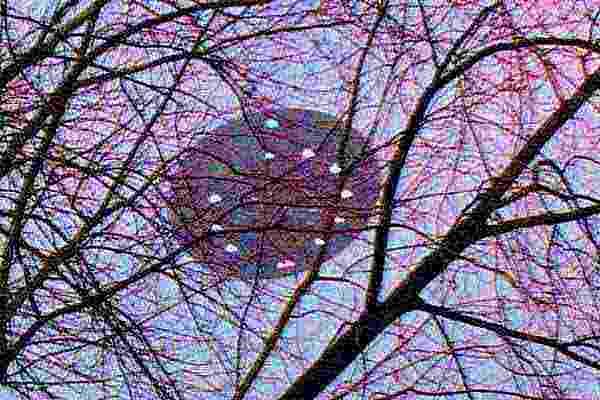
Many people have unusual experiences: lights in the sky, a figure in the corner of a room, a sudden feeling that someone is there. These moments feel real. But how you interpret unusual experiences depends heavily on what you already believe.
When something unusual happens, the mind doesn’t just passively observe. It actively interprets. It compares what is happening to what it already knows, then picks the closest match. If you expect angels, you may see an angel. If you expect aliens, the same light becomes a UFO. If you expect nothing unusual, you may dismiss the event or forget it entirely.
The event itself doesn’t change. What changes is how the mind organizes unfamiliar input into a familiar pattern so it can make sense of it.
The goal is to explain why unusual experiences are so hard to read, what research has found about the most common ones, and how to interpret unusual experiences of your own, step by step. The goal is not to prove or debunk anything. It is to see clearly.
Why unusual experiences are hard to interpret
When we meet something that doesn’t match our expectations, the mind first has to decide whether it matters. If it can’t quickly connect the experience to something known, it often lets it go. If the experience feels important, especially if it triggers fear or curiosity, the mind holds on and examines it closely.
What stands out is not always what is most real. It is what the mind can’t easily place.
When something resists explanation, the mind works harder to resolve it. That effort can turn a fleeting moment into a meaningful event. And once we settle on an explanation, the explanation starts to feel like part of the experience itself.
The belief filter
Every person carries assumptions about how the world works, built from family, culture, media, and experience. These assumptions act as a filter. They shape not only what we believe, but what we are able to notice in the first place. When something unfamiliar happens, the mind reaches for the closest available explanation and uses it to steady the experience.
Two people can witness the same event and come away with different conclusions. They don’t disagree about what happened so much as about what it meant.
➡ For more, see: How Perception Is Shaped — Mistaking Interpretation for Reality
➡ For more, see: How We Reach A Conclusion And What Can Go Wrong
Naming the unknown
People usually sort unusual experiences into a few broad categories:
- Paranormal: outside what is considered normal.
- Supernatural: beyond the natural world.
- Metaphysical: involving deep questions about reality, perception, time, space, and cause.
These labels don’t explain an event. They contain it. When something doesn’t fit everyday categories, we borrow or create one to give it a place. Naming an experience doesn’t resolve it, but it reduces uncertainty enough for the mind to move on.
One of the biggest questions behind many of these labels is whether we are alone in the universe.
➡ For more, see: Are We Alone In The Universe: Two Possibilities
The observer matters more than the event
Most investigations of unusual experiences focus on the event itself. But the observer’s mindset, expectations, and emotional state shape the whole experience. The same sensory input can produce very different interpretations depending on who receives it.
Part of this is personal: what you notice, what you ignore, what feels important. Part of it is learned. Cultures provide ready-made explanations. Some draw on religion, some on folklore, and some on science. A culture that teaches about angels tends to produce angel sightings. A culture that teaches about extraterrestrials tends to produce UFO reports. A culture that teaches strict skepticism tends to produce dismissals.
People aren’t inventing experiences out of nothing. They are interpreting them with the tools they were given.
What research has found
Some unusual experiences are far more common than most people realize. Researchers have studied many unusual experiences closely. Their findings don’t settle what every experience means, but they do show that an experience can be real and still have more than one explanation.
A figure in the room
Sleep paralysis happens when the mind wakes up before the body’s sleep paralysis wears off. You are awake but can’t move. Many people also see a figure, feel pressure on the chest, or sense a threatening presence. A 2011 review by Brian Sharpless and Jacques Barber estimated that about 8% of people have it at least once, and closer to 3 in 10 college students.
Folklorist David Hufford studied this experience in his 1982 book The Terror That Comes in the Night. In Newfoundland, it was known as the “Old Hag,” a being who sat on sleepers’ chests. Hufford found something surprising. People who had never heard of the Old Hag described the same core features. Culture shaped the name and the story, but the experience itself appeared without it.
That finding cuts both ways. It means the experience is not simply imagined because of a story. It also means the experience has a known physical setting, the border between sleep and waking.
A sense of presence
The feeling that someone is standing behind you, when no one is there, has been reported by mountain climbers, polar explorers, and grieving people. In 2014, neuroscientist Olaf Blanke and his team produced this feeling in healthy volunteers in a lab. They used a robot that slightly mismatched the timing of what people did and what they felt on their backs. Some volunteers felt a presence so strongly that they counted extra people in the room.
Seeing someone who has died
In 1971, Welsh physician Dewi Rees interviewed 293 widowed people. Nearly half said they had sensed, seen, or heard their dead spouse. Most found the experience comforting, and many had never told anyone, including their doctors. Experiences like these are common in grief. They are not a sign that something is wrong with the person.
Lights in the sky
From 1947 to 1969, the U.S. Air Force’s Project Blue Book investigated 12,618 reports of unidentified flying objects. Investigators found ordinary explanations for most of them, such as aircraft, planets, balloons, and weather. Seven hundred and one remained unidentified. Most sightings had everyday causes, and a small share stayed unexplained.
Faces in random patterns
The mind is built to find patterns, especially faces. Seeing a face in a cloud, an electrical outlet, or a piece of toast is called pareidolia. The broader tendency to see meaningful connections in random things is called apophenia, a term coined by psychiatrist Klaus Conrad in 1958. These are not flaws. They come from the same system that lets you spot a friend in a crowd.
Stress, fear, and heightened perception
Strong emotion changes perception, and it often sets the stage for unusual experiences. Under stress, fear, or grief, attention becomes sharper and more reactive. The mind becomes more sensitive to anything that feels out of place.
In that state, the threshold for meaning drops. Small or unclear signals can feel significant, even threatening. When the mind can’t fully resolve what it is seeing, it fills in the gaps with whatever explanation is most available. This is why the same house can feel ordinary one day and charged or uncanny the next.
➡ For more, see: Decoding The Fear and Fascination With the Unknown
When experiences become folklore
Unusual experiences gain power when they are shared. A single unexplained event, retold and repeated, can become a story that others adopt. Over time, the story gains stability, not because anyone verified it, but because it became familiar.
Folklore, superstition, and cultural myth often grow this way. The more a story is told, the more it feels like an explanation rather than an interpretation. Waves of sightings can follow the same pattern, as with why cryptid sightings rise after a story spreads.
The experience itself is rarely the problem. The problem is the story attached to it, and how quickly that story becomes fixed.
➡ For more, see: How Myth And Symbolic Stories Shape Culture
How to interpret unusual experiences
If you have an experience you can’t explain, these steps can help you interpret unusual experiences without dismissing them or jumping to a conclusion.
Step 1: Write it down right away. Record exactly what you saw, heard, and felt before you start explaining it. Memory changes quickly, and each retelling adds detail.
Step 2: Note the conditions. Write down the time, the light, the weather, how much sleep you’d had, your stress level, and any medication, alcohol, or other substances. Were you falling asleep or just waking up?
Step 3: List the ordinary explanations first. Could it have been a reflection, an animal, an aircraft, a planet, sleep paralysis, or a trick of light? Ruling these out makes any remaining mystery more meaningful.
Step 4: Ask three questions. What assumptions influenced my interpretation? What evidence supports it? Could another explanation fit the same facts?
Step 5: Try more than one frame. Ask how a believer, a skeptic, and a scientist would each explain it. Notice which explanation you reached for first, and why.
Step 6: Look for independent support. Did anyone else see it? Is there a photo, a recording, a news report, or a weather record? Compare accounts before you compare notes.
Step 7: Leave the question open. You don’t have to decide right away. “I don’t know yet” is an honest answer. Some experiences become clearer with time, and some never fully resolve.
For a personal example of working through an unexplained sighting, see a velociraptor road-crossing encounter. For meaningful coincidences, see omens and synchronicity.
A note on health: If unusual experiences are frequent, frightening, or interfere with daily life, talk with a doctor. Sleep disorders, migraines, medications, and some medical conditions can cause them, and many of these causes are treatable.
What your worldview lets you see
Learning to interpret unusual experiences is not about proving or debunking them. It is about understanding how the mind handles what it doesn’t immediately understand.
Your worldview shapes what counts as meaningful, what gets ignored, and which explanation feels right. It shapes perception before you are even aware that interpretation is happening. Perceptual tunnel vision can narrow what you see even further.
You may be surrounded by unusual moments, but you will only recognize the ones your mind knows how to explain. Learning to hold an experience open, without forcing it into a story, lets you see more of what is actually there.
References
- The Terror That Comes in the Night: An Experience-Centered Study of Supernatural Assault Traditions. David J. Hufford, University of Pennsylvania Press, 1982.
- Lifetime Prevalence Rates of Sleep Paralysis: A Systematic Review. Brian A. Sharpless and Jacques P. Barber, Sleep Medicine Reviews, 2011.
- Neurological and Robot-Controlled Induction of an Apparition. Olaf Blanke et al., Current Biology, 2014.
- The Hallucinations of Widowhood. W. Dewi Rees, British Medical Journal, 1971.
- Project Blue Book. United States Air Force, 1952–1969, National Archives.
- Die beginnende Schizophrenie (The Onset of Schizophrenia). Klaus Conrad, Thieme, 1958.
- Hallucinations. Oliver Sacks, Knopf, 2012.
- The Believing Brain: From Ghosts and Gods to Politics and Conspiracies. Michael Shermer, Times Books, 2011.
- Why People Believe Weird Things. Michael Shermer, W. H. Freeman, 1997.
- The Varieties of Religious Experience. William James, Longmans, Green, and Co., 1902.
About this project
Seeker Project 4 Spiritual Exploration (SP4SE) offers resources for exploring consciousness. It also helps with awareness and self-observation. It is a project of Americans In Alliance.
- Support SP4SE to help maintain and develop its educational resources.
- Visit Americans In Alliance to learn more about the parent organization.