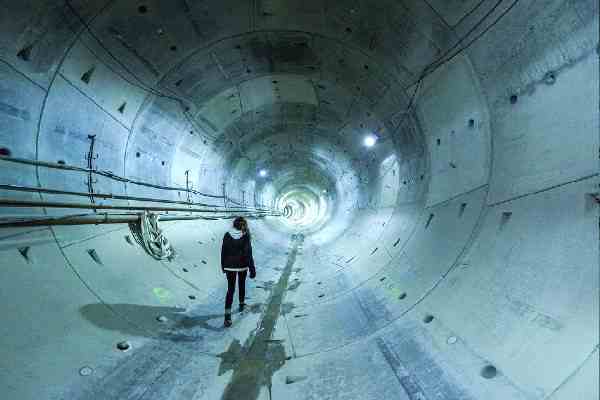
An oppressive culture is like a dark tunnel. When we look into the tunnel, all we see is darkness. To see the light, we must turn around and look at the light. This analogy describes the challenge of perceptual tunnel vision and mass hallucination.
Perceptual tunnel vision happens when the mind narrows around one belief, one fear, one story, or one group identity. The person may still think they are seeing clearly. But they are only seeing what the tunnel allows them to see.
Mass hallucination effects happen when many people share a similar distorted way of seeing reality. The belief feels normal because everyone inside the same cultural tunnel repeats it. That does not make the belief true. It only makes the distortion harder to notice.
Inner Work Gate Notice:
It may increase discomfort before resolution. The material examines identity attachments, inherited beliefs, fear-based thinking, group conditioning, and the psychological patterns that can restrict perception. Emotional stability should be established before engaging this material. This article is not designed for immediate calming. It is designed for transformation.
What perceptual tunnel vision means
Perceptual tunnel vision is a narrow way of thinking. It does not mean the eyes stop working. It means the mind stops taking in the full picture.
A person with perceptual tunnel vision may focus on one idea so strongly that other facts fade away. They may notice evidence that supports their belief and ignore evidence that challenges it. They may hear one voice loudly and fail to hear the rest of the room.
This is why perceptual tunnel vision is so dangerous. It can feel like certainty. It can feel like loyalty. It can even feel like spiritual strength. But it is often a sign that the mind has stopped looking freely.
The problem is not having beliefs. Everyone has beliefs. The problem begins when beliefs become a tunnel instead of a window.
A window lets us see more. A tunnel lets us see less.
Why the tunnel feels normal
Most people do not choose a cultural tunnel on purpose. They inherit one.
Family, religion, politics, media, and social groups all influence how people interpret reality. Over time, these influences can become so familiar that they seem invisible.
When an entire group shares the same assumptions, those assumptions can begin to feel like reality itself. This is one reason perceptual tunnel vision can be difficult to recognize.
If you would like a deeper explanation of how beliefs, assumptions, and expectations shape perception, see:
➡ How Perception Is Shaped — Mistaking Interpretation for Reality
➡ Aligning Beliefs With Truth — Objective Truth Versus Subjective Truth
Mass hallucination
This is where mass hallucination effects begin. When a whole group shares the same narrow view, the tunnel becomes culture. People repeat the same claims, fears, symbols, and enemies. The group confirms the story for itself.
Once that happens, the narrow view no longer feels like a belief. It feels like reality.
For a deeper explanation of how interpretation becomes mistaken for reality, see the article on how perception is shaped.
The main sign of perceptual tunnel vision
The main sign of perceptual tunnel vision is not disagreement. Disagreement is normal.
The main sign is the loss of open seeing.
A person caught in perceptual tunnel vision no longer asks honest questions. They only ask questions that protect the belief. They no longer seek truth. They seek proof that their side is right.
This can happen in religion. It can happen in politics. It can happen in families, workplaces, schools, and online groups. The setting changes, but the pattern is the same.
The mind becomes fixed. The story becomes protected. The person begins to defend the tunnel instead of looking for the way out.
Philosophical symptoms of perceptual tunnel vision
Philosophical symptoms affect how a person thinks, reasons, and searches for truth.
The first symptom is only believing what already supports the belief. This is a form of confirmation bias. The person notices facts that agree with them and dismisses facts that do not. They may claim to be open-minded while only accepting information that keeps their worldview safe.
Another symptom is missing the big picture. A person may focus on one rule, one verse, one expert, one event, or one piece of evidence. They may treat that one piece as if it explains everything. But truth often requires context. When context is removed, the mind becomes easier to control.
A third symptom is loss of intellectual empathy. This does not mean agreeing with everyone. It means being able to understand how another person sees the issue. When intellectual empathy disappears, other people are no longer seen as people with reasons. They become threats, fools, sinners, enemies, or outsiders.
Another symptom is ethical narrowness. The person may defend one rule while ignoring the harm caused by applying that rule blindly. They may say they are standing for morality, but they fail to ask who is being hurt.
The final philosophical symptom is the closed-system worldview. This happens when a person believes their current system already contains every important answer. New facts are treated as danger. Questions are treated as rebellion. Doubt is treated as weakness.
When this happens, the person is no longer seeking truth. They are guarding the walls of the tunnel.
Sociological symptoms of perceptual tunnel vision
Sociological symptoms affect how people relate to groups, institutions, and society.
The most obvious symptom is us-versus-them thinking. The person begins to divide the world into the good group and the bad group. Their own group is seen as pure, chosen, awake, patriotic, faithful, or righteous. Other groups are seen as dangerous, corrupt, evil, stupid, or less human.
This kind of thinking creates fear. Fear makes the tunnel stronger.
Another symptom is exclusion and blame. Complex problems are reduced to one enemy. Instead of asking what caused the problem, the group asks who should be blamed. This makes it easier to ignore history, poverty, power, trauma, propaganda, and other real causes.
Institutional rigidity is another symptom. Schools, churches, governments, businesses, and social groups can all become trapped in old patterns. The system keeps repeating the same actions because its leaders cannot see outside the old frame. New ideas are rejected before they are understood.
A fourth symptom is missed social opportunity. Different people often bring different knowledge. A healthy culture can learn from that difference. A tunnel culture cannot. It treats difference as danger instead of strength.
This is why perceptual tunnel vision damages communities. It does not only narrow one person’s mind. It narrows the shared space where people must solve problems together.
For a deeper discussion of group identity and social division, see the article on moving from a tribal mindset to a universal mindset.
Spiritual symptoms of perceptual tunnel vision
Spiritual symptoms affect purpose, meaning, humility, and connection.
One symptom is spiritual self-absorption. A person becomes so focused on their own salvation, purity, awakening, mission, or spiritual status that they stop seeing the needs of others. The path becomes self-centered even when it uses spiritual language.
Another symptom is fixation on doctrine. This happens when a belief becomes more important than truth, compassion, or direct experience. The person may reject anything that does not fit the doctrine. They may confuse loyalty to a teaching with loyalty to reality.
A third symptom is loss of gratitude and wonder. When the mind is trapped in fear, anger, guilt, or certainty, it stops noticing the mystery of life. It may become obsessed with enemies, signs, punishments, prophecies, or rules. The wider beauty of life disappears from view.
Another symptom is unreceptivity to the signs of the times. This does not mean chasing every trend. It means being able to notice when old answers are failing. A spiritually mature person can ask whether a belief still produces wisdom, compassion, honesty, and growth.
A spiritually trapped person cannot ask that question. The belief must be defended even when it no longer produces good fruit.
For a deeper discussion of fear-based beliefs, see the article on religious cognitive distortions and fear-based beliefs.
How mass hallucination effects spread
Mass hallucination effects occur when large groups of people reinforce the same assumptions, fears, narratives, or beliefs. The more often the story is repeated, the more normal it appears.
Over time, people may stop examining the belief and simply assume it is true because everyone around them accepts it.
Several articles explore the mechanisms behind this process in greater detail:
➡ Religious Cognitive Distortions and Fear-Based Beliefs
➡ Why Unbelief Is Necessary to Make Belief Possible
➡ Misrepresentations and Misconceptions in Spiritual Exploration
How religion can create perceptual tunnel vision
Religion can give people comfort, meaning, ritual, and community. But organized religion can also create perceptual tunnel vision when it teaches people not to question.
The danger begins when a belief cannot be examined. A claim may be called sacred, but that does not make it true. A story may be old, but that does not make it factual. A tradition may be powerful, but that does not make it harmless.
When religious claims are protected from evidence, the mind learns to split reality in two. One part is allowed to be questioned. The other part is protected by fear, guilt, authority, or group pressure.
This creates a tunnel.
Inside that tunnel, myths may be treated as history. Social rules may be treated as divine law. Prejudice may be treated as morality. Control may be treated as love.
This is why religious tunnel vision is so difficult to escape. The belief is not only an idea. It becomes tied to family, identity, fear of death, fear of punishment, and the need to belong.
For a deeper look at myths, historical claims, and religious misrepresentations, see the article on misrepresentations and misconceptions in spiritual exploration.
How politics can create perceptual tunnel vision
Politics can also create perceptual tunnel vision.
A political group may train people to see every issue through one story. The leader is always right. The other side is always corrupt. The group is always under attack. Any criticism is fake. Any evidence against the group is part of the enemy’s plan.
This kind of thinking does not create informed citizens. It creates followers.
Political tunnel vision often uses fear. It tells people that they are losing their country, their freedom, their children, their religion, or their way of life. Then it offers one group, one leader, or one ideology as the answer.
Once fear takes control, the person may stop asking whether the claims are true. They only ask whether the claims protect the group.
That is how democracy weakens. People stop caring about truth, fairness, and shared reality. They begin to care only about winning.
Warning signs you share a mass hallucination
Perceptual tunnel vision is easier to see in other people than in ourselves. That is why self-checking matters. Group dynamics make the mass hallucination provide a sense of belonging.
A belief may deserve closer examination when:
- Questioning it makes you feel afraid, guilty, or disloyal.
- Critics are attacked instead of answered.
- Evidence is ignored because it comes from the wrong group.
- The belief requires you to excuse cruelty or dishonesty.
- You feel certain before you have looked at the facts.
- You repeat slogans more often than you ask questions.
- You cannot explain the other side fairly.
- Your group identity matters more than truth.
- You feel pressure to protect the belief from examination.
- The belief makes you less compassionate, less honest, or less free.
These warning signs do not prove that every belief is false. They show that the belief may be functioning like a tunnel.
A healthy belief can face questions. A fragile belief needs protection from questions.
How to begin turning around
Recognizing the symptoms of perceptual tunnel vision is only the first step.
Learning how to examine beliefs, identify harmful programming, evaluate evidence, and change long-standing thinking patterns requires additional tools and practices.
The following articles provide practical methods for that work:
➡ Developing Problem-Solving Skills Through Critical Thinking
➡ Aligning Beliefs With Truth — Objective Truth Versus Subjective Truth
➡ Why Unbelief Is Necessary to Make Belief Possible
➡ Religious Cognitive Distortions and Fear-Based Beliefs
➡The Core Process For Repairing Harmful Thinking, Beliefs, and Values
The purpose of this article is not to teach those methods. Its purpose is to help you recognize the warning signs that suggest you may be looking at reality through a tunnel rather than through a wider lens.
How to begin turning around
The way out of perceptual tunnel vision begins with one simple act: turn around.
Turning around means becoming willing to see what the tunnel has hidden. It means asking better questions. It means noticing when fear, loyalty, or identity is controlling what you allow yourself to see.
This does not require rejecting every belief at once. It requires honesty.
Start by asking:
- What am I not allowed to question?
- Who benefits if I keep believing this?
- What facts have I been trained to ignore?
- What would I notice if I were not afraid?
- Does this belief make me more honest, more kind, and more free?
These questions open the mind without forcing an answer. They create space. That space is where clearer seeing begins.
For a deeper method of testing beliefs, see the article on aligning beliefs with truth.
Why critical inquiry matters
Critical inquiry is one of the best tools for escaping perceptual tunnel vision.
Critical inquiry does not mean being cold, harsh, or cynical. It means caring enough about truth to examine claims carefully. It means asking whether a belief is supported by evidence. It means being willing to change when the facts require change.
A tunnel teaches people to defend the old answer.
Critical inquiry teaches people to keep looking.
This is why critical inquiry is not the enemy of spirituality. It is a safeguard. It protects the mind from fear-based beliefs, false claims, group pressure, and emotional manipulation.
A belief that cannot survive honest inquiry may not deserve control over your life.
For practical tools, see the article on developing problem-solving skills through critical thinking.
Why inner work matters
Perceptual tunnel vision is not only an intellectual problem. It is also emotional.
People often defend false beliefs because those beliefs protect something inside them. The belief may protect belonging. It may protect identity. It may protect the comfort of certainty. It may protect a person from grief, doubt, or fear.
This is why facts alone do not always free people.
Sometimes the mind sees the evidence, but the nervous system still feels unsafe. The person may understand the problem but still cling to the tunnel because life outside the tunnel feels too uncertain.
Inner work helps with this deeper layer. It helps us notice the fear beneath the belief. It helps us see the old scripts we inherited. It helps us separate truth from the need to feel safe.
This is where real freedom begins. We stop fighting only with ideas. We begin healing the patterns that made the tunnel feel necessary.
For deeper support, see the articles in the Inner Work and Pattern Change category.
What freedom of thought looks like
Freedom of thought does not mean having no beliefs. It means holding beliefs in a way that leaves room for truth.
A free mind can question itself. It can listen without surrendering judgment. It can change when new evidence appears. It can admit uncertainty without feeling destroyed.
A free mind does not need enemies to feel strong. It does not need myths to be literal in order to find meaning. It does not need a group to approve every thought before the thought is allowed.
Freedom of thought is not the same as rebellion. It is not rejecting everything just to prove independence. It is the ability to see clearly, choose honestly, and live from values that have been examined.
That is the opposite of perceptual tunnel vision.
The tunnel narrows life. Freedom widens it.
Conclusion: Learning to see beyond the tunnel
Perceptual tunnel vision happens when the mind narrows around one story, one belief, one fear, or one group identity. Mass hallucination effects happen when many people share the same narrow view and call it reality.
The symptoms can appear in philosophy, society, and spirituality. They show up as closed thinking, group blame, rigid doctrine, loss of wonder, fear of questions, and loyalty to beliefs that cannot face evidence.
The answer is not to replace one tunnel with another. The answer is to learn how to see.
We begin by noticing the tunnel. Then we question what keeps us inside it. We test our beliefs. We seek better evidence. We do the inner work needed to loosen fear-based programming. We choose values that create honesty, compassion, and freedom.
The light is not deeper inside the tunnel.
The light begins when we turn around.
References
- The Structure of Scientific Revolutions, Thomas S. Kuhn.
- The Demon-Haunted World: Science as a Candle in the Dark, Carl Sagan.
- Thinking, Fast and Slow, Daniel Kahneman.
- Judgment Under Uncertainty: Heuristics and Biases, Daniel Kahneman, Paul Slovic & Amos Tversky.
- An Enquiry Concerning Human Understanding, David Hume.
- The Logic of Scientific Discovery, Karl Popper.
- How We Know What Isn’t So: The Fallibility of Human Reason in Everyday Life, Thomas Gilovich.
- The True Believer: Thoughts on the Nature of Mass Movements, Eric Hoffer.
- Escape from Freedom, Erich Fromm.
- Thought Reform and the Psychology of Totalism, Robert Jay Lifton.
- Manufacturing Consent: The Political Economy of the Mass Media, Edward S. Herman & Noam Chomsky.
- Propaganda, Edward Bernays.
- Groupthink: Psychological Studies of Policy Decisions and Fiascoes, Irving L. Janis.
- A Theory of Cognitive Dissonance, Leon Festinger.
- The Righteous Mind: Why Good People Are Divided by Politics and Religion, Jonathan Haidt.