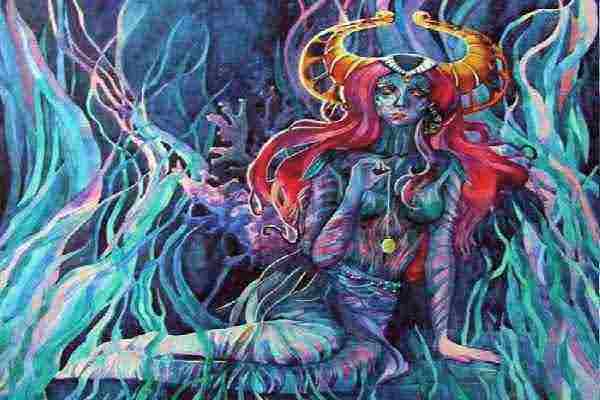
Rebirth symbols contain ideas older than any culture, yet the meaning we project comes from us. If that’s true, then the real mystery isn’t the symbol at all — it’s what and why we project what we do. Want to find out?
Symbols of rebirth look stable on the surface, but they never land the same way for any two people. Each one holds a long‑shaped idea, yet our mind adds its own fear, hope, memory, or desire the moment we look at it. That blend is where meaning starts to shift.
So the real work is seeing the split: what these symbols carry on their own, and what we project from them without even noticing. To make that clear, we begin with the image at the top of this article — and what you saw in it before you knew why.
Inner Work Gate:
This article examines projection, inherited beliefs, and identity structures. It may increase discomfort before clarity as familiar narratives are questioned. Emotional stability should be established before engaging deeply.
The meaning we project from the cover image
Rebirth symbols contain the oldest stories humanity tells itself. Every culture, religion, and philosophy has its own way of defining when a person transforms into something new. At the heart of all myths and symbols is a key idea: rebirth means waking up inside.
Look at the primary image of this article. Some people see a maiden sitting peacefully in the grass. Others see a demon surrounded by blue flames. The same image — two radically different interpretations.
This is the power of symbolism. They don’t hand us meaning. They show us what we’re projecting.
The mind is a symbolic engine. The world is a symbolic mirror.
To transform the world, we must begin with ourselves, and what is important in beginning with ourselves is the intention. It is important to understand that this is our responsibility, yours and mine… — Jiddu Krishnamurti
Rebith = typology
What you see in the image shows your worldview, feelings, beliefs, and hidden patterns. This is why rebirth imagery is so potent. It bypasses logic and speaks straight to the psyche. The symbol is the encapsulates the type or pattern that you project into it.
Rebirth is always personal before it becomes universal. So the real question isn’t whether there are only two interpretations — it’s how many parts of you are speaking when you look at it. In the end, we learn to protect the meaning we project in symbols and beliefs.
How rebirth symbols contain universal meaning
The symbols of rebirth are universal. They express the same psychological fears and desires found in every human being. The fear of ending. The desire for continuity. The hope that identity can survive change. These impulses come from us, not from culture.
Different cultures simply choose the expression that fits their cosmology:
Cosmologies of return — reincarnation, ancestral presence
Ritual transformations — initiations that mark the death of an old self
These aren’t the same things — they’re different cultural answers to the same internal tension. Each tradition picks the version that fits its beliefs, rules, and what it can teach, keep, or sell.
But beneath all these variations lies one truth: the symbols of rebirth don’t reveal the structure of the universe. They reveal the structure of our psyche — the part of us that cannot bear the idea of ending without becoming something new.
If all rebirth symbols contain similar inner tension, studying one helps us understand the meaning we project. The phoenix is the most transparent example.
The phoenix: A universal blueprint for awakening
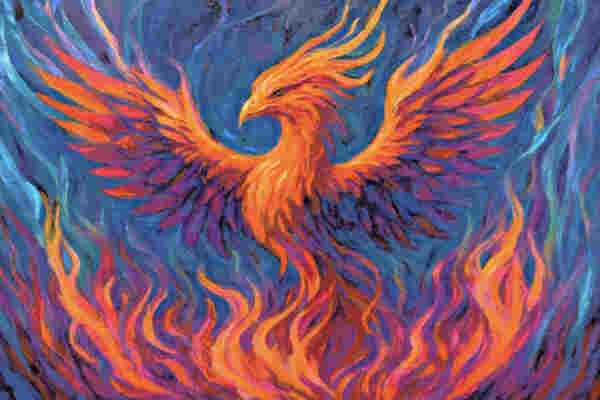
Before we look at the phoenix across cultures, it helps to remember why this symbol endures at all. Few images capture the psychology of inner transformation as sharply as this one:
You must be ready to burn yourself in your own flame. How could you become new if you haven’t first become ashes? — Friedrich Nietzsche
People often connect this quote to the phoenix, and for good reason. The phoenix is one of the clearest metaphors for inner transformation:
It burns from within.
It collapses into ash.
It rises as something new.
The phoenix does not die. It transforms.
Ancient cross-cultural variations, same inner pattern
| Tradition | Symbolic Focus |
|---|---|
| Greek | Immortality through cycles |
| Egyptian | Renewal and cosmic order |
| Chinese (Fenghuang) | Harmony, balance, yin–yang integration |
Different cultures emphasize different aspects of symbolism. However, the psychological blueprint remains the same. The old self must dissolve for the new self to emerge.
The butterfly: transformation hidden from view
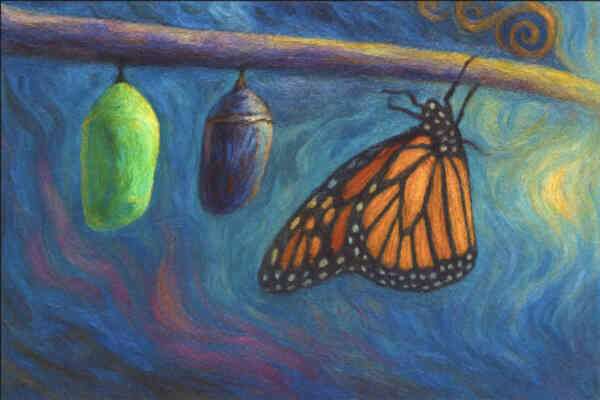
The butterfly is a powerful rebirth symbol, but it carries a different psychological emphasis than the phoenix. The phoenix is flashy and obvious. On the other hand, the butterfly signifies a transformation that unfolds quietly, unseen by others.
The caterpillar disappears into the chrysalis — a private, unseen dissolution. No one witnesses the struggle. No one sees the breaking down of what was.
This mirrors the inner work of awakening. The world sees the before and the after. The transformation itself happens in solitude.
Rebirth is always an interior event before it becomes an exterior expression. The butterfly reminds us that the most profound changes are the ones no one else can see while they’re happening.
Why we protect the meaning we project
Many religions and spiritual systems are built around myths of life after death. These include reincarnation, heavenly realms, and perfected future selves. These rebirth symbols tell stories. They provide comfort and continuity. Also, they help ease the fear of endings. But none of them describe what rebirth actually points to.
Rebirth is not about the afterlife.
It is not about returning as another being.
It is not about resurrecting a perfected version of yourself.
Rebirth is the moment you stop living from inherited beliefs and start living from direct awareness. It is the moment the observer awakens — the shift from unconscious identification to conscious seeing.
Ego isn’t destroyed — it’s repositioned
We are not born with the ego in control. Our natural state is innocence — open, receptive, unconstructed. But as we acclimate to our bodies and begin navigating the world, the ego rushes in to take charge. Instincts, personality, and survival strategies form quickly. Awareness often ends up in the backseat.
Awakening requires a reversal of this arrangement:
The ego becomes a tool.
The observer becomes the center.
Rebirth is the moment you realize you are not the story. You are the one who is aware of the story.
Burning away belief: the fire of awakening
Fire appears in many rebirth symbols because it represents the same inner process: the dissolution of what can no longer remain.
The phoenix burns in its own flame, collapsing into ash so a new form can emerge. Its fire is the refusal to carry the old self forward. The burning bush reveals truth through heat and illumination — a symbol of clarity so intense it strips away illusion.
The cremation pyre reduces the body to its essence, reminding us that everything temporary must be surrendered. The inner flame consumes what is false from within, a quiet but relentless heat that exposes self-deception.
The alchemical furnace splits matter apart. This allows for recombination at a higher order. It mirrors the psychological breakdown needed for awakening.
Different images, same meaning: fire destroys what is no longer true, so something more authentic can emerge.
To awaken, the same burning must happen within. Inherited beliefs, cultural myths, and unchallenged ideas need awareness. They form the structures that keep the ego in control and the observer unaware.
This is the frightening part of rebirth. It feels like losing everything. But what you lose is only what was never truly yours.
When belief burns away, clarity emerges.
Awakening today viewed as a process
Modern rebirth is not a ritual, a ceremony, or a mystical event. It begins in the ordinary moments of your life — the quiet, unsettling recognition that the worldview you inherited no longer fits. You start noticing the stories you were taught to believe, the truths you avoided, the identities you clung to out of habit. Something in you begins to loosen.
Awakening often looks like letting an old self collapse. It looks like questioning what once felt unquestionable. It looks like discovering a deeper, quieter awareness beneath the noise — an awareness that has been there all along, waiting for space.
Rebirth today is not dramatic. It is honest. It is the moment you stop pretending.
But this moment is not the end of the process. Rebirth is not a single event. It is a rhythm. We shed layers, outgrow versions of ourselves, and awaken again and again. The symbols we inherit—phoenix, butterfly, resurrection, reincarnation—don’t mean the afterlife literally. They have deeper meanings. They are metaphors for the inner cycles that shape a human life.
Once you grasp that these symbols show typologies, you notice them everywhere. You see them in your losses, breakthroughs, and unexpected identity shifts. They appear in sudden moments of clarity and in the quiet fading of beliefs you once thought were permanent.
Rebirth is not something that happens to you. It is something you participate in. It is the ongoing practice of becoming more awake, more aware, and more fully yourself.
How we project meaning onto people
Everything in this article has been about symbols, but the mechanism doesn’t stop there. We don’t just project meaning into rebirth symbols — we project meaning into people. We meet someone and instantly see a type, a category, a role we’ve been taught to expect. We don’t see the person. We see the representation.
The projection feels accurate because it comes from inside us.
The meaning feels inherent because we never question its source.
But it isn’t inherent.
It’s inherited.
If your beliefs are shaped by fear, bias, or old wounds, you’ll see the demon surrounded by blue fire instead of the maiden in the grass. The image doesn’t change — your interpretation does. What you perceive in another person is determined by the meaning you project, not the reality in front of you.
This is why awakening matters.
It’s not just about symbols.
It’s about how much of your world is made up of unexamined projections. This is especially true for the people you love, those you fear, and those you’ve never really seen.
Rebirth begins when you stop confusing your projections with the person standing in front of you.
The real invitation of rebirth
When you realize how much meaning you give to symbols and people, rebirth turns from an abstract idea into a personal responsibility.
Rebirth symbols contain universal psychological triggers. It was never about the afterlife. It was never about cosmic cycles or mythic creatures returning from the dead. Every symbol—phoenix, butterfly, fire, resurrection—points to the same idea. It’s about stopping the old stories you inherited. Instead, start living from the awareness that recognizes them.
Awakening is not a single transformation. It is the ongoing willingness to let old identities fall away, to burn through what is false, and to meet yourself with increasing honesty. The symbols endure because the process endures. We are always dissolving, always emerging, always learning to see more clearly.
Rebirth is not something promised to you. It is something practiced by you. It is the lifelong work of becoming the one who is awake within your own life.
References
- Typology. Stanford Encyclopedia of Philosophy.
- Friedrich Nietzsche. Stanford Encyclopedia of Philosophy.
- Stories and the Brain: The Neuroscience of Narrative. Frontiers in Psychology.
- Symbolic Processing in Human Cognition. Frontiers in Psychology.
- Terror Management Theory and Symbolic Meaning. Personality and Social Psychology Review.
- Carl Jung. Stanford Encyclopedia of Philosophy.
- Phoenix. Encyclopaedia Britannica.