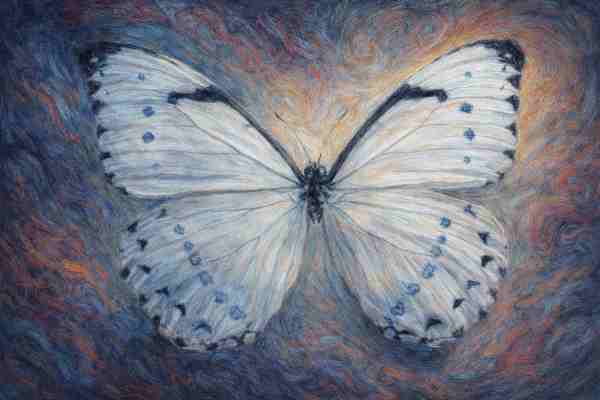
Butterflies are underappreciated. They are a living example of a closed-loop process—one that hides more than it reveals. The butterfly transformation process points to something deeper than beauty or change. It points to the underlying process, symbolism, and change mechanism.
Understanding what transformation really requires helps explain why most people never complete it. After reading this article, the hidden symbolism will take on a different meaning.
Hopefully, you won’t see butterfly metamorphosis as an empty label. You will understand the symbolism behind it as machinery. It is something that can be operated and applied to produce a desired outcome.
Inner Work Gate Notice:
It may increase discomfort before resolution. The exercises are designed to examine and restructure belief patterns, identity structures, or emotional resistance. Emotional stability should be established before engaging this material. This article is not designed for immediate calming. It is designed for transformation.
Transformation process before meaning
Before assigning symbolism to the butterfly, it helps to understand the process itself. Not the simplified version, but what actually happens.
A butterfly goes through four distinct stages: egg, caterpillar, chrysalis, and adult. Each stage is necessary, and none can be skipped or replaced.
The tendency is to focus on the stage, not the mechanism that causes it to exist.
The egg represents the beginning. Everything needed is already present, but nothing has developed yet. It is pure potential, waiting for the right conditions.
The caterpillar stage is defined by growth. Its only job is to eat, expand, and shed what no longer fits. It constantly consumes, and as it grows, it outgrows its current form again and again. Even at this stage, growth requires change.
Then comes the chrysalis, which is where the process becomes difficult to understand.
The hidden change mechanism
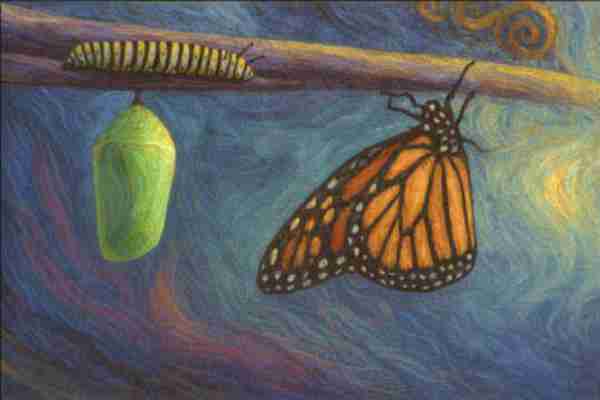
The stages are snapshots that overlook the mechanisms behind them
From the outside, it appears still. Nothing seems to be happening. But inside, the structure of the caterpillar is breaking down. The butterfly transformation process dissolves all previous forms. What it was no longer exists.
From that breakdown, something new is formed.
When the butterfly finally emerges, it still has one more challenge. It must struggle to break free from the chrysalis. That struggle is not a flaw in the process—it is what allows the butterfly to survive. Without it, the wings do not develop properly, and it cannot fly.
Where the process symbolism comes from
Once the process is understood, the symbolism and change mechanism it represents begin to take on real meaning.
The butterfly transformation process is not simply a symbol of beauty or change. It represents a specific kind of change—one that involves stages, pressure, and a complete shift in structure. We only see the finished stages, not the hidden inner work that goes on to make the change possible.
Maria Sibylla Merian was a naturalist. She observed, recorded, and illustrated the complete metamorphosis of the butterfly. Her work, The Wonderful Transformation and Singular Flower Food of Caterpillar. was published in 1679. It disproved the idea of spontaneous generation of butterflies.
The symbolism and change mechanism revealed
We can see these stages: the egg, different caterpillar instars, and the chrysalis. We can’t see the capacities or mechanisms in the process without the right observational awareness.
The process is a loop. The egg can’t be the beginning, as the egg must be fertilized first by a male and a female. Does it begin with two butterflies incubating the eggs? No. There must be two butterflies first. It can’t be the caterpillar either because it comes from the egg.
It is a closed-loop process that evolved from earlier moths. Moths are an even more primitive structure without scaled wings or a proboscis for nectar feeding. The moth uses this same process.
In many traditions, the butterfly became a symbol of the soul. Not because of how it looks, but because of what it goes through.
Human parallel to the butterfly transformation process
The stages of butterfly metamorphosis provide a metaphor that relates to human development. Each stage involves capacities and mechanisms that are hidden inner work processes.
We must have the appropriate level of awareness and observational skills to grasp these change processes in action. Psychometric tools provide glimpses of these hidden transitional forms. They capture it in data we can graph or measure.
The human parallel with the egg is the realization that something needs to change, even if nothing has changed yet. The potential is there, but it has not been acted on.
If we grow enough, we become the first stage instar of the caterpillar. This growth is not automatic. You don’t grow because you get older.
The next phase resembles the caterpillar. This is where people seek out knowledge, explore ideas, and begin to grow. They consume information, experiment with new ways of thinking, and start shedding beliefs that no longer fit.
But growth alone is not transformation.
The chrysalis stage is the last stage. It requires more than learning or improvement. It requires breaking down the structure you have been operating from. If your identity, assumptions, and patterns are no longer reinforced, they can and should be dismantled.
The metaphor of the butterfly transformation overlooks the destruction of these internal systems. But they must be dismantled to make room for the new.
This mechanism is internal, often invisible, and not easily explained to others. From the outside, it can look like nothing is happening. In reality, everything is changing.
The final stage is not about becoming a better version of what you were. It is about becoming something different. The structure has changed, and with it, the way you move through the world.
The part that creates resistance
The most difficult part of this process is not understanding it. It is accepting what it requires.
The use of inner work processes often causes discomfort before reaching stability. The discomfort of true transformations is the primary reason many people stay in the egg or caterpillar form of development.
The caterpillar does not become a better caterpillar. It dissolves. That is what allows the butterfly to exist. The process’s symbolism is inherent but subtle.
Most people want change without that level of loss. They want to add something new while keeping everything they already are. They want the outcome without the disruption.
But transformation does not work that way.
Adding new beliefs or habits on top of an unchanged structure does not create something new. It creates a version of the same thing with different labels.
This is where many systems fall short. They offer identity instead of transformation. They provide a framework to belong to, but they do not require the deeper process that leads to real change.
Why most people stay where they are
It is easy to remain in the earlier stages because they feel productive. Learning, exploring, and growing can continue indefinitely without requiring a fundamental shift. They remain an instar stage of a caterpillar.
Neither time nor age provides the impetus to grow. Some children are butterflies, while some adults remain eggs.
Moving beyond your current level requires entering the stage where things begin to break down, and that is where resistance shows up. It feels uncertain, uncomfortable, and difficult to control.
So most people stop before they get there. In this way, people are like butterflies. Only one out of one hundred eggs develops into a butterfly. The rest perish along the way.
The role of struggle
Even at the final stage, the process does not become effortless.
The butterfly must struggle to leave the chrysalis, and that struggle is essential. It strengthens the wings and prepares the butterfly for what comes next. Without it, survival is not possible.
This is not separate from transformation. It is part of it.
The same principle applies to personal change. The resistance, the difficulty, and the pressure are not signs that something is wrong. They are part of what allows the next stage to function.
What this points to
In many cultures, the butterfly’s transformation symbolizes the soul, change, and the cycle of life and death. These interpretations vary in detail, but they share a common understanding of the underlying pattern.
Transformation is not simply growth. It is a shift from one state of being to another, and that shift requires more than surface-level change.
We tend to focus on the final form because it is easy to admire. What we avoid is the process that made it possible.
Final thought
As you engage in inner work, the butterfly transformation process is no longer theoretical—it becomes personal.
You can continue to grow in ways that do not challenge your current structure, or you can move into the part of the process that requires real change.
There is no shortcut between the two.
The stages of this process cannot be skipped, and the outcome cannot be separated from the process that creates it. The butterfly transformation process, symbolism, and change mechanism are inseparable.
The question is not whether transformation exists.
The question is whether you are willing to go through it.
References
- Metamorphosis: The Butterfly Life Cycle and Development, National Institutes of Health.
- Insect Metamorphosis and Developmental Biology, National Library of Medicine.
- The Wonderful Transformation and Singular Flower Food of Caterpillars, Maria Sibylla Merian.
- The Hero with a Thousand Faces, Joseph Campbell.
- Man and His Symbols, Carl G. Jung.
- The Structure of Scientific Revolutions, Thomas S. Kuhn.
- Developmental Stages and Identity Transformation, National Institute of Mental Health.
- Neuroplasticity and Behavioral Change, National Institutes of Health.
- Metamorphosis, Wikipedia.
- Butterfly, Wikipedia.