Our comfort zone can become the twilight zone. Its transformation is silent. Nothing there looks wrong. Rest, routine, and familiar places are good for you, and everyone needs them. The trouble starts when the comfort zone stops being a place to recover and turns into a place to hide. Once you learn the difference, you can find your way back out.
Most people never notice the moment it happens. Days become predictable, life stays calm, and nothing seems broken. Yet somewhere along the way, a quiet feeling settles in that life is not bad but not fully alive either. We’ll explore seven patterns that trap people in the twilight zone. Then, we’ll suggest small, realistic steps to shift from autopilot to a life that feels awake and intentional.
Inner Work Gate:
This article explores patterns of avoidance and comfort that limit growth. It may increase discomfort before clarity as familiar habits are challenged. Emotional stability should be established before engaging deeply.
The Twilight Zone becomes the comfort zone
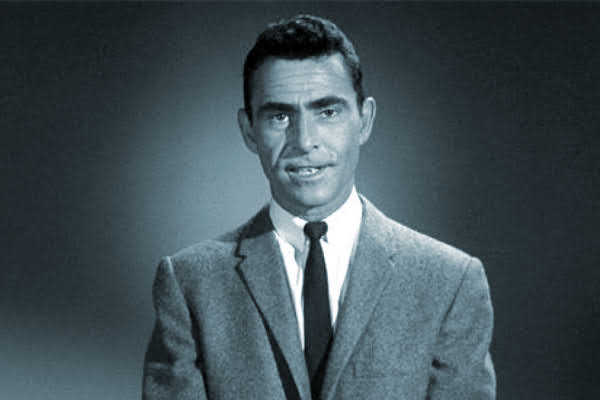
In 1959, Rod Serling created a television show called The Twilight Zone. He described this strange place as a land of both shadow and substance. Each episode dropped ordinary people into situations where something was not quite right. Life looked normal on the surface, but underneath, the rules had shifted.
Many of us live in a quieter version of that place. Think about a man named Marcus. He has worked at the same job for twelve years. He eats the same lunch, drives the same route, and watches the same shows each night. If you asked him how he was doing, he would say “fine,” and he would mean it. Nothing in his life is broken. But when Marcus tries to remember the last time he felt excited about something, he comes up empty.
Marcus is not in crisis. His comfort zone has become The Twilight Zone, where days blur together, and the highs and lows have flattened into a steady hum. The hardest part about this place is that it does not feel like a trap. It feels like stability.
A resting place or a hiding place
The comfort zone is not your enemy. Your mind and body need familiar places to rest, recover, and feel safe. After a hard week, a quiet evening at home is not avoidance. It is how you refill the tank.
The difference lies in what the comfort zone is doing for you. A resting place gives you energy so you can return to the world. A hiding place keeps the world away. When you rest, you come out stronger. When you hide, the walls slowly move closer, and the space you live in gets smaller without you noticing.
You can often tell which one you are in by asking a simple question:
Am I choosing this, or am I avoiding something?
Marcus chose his routines years ago, and they once made his life easier. Somewhere along the way, though, they stopped being choices. They became the reason he never applied for the new position. He kept thinking about signing up for the pottery class but never did. He also never told his manager that he was bored with his work.
Underneath most hiding, there is fear. It may be fear of failing, fear of change, fear of looking foolish, or simple fear of the unknown. The comfort zone soothes that fear by asking nothing new of you. That relief feels good, so you come back to it again and again.
➡ For more, see: Decoding The Fear And Fascination With The Unknown
How autopilot takes over
Your brain loves patterns it already knows. Familiar routines take less energy, so the brain is happy to repeat them forever if you let it. This is helpful when you are brushing your teeth or driving a road you know well. It becomes a problem when whole days start running on the same setting.
The autopilot mindset is like a trout drifting with the current. Fighting the water takes energy, so the fish lets the stream decide where it goes. People do the same thing. You do not decide to spend an hour scrolling.
You open an app for a minute, and the current carries you the rest of the way. Over weeks and months, that drift becomes a way of life. Curiosity fades because nothing new comes in. Risk starts to look pointless, and even small changes begin to feel like interruptions rather than chances.
➡ For more, see: Why You Act Like a Trout: Reflex Loops Steering Behavior
Autopilot also changes how you feel. When every day looks the same, your emotions settle into a narrow band. You may have fewer bad days, but you also have fewer good ones. Small signals that something in you wants to change get swallowed by the routine before they can reach the surface.
The comfort zone shapes your thinking, too. Old ideas about what you can and cannot do run quietly in the background. Often, many of them were handed to you by family, culture, or the belief systems you grew up with. Over time, those inherited scripts can become invisible walls around your thinking, and they deserve a closer look of their own.
➡ For more, see: Identifying Self-Limiting Thinking
➡ For more, see: Challenging Inherited Thinking: Outgrowing Traditional Beliefs
Seven ways the comfort zone turns into a trap
The comfort zone rarely traps people all at once. It works through small patterns that each seem reasonable on their own. You may recognize one of the seven below, several of them, or your own version of them. Noticing them is the first step toward change, and each one comes with a healthy shift you can try.
1. Complacency: going along to get along
The opposite of courage in our society is not cowardice, it is conformity. — Rollo May
Complacency is the feeling that “this is just how things are,” even when something inside you knows better. You stop asking questions and stop picturing other options. You say yes on the outside while a quiet no sits on the inside—that’s a signal you’ve entered The Twilight Zone.
Marcus knows this feeling well. In meetings, he often disagrees with a plan, but everyone else seems on board, so he stays silent. Going along feels safer than standing out. It is the same schooling instinct that keeps trout turning together in a tight group, where no fish wants to be the one swimming alone. Its cost is slow and easy to miss. Each time you go along, you trade away a little of your real self and a little of your time, and neither one comes back.
Healthy shift: from conformity to authenticity. Start with an honest look at your own life. Ask yourself:
- Where am I going along just to avoid conflict or discomfort?
- Where do I feel a quiet “no” inside but keep saying “yes” on the outside?
Write down the places where you are going along instead of choosing. Then pick one small, safe action that lets more of the real you show. It might be sharing one honest opinion in a meeting, changing a routine that no longer fits, or turning down one request you do not want to accept. Small acts like these build the courage you will need for bigger ones.
2. Weariness and self-doubt: feeling defeated
You may encounter many defeats, but you must not be defeated. — Maya Angelou
Weariness creeps in when life starts to feel like a list of chores instead of a journey. Over time, you may begin to question your abilities, your worth, or your direction. Self-doubt can become so familiar that it starts to feel like part of who you are.
In this state, it is easy to slip into phrases like “Why bother?” or “This is just who I am.” They sound like honesty, but they work like a shield. If you never try, you can never fail. That bargain keeps the comfort zone safe, but it also keeps every door closed. The voice behind these phrases was learned, and it is not a fact about who you are.
Healthy shift: reconnecting with joy. Think back to a specific moment when you felt alive, hopeful, or proud of yourself. Write down what you were doing, who you were with, and how it felt in your body. Then let that feeling stay with you for a minute. You are not trying to live in the past. You are reminding yourself that the ability to feel joy and bounce back is still inside you. From there, a small step forward feels much more possible.
➡ For more, see: Overcoming The Self-Doubt Mindset and Negative Thinking Patterns
3. Boredom: when desire goes quiet
Boredom: the desire for desires. — Leo Tolstoy
Boredom is not the same as having nothing to do. Plenty of people feel bored with a full calendar. It shows up as a flat or restless feeling, a sense that you are going through the motions without really being there. Hours slip away to scrolling, channel surfing, or snacking, and when they are gone, you feel neither rested nor satisfied.
Tolstoy’s short definition gets to the heart of it. Boredom is not a lack of activity. It is a lack of wanting — that’s the Twilight Zone. The things that used to pull you forward have gone quiet, and nothing has taken their place. Researchers who study boredom describe it as a mind that wants to be engaged but cannot find anything worth engaging with.
That makes boredom useful if you listen to it. It often points to a need that is not being met, such as a need for meaning, creativity, challenge, or connection. The problem is that most of us treat boredom like an itch to scratch. We reach for more noise and more stimulation, which covers the feeling for a while but leaves the need underneath untouched.
Marcus notices this most on Sunday afternoons. He flips between shows, checks his phone, opens the fridge, and closes it again. He is not tired, and he is not busy. He is hungry for something, but he has never stopped long enough to ask what it is.
Healthy shift: introducing mindful pauses. The answer to boredom is often not more activity but more awareness. Try sitting for three minutes with no screen, no task, and no music. Just breathe and notice what you feel. Then ask yourself one question: if I could spend the next hour on anything at all, what would I choose? The answer may surprise you. Even a short pause like this can open space for old interests to return and new ones to appear.
➡ For more, see: Meta-Awareness And Inner Observation
4. Distraction: chasing every shiny thing
Focus helps you do something. Distraction makes you avoid doing anything. — Mani S. Sivasubramanian
In a world packed with alerts and headlines, distraction has become the normal state for many people. You jump from messages to videos to chats to tasks without fully landing on any of them. At the end of the day, you have been busy for hours, yet you feel scattered and unsure what you actually got done.
Distraction fits the comfort zone perfectly because it keeps you moving without ever asking you to go deep. It feels productive, but it protects you from the harder, slower work of focusing on what matters. Like a trout snapping at every flash in the water, attention gets hooked by anything new, bright, or emotionally charged. Many of those lures are designed on purpose, and each one pulls you a little further from what you meant to do.
Healthy shift: reclaiming your attention. Begin by noticing, without judging yourself, that distraction has become a habit. Then try a few small boundaries:
- Set specific times to check messages or social media.
- Turn off notifications you do not truly need.
- Choose one task and give it your full focus for a set amount of time.
Over time, you may find that doing fewer things more fully brings far more satisfaction than doing many things halfway.
5. Apathy: when nothing seems to matter
The inactive must justify their sloth by picking nits with those making an attempt. — Dave Eggers
Apathy goes deeper than putting things off. It is a loss of interest, a sense that nothing matters enough to act on. You may see clearly what needs to change in your life, your community, or the world, yet feel no energy to do anything about it.
Apathy often grows out of disappointment. If you cared about something once and it let you down, not caring can feel like protection. You cannot be hurt by losing what you never wanted. In that way, apathy becomes the comfort zone’s quietest guard. It does not argue with you or scare you. It simply makes everything seem too small to bother with.
The Eggers quote points to another side of apathy. People who have stopped trying often find fault with those who still are. This is because someone else’s effort is an uncomfortable reminder. If you catch yourself rolling your eyes at a friend’s new project, it may be worth asking what that reaction is protecting.
Left alone, apathy spreads like a vine. It spreads from work to friendships and hobbies. It wraps around every part of your life. Soon, it can block your creativity and sense of purpose.
Healthy shift: cultivating a beginner’s mind. Because apathy often has deep roots, it responds best to patient inner work.
Journaling can help you trace when the not-caring started and what happened just before it. Zen teacher Shunryu Suzuki described a “beginner’s mind” as seeing familiar things as if for the first time. Try it with something ordinary, like your walk to the car or your morning coffee, and notice details you usually skip. That small spark of curiosity is often the first crack in apathy’s wall.
➡ For more, see: The Architecture of Journaling as the First Tool
6. Lack of goals: avoiding failure by avoiding direction
It’s a lack of clarity that creates chaos and frustration. — Steve Maraboli
Life without goals can feel surprisingly comfortable. If you never decide where you are going, you never have to face the sting of falling short. You simply drift, and drifting asks nothing of you.
The trouble is that drifting has its own cost. Without direction, weeks turn into years that look the same. Frustration builds slowly, along with a feeling that life is happening to you rather than something you are taking part in. Marcus once planned to go back to school. He never decided against it. He just never decided at all, and the years kept passing.
Clear goals do more than give you a target. They give your days a shape and your choices a reason. Even a small goal changes how you move through a day, because you are heading somewhere instead of waiting.
Healthy shift: starting with small, clear goals. You do not need to plan your whole future at once. Start with goals small enough to finish soon. A helpful framework is called SMART:
- Specific: Clear and concrete.
- Measurable: You can tell when it is done.
- Achievable: Within your current time, energy, and resources.
- Relevant: Connected to something that matters to you.
- Time-bound: Tied to a clear deadline.
Here are a few examples of simple goals:
- Make your bed today.
- Smile and say something kind to the first person you see.
- Take a short walk after work.
- Take a one-hour break from social media during the day.
Every goal you finish becomes proof that you can follow through. As that proof piles up, you can stretch toward larger goals that carry more meaning.
7. Chasing the next high
He who knows he has enough is rich. — Lao Tzu
Some people handle the comfort zone in the opposite way. Instead of staying still, they keep moving, always chasing a new adventure, a bigger purchase, or a more intense feeling. At first glance, this looks like the opposite of being stuck. Look closer, though, and it often serves the same purpose. Constant excitement keeps you from sitting still long enough to face quiet questions or hard feelings.
There is nothing wrong with fun, travel, or challenge. The pattern turns unhealthy when the thrill becomes the point. Each experience fades faster than the last, so the next one has to be bigger, faster, or more extreme.
Psychologists call this comfort zone the hedonic treadmill. You keep running toward happiness, but the ground moves with you, and you end up in the same place. Adventures and achievements may pile up while the sense of fulfillment stays thin.
Part of what makes this pattern so strong is the same fear-and-fascination pull that draws people toward the unknown. Excitement and fear are close cousins. The rush of a roller coaster or a risky choice sharpens your focus and wakes up your body. Some people come to crave that intense feeling just like others crave calm.
Healthy shift: understanding your patterns and embracing simple joy. Personality frameworks like the Enneagram can help you see the core needs and fears that drive your search for intensity. Alongside that, practice noticing small, quiet pleasures, such as a slow meal, a real conversation, or a walk with no destination. Moving from chasing intensity to receiving what is already here can bring a deeper and steadier kind of satisfaction.
➡ For more, see: The Underlying Mechanisms Behind The Enneagram Personality Types
Turning a hiding place back into a resting place
If some of these patterns feel familiar, you are in good company. Most people pick up at least a few of them while trying to cope with a fast, uncertain world. The goal is not to judge yourself. It is to notice where you have more choices than you realized.
Marcus did not change his life overnight. He started by noticing. For two weeks, he jotted down the moments when he felt flat, restless, or quietly bored. Patterns showed up quickly. Sunday afternoons, long meetings, and the drive home were his low points. Then he picked one small change. On the drive home, he turned off the radio and let himself think. A month later, he finally called the community college about the program he had been putting off for so long.
That is how the walls move back out. You notice a pattern, test one small change, and pay attention to what happens. A simple way to sort your options is to ask what you want to start, what you want to stop, what is working well enough to continue, and what you should avoid. The answers turn a vague wish for change into a clear next step. When a pattern runs deeper than habit, a step-by-step process for finding and replacing the old belief underneath can help.
Through all of this, the comfort zone does not disappear. It changes jobs. It’s not just a place to escape life. It’s a base camp. You rest there between climbs. It’s where you go back after trying something new.
➡ For more, see: Correcting Misjudgment Using Start, Stop, Continue, and Avoid
➡ For more, see: The Core Process for Repairing Harmful Thinking, Beliefs and Values
Conclusion
The comfort zone is meant to be a place to recover, not a place to live forever. When it turns into a hiding place, you end up in the Twilight Zone of the comfort zone. Days can blur together, and everything seems fine, but nothing feels fully alive.
Complacency, self-doubt, boredom, distraction, apathy, drifting, and thrill-chasing keep you there. You can spend your life there and drift with the current, realizing too late that your comfort zone has become The Twilight Zone.
Finding your way out does not require a dramatic leap. It asks for honest noticing, a little courage, and one small step at a time. With each step, the walls move back, the world grows a little larger, and the life you are living starts to feel like one you chose.
References
- Psychological Flexibility as a Fundamental Aspect of Health. Clinical Psychology Review.
- The Unengaged Mind: Defining Boredom in Terms of Attention. Perspectives on Psychological Science.
- The Strength Model of Self-Control. Current Directions in Psychological Science.
- Goal Setting and Task Performance: 1969–1980. Psychological Bulletin.
- Beyond the Hedonic Treadmill: Revising the Adaptation Theory of Well-Being. American Psychologist.
- Apathy: A Neuropsychiatric Syndrome. The Journal of Neuropsychiatry and Clinical Neurosciences.
- Zen Mind, Beginner’s Mind. Shunryu Suzuki.
- The Twilight Zone (1959–1964). Created by Rod Serling. CBS.
About this project
The Seeker Project 4 Spiritual Exploration (SP4SE) is a project of Americans In Alliance. The mission of SP4SE is spiritual education. The mission of Americans In Alliance is environmental conservancy. Click the links below to learn more and support our efforts.