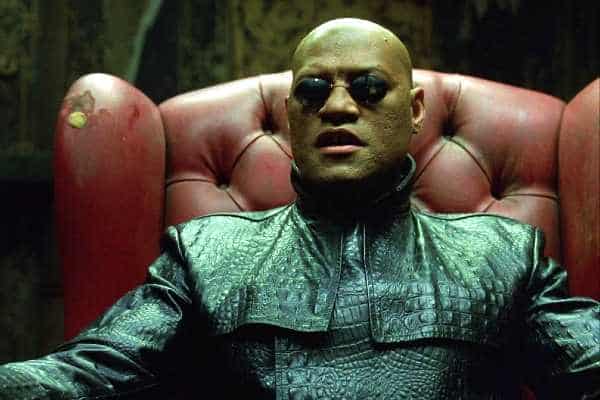
The Matrix movies tell a story about people who are asleep to reality without knowing it. When we look closely at the symbolism in the Matrix movies, we find a map of how ideas, beliefs, and systems can shape the way we see the world. Each pill, rabbit, mirror, and character points to something we can recognize in our own lives.
On the surface, the films are action movies filled with chases, fights, and special effects. Underneath, they ask a much older question. How do we know that what we see is real, and how much of what we believe was handed to us by someone else?
Inner Work Gate:
This article asks you to examine beliefs, habits, and ideas that may have shaped how you see yourself and the world. Questioning familiar beliefs can bring up discomfort or uncertainty. Make sure you feel steady before going deeper, and take a break if the process becomes overwhelming.
Many people sense that the Matrix movies are more than entertainment. The symbols work like mirrors. When we understand what they stand for, we can begin to see the same patterns in our families, schools, media, and culture. We can also ask whether we are living with awareness or simply repeating patterns we never chose.
Exploring the symbolism in the Matrix movies
In the first film, Thomas Anderson lives an ordinary life. He works at a software company by day and works as a hacker named Neo by night. Something about his world feels wrong, but he cannot say what it is. Then he learns the truth. The world he knows is a computer program. His real body lies asleep in a pod, while his mind lives inside a dream built by machines.
The story works so well because most of us have felt a smaller version of that moment. Maybe we realized that something we were taught as children was not quite true. Maybe a belief we never questioned suddenly looked different. In that moment, we glimpsed the frame around our thinking for the first time.
Culture can work like that frame. From a young age, we learn what success looks like, who to trust, and what to fear. These lessons come from family, school, religion, media, and the people around us. Over time, they become so familiar that we stop noticing them. They begin to feel like the way the world simply is.
The Matrix movies give that hidden frame a picture. The machines did not need chains to control people. They only needed people to believe the dream was real. Once Neo sees the program, he cannot unsee it. The same can happen to us when we begin to notice the beliefs running quietly in the background of our own minds.
Seeing the frame does not mean we must reject everything inside it. It means we can begin to choose. Some beliefs may still make sense after we look at them closely. Others may not. The difference is that we get to decide instead of accepting them without thought.
➡ For more, see: Mental Conditioning and Social Programming: Layers of Influence
➡ For more, see: How Mental Conditioning and Brainwashing Shape Beliefs
How symbolic language programs belief
The Matrix movies are a series of stories told almost entirely through symbols. That is one reason it stays with people long after the credits roll. The symbolism speaks to the imagination before logic has a chance to step in. The films use several kinds of symbolic language, and each one shows how easily images and comparisons can shape what we believe.
Analogy
An analogy compares one thing to another to make an idea easier to understand. The whole film is built on one big analogy. The Matrix movies are like the world we live in, and the machines are like the systems that shape our thinking.
Analogies can be very helpful for understanding the symbolism by linking it to something we already know. But they can also mislead us. If we accept a comparison without checking it, we may carry its flaws into our beliefs. A good question to ask is where the comparison fits and where it breaks down.
Metaphor
A metaphor lets one idea stand in for another. In the film, the red pill is not really about medicine. It stands for the choice to see the truth. The pods are not just machines. They stand for a life lived without awareness.
Metaphors also shape everyday thinking. If someone describes life as a battle, they may start treating every person as an opponent. If they describe life as a journey, they may become more patient with themselves and others. The metaphors we live by can quietly guide how we act. Trouble begins when a metaphor stops being treated as a picture and starts being treated as a fact.
➡ For more, see: The Concept of God: From Belief to Metaphor to Linguistic Placeholder
Simile
A simile compares two things using the words “like” or “as.” Morpheus uses this kind of language when he tells Neo that the Matrix is like a prison he cannot see, smell, or touch. The comparison makes Neo feel the problem before he understands it.
Similes guide feelings. When an idea is often compared to danger, disease, or an enemy, fear grows. When it is compared to light, growth, or a doorway, hope grows. In both cases, the emotion often arrives before careful thinking does.
Word pictures
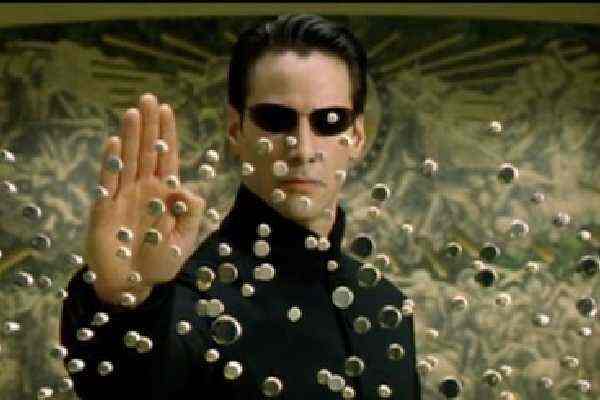
Word pictures use stories and images to make ideas feel real. The Matrix is full of them. Rows of human bodies glowing in pods. Green code falling down a screen. A man bending backward to dodge bullets. These images teach the film’s ideas faster than any lecture could.
That is the power of a story. It can slip past our defenses and speak directly to our hopes and fears. This is why stories have always been used in religion, politics, and advertising. The same power that makes the Matrix memorable can also be used to shape belief without our noticing.
➡ For more, see: How Myth And Symbolic Stories Shape Culture
The Symbolism of awakening and choice
The first group of symbols marks the moment when a person begins to question what they have been taught. In the film, this is when Neo starts to suspect that his world is not what it seems. Awakening is rarely comfortable. It shakes our certainty and challenges the way we see ourselves. Yet it is also the doorway to change.
The red pill
Morpheus holds out two pills. If Neo takes the red one, he will learn the truth about the Matrix, no matter how hard it is. Neo reaches for the red pill, and his old life ends.
The red pill stands for choosing truth over comfort. In our own lives, it can mean being honest with ourselves even when the answer is painful. It can mean questioning authority, tradition, or our own assumptions. Taking the red pill is not about rebelling just to rebel. It is about having the courage to see clearly and the integrity to act on what we see.
The blue pill
If Neo takes the blue pill, he will wake up in his bed and believe whatever he wants to believe. Nothing will change. The story will simply go on.
The blue pill stands for the very human wish to stay comfortable. Familiar beliefs can feel safe, even when they are not true. Facing uncertainty can feel frightening. The blue pill reminds us that comfort can slowly become a cage when it keeps us from growing.
The white rabbit
Early in the film, a message appears on Neo’s computer screen telling him to follow the white rabbit. Soon after, a woman at his door has a white rabbit tattoo on her shoulder. Neo follows her, and the trail leads him to Trinity.
The white rabbit comes from Alice’s Adventures in Wonderland, where Alice follows a rabbit down a hole into a strange new world. In The Matrix, it stands for curiosity and the first sign that something is off. Spiritual awakening often begins this way. A small question, an odd coincidence, or a sudden doubt can lead somewhere much bigger. Following the white rabbit means letting curiosity carry you past the easy answers.
The mirror
After Neo takes the red pill, he notices a cracked mirror that begins to heal itself. When he touches it, the mirror turns to liquid and spreads over his body. Moments later, he wakes up in the real world.
The mirror stands for seeing yourself as you truly are. Many spiritual traditions treat self-reflection as an essential step. When we look past our roles, labels, and inherited beliefs, we may begin to see who we really are. Like Neo’s mirror, this kind of self-examination can feel strange and even frightening, because it changes the way we see everything.
➡ For more, see: Moving From Ego Identification to Observer Awareness
The phone booth
In the Matrix, ringing telephones are the way out. When the rebels need to leave the program, they find a phone line and answer the call. The first film ends with Neo hanging up a phone in a booth, then flying into the sky.
The phone booth stands for the link between illusion and reality. It is the point where a decision becomes an action. In our own lives, it can be the inner voice that calls us out of confusion and toward clarity. Answering that call is how awareness turns into change.
Symbols of identity and transformation
The second group of symbols shows how a person changes after they begin to wake up. Neo does not become a new person the moment he takes the red pill. He has to learn, train, fail, and try again. Real transformation works the same way. It takes discipline, humility, and patience.
Neo
Neo begins the story unsure of himself. He doubts what Morpheus tells him, and he doubts that he is special. Over time, through training and experience, he grows into his full ability. By the end of the first film, he can see the code behind the Matrix itself.
Neo stands for the hidden potential inside every person. His name is even a rearranged spelling of “One.” His journey shows what can happen when we stop letting old beliefs set our limits. In spiritual terms, Neo is the awakening self, the part of us that is capable of moving beyond what we were told we could be.
➡ For more, see: The Hero’s Journey: Map for Inner Change
Morpheus
Morpheus is the guide who helps Neo wake up. He believes in Neo long before Neo believes in himself. His name comes from the Greek god of dreams, which fits a man whose job is to wake people from one.
Many awakening journeys include someone like Morpheus. It might be a teacher, a mentor, a friend, or even a hard experience that challenges our view of the world. A good guide opens the door but does not walk through it for us. Morpheus tells Neo that he can only show him the door. Neo has to choose to walk through it himself. That is also a useful test for any real teacher. A healthy guide helps us think for ourselves rather than asking us to depend on them.
➡ For more, see: Selecting the Right Spiritual Teacher or Guru and Avoiding Scams
Trinity
Trinity is the one who first makes contact with Neo, and she stays by his side through the danger that follows. She is brave, skilled, and loyal. When Neo falls, it is Trinity’s faith in him that helps bring him back.
Trinity stands for inner strength, intuition, and the support we need to grow. Transformation is rarely a solo journey. Trinity also shows a balance between thinking and feeling, and between action and belief. She reminds us that courage often grows stronger when someone believes in us.
The dojo
After Neo wakes up, Morpheus loads a training program. The two of them meet in a dojo, a place for martial arts practice, and fight. Neo keeps losing because he still believes the rules of the old world apply. Morpheus asks him whether he truly thinks that is air he is breathing.
The dojo stands for the inner place where we train our minds and emotions. Neo’s real challenge in that room is not learning to fight. It is unlearning the limits he carried in with him. Spiritual growth works much the same way. It takes practice, repetition, and a willingness to let go of old thought patterns.
The mirror glasses
When Morpheus offers Neo the two pills, Neo sees himself reflected twice in the lenses of Morpheus’s sunglasses. One reflection holds the red pill. The other holds the blue.
The mirror glasses show that what we see is shaped by how we see it. Every person looks at the world through their own lenses, built from experience, belief, and bias. The reflection in the glasses reminds us that perception is not the same as truth. Recognizing our own lenses is part of waking up.
Symbols of control and illusion
The third group of symbols shows how the Matrix keeps people in line. Control in the Matrix rarely looks like control. It blends into ordinary life so smoothly that most people never notice it. The same can be true of the forces that shape our own thinking.
The Matrix code
The green code falling down the screen is one of the most famous images in the film. Inside the Matrix, people see buildings, streets, and faces. The code is what lies underneath. Near the end of the first film, Neo finally sees the world as code, and everything changes.
The code stands for the hidden structure behind the illusion. Every culture has its own code made of unspoken rules and assumptions. They shape what feels normal and what feels strange. When we learn to read that code, we begin to see those assumptions for what they are. They no longer control us quite as easily.
The agents
Agent Smith and the other agents protect the Matrix. They can take over the body of any person who is still plugged in. That means anyone around Neo could suddenly become an agent.
The agents stand for the forces that keep a system safe from questions. Sometimes these forces come from authority figures. Sometimes they come from social pressure, such as friends and family who become uneasy when we question shared beliefs. Sometimes they come from inside, in the form of our own fear. In each case, their job is to bring us back in line.
The black cat
Neo sees a black cat walk past a doorway. A moment later, he sees the same cat do the same thing again. He calls it déjà vu. The others freeze because they know what it means. A glitch in the Matrix happens when the machines change something.
The black cat stands for those moments when something feels off and the world does not quite add up. These small glitches are easy to brush aside, but they can be invitations to look more closely. They interrupt routine and open the door to new questions.
➡ For more, see: The Black Cat Analogy and the Search for Truth
The pillars
In one of the film’s most famous scenes, Neo and Trinity fight their way through a government building lobby lined with heavy stone pillars. By the end of the fight, the pillars are cracked and broken apart.
The pillars stand for the solid-looking structures that hold a system in place. Institutions, traditions, and power structures can give a society stability. But when they refuse to change, they can also keep people stuck. The broken pillars remind us that even structures that look permanent can crack when they are challenged.
The woman in the red dress
During a training program, Morpheus walks Neo through a crowded city street. Neo’s eyes are drawn to a woman in a bright red dress. When he turns back, the woman has become an agent pointing a gun at him. Morpheus asks whether Neo was listening or looking at the woman in the red dress.
The woman in the red dress stands for distraction. It is one of the most powerful tools of control because it does not feel like control at all. When our attention is always pulled toward something exciting or entertaining, deeper questions never get asked. The lesson is simple. Whoever holds our attention holds a great deal of power over us.
Symbols of knowledge and prophecy
The fourth group of symbols shows the deeper wisdom that helps the characters understand their world. Knowledge alone is not enough in the Matrix. What matters is how each character interprets what they learn and what they choose to do with it.
The Oracle
The Oracle does not look like a wise prophet. She is a warm woman baking cookies in an ordinary apartment kitchen. Above her door hangs a sign in Latin that means “know thyself.” She tells Neo things he needs to hear, but not always the things he wants to hear.
The Oracle stands for inner wisdom and intuition. Her guidance shows that truth often arrives quietly. It does not always come through force or proof. It may come through a feeling, a sense of a pattern, or a quiet knowing. The sign above her door also points to the oldest lesson of all. Understanding the world begins with understanding ourselves.
➡ For more, see: Applying Logic and Intuition: Combining Reason and Instinct
The Oracle’s cookies
The Oracle offers Neo a cookie and tells him he will feel better by the time he finishes eating it. She also warns him not to worry about a vase. When he turns to look, he knocks it over. Afterward, she asks whether he would have broken it if she had not said anything.
The cookies and the vase stand for the way small suggestions shape our choices. A few words of encouragement, a hint of expectation, or a passing warning can change what we do next. Sometimes a prediction helps bring about the very thing it predicts. That makes it worth asking where our expectations come from and who placed them there.
The Architect
In the second film, Neo meets the Architect, the program that designed the Matrix. He sits in a white room surrounded by screens. He explains, in cold and careful language, that the system has been rebuilt many times and that even the rebellion is part of its plan.
The Architect stands for logic without empathy. He shows how systems can be designed to shape behavior and control outcomes. Such systems can be efficient and orderly while still treating people as parts in a machine. The Architect reminds us that any system worth trusting must make room for human choice and human worth.
The Keymaker
Also in the second film, the rebels rescue a quiet old man known as the Keymaker. He carries a huge ring of keys and knows which doors lead where. With his help, Neo walks down a hallway of doors and reaches the place he needs to go.
The Keymaker stands for access to deeper understanding. Every locked door in our own lives can represent a belief we have never examined. Some doors open easily once we find the right key. Others take patience. The Keymaker reminds us that the tools for unlocking hidden truths often already exist. We simply need to find them and learn to use them.
The Nebuchadnezzar
Morpheus’s ship is called the Nebuchadnezzar. It carries the crew through the real world and gives them a place to plug in and out of the Matrix. The name comes from a Babylonian king in the Bible who was troubled by dreams he could not understand.
The ship stands for the journey from illusion to awareness. It also stands for community. No one aboard the Nebuchadnezzar survives alone. Each person has a role, and each depends on the others. Awakening can be lonely at first, so finding people who share the journey can make all the difference.
Symbols of corruption and consequence
The fifth group of symbols shows what happens when people cling to the illusion or use others to protect their own comfort. These symbols reveal the cost of refusing to grow, and they remind us that every choice carries consequences.
Cypher
Cypher took the red pill long before Neo arrived. Over time, he grew tired of the hard, cold real world. In one scene, he sits in a fancy restaurant inside the Matrix and eats a steak. He knows the steak is not real, but he decides that ignorance is bliss. To get back into the dream, he betrays his crew.
Cypher stands for the choice to return to illusion. He shows how fear and the longing for comfort can lead people to betray both themselves and others. His story also carries a hard lesson. Once we have seen the truth, ignoring it does not bring peace. It brings inner conflict, and that conflict can lead to harmful choices.
Tank and Dozer
Tank and Dozer are brothers who were born free in the real world. Unlike the others, they were never plugged into the Matrix. When Cypher betrays the crew, Dozer is killed, and Tank is badly wounded.
Tank and Dozer stand for the innocent people harmed when others choose illusion over truth. Their story shows that awakening is never only personal. The choices we make spread outward and affect our families, friends, and communities. When one person turns away from the truth, others may pay the price.
Training after the red pill
After Neo takes the red pill, he does not simply walk into the real world ready for anything. His muscles are weak because he has never used them. His mind is shaken by everything he has learned. He has to rest, rebuild his strength, and train before he can face what comes next.
Awakening in real life follows a similar path. Seeing the frame around our thinking is only the beginning. After that comes the slower work. We trace beliefs back to where they came from. We steady ourselves while old certainties fall away. We rebuild a sense of who we are, and we learn to make choices based on our own values instead of outside pressure.
That work can feel overwhelming if we try to do it all at once. Just as Neo needed Morpheus, the crew, and the training programs, most people need structure and support. Moving at a steady pace, staying grounded, and getting help when the work becomes too heavy are all part of the process.
➡ For more, see: The Cult and Religious Indoctrination Recovery Process
Are you ready to unplug from the Matrix?
The Matrix movies give us a story we can carry into our own lives. Exploring the symbolism in the Matrix movies, we can begin to spot the same patterns around us. We may start to recognize red pill moments, white rabbits, black cats, and agents in our everyday lives.
Waking up is not a single event. It is a lifelong practice of noticing, questioning, and choosing what is real. It takes humility to admit that we may have been wrong, and courage to change direction when we are.
The invitation is not to reject the world. It is to live in it with our eyes open. The real question is not whether a Matrix exists. It is whether we are willing to look at the one shaping us.
References
- The Matrix. Directed by Lana Wachowski and Lilly Wachowski. Warner Bros., 1999.
- The Matrix Reloaded. Directed by Lana Wachowski and Lilly Wachowski. Warner Bros., 2003.
- The Matrix Revolutions. Directed by Lana Wachowski and Lilly Wachowski. Warner Bros., 2003.
- The Matrix and Philosophy: Welcome to the Desert of the Real. William Irwin (ed.), Open Court, 2002.
- Philosophers Explore The Matrix. Christopher Grau (ed.), Oxford University Press, 2005.
- Taking the Red Pill: Science, Philosophy and Religion in The Matrix. Glenn Yeffeth (ed.), BenBella Books, 2003.
- Simulacra and Simulation. Jean Baudrillard, University of Michigan Press, 1994.
- The Republic, Book VII: The Allegory of the Cave. Plato, c. 375 BCE.
- Alice’s Adventures in Wonderland. Lewis Carroll, 1865.
- The Hero with a Thousand Faces. Joseph Campbell, 1949.
- Metaphors We Live By. George Lakoff and Mark Johnson, University of Chicago Press, 1980.
- Are You Living in a Computer Simulation? Nick Bostrom, The Philosophical Quarterly, 2003.
About this project
The Seeker Project 4 Spiritual Exploration (SP4SE) is a project of Americans In Alliance. The mission of SP4SE is spiritual education. The mission of Americans In Alliance is environmental conservancy. Click the links below to learn more and support our efforts.