The concept of God can be understood in different ways. It can be taken as a literal being, or as a metaphor for the unknown. Finally, it can become a linguistic placeholder without belief in an actual God. That shift can change what the word God means in your life.
These stages do not have to describe what everyone believes. They show how the concept of God can change as a person questions what they were taught and looks at the word in a different way.
This article shows that this progression is an evolution in understanding. It doesn’t dismantle the traditions that support belief in a supreme being.
Emotional Readiness Notice:
This article examines ideas about God that may be closely tied to identity, family, culture, fear, and emotional security. Questioning if these ideas are beliefs, metaphors, or names for the unknown can cause discomfort or uncertainty. Emotional balance lets you explore these meanings clearly. You won’t feel rushed to defend or reject beliefs until you’re ready.
The evolution of the concept of God
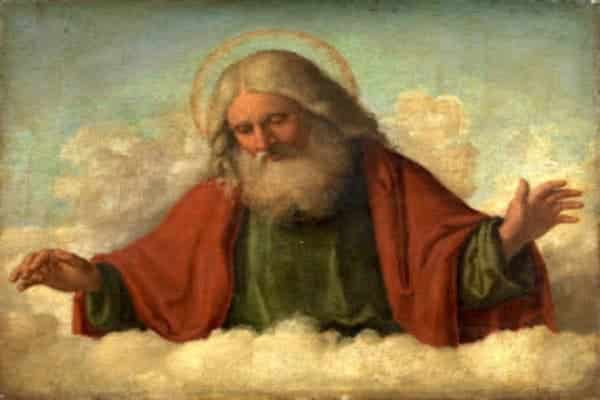
The first stage is the one taught by many religions. God is understood as a real supernatural being who exists apart from us. God is seen as the creator of the universe and as a being who may still act in our lives today. God answers prayers, gives commands, judges behavior, or changes events.
In this view, statements about God are claims about something believed to be real. Saying that God created the universe is not a symbol. It means that an actual God performed that act.
The second stage changes the role of the concept from belief to metaphor. Instead of treating God as a literal being, a person can see God as a metaphor for things we do not fully understand.
Creation offers a simple example. We know that the universe exists, but many questions about its beginning remain open. The image of a creator can give that mystery a form without requiring us to believe that a supernatural creator actually exists.
Other divine images can work in the same way. Light can stand for knowledge. A father can stand for care or authority. A judge can represent justice. Nature can stand for life, change, or the larger forces around us. At this stage, the image still has meaning, but it no longer has to be taken as fact.
The third stage takes the concept one step further. We move from metaphor to a linguistic placeholder. A person may no longer need a divine image at all, yet the word God can remain useful. It can become a linguistic placeholder for something that is still unknown.
In this use, the concept of God does not mean a literal being. The word simply gives us a way to refer to something we do not understand.
➡ For more, see: Seeking God: The Four Ways to Approach a Higher Power.
This transition is not always easy. The belief in God as a literal being is well ingrained in Western culture.
➡ For more, see: How Mental Conditioning and Brainwashing Shape Beliefs
➡ For more, see: Mental Conditioning and Social Programming: Layers of Influence
Why mystery gives rise to metaphor
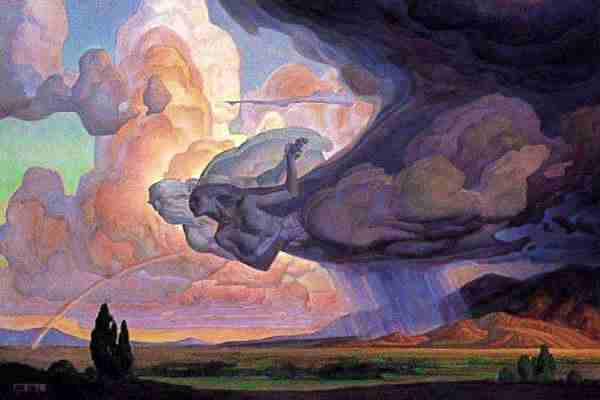
People have always faced questions that were hard to answer. They wondered where the world came from. They asked why storms happened, what caused illness, and why people died. Also, they questioned if anything continued after death.
Some of those questions now have much better answers. Others remain open.
- Why does anything exist at all?
- What is consciousness?
- What happens to consciousness at death?
- Why do people experience meaning and purpose?
- Where does our sense of right and wrong come from?
- Are there parts of reality we still do not understand?
When people cannot describe something directly, they often turn to metaphor. We do this in everyday life without even thinking about it. The concept of God has often been used in this way to give form to mysteries people could not explain.
We call a close friend our “rock” because the person feels steady and dependable. We speak of reaching a “crossroads” when we face an important choice. We say someone has “seen the light” when they finally understand something.
None of these images needs to be literally true. Their value comes from the meaning they carry.
Religious language can work in the same way. Creation can be pictured as the work of a maker. Knowledge can become light. Death can become a journey. Forces of nature can be pictured as gods or spirits.
These images give people something familiar to use when thinking about something less familiar. That is one reason religious symbols can remain meaningful even after a person stops taking them literally.
➡ For more, see: How Myth And Symbolic Stories Shape Culture.
How cultures turn mystery into images of God
The metaphorical stage becomes easier to see when we compare the many ways cultures have pictured the divine.
People do not create their symbols in an empty space. They draw from family life, nature, work, rulers, animals, the seasons, and other things they already know. The concept of God has a diverse history of development.
Christianity often describes God as Father, Shepherd, Rock, King, and Light. These images can express care, protection, strength, authority, or guidance.
Judaism also uses images such as shepherd, judge, king, and covenant-maker. These can express responsibility, justice, protection, and the bond between a people and the sacred.
Islam uses many names and descriptions for Allah, including the Merciful, the Guide, and the Light. These words can express mercy, direction, wisdom, and clarity.
Hindu traditions include many divine forms. Vishnu can represent preservation, while Shiva can represent destruction and renewal. Brahman can point toward a deeper reality behind ordinary experience.
Some Pagan traditions connect sacred meaning with the Earth, Sun, Moon, animals, fertility, and the changing seasons. In these traditions, the divine can be closely tied to nature.
Buddhism does not center on belief in a creator God, yet it also uses symbolic figures. A Buddha can represent awakening, while the Dharma can be pictured as a path.
These traditions are not different versions of the same religion. Their beliefs and histories are very different. What they show is how often people use familiar images to think about things that are harder to describe. Those images can carry meaning even when a person no longer sees them as literal pictures of supernatural beings.
What divine metaphors can reveal
Once we view a divine image as a metaphor, we can ask a different kind of question. Instead of asking only whether the image is literally true, we can ask why that image mattered to the people who used it.
A culture that pictures divine power as a king may place great value on authority and order. A mother image may carry ideas about birth, care, protection, or creation. Images tied to rain, land, or harvest may grow from people whose survival depended on natural cycles. The symbol can therefore tell us something about the culture that shaped it.
The same symbol can also take on a personal meaning. Someone who connects fatherhood with safety may find comfort in the concept of God as Father. Someone with a painful family history may react to that image in a very different way. This is how a cultural metaphor becomes personal. We inherit symbols from other people, but our own experiences help decide what those symbols mean to us.
Looking at divine images this way does not require us to settle the question of whether God exists. We can still ask what an image represents, why it became important, and what values or feelings it carries.
For some people, the process can stop here. They may find that God works well as a metaphor and see no reason to take the idea further.
Others may continue to the third stage.
From belief to metaphor to linguistic placeholder
The third stage begins when even the metaphor becomes optional. It becomes a useful linguistic placeholder.
A person may still find the word God useful but no longer need it to describe a father, creator, judge, light, force of nature, or any other image. The word can simply stand for something that remains unknown.
Imagine someone speaking about the origin of existence. They might say, “I do not know why anything exists or what lies behind it. I sometimes use the concept of God for that unknown.” That statement does not claim that an actual God exists. It also does not tell us what the unknown is like. God is simply the word being used to point toward the unanswered question.
The same thing could happen when speaking about consciousness or some deeper part of reality that we do not yet understand. A person can use the word as shorthand while remaining clear that it adds no new knowledge.
This is what makes a linguistic placeholder different from a metaphor. A metaphor gives the unknown an image or meaning. A placeholder does not need to do that. It simply marks the place where knowledge stops.
We can think of it like a label on a box whose contents we have not seen. The label helps us talk about the box, but it does not tell us what is inside.
Using God in this way leaves the mystery open. The word stays helpful without needing to explain or demand faith in a supernatural being.
When metaphor or language becomes a claim of fact
The difference between these stages matters because symbols and labels can slowly begin to sound like facts.
A person may read a creation story as a metaphor for the mystery of existence. Another person may use the concept of God as a word for whatever remains unknown. Neither use requires belief in a supernatural creator.
The situation changes when someone says that a supernatural being exists. They attribute everything we do not understand to this entity. They claim God created the universe, performs miracles, judges, and rewards and punishes people after death. Those are no longer only symbols or labels. They are claims about what actually exists or happened.
That does not make a claim false simply because it is religious. It does mean that the meaning of a story cannot serve as proof that the claim is true.
A symbol can carry wisdom without proving that the being shown in the symbol exists. In the same way, calling an unknown “God” does not show that the unknown is actually a God.
The larger process by which belief can begin to function as truth belongs to another article:
➡ For more, see: How Faith Operates as Truth — When Belief Mimics Facts.
Religious stories can become shared beliefs. This happens through repetition, emotion, tradition, and authority.
➡ For more, see: The Superstition Mechanism: How Myth Becomes Doctrine.
When beliefs are hard to question, fear, punishment, reward, or sacred authority often protect them.
➡ For more, see: Religious Camouflage Hiding Illogical Thinking.
If those beliefs later gain power through institutions, laws, education, or public systems:
➡ For more, see: The Social Cost and Systemic Harm of Organized Religion.
Those articles follow those processes further.
Reclaiming the concept of God
A person who no longer accepts God as a literal being may still find value in some of the old divine images. Letting go of the literal belief does not mean that every symbol has to be thrown away with it. A person can look at what the image means and decide whether that meaning is still useful.
The image of a creator may still help someone think about creativity or the mystery of existence. Light may still express knowledge or awareness. An image tied to love may help someone think about care, compassion, or human connection.
The value comes from what the image helps the person explore, not from treating it as proof of a supernatural being.
This gives people room to separate useful symbols from beliefs they no longer accept. A person can keep an image that promotes compassion. They can also let go of thoughts about supernatural punishment. Another person might value creation as a symbol while no longer believing in a literal creator.
Other symbols may no longer be useful. Some may carry fear, shame, prejudice, or ideas that no longer fit a person’s values.
Reclaiming the metaphor therefore becomes a choice. A person can decide which meanings remain useful while staying clear that those meanings are symbolic. Someone who moves into the third stage may go even further. The old images can fall away while the word God remains as a simple label for something still unknown.
Both paths can move beyond literal belief, but they do not use the word in the same way.
Examining what the word God means to you
Most people first learn about God through family, religion, culture, stories, art, and personal experience. These influences can mix so early that we may never stop to ask which parts we actually believe.
A useful first step is to notice what comes to mind when you hear the word God.
- Do you picture a literal being?
- Do certain religious images appear?
- Who taught you those images?
- What feelings have become connected with them?
- Which ideas do you still believe are literally true?
- Which images now make more sense as metaphors?
- Would the concept of God still be useful if it only named something unknown?
Your answers may show that several meanings have been bundled together for years.
Some parts may still be literal beliefs. Other parts may work better as metaphors because their meaning matters more to you than the supernatural claims once tied to them.
You may also find that the images are no longer needed, while the word itself still feels useful. In that case, the concept of God may work only as a linguistic placeholder for something you openly admit you do not understand.
There is no need to force all three stages into one definition. The purpose is to see how your own idea has changed and what you actually mean when you use the word.
This discussion can uncover harmful beliefs tied to fear, shame, identity, or automatic thinking. Changing those beliefs belongs to a separate inner work process.
➡ For more, see: The Core Process for Repairing Harmful Thinking, Beliefs and Values.
Conclusion: how the concept of God can change
The concept of God does not have to remain fixed throughout a person’s life. What starts as belief in a real being can later be seen as a metaphor. Then, that metaphor can turn into a simpler use of the word.
At the second stage, divine images can still help us think about things we do not understand. They can carry ideas about creation, love, justice, nature, knowledge, or other parts of human experience.
At the third stage, even those images become optional. The concept of God can serve as a placeholder for the unknown. It doesn’t have to imply a supernatural being.
Keeping these stages separate allows each one to do a different job. Literal claims can be examined as claims about reality. Metaphors can be explored for the meaning they carry. A linguistic placeholder can simply mark the edge of what we know.
That makes it possible for the concept of God to change as our understanding changes. We can keep what remains useful, let go of what no longer fits, and still leave room for the things we do not yet understand.
References
- Metaphor and Religious Language. Oxford University Press.
- Metaphorical Theology: Models of God in Religious Language. Fortress Press.
- Models of God: Theology for an Ecological, Nuclear Age. Fortress Press.
- Naming God: Addressing the Divine in Philosophy, Theology and Scripture. Cambridge University Press.
- Religious Language. Stanford Encyclopedia of Philosophy.
- Concepts of God. Stanford Encyclopedia of Philosophy.
- Metaphor. Stanford Encyclopedia of Philosophy.
- The Rule of Metaphor: Multi-disciplinary Studies of the Creation of Meaning in Language. University of Toronto Press.
- Metaphors We Live By. University of Chicago Press.
- Dynamics of Faith. Harper & Row.
- Religion as a Cultural System. The Interpretation of Cultures, Basic Books.
- Dimensions of the Sacred: An Anatomy of the World’s Beliefs. University of California Press.
About this project
The Seeker Project 4 Spiritual Exploration (SP4SE) is a project of Americans In Alliance. The mission of SP4SE is spiritual education. The mission of Americans In Alliance is environmental conservancy. Click the links below to learn more and support our efforts.