What if consciousness is not a single state, but a spectrum of experiences? The ten states of consciousness offer a map for seeing how ordinary, altered, and higher states fit together.
We do not experience consciousness in one fixed way. Our condition of consciousness changes as we wake, sleep, dream, meditate, or enter an altered state. What becomes clear in awareness and where attention is directed also change.
Some changes are easy to notice. Others happen so quietly that we pass through them without realizing it.
This article presents an overview of the structure of consciousness as a map of awareness. It does not attempt to teach every method used to reach each state. Other articles explore the related subtopics. Here, the goal is to see how these different experiences may belong to one larger spectrum.
Consciousness as a map of awareness
Consciousness is the overall field or condition in which experience occurs. Awareness is the recognition of what is present or happening within that field. Attention is the selective focus that gives one part of experience priority over other parts.
The ten states of consciousness describe different conditions of consciousness. Within each state, the contents and clarity of awareness may change, and attention may function in different ways.
Most people think of consciousness as a single separate partition. As something with a clear on-and-off switch. We are either conscious or unconscious. Yet our daily experience suggests something more complex. We often move between waking, sleeping, and dreaming without noticing how awareness changes along the way.
One way to understand these changes is through the metaphor of a rainbow. A rainbow contains many colors, but the colors do not exist in separate compartments. They blend together. Consciousness appears to work in a similar way. We can identify different states, but the boundaries between them are often gradual rather than fixed.
The ten states of consciousness provide a map for exploring this spectrum of awareness. This map describes common, altered, and higher states. The model is not a ranking system; it is a framework for understanding how different experiences of awareness may relate to one another.
The purpose of this article is not to prove a particular philosophy or belief system. It is to provide an overview of the structure of consciousness and show how the different states fit together within a larger whole.
One reason this model is useful is that it helps explain experiences that may seem unrelated. A dream, a moment of deep meditation, a sudden insight, or a strong feeling of connection can seem very different.
Yet each may represent a change in awareness within the same spectrum of consciousness. Instead of viewing these experiences as separate events, this map helps us see how they may fit together as part of a larger picture.
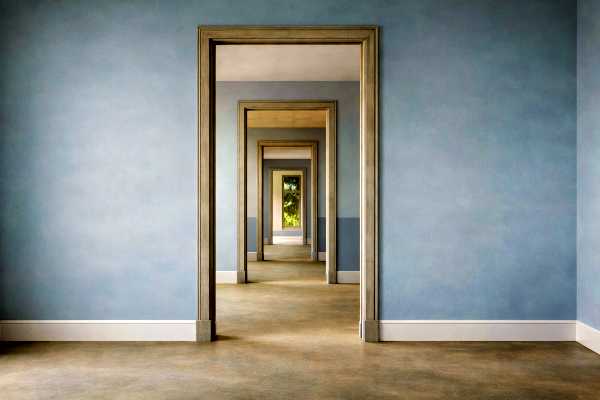
Another way to think about these moments is as portals of experience. A portal is not a separate state of consciousness. It is a moment, practice, or transition that interrupts the usual frame of perception long enough for a different condition of consciousness or pattern of awareness to become noticeable.
A dream can act as a portal because it shows how fully the mind can create an experienced world. Meditation can act as a portal when ordinary mental activity becomes quiet enough for a different condition of consciousness to be noticed. A shamanic journey or lucid dream can serve the same function in another way.
The portal is the doorway. The state of consciousness is the experience entered or recognized through it.
This distinction keeps the map clear. A portal does not prove that someone’s interpretation of an experience is true, and it is not another level on the map. It simply describes a way the familiar frame can be interrupted so that another condition of consciousness becomes easier to notice.
Why people remain within the default states
Many people never explore much beyond waking, sleeping, and dreaming. Daily responsibilities take most of their attention. Modern life, social pressure, and religious expectations can keep life inside familiar boundaries.
Fear also plays a role. A state that cannot be controlled or explained may feel dangerous. People often reject unfamiliar experiences before studying them.
Imagine trying to explain sleep to someone who has never slept. You might say that the person must lie down, close their eyes, and lose awareness of the room for several hours. Strange images may appear. Time will pass without being noticed.
The person might answer, “That sounds terrible. Why would I want to lose control and enter a world that is not physically present?”
That reaction is similar to the fear many people have toward altered states of consciousness. The resistance does not always come from evidence. It often comes from having no frame of reference.
The hallway-and-mansion analogy explores this problem in more detail. It explains why people may remain in one familiar area of consciousness even when other rooms are available. This article has a different job. Its purpose is to provide the larger map of those rooms.
➡ See: Living in the Hallway of Mansion Instead of in the Rooms
Three ways consciousness can change
There are three primary ways we can change consciousness: we can alter, expand, or shift access to higher states of consciousness.
Altering consciousness means changing your current state of awareness or perception. This can happen through sleep, dreams, meditation, or rituals. It might also occur due to illness, medication, emotional experiences, or other factors that change how we see reality.
Expanding awareness means increasing your ability to perceive and understand. Self-observation and critical thinking help us notice things. Meditation and dream work reveal hidden patterns, beliefs, and emotions. These practices show us connections we might have missed.
Accessing higher states of consciousness means going beyond ordinary awareness. This leads to deeper perception, a sense of unity, transcendence, and spiritual insight. These experiences are often the focus of spiritual traditions and consciousness studies.
The ten states of consciousness show how different experiences link. They fit into a larger framework of awareness.
Exploring the ten states of consciousness
The following ten states offer a broad structure for understanding consciousness. Some states are common biological states. Others are altered or combined states. The final states of consciousness describe experiences reported in spiritual and philosophical traditions.
The boundaries remain fluid. A person may move between states, experience only a glimpse, or use different language for the same basic event.
1. The waking state
The waking state is the condition in which we interact with the physical world through our senses. It represents our standard for everyday reality. But perception can change based on attention, memory, beliefs, and experience.
Most people spend the majority of their lives focused on this state and rarely question how it shapes their understanding of reality. The path of self-discovery begins by observing how ordinary awareness works.
2. The sleeping state
Sleep lowers awareness of the surroundings. Meanwhile, the body and brain carry out crucial restorative tasks. We spend nearly a third of our lives in this state, yet remember very little of it.
The transition into and out of sleep reminds us that consciousness is not fixed. Awareness gradually fades and returns rather than switching off instantly.
3. The dreaming state
Dreaming creates an inner reality that can feel just as convincing as waking life. We encounter people, places, feelings, and events without relying on the physical world.
Dreams reveal that consciousness can generate complete experiences of its own. They also provide one of the most accessible gateways to exploring non-ordinary states of awareness.
4. The transcendent state of pure awareness
The transcendent state is often described as awareness without internal dialogue. Thoughts become quiet while awareness itself remains present.
Many people encounter this state through meditation, prayer, or moments of deep stillness. It lays the groundwork for higher states of consciousness. It helps separate awareness from the mind’s constant activity.
➡ See: The Fourth State of Transcendental Consciousness
5. The witnessing state
The witnessing state adds observer awareness to ordinary experience. A person continues thinking, feeling, and acting while simultaneously observing the process.
Instead of being completely absorbed by thoughts and emotions, a second perspective develops. Observer awareness is a key tool for self-observation, personal growth, and inner work.
➡ See: Witnessing or Split Perception — The Fifth State
6. The shamanic state of consciousness
The shamanic state of consciousness is an altered state. It’s often reached through rhythm, focused intention, and creative visualization. It allows a person to enter a symbolic inner landscape while remaining aware of the experience.
Many cultures have used this state for healing, guidance, and spiritual exploration. It demonstrates how consciousness can move beyond ordinary awareness into non-ordinary reality.
➡ See: The Core Principles of Shamanism: The Vision Quest
7. The lucid dreaming state
Lucid dreaming occurs when a person becomes aware that they are dreaming while the dream continues. Awareness enters the dream state without waking the body.
This state combines elements of dreaming and witnessing. It demonstrates that different states of consciousness can overlap and operate simultaneously.
➡ See: Learn Lucid Dreaming Tonight: An Awareness-Expanding Process
8. God consciousness
God consciousness describes a state in which the sacred is experienced directly within creation. Rather than viewing the divine as distant or separate, it is perceived as present throughout life itself.
Various traditions have different names for this experience. However, they all share a common theme: a deeper awareness of connection, meaning, beauty, and intelligence in the world.
9. Unity consciousness
Unity consciousness is a state in which the separation between the observer and the observed begins to dissolve. Life is experienced as an interconnected whole rather than a collection of separate parts.
This experience is often described as oneness. It brings a greater sense of connection, compassion, and harmony with the world around us.
10. Unbound awareness and consciousness
Unbound consciousness means being aware beyond normal limits. It isn’t confined by identity, time, or space. It sits at the far edge of the consciousness spectrum described in this article.
This state is hard to describe. Yet, reports of it show up in many spiritual, mystical, and philosophical traditions. It points toward experiences that seem to move beyond the ordinary boundaries of perception.
How the states relate to one another
The ten states of consciousness are not ten sealed rooms. They are labels for the most prominent characteristics.
In daily life, people often move through several states of consciousness without noticing it. You may wake from a vivid dream, become deeply focused on a task, spend time reflecting on a problem, or experience a quiet moment during meditation. Most of these changes happen gradually. One state blends into another, making the transitions easy to miss. Several of them combine features from earlier states.
Lucid dreaming joins dream experience with witnessing awareness. The shamanic state uses waking attention while entering a symbolic landscape similar to a dream. God consciousness changes the way the waking world is perceived. Unity consciousness changes the apparent relationship between the observer and the world.
The transcendent state may also support later states of consciousness. Learning to recognize pure awareness can make it easier to observe thoughts without becoming lost in them. Witnessing may then create a stable point of view from which deeper experiences can be examined.
This structure does not mean that everyone must move through the states in the same order. A person may have a spontaneous glimpse of unity before learning meditation. Some people practice meditation for years. They may not describe the experience as God consciousness.
The ten levels of consciousness show relationships. They do not dictate one required path.
The role of brainwaves and physical processes
Changes in consciousness are connected with changes in the brain and body. Brain activity shows different patterns. These patterns connect to alert thinking, relaxation, dreaming, and deep sleep.
Beta activity is commonly linked with active waking thought. Alpha activity often appears during relaxed awareness. Theta patterns may occur during drowsiness, dreaming, meditation, and inward attention. Delta activity is associated with deep sleep.
These patterns help researchers study consciousness. However, a brainwave category can’t fully explain an experience. Two people may show similar patterns while reporting very different thoughts, emotions, or images.
A spiritual label should not replace physical evidence. The opposite is also true. Measuring brain activity does not automatically explain the personal meaning of an experience.
A complete study of consciousness may need several points of view:
- What happens in the brain and body?
- What does the person experience?
- What meaning does the person give the experience?
- How does the experience affect later behavior?
The structure of consciousness includes both measurable processes and personal experience.
Experience is not the same as interpretation
A person may have a real and powerful experience while misunderstanding what caused it or what it means.
For example, someone may feel a presence during meditation. The experience itself is real as an experience. The interpretation often involves a mixture of sources. Memory, imagination, brain activity, and cultural expectations all play a role in the process.
Respecting the experience does not require accepting the first explanation.
This distinction protects the path of self-discovery from two common mistakes. The first mistake is rejecting every unusual experience because it cannot be easily measured. The second is believing every interpretation because the experience felt intense.
Healthy inquiry allows room for both wonder and doubt.
➡ For More See: Exposing Faulty Arguments and Revealing Common Logical Fallacies
Higher states of consciousness and spiritual maturity
A higher state is not the same as spiritual maturity.
A person can have a vision and remain dishonest. Someone can enter deep meditation and still treat others badly. A powerful experience may open a door, but it does not complete the work of character development.
Spiritual maturity appears through the way a person lives after the experience. It includes greater honesty, compassion, patience, responsibility, and willingness to question personal beliefs.
This is why inner work, critical inquiry, emotional regulation, and values remain important. They help transform an experience into lasting growth.
Without integration, altered states can become another form of entertainment. A person might seek visions, energy, excitement, or a sense of importance. They often do this to avoid everyday problems.
The structure of consciousness shows what may be possible. It does not remove the need for effort.
➡ For More See: Spiritual Growth Pathways — Finding Wisdom and Insight
Using the map for self-discovery
The ten states of consciousness can help you examine your own experience without forcing it into a rigid system.
Begin with the states you already know. Most people move through different states of consciousness every day without thinking about them. Simply paying attention to these changes can reveal patterns that were previously hidden. Some activities boost awareness and focus. Others promote automatic habits and routine thinking.
Notice the transition into sleep. Record a dream. Observe how attention changes during stress. Watch what happens when the mind becomes quiet.
Ask simple questions:
- What state am I in now?
- What is holding my attention?
- Am I reacting automatically or observing the reaction?
- Does this experience increase clarity or confusion?
- How does it affect my behavior afterward?
These questions keep the focus on awareness rather than labels.
There is no need to claim a high level. Naming an experience does not create growth. In many cases, the most useful work happens in the waking state through honest observation and better choices.
The map becomes valuable when it helps us see more clearly.
➡ For More See: Dealing with A lost or Broken Spiritual Map and Compass
Closing reflections
These ten states of consciousness create a spectrum rather than a set of boxes. Like colors in a rainbow, they can blend, overlap, appear briefly, and change in strength.
The path of self-discovery is not about escaping ordinary life. It is about understanding the awareness through which ordinary life is experienced.
Exploring consciousness shows how thoughts shape perception. It reveals how beliefs limit attention and how various states offer different viewpoints. It can also teach humility. The more we explore awareness, the more we realize how much remains unknown.
The ten states of consciousness provide a structure for that exploration. They link waking life, sleep, dreams, and meditation. They connect witnessing and symbolic journeys. They also link spiritual perception, unity, and awareness. All these form one big map.
No map can replace direct experience. It can only help us recognize where we may be, what may lie ahead, and which tools are best suited for the next part of the journey.
The rainbow of consciousness is always moving. Its colors appear, blend, fade, and return. Our task is not to capture every color. It is to become more aware of the light moving through them.
References
- EEG Microstates in Altered States of Consciousness. Bréchet, L. and Michel, C. M. Frontiers in Psychology, 2022.
- Awareness and Consciousness in Humans and Animals: Neural and Behavioral Correlates. Ehret, G. and Romand, R. Frontiers in Systems Neuroscience, 2022.
- Consciousness Science: Where Are We, Where Are We Going, and What If We Get There? Cleeremans, A., Mudrik, L., and Seth, A. Frontiers in Science, 2025.
- Bridging Gaps in Understanding Consciousness: Multidisciplinary Perspectives. Domingues, D. and others. Frontiers Research Topic Collection, 2025.
- Consciousness Research Section Overview. Frontiers in Psychology Editorial Board, 2025.
About this project
The Seeker Project 4 Spiritual Exploration (SP4SE) is a project of Americans In Alliance. If you want to help SP4SE’s education or our parent organization’s environmental work, click the links below.