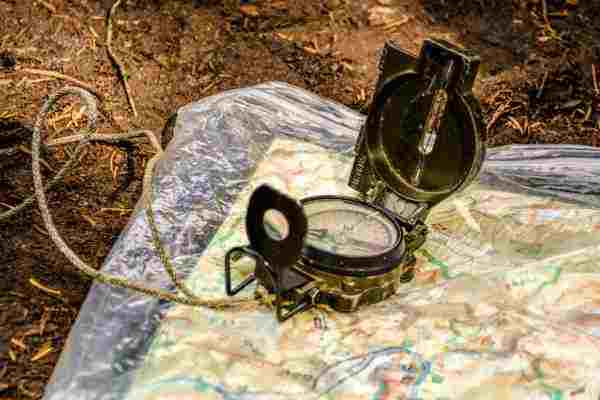
Our spiritual map and compass are as important as physical and mental health. Spiritual beliefs shape your mindset, and your mindset shapes the trajectory of your life. These tools are the spiritual map and the spiritual compass. Many people do not even know what these tools are or if they are lost or broken.
The compass and map are word pictures for two important functions of the psyche. Tell us where we are headed and why. The map reflects our trajectory and direction. The compass reflects the values that guide the choices on this path.
When these tools work together, life feels steady and clear. The outcomes of our behaviors have a positive effect on everyone around us. When they are lost or broken, life feels confusing, stuck, or pulled off course.
This article follows the full navigation cycle. It explains why these tools matter, what they are, how they get damaged, how to repair them, and how to use them to move forward.
Inner Work Gate Notice:
It includes processes intended to identify and repair harmful belief patterns, emotional conditioning, and distorted value structures. Some sections may create discomfort as existing beliefs, identity attachments, and conditioned behaviors are examined. This article is designed for conscious self-development and psychological change, not passive information consumption.
Understanding these spiritual navigation tools
Life is full of choices, challenges, and distractions. Without a map and compass, a person can drift into unhealthy beliefs and habits. The modern world of social media makes it easy to fall prey to groupthink, fear, anger, or confusion. A health purpose and direction become harder to see.
The spiritual map
The map shows the terrain of a person’s inner and outer world. It reflects where they stand, what they believe, and the legacy they are building. It also shows the next steps on their path.
However, this map is not found in any holy book. It is not handed down by religion, politics, or cultural stories. It is the landscape of a person’s own mind and life. Every map is unique because every life is unique.

A map becomes lost or broken when noise, pressure, or confusion takes over. It can be replaced by outside forces such as:
- Western organized religion that teaches fear, guilt, or prejudice
- Political systems that demand loyalty instead of honesty
- Commercial messages that push consumption instead of thought
These forces can overwrite natural values and blur a person’s sense of identity. When this happens, the landscape becomes hard to see.
Reading the spiritual map requires clarity of conscience and honest self-understanding. It requires shining a light on beliefs and actions to see whether they are harmless or harmful. This is how a person finds their true spiritual location.
The spiritual compass
The spiritual compass is the tool that guides moral direction. It helps a person sense the difference between harmful and harmless actions. It is not built on ancient rules. It is built on natural instincts for fairness, empathy, and respect.
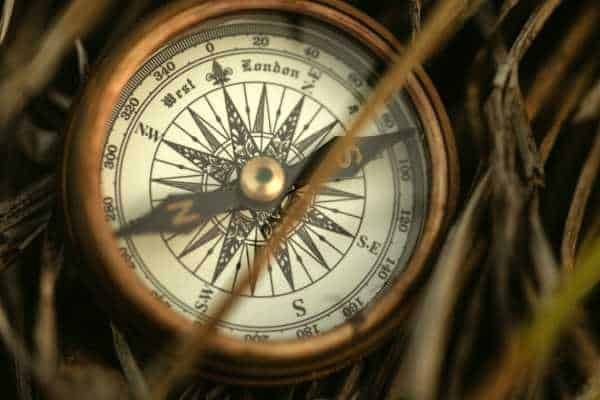
This compass is present at birth. It has two main parts:
- Intellect, which supports clear thinking and understanding
- Intuition, which guides the sense of what feels true and right
When intellect and intuition work together, the compass points toward healthy values. When they fall out of balance, the compass becomes weak or confused.
The compass grows stronger when intellect and intuition grow stronger. Intellect grows through learning, reading, and logic. Intuition grows through silence, reflection, and listening to the inner voice. Meditation helps quiet the noise so this voice can be heard.
A compass becomes unreliable when morality is based only on religious ideology. Bias and prejudice cannot excuse harmful actions. A belief system cannot be used to avoid responsibility.
How the spiritual map and compass work together
When these spiritual instruments of the psyche work together, they form a single navigation system. The map shows the terrain—beliefs, patterns, habits, and the direction a life is moving.
The compass shows the values that guide each choice along that terrain. The map reveals the path, and the compass reveals whether the next step aligns with healthy principles.
One tool shows location, and the other shows direction. When both are functioning, decisions become clearer, and the path ahead becomes easier to understand.
How a spiritual map gets lost or broken
The map becomes distorted when purpose, values, or identity fade. Signs of a distorted map include:
- A sense of moving through life without meaning
- A fading connection to core beliefs
- Neglect of physical, emotional, or mental health
- A quiet emptiness, as if something important has gone missing
Fear, anger, and hatred can twist the map even further. These emotions can pull a person away from their true direction. They may stop speaking up for individual rights and social justice. They may drift into harmful beliefs without noticing.
A distorted map makes it hard to see where one stands or where one wants to go. Reconnection requires slowing down, reflecting, and returning to core values.
How a spiritual compass gets lost or broken
A compass becomes broken when natural values are replaced by fear, prejudice, or harmful beliefs. Mental conditioning from Western organized religion is the most prominent cause of this breakage. Signs of a broken compass include:
- A sense of being lost and unsure of direction
- A loss of empathy and growing indifference toward others
- Persistent self-doubt and low confidence
- Emotional distress caused by actions that do not match values
- Adoption of extreme ideas that encourage harm or control over others
A broken compass often appears when a person is taught to hate or discriminate. When someone believes they have the right to control others, the compass is not working. When beliefs are used to justify harm, the compass is pointing in the wrong direction.
Repair begins with removing bias and prejudice and returning to the natural values of fairness, empathy, and respect.
How to recover and repair the compass and map
The spiritual map and compass can be repaired. Eliminating harmful programming is essential.
The first step in recovery is removing the source of the programming. Many systems—including Christianity, Islam, and Judaism—use groupthink and self-hypnosis to spread sectarian beliefs. These tactics cloud thinking and disconnect a person from their spiritual map and compass.
Once the source of the harmful programming is removed, you can repair harmful thinking with the proper inner work tools.
Self-reflection is another essential tool. Regular reflection on thoughts, feelings, and actions helps restore clarity. Journaling and meditation reveal patterns and highlight beliefs that need to be removed.
Reconnecting with the values of an innocent soul is also important. These are the values present before exposure to religion: respect for all people and living things, sharing, caring, and fairness.
Practicing gratitude helps align the compass. Every detail of life plays a role in restoring direction.
Spiritual technologies expand the mind. These include analytical tools, meditation, awareness practices, and natural healing modalities. These tools help locate and repair the spiritual map and compass.
Surrounding oneself with positivity is essential. People who uplift others and demonstrate inclusive values help reinforce a healthy direction.
Inclusion means welcoming and respecting everyone, regardless of background, beliefs, or identity. Inclusive values balance individualism and collectivism. They manifest through empathy, accountability, open-mindedness, collaboration, empowerment, and balanced thinking. These values help reveal the spiritual map and calibrate the compass.
Mistakes will happen, but a functioning compass and map help identify lessons and return to the right path. The right teachers and tools will appear when the compass is aligned.
- Step away from fear-based groups and ideas
- Remove harmful programming with the core process for repairing thinking
- Practicing self-reflection through journaling, meditation, and honest inner work
- Returning to healthy values like kindness, sharing, and respect for all living things
- Practicing gratitude to stay grounded and aware of what is good in life
- Choosing relationships with people who live by inclusive and respectful values
Inclusive values make the map easier to read. These values include empathy, accountability, open-mindedness, collaboration, empowerment, and balanced thinking. They help keep a person aligned with their true direction.
How to navigate forward with both tools working
A healthy map and compass help a person move through life with clarity and purpose. Together, they reveal patterns, guide choices, and support growth.
When both tools are working, a person gains:
- clarity in a confusing world
- a sense of purpose and direction
- a deeper connection to life
- personal growth and transformation
Mistakes will still happen, but a working map and compass help a person learn from them. These tools help identify the right teachers, the right practices, and the right path.
Find and realign your spiritual direction
Spiritual health is part of overall well-being. A strong compass and a clear map support a meaningful life. Even when these tools are lost or broken, they can be repaired with patience and practice.
The journey begins with simple questions. Where is the current location on the spiritual map? Is the compass pointing toward harmless and healthy values? Is the chosen direction true?
These questions open the path. Awareness begins the journey. Courage and clarity carry it forward. The map shows the terrain. The compass shows the direction. Together, they help a person find their way.
References
- Man’s Search for Meaning, Viktor E. Frankl.
- The Righteous Mind: Why Good People Are Divided by Politics and Religion, Jonathan Haidt.
- Thinking, Fast and Slow, Daniel Kahneman.
- The Power of Now: A Guide to Spiritual Enlightenment, Eckhart Tolle.
- Flow: The Psychology of Optimal Experience, Mihaly Csikszentmihalyi.
- Maps of Meaning: The Architecture of Belief, Jordan B. Peterson.
- Influence: The Psychology of Persuasion, Robert B. Cialdini.
- Cognitive Bias and Belief Formation, National Institutes of Health.
- Mindfulness Meditation and Emotional Regulation, National Library of Medicine.
- Groupthink and Social Conditioning, National Institute of Mental Health.
- Meaning of Life, Stanford Encyclopedia of Philosophy.
- Self-Reflection, Wikipedia.