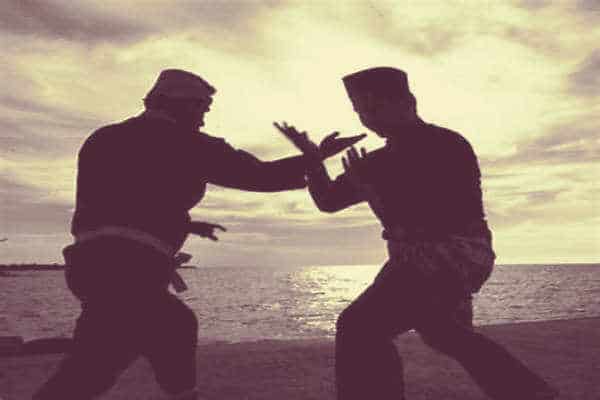
Some people believe timing is everything. Others say alignment is everything. Which one is superior? When you learn how proper alignment creates proper timing, you unlock the key to precision, adaptability, and purposeful movement. You can act at the right moment, in the right way, for the right reason.
To understand the hierarchy of timing and alignment, we need to understand the systems involved. Martial arts give us a useful way to see the relationship between the body, mind, and spirit.
The martial artist trains the body to move, the mind to stay present, and the spirit to guide the use of power. When these three are aligned, proper timing becomes possible. When they are divided, even great speed can fail.
How proper alignment creates proper timing
Proper timing means doing the right thing at the right moment. Many people believe proper timing comes from speed, experience, or instinct. In reality, proper timing begins with proper alignment.
Many people think timing comes from speed. They assume the faster person has the advantage. That is only partly true. Speed is useful only when it is guided by awareness, balance, and purpose.
A fast person can still move in the wrong direction. A strong person can still overreact. A trained person can still freeze if the mind is trapped in fear. This is why proper alignment comes before proper timing.
Proper alignment creates proper timing.
In martial arts, the body must be able to move. The mind must read the situation. The spirit must guide the level of response. If one of these is missing, proper timing breaks down.
Proper alignment means the whole person is available to the moment.
Training the body and mind
Martial artists spend a great deal of time training the body. They build endurance, agility, speed, flexibility, balance, and strength. These physical traits are assets in a conflict if the person knows how to use them.
Martial artists also train the mind. They learn patterns, distance, angles, timing, and techniques. They train themselves to stay present while another person is moving against them.
Commercial martial arts often focus on one-on-one contests. Boxers train to strike with gloved fists while blocking or taking punishment. Full-contact karate adds kicking and punching. Judo trains grappling, balance, and throws. Mixed martial arts combines parts of striking, wrestling, and ground fighting.
These systems can build skill, courage, and fitness. But they also share one important limitation. They are sports with rules of engagement.
Physical skill can improve speed and power, but proper timing requires more than physical ability. Proper alignment of the body, mind, and spirit allows those skills to be used effectively.
Rules of engagement
Rules make sport possible. They protect the fighters, define the contest, and create a fair arena. But rules also train habits.
Once a person trains inside a fixed rule system, those limits become part of the mind and body. The student learns what to expect, what to protect, and what not to do. That training becomes muscle memory.
This is useful inside the sport. It can become a problem outside the sport.
Real-life situations do not always match commercial combat. A real conflict may involve more than one opponent. One person may have a weapon. The space may be crowded. The ground may be uneven. The attack may not begin cleanly. There may be no referee, no padded floor, and no rule against striking vulnerable areas.
This does not mean commercial martial arts are worthless. They can be very effective against an untrained person. They can also build discipline and confidence. But they are not the same as combat without rules.
Authentic martial arts must train adaptability. They must train the person to stay present in a changing field. That is where proper alignment becomes more important than style.
Moving in the right way at the right moment
The ability to move in the right way at the right moment is the key to proper timing. This skill can help someone overcome opponents who are faster, stronger, larger, or more aggressive.
What creates proper timing?
The answer is not speed by itself. The answer is integrating the self.
The body must be trained enough to move efficiently. The mind must be calm enough to read what is happening. The spirit must be clear enough to guide the response. These three parts must work together under pressure.
This is the basic sequence:
- The body provides movement.
- The mind provides awareness.
- The spirit provides direction.
- Proper alignment brings them together.
- Proper timing flows from that alignment.
If the body is trained but the mind is panicked, proper timing fails. If the mind sees the opening but the body cannot move, proper timing fails. If the body and mind are strong but the spirit is ruled by anger, the response may be excessive.
Proper alignment is not just performance. It is the right use of the whole person.
Reaching proper alignment of mind, body, and spirit
Aligning and harmonizing the self requires both external and internal training. The external training teaches movement, balance, angles, and efficiency. The internal training teaches the person to control fear, anger, attention, and response.
This is where the nervous system matters.
Our natural reaction to danger is to engage the sympathetic nervous system. This is the system behind fight, flight, or freeze. It prepares the body for survival. Blood flow changes. Adrenaline rises. Pain may be reduced. Muscles prepare for action.
That response can save a life. But it can also create a problem.
When the survival system takes over, higher reasoning can become weaker. The person may react from fear or anger instead of clear judgment. In a fast-changing conflict, that can lead to the wrong move at the wrong time.
This is why the martial artist must learn to stay present. The goal is not to remove the survival response. The goal is to keep enough awareness online to respond wisely inside it.
To achieve proper timing, the person must not be ruled by panic. The body must remain available. The mind must keep assessing. The spirit must keep measuring the right level of response.
Using peripheral vision
One of the practical keys is peripheral vision.
When fear takes over, people often develop tunnel vision. They lock onto one threat and lose awareness of the whole field. This can be dangerous in combat because the person misses movement at the edges. They miss changes in distance. They miss the second opponent. They miss the opening.
Peripheral vision helps widen awareness. Instead of staring at one point, the person softens the gaze and takes in more of the field. This can help the body calm and the mind stay present.
Proper timing does not come only from moving faster. It comes from seeing more of what is happening.
This is also true in life. People develop tunnel vision around fear, belief, anger, grief, or identity. They focus on one part of reality and lose the larger field. Broader awareness supports proper alignment because it gives the mind more information and gives the spirit more room to guide the response. In turn, proper alignment improves proper timing.
Peripheral vision is not just an eye skill. It is a metaphor for the aligned self. The narrow self reacts. The wider self responds.
The spiritual aspect
Up to this point, we have been discussing the integration of the body and mind. The spiritual aspect comes into play when the person must decide how power should be used.
In combat, the question is not only, “Can I act?” The question is, “What action is right?”
A person may need to escape. A person may need to block. A person may need to disable an attacker. A person may need to protect another person. The right response depends on many changing factors.
This level of judgment is not possible when the person is locked in fear or anger. Fear may freeze the body. Anger may use too much force. Pride may escalate the conflict.
The spirit is the compass of the self. It helps the person measure power with purpose. It asks whether the response is necessary, wise, and proportionate.
This is why proper alignment is more than body mechanics. It is also character. The body moves, the mind reads, and the spirit guides.
Practical application of proper timing
To grasp the art of combat, my Silat guru had us watch Fred Astaire and Ginger Rogers. Their acrobatic dance in the 1936 movie Swing Time was a perfect example of timing, balance, rhythm, and response.
At first, that may sound strange. What does dance have to do with combat?
The answer is movement inside a living field.
A good dance is not just a list of steps. One dancer moves, and the other adjusts. The distance changes. The rhythm changes. The next action depends on the last action. The dancers must stay aware of each other, the space, and the timing.
Combat works in a similar way, though the purpose is very different. A real encounter is not a fixed script. The opponent moves. The angle changes. The opening appears and disappears. The body must adjust while the mind remains present.
This is one of the lessons of Guru Tua. It demonstrates how proper alignment of mind, body, and spirit creates proper timing. The whole person must be involved, or the movement becomes late, stiff, forced, or unsafe.
Why style is not enough
Styles and forms are useful. They teach structure, principles, movement, and discipline. But they are not the final goal.
When a person becomes trapped inside a style, the style becomes a boundary. The person may try to make the situation fit the form instead of adapting to what is happening.
This is one reason authentic martial arts focus on staying present. The student must learn how to evaluate changing conditions and make precise adjustments. The goal is not to perform a style. The goal is to move correctly inside the moment.
Silat and Kun Tao are Indonesian martial arts that draw from many effective methods. Their value is not in rigid rules. Their value is in adaptability, efficiency, and presence.
True martial arts do not depend on the illusion that life will follow a clean pattern. They prepare the student to move in a world that changes.
That is also the work of integrating the self.
When the self is misaligned
Most misalignments happen because one part of the self is ignored, overused, or underdeveloped.
A person may have a strong body but a fearful mind. That person may be powerful but easy to control through panic.
A person may have a sharp mind but a weak body. That person may see the right move but fail to act.
A person may have physical skill and mental focus but no spiritual compass. That person may use power for ego, anger, or domination.
The same pattern appears outside martial arts. People may have strong beliefs but poor emotional control. They may have good intentions but no discipline. They may have knowledge but no wisdom.
Integrating the self means bringing these parts into proper relationship. The body should not be ignored. The mind should not be scattered. The spirit should not be pushed aside.
Each part has a role. The body grounds action. The mind clarifies action. The spirit guides action. Proper alignment unites them.
Why speed is not the secret
People think learning how to move faster is the key because they only see the result of the technique. They see the strike land. They see the person move first. They see the opening taken.
But they do not always see what made the timing possible.
They do not see the awareness before the movement. They do not see the balance before the step. They do not see the calm before the response. They do not see the alignment that allowed the person to move without hesitation.
Speed without proper alignment is only motion. It may be fast, but it may not be useful.
The key to success in a physical encounter lies in integrating the self so the body can move, the mind can assess, and the spirit can guide. Moving at the right time, to the right place, and in the right way is the goal.
As Guru Tua said:
Speed is bull___. Proper alignment is everything.
The point is not that speed never matters. The point is that speed is secondary. Proper alignment is the source of proper timing.
Silat vetting and training methods
The essential training methods of this art are given to those who pass the vetting process. The vetting process takes time because athletic ability is not the most important factor.
Integrity and dedication matter more.
Only those who will not misuse the art are brought into the inner circle. This helps keep the art from being diluted and protects its deeper purpose.
The field of martial arts often attracts people with secondary gain issues. Some want status. Some want power. Some want to make a name for themselves. Others borrow from a tradition and later claim the material as their own.
This is not only a martial arts problem. It is a human problem. Power always attracts ego unless character is part of the training.
That is why the spiritual part of integration matters. Skill without integrity is dangerous. Knowledge without humility becomes distortion. Power without wisdom becomes harm.
Proper alignment protects the art, the student, and the people around them.
Putting the model together
The proper alignment of mind, body, and spirit is not a vague ideal. It is the foundation of proper timing.
The body gives movement. The mind gives awareness. The spirit gives direction. When these parts are integrated, the person can respond with better timing.
This is why proper alignment comes before proper timing.
A divided person reacts from one part of the self. A fearful person reacts from the survival system. An angry person reacts from emotion. A rigid person reacts from training patterns. A present person responds from the whole self.
That is the difference.
Proper timing is not separate from the person. Proper timing comes from the state of the person. The more integrated the self becomes, the more naturally right timing appears.
In conclusion
Proper timing is a crucial factor in meeting opportunities, responding to conflict, and moving through life. But proper timing depends on proper alignment.
Proper alignment creates the balance we need for right action. By integrating the self, we create the platform for better timing, better judgment, and better response.
Authentic martial arts reveal this clearly. Training the mind and body to move only within a style or form can create boundaries. Real life requires fluidity, presence, and adaptability. It requires the ability to move at the right time, to the right place, and in the right way.
The same is true in daily life. We experience life differently when the body, mind, and spirit are aligned. We recognize more. We respond better. We hear intuition more clearly. We notice synchronicity without chasing it.
Some people believe proper timing is everything. But proper timing is the fruit, not the root.
The root is proper alignment.
Proper alignment is everything.
References
- Tao Te Ching, Lao Tzu.
- The Art of War, Sun Tzu.
- The Book of Five Rings, Miyamoto Musashi.
- Zen in the Martial Arts, Joe Hyams.
- The Unfettered Mind, Takuan Soho.
- Meditations, Marcus Aurelius.
- Nicomachean Ethics, Aristotle.
- Flow: The Psychology of Optimal Experience, Mihaly Csikszentmihalyi.
- Thinking, Fast and Slow, Daniel Kahneman.
- The Body Keeps the Score, Bessel van der Kolk.
- On Combat: The Psychology and Physiology of Deadly Conflict in War and Peace, Dave Grossman.
- The Polyvagal Theory, Stephen W. Porges.
- The Varieties of Religious Experience, William James.
- Man and His Symbols, Carl G. Jung.
- The Courage to Be, Paul Tillich.
- The Psychology of Martial Arts Training. Mindful Wing Chun.
About this project
The Seeker Project 4 Spiritual Exploration (SP4SE) is a project of Americans In Alliance. The focus of SP4SE is spiritual education. The mission of Americans In Alliance is environmental conservancy. Click the links below to learn more and support our efforts.