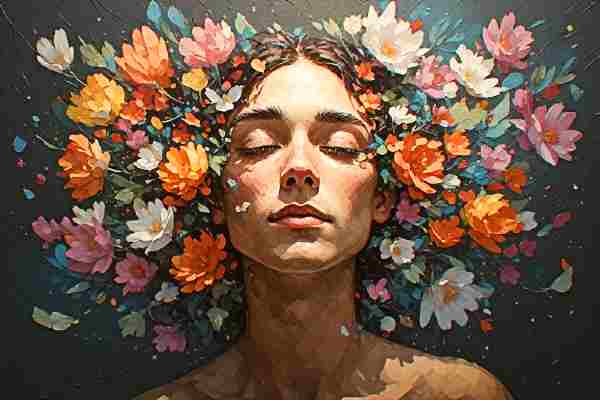
Want a healthier culture and society? One way to begin is by developing a mindset for living the higher virtues. These virtues are already inside us. With the right attitude and daily choices, we can bring them forward and let them guide how we live.
In this article, we look at what it means to live the higher virtues and how different traditions understand this idea. We look at spiritual, psychological, scientific, and cultural views. Each offers lessons on human growth.
By learning from these perspectives, you can discover where your own strengths are and where you may need more practice. This helps you build a mindset that supports the higher virtues in everyday life.
Inner Work Gate Notice:
It may increase discomfort before resolution. The exercises are designed to examine and restructure belief patterns, identity structures, or emotional resistance. Emotional stability should be established before engaging with this material. This article is not designed for immediate calming. It is designed for transformation.
Understanding spiritual perspectives
When we define the words we use, we create clarity and reduce confusion. To understand something is to know how it works.
The word “spirit” or “spiritual” often points to the non-physical, aware part of our mind. Ancient cultures called this the spirit or soul. Some traditions call it the observer. Modern psychology and science use words like consciousness and awareness. These ideas use different language, but they often describe similar parts of human experience.
A perspective is like a filter. It shapes how we see events, form opinions, and make decisions. Our perspectives come from our mindset, values, beliefs, experiences, and culture.
- A mindset is a way of thinking and interpreting life.
- A worldview is the collection of beliefs and values that shape our mindset.
- A paradigm is a worldview shared by a larger group or culture.
Together, these elements influence how we see ourselves, others, and the world around us.
A mindset for living the higher virtues is a way of life. It’s a philosophy guided by clear values, steady attention, and a sense of purpose that supports both people and the planet. When we take time to explore different spiritual perspectives, we gain insight into ourselves and into others.
Keys to living the higher virtues
1. Childlike innocence
Our original state of mind lets us approach life with curiosity, wonder, creativity, and openness. Children explore the world without many of the fears, labels, and judgments that adults often carry.
We can reconnect with this healthy curiosity by remembering what brought us joy as children. Think of games, hobbies, or places that made you feel alive and engaged. Returning to these kinds of activities can restore a sense of play and openness.
Childlike innocence does not mean being naive. It means staying curious, flexible, and willing to learn.
2. Embracing inner work
If we want to grow, we need to look at the beliefs, habits, and emotional patterns that shape our lives.
Inner work is the process of exploring the mind and getting to know ourselves more deeply. It helps us see our thoughts, feelings, values, and motivations more clearly.
Common inner work practices include:
- Self-reflection and self-inquiry
- Meditation
- Simple awareness exercises
- Journaling
- Natural healing practices
- Personal growth methods
The purpose of inner work is not to judge ourselves. The goal is understanding. As we understand ourselves better, we can see which beliefs and habits support our well-being and which ones hold us back.
3. Presence
Presence means giving your full attention to the moment you are in right now. Instead of getting lost in regrets about the past or worries about the future, you stay engaged with life as it unfolds.
When we are present, we can choose our responses more carefully instead of reacting on autopilot. In this state, we notice our habits and fears more easily. Once we see them, we can decide how we want to act instead.
Presence makes inner work more effective because we are actually paying attention to what is happening inside and around us. Developing presence is one of the most important keys to living the higher virtues.
Intuitive or inspired living means not just passively hearing the voice, but acting on it. — Stephen Nachmanovitch
4. The higher virtues
The higher virtues of the spirit are noble qualities of human awareness. They are not prizes we earn from outside. They are natural potentials already within us.
These virtues are:
- Healthy expressions of consciousness and awareness.
- Gifts are carried in our biological and psychological nature.
- Part of our evolutionary and ancestral heritage.
Every person has the capacity for all nine virtues. Still, each person often has one main “gateway” virtue that feels most natural. The Enneagram, a personality system, can help people see which virtue is their main entry point and what blocks it.
As we continue inner work, unhealthy conditioning and limiting beliefs lose strength. This opens the way for all nine virtues to become more active in daily life.
- The nine virtues of the spirit are innate human potentials. They are inherited through our evolutionary and ancestral heritage.
- These virtues are the highest expressions of consciousness and awareness.
- Each personality type has a natural gateway virtue that serves as an entry point into spiritual growth.
- Through inner work and integration, the barriers that block awareness are removed, allowing access to all nine virtues.
The Enneagram is a useful tool for seeing personality patterns and growth opportunities. It reveals pathways that lead toward greater balance and integration. With this tool, you can see the obstacles holding you back from a mindset for living the higher virtues.
The fragrance of the heart is made up of the qualities and virtues of our spirit. Most of us have learned how to keep our hearts closed in a world that would trample all over us if we let it. Being open hearted today seems to require tremendous courage. — Osho
5. Exploring the shadow self
The shadow self holds the parts of us we often avoid, deny, or ignore. These can include fears, insecurities, unhealthy habits, emotional wounds, and limiting beliefs.
Shadow work is not about blaming ourselves. It is about being honest and seeing what is really there. When hidden patterns become visible, we can choose to change them.
Every strength can become a weakness when used in the wrong way. Every weakness can become a strength when understood and used wisely. Shadow work helps us learn from past experiences, heal old hurts, and release patterns that no longer serve us.
As we integrate these hidden parts, we move toward greater wholeness, authenticity, and freedom.
6. Promoting authenticity
Living the higher virtues means living as your authentic self. Authenticity is being honest about who you are, what you value, and how you experience life. It includes accepting both your strengths and weaknesses without pretending to be someone else.
Many people spend years trying to fit into expectations from family, culture, social groups, or institutions. These influences can help in some ways, but they can also pull us away from our true nature.
Living authentically takes courage. It means making choices that match your values instead of simply following the crowd. Authenticity is not about being perfect. It is about being genuine.
As we become more authentic, we often feel more compassion for ourselves and others. We stop wasting energy hiding parts of ourselves and start living with more honesty and purpose. This makes it easier for the higher virtues to show up in everyday life.
7. Living the higher virtues as a path of awareness
Living the higher virtues is not about following a single belief system, culture, or tradition. People use many words for the same inner experience. Some say spirit. Others say soul, awareness, consciousness, or the observer.
Living this way means making choices based on wisdom instead of fear. It means choosing compassion instead of harsh judgment. Exercising thoughtful action instead of automatic reaction.
As we grow in awareness, the virtues show up more clearly in our thoughts, emotions, relationships, and actions. Inner work, presence, authenticity, and self-understanding all support this kind of spiritual development.
People may follow religious paths, philosophical ideas, scientific views, or personal practices. The common thread is the desire to live with more meaning, connection, and purpose. Living the higher virtues is less about the label we use and more about how we choose to live each day.
8. Time to reflect
What does adopting a mindset for living the higher virtues mean to you?
Reflection is a powerful tool for growing in awareness. If you want to explore this question, set aside a few quiet minutes and use a journal. Writing by hand often slows the mind and encourages deeper thought.
Try this simple exercise:
- Sit quietly for a few minutes and let your mind settle.
- Take several slow breaths and focus on the present moment.
- Ask yourself, “What does living the higher virtues mean to me?”
- Write down whatever comes to mind without judging your answers.
- Keep exploring the question for several minutes.
There are no right or wrong answers. The purpose is not to find a perfect definition. The goal is to see more clearly what you believe, value, and have experienced. Your answers today may be different from your answers a year from now. Growth often changes how we understand ourselves and the world.
The journey begins with curiosity.
Different perspectives on living the higher virtues
Throughout history, people have created many ways to understand the spirit. They explored consciousness, awareness, and what it means to be human. Culture, geography, education, family traditions, and personal experiences shape our views. Each factor influences how we think about these ideas.
Languages can differ. Still, many views share key themes. These include meaning, connection, growth, compassion, and self-understanding. Exploring these viewpoints does not mean we must agree with all of them. Instead, it helps us see how people make sense of their lives and experiences.
Spiritual and religious perspectives
Indigenous and animist traditions
Many Indigenous cultures view life as a web of connections. This web links people, animals, plants, ancestors, and the natural world. Their lifestyle is built around a mindset for living the higher virtues.
From this view, living the higher virtues means living in harmony with nature and honoring the connections that support life. Respect, gratitude, and care for the land are central values. People are encouraged to support their communities and learn from the wisdom of those who came before them.
Animist traditions often teach that spirit exists throughout nature. Mountains, rivers, forests, animals, and even weather can be seen as part of a living, connected world. Living the higher virtues here means recognizing these bonds and acting with respect toward all forms of life.
Western religion
In the Abrahamic tradition, living by higher virtues means following the values and beliefs of the religion. Life is believed to have divine guidance and a higher purpose.
In Christianity, being guided by the Holy Spirit is linked with love, kindness, patience, forgiveness, and serving others.
In Judaism, the concept of Ruach can mean spirit, breath, or divine inspiration. Living the higher virtues means following ethical principles. It also means having a strong relationship with God.
In Islam, ruh refers to the soul or spiritual essence. Living the higher virtues may include devotion, self-discipline, compassion, and steady spiritual growth.
These traditions have different beliefs and practices. Still, they often promote personal growth, ethical living, and caring for others.
Eastern religion
Many Eastern traditions see spiritual development as increasing awareness and reducing needless suffering.
In Hinduism, spiritual growth means living in harmony with dharma. It includes gaining self-knowledge and seeing a deeper connection with life.
In Buddhism, higher virtues relate to mindfulness. They also connect to compassion and wisdom. These virtues help reduce suffering. Practices like meditation help people develop calm attention and emotional balance.
In Taoism, living the higher virtues means flowing with the natural rhythms of life. Instead of forcing outcomes, people learn to work with the natural order of existence.
Though these traditions differ, they often highlight awareness, balance, compassion, and inner growth.
Philosophy, psychology, and science
Philosophical perspectives
In many philosophical traditions, living the higher virtues can be seen as living an examined life. Socrates and other thinkers valued asking questions, reflecting, and seeking wisdom. They believed these were more important than just going through life without thought.
Existential philosophy looks at how people create meaning in a world without fixed answers. From this view, living the higher virtues means taking responsibility for one’s choices, values, and direction.
Phenomenology focuses on direct experience. It says that consciousness is always aware of something. To understand life, we must pay close attention to our experiences.
These approaches show themes of reflection, awareness, and intentional living. They appear often.
Psychological perspectives
Modern psychology and spiritual traditions use different languages. However, they both explore similar aspects of human life.
Humanistic psychology emphasizes personal growth, self-actualization, and authenticity. It suggests that people have a natural drive toward wholeness when they are in supportive conditions.
Depth psychology looks at the unconscious mind. It explores hidden motivations, emotional patterns, and symbolic meanings. This connects closely with shadow work and inner reflection.
Positive psychology is about well-being and resilience. It values strengths like gratitude, compassion, and purpose.
Living by higher virtues means being self-aware. It also means integrating emotions and finding psychological balance.
Scientific perspectives
Science doesn’t define “spirit” in metaphysical ways. However, it studies consciousness, perception, and behavior.
Neuroscience looks at how brain activity relates to thoughts, emotions, and awareness. It does not fully explain consciousness, but it maps the biological processes linked to experience.
Cognitive science looks at how people take in information, make choices, and build their view of reality.
Living the higher virtues means understanding your thoughts and feelings. This awareness can shape your experiences for the better. Science and spirituality use different words. Still, both aim to understand human experience.
Literary, artistic and social perspectives
Literary and artistic perspectives
Art and literature often express what is hard to say in logical terms alone.
Writers, poets, musicians, and visual artists explore big themes. They look at meaning, identity, suffering, beauty, and transcendence. Living by higher virtues links to creativity. It also relates to expression and engaging deeply with experiences.
Art lets people explore inner states and share them in symbolic form. It often shows emotional and spiritual dimensions of life more directly than analysis.
Many artistic traditions suggest that creativity grows from presence, openness, and emotional honesty. Living the higher virtues means expressing yourself. It also means letting your creativity flow.
Social perspectives
From a social view, spirituality is shaped by culture, community, and shared values.
Societies create systems that shape how people see purpose, morality, and identity. Living the higher virtues with others means being kind. It involves helping each other and taking responsibility. It includes seeing how deeply human lives are connected.
In modern societies, spirituality can appear in both religious and secular forms. Some communities emphasize traditional religious practices. Others focus on mindfulness, ethics, or personal growth.
Despite differences, social expressions of spirituality often highlight belonging, empathy, and shared responsibility.
Developing a mindset for living the higher virtues
A spiritual living mindset is not limited to one tradition or belief system. It is a way of approaching life that emphasizes growth and values that support well-being.
Developing this mindset means combining insights from different viewpoints. It also involves staying rooted in your own experiences.
Key elements include:
- Self-awareness and reflection
- Emotional honesty and integration
- Openness to learning and growth
- Compassion toward self and others
- Responsibility for one’s actions
- Willingness to question assumptions
This mindset is flexible rather than rigid. It can change as understanding deepens.
Secular but spiritual
A secular spiritual approach does not require following religious rules. Instead, it focuses on lived experience, ethical values, and personal development.
Spirituality, living higher virtues, involves cultivating attention. They also mean finding meaning and showing care in everyday life. Meditation, journaling, time in nature, and quiet reflection can help with this approach. You don’t need specific beliefs to benefit from them.
A secular spiritual mindset helps people gain insights from various traditions. It keeps them grounded in their own observations and experiences.
Traditional but open-minded
Many people keep strong ties to religious or cultural traditions while also staying open to wider perspectives.
This approach keeps our heritage and community strong. It also encourages learning and personal growth. Being open-minded does not mean leaving tradition behind. It means engaging with it thoughtfully and allowing space for reflection.
This balance can support both identity and growth.
Conclusion
Living the higher virtues of the spirit isn’t tied to one belief system, culture, or philosophy. It is a broad and evolving way of understanding human experience.
Many traditions and disciplines share common themes.
When we explore religion, philosophy, psychology, science, or art, higher virtues stand out. They help us think more clearly. They also guide us to make better choices.
In the end, the path is not about finding the “correct” perspective. It’s about understanding more deeply. It’s about living in a way that brings meaning, growth, and care to our lives.
References
- Nicomachean Ethics, Aristotle.
- The Republic, Plato.
- Meditations, Marcus Aurelius.
- The Varieties of Religious Experience, William James.
- Man and His Symbols, Carl G. Jung.
- Man’s Search for Meaning, Viktor E. Frankl.
- Toward a Psychology of Being, Abraham Maslow.
- On Becoming a Person, Carl Rogers.
- Flow: The Psychology of Optimal Experience, Mihaly Csikszentmihalyi.
- Character Strengths and Virtues: A Handbook and Classification, Christopher Peterson & Martin E. P. Seligman.