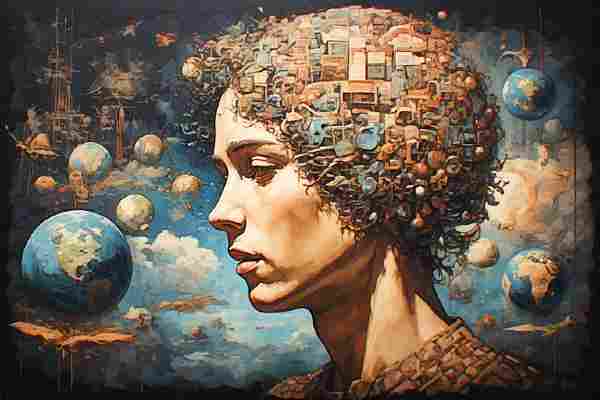
Memetic transmission explains how ideas replicate, shaping minds and cultures over time. Belief systems and social systems spread and reinforce their ideas. The narratives they project can then influence beliefs, values, and behavior.
The concept of using social connections is an old idea. It existed long before online social networks. Major institutions used systems of indoctrination to influence thinking, beliefs, and values.
This layer of influence looks at how ideas spread, compete, and evolve.
This article is the seventh installment in a seven-part series that examines how ideas take hold in the human mind, organize into shared systems, and eventually shape culture over time. Each article explores a different stage in that process and how those stages connect to one another. Return to the hub overview of the series.
Memetic transmission shaping minds
Belief systems do not stay in one place. Ideas travel through conversations, stories, media, and education. As people share ideas, those ideas move from one mind to another.
A meme is a modern example of how an image is not just a joke or a play on words. It is a unit of cultural information that is replicated. The message becomes a part of the cultural archive.
Memetic transmission is the process through which beliefs move and influence society. When many people hear and are encouraged to repeat the same ideas, those ideas begin to guide how communities think and act.
Over time, belief systems spread across societies. Some ideas grow stronger and become widely accepted, while others fade away. The ideas that spread most successfully often shape the cultural identity of a community.
Shaping minds and cultures
A meme is a modern example of how an image is not just a joke or play on words. It is a unit of cultural information that is replicated. The message becomes a part of the cultural archive.
When people repeat a story, a value, or a belief, that idea spreads. Each time it is repeated, it has another chance to influence someone else.
The process of memetic transmission shaping minds treats ideas like cultural replicators. Just as genes pass biological traits from one generation to the next, memes pass ideas from one mind to another.
Some ideas spread easily because they connect with emotions, identity, or simple explanations. These ideas replicate quickly and become part of the cultural environment.
Imitation and social learning
People learn by observing and being influenced by others. Children learn from parents. Students learn from teachers. Communities learn from shared traditions.
Through imitation, ideas move from person to person. People copy behaviors, repeat stories, and adopt beliefs they see around them.
This social learning helps memetic transmission spread ideas across communities and generations.
Competition between narratives
Different belief systems often offer different explanations of the world. These narratives compete for attention and influence.
People choose which ideas to follow based on trust, identity, and emotional connection. Some narratives become dominant within a culture, while others remain small or disappear.
This competition shapes the beliefs that survive and spread.
Channels of cultural transmission
For much of human history, stories were the main way people passed ideas across generations. Oral traditions carried knowledge, values, and cultural identity.
Stories make ideas easier to remember. A well-told story can travel across many communities and survive for centuries.
Through storytelling, memetic transmission spreads beliefs and values. Many stories and legends existed long before written language or modern media.
Media and communication networks
Modern communication systems allow ideas to spread faster than ever before. Television, books, social media, and digital networks carry ideas across large audiences.
These networks connect people from many cultures. As ideas travel through these systems, they influence how societies think and respond to events.
Media plays a powerful role in memetic transmission, shaping minds and cultures.
Education and institutions
Schools and institutions help transmit ideas in structured ways. Education teaches history, values, and social expectations that shape how people see the world.
Institutions also repeat ideas through traditions, ceremonies, and formal teaching. These repeated messages strengthen belief systems and help them spread across generations.
Through education and institutions, memetic transmission reaches large populations.
Factors that accelerate transmission over time
Ideas that trigger strong emotions spread quickly. Fear, hope, anger, and pride can motivate people to repeat stories and share beliefs.
When an idea connects with emotion, it becomes easier to remember and more likely to be shared with others.
You can watch memetic transmission shaping minds in a community in real time when a phrase, slogan, or belief suddenly becomes the norm.
Identity reinforcement
Ideas that strengthen group identity often spread easily. Beliefs that define who belongs to a community can create strong loyalty.
When a belief becomes part of identity, people defend it and share it with others. This reinforcement helps ideas spread through social networks.
Identity-based ideas often become powerful drivers of memetic transmission, shaping minds and cultures.
Simplicity and memorability
Simple ideas are easier to remember and repeat. Messages that are short, clear, and easy to explain travel faster than complex ideas.
A simple story or slogan can move quickly through communities because people can easily share it with others.
This simplicity allows memetic transmission to carry ideas across large populations.
Competition between belief systems
Conversion and recruitment
Belief systems actively seek new members. Religious movements, political groups, and cultural organizations compete. They all want people to adopt their ideas.
Through outreach, teaching, and persuasion, these groups try to expand their influence. Conversion and recruitment help belief systems spread into new communities.
Cultural assimilation
Sometimes belief systems spread gradually through cultural contact. When different communities interact, they may adopt parts of each other’s traditions.
Over time, ideas blend and form new cultural patterns. Cultural assimilation allows memetic transmission to reshape beliefs as societies interact.
Conflict between ideologies
Competing belief systems can also lead to conflict. Groups may disagree about values, authority, or social organization.
These conflicts often appear in political debates, cultural disagreements, or even wars. Competition between ideologies is part of how belief systems spread and evolve across societies.
Evolution of belief systems
Adaptation to new environments
As societies change, belief systems often adapt to new conditions. New technologies, economic systems, and social structures create new challenges.
Beliefs that adjust to these changes are more likely to survive. Adaptation allows belief systems to remain relevant as cultures evolve.
Fusion of cultural traditions
When cultures interact, their ideas may combine. Traditions, stories, and values from different groups can merge into new cultural forms.
This blending creates hybrid belief systems that reflect multiple influences. Fusion of traditions shows how memetic transmission reshapes cultural identity over time.
Emergence of new ideological movements
New belief systems sometimes emerge when existing ideas combine or when societies face new problems. Sometimes new groups form to fill a gap or in response to a situation. Increasing their social visibility is often the key to attracting potential members.
Movements may arise that challenge older beliefs or propose new ways of organizing society. Through memetic transmission, these movements can grow quickly and reshape cultural landscapes.
Final thoughts
Belief systems function like living cultural structures. They grow, adapt, and spread as people share ideas across generations. The more resources they have to share their message and the greater their visibility, the faster they grow.
Much of history can be understood through memetic transmission, shaping the rise and fall of dominant ideas.
By recognizing these patterns, people can approach belief systems with greater awareness. When these mechanisms reveal themselves, they improve dialogue and encourage discussion across cultures. The question is, who is the actor behind the curtain shaping minds and cultures?
References
- The Selfish Gene. Richard Dawkins, 1976.
- Cultural Evolution and the Transmission of Social Norms. Proceedings of the National Academy of Sciences.
- Social Learning Strategies in Humans and Animals. Philosophical Transactions of the Royal Society B.
- Meme. Encyclopaedia Britannica.
- The Spread of Behavior in Social Networks. American Journal of Public Health.
- The Cultural Transmission of Beliefs and Practices. Philosophical Transactions of the Royal Society B.
About this project
The Seeker Project 4 Spiritual Exploration (SP4SE) is a project of Americans In Alliance. The mission of SP4SE is spiritual education. The mission of Americans In Alliance is environmental conservancy. Click the links below to learn more and support our efforts.