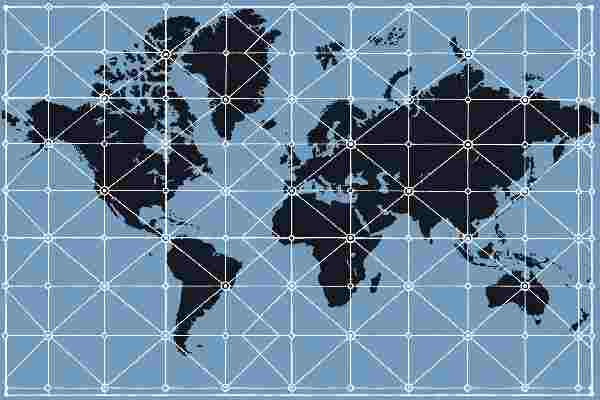
The locations of the 38 ancient sacred sites are not a coincidence. They are strategically located on the Earth grid ley lines map. An energy network known to ancient people worldwide. Some of these archaeological treasures are likely on your travel wish list.
Global networks are not an invention of the modern world. Ancient civilizations designed and built them eons before recorded history. It prompts several questions.
This article focuses on the ancient architectural wonders built along the ley lines Earth grid network. It explores how pyramids, temples, tombs, and ceremonial centers were placed on key points of the Earth grid to align with energy, astronomy, and sacred geography.
For the darker, anomaly‑based side of the Earth grid, see the companion article on The 12 Vile Vortices.
For the metaphysical and experiential interpretation of dark energy and light energy within the ley lines Earth grid network, see the companion article on Dark Energy and Light Energy.
The expanded Earth grid ley lines map
This system of 38 ancient sacred sites expanded earlier research connected to the 12 Vile Vortices and added many more ancient landmarks, temples, pyramids, tombs, sacred cities, and ceremonial centers across the world.
The earlier vortex map focused mainly on unusual regions tied to magnetic disturbances, strange weather, navigation problems, and unexplained stories. This article focuses on the later expansion of the grid and the architectural sites connected to it.
Researchers who study ley lines believe ancient builders may have understood something about geography, astronomy, or natural Earth patterns that later civilizations forgot. Some researchers think these locations were chosen because they align with celestial events, while others believe they were linked to trade routes, sacred geography, or symbolic systems.
Skeptics disagree and argue that many of the alignments are coincidences or examples of people finding patterns where none exist. One or two sacred sites might be a coincidence, but 38 sites on a complex global pattern are beyond the probability of coincidence.
Still, the Earth grid ley lines map continues to raise important questions.
Why do massive structures from different civilizations appear near similar geometric alignments?
Why were so many ancient ceremonial centers built in precise locations?
Did ancient cultures share knowledge across continents long before modern history believes they could?
From the 12 vile vortices to the Becker-Hagens grid
Researcher Ivan T. Sanderson first mapped twelve unusual locations around the world that later became known as the 12 Vile Vortices. These areas were associated with strange weather, magnetic anomalies, navigation failures, compass disruptions, and stories of disappearances.
Sanderson believed these locations formed a repeating global pattern instead of random isolated events. His original model focused on physical anomalies and unusual environmental effects.
Later researchers, including Becker and Hagens, expanded Sanderson’s work into a much larger planetary grid. Instead of focusing only on mysterious activity, they added ancient sacred sites, pyramids, temples, burial complexes, and ancient cities that appeared to align with geometric patterns spread across the Earth.
Their system used an icosahedron-shaped grid made of interconnected triangles placed over the globe. When mapped onto Earth, many famous ancient sites appeared near the intersections and connecting lines.
This later system became known as the Becker-Hagens planetary grid.
Unlike Sanderson’s earlier model, the expanded grid focused more on sacred geography, symbolic alignments, ancient architecture, and possible connections between civilizations separated by oceans and time.
38 ancient sacred sites on the Earth Grid
British Isles and Western Europe
1. Standing Stones of Stenness — Scotland
The Standing Stones of Stenness are considered one of the oldest henge monuments in the British Isles. The site once contained at least nineteen giant standing stones arranged in a large ellipse. Some of the stones originally stood nearly twenty feet tall. Researchers believe the monument dates back to the Neolithic period and may be older than Stonehenge.
2. Solsbury Hill — England
Solsbury Hill is an Iron Age hillfort near Somerset, England. The flat-topped hill rises high above the surrounding countryside and was occupied between 300 BCE and 100 BCE. Like many sites connected to ley line theories, it combines defensive positioning with possible ceremonial use.
3. Stonehenge — England
Stonehenge remains one of the most recognized ancient monuments in the world. The massive standing stones form a circular arrangement aligned with solar events like the summer solstice. Some of the bluestones used at the site were transported from quarries more than 140 miles away, showing the enormous effort involved in constructing the monument.
4. Locmariaquer Megaliths — France
This Neolithic site contains giant stone structures, burial chambers, and dolmens believed to be older than Stonehenge. One of the most famous structures is the broken Grand Menhir, which may once have stood over sixty feet tall.
5. Carnac Stones — France
The Carnac region contains more than 3,000 standing stones arranged in long rows stretching across the landscape. Researchers still debate why these stones were placed in such precise formations. Some believe the rows carried symbolic or astronomical meaning.
6. Marhoj Passage Grave — Denmark
The Marhoj Passage Grave is an underground Neolithic burial structure connected to ancient Danish burial traditions. The site includes a stone-lined chamber and a passageway built thousands of years ago.
Turkey and Egypt
7. Yazılıkaya Sanctuary — Turkey
This ancient Hittite sanctuary contains carved stone reliefs showing gods, rulers, and ceremonial scenes. The site was part of the larger Hittite capital region and remains one of the best-preserved examples of Hittite religious artwork.
8. Great Pyramid of Giza — Egypt
The Great Pyramid is the oldest surviving wonder of the ancient world and one of the most studied structures ever built. Its massive scale, mathematical precision, and astronomical alignments continue to inspire debate about ancient engineering knowledge.
9. Temple Complex of Luxor — Egypt
The Luxor temple region includes multiple temple complexes connected to Egyptian kingship and coronation ceremonies. The area stretches along the Nile River and became one of the most important ceremonial centers in ancient Egypt.
10. Valley of the Kings — Egypt
Located near Luxor, the Valley of the Kings served as a burial ground for pharaohs and nobles for hundreds of years. The site contains elaborate underground tombs carved deep into the rock.
11. Philae Temple — Egypt
The Philae Temple complex originally stood near the Nile River but was later relocated after flooding caused by the Aswan Dam. The temple was dedicated mainly to the goddess Isis and became one of the last major centers of ancient Egyptian religion.
Middle East and Indus Valley
12. Petra — Jordan
Petra is famous for its massive structures carved directly into red sandstone cliffs. The city served religious, commercial, and defensive purposes and became one of the most important trade centers in the ancient Middle East.
13. Ziggurat of Ur — Iraq
The Ziggurat of Ur is a stepped pyramid structure built during the Neo-Sumerian period. It functioned as part of a temple complex dedicated to the moon god Nanna.
14. Arg-e Bam — Iran
Arg-e Bam is one of the largest adobe fortress cities ever built. The site became an important stop along ancient Silk Road trade routes and reflects early Persian architectural design.
15. Mohenjo-Daro — Pakistan
Mohenjo-Daro was one of the largest cities of the Indus Valley civilization and dates to around 2500 BCE. The city shows evidence of advanced urban planning, drainage systems, and organized construction.
India and Tibet
16. Virupaksha Temple — India
This temple complex at Hampi is dedicated to Shiva and remains an active religious site today. The region around Hampi contains many monumental ruins and sacred structures.
17. Sri Ranganathaswamy Temple — India
The Sri Ranganathaswamy Temple is considered the world’s largest functioning Hindu temple. Its enormous walls, towers, and corridors attract millions of visitors and pilgrims.
18. Ramanathaswamy Temple — India
This temple is one of the sacred Jyotirlinga temples connected to Shiva worship. It is also known for its long stone corridors and ceremonial importance.
19. Potala Palace — Tibet
The Potala Palace rises high above the city of Lhasa and once served as the Dalai Lama’s winter residence. The structure contains thousands of rooms, shrines, statues, and ceremonial chambers.
China and Southeast Asia
20. Leshan Giant Buddha — China
The Leshan Giant Buddha is the world’s largest pre-modern stone Buddha statue. Carved directly into a cliff face, the monument towers over the surrounding rivers below.
21. Prang Pyramid — Cambodia
This seven-tier pyramid structure dates to the Khmer Empire and rises steeply above the surrounding landscape.
22. Angkor Wat — Cambodia
Angkor Wat is the largest religious monument in the world and one of the most visited ancient sites on the Earth ley lines map. The enormous temple complex combines detailed carvings, symbolic geometry, and astronomical alignments.
23. Tana Toraja Tombs — Indonesia
These burial chambers were carved directly into volcanic rock cliffs. The tombs remain deeply connected to the cultural traditions of the Toraja people.
24. Imperial Tombs of Xia — China
This burial complex contains royal mausoleums and hundreds of graves spread across a large region in China.
25. Janggun Chong Pyramid — China
Sometimes called the “Pyramid of the East,” this ancient tomb structure contains enormous stone blocks and remains surrounded by mystery regarding its true age and original purpose.
Pacific and South America
26. Easter Island — Pacific Ocean
Easter Island is famous for the giant Moai statues carved by Polynesian builders. The island was also one of the locations connected to Sanderson’s original vortex map because of its remote position and unusual history.
27. Tiahuanacu — Bolivia
This pre-Columbian site near Lake Titicaca contains monumental stone structures and massive carved blocks that continue to puzzle researchers.
28. La Puerta de Hayu Marca — Peru
Known as the “Gate of the Gods,” this carved stone doorway is surrounded by legends involving portals, spirits, and disappearances.
29. Machu Picchu — Peru
Machu Picchu sits high above the Urubamba River in the Andes Mountains. The Inca city combines advanced stone construction with dramatic mountain geography and astronomical alignments.
Central America and Mexico
30. Tazumal Pyramid Complex — El Salvador
This ancient ceremonial complex formed part of the larger city of Chalchuapa and reflects the influence of Mayan culture in the region.
31. Copán — Honduras
Copán became one of the great cities of the Maya civilization and is known for its detailed carvings, monuments, and hieroglyphic stairways.
32. Pyramid of the Sun — Mexico
The Pyramid of the Sun dominates the ancient city of Teotihuacan and remains one of the largest pyramids in the Americas.
33. Tikal Temple Complex — Guatemala
Tikal was one of the most important Maya cities and contains towering pyramids rising above the rainforest canopy.
34. El Castillo at Chichén Itzá — Mexico
This step pyramid dedicated to Kukulcán was carefully aligned with seasonal astronomical events, including the famous serpent shadow effect during the equinox.
North America
35. Crystal River Mound Complex — Florida
This Native American ceremonial site was used for more than 1,600 years and includes burial mounds, temple platforms, and gathering spaces.
36. Emerald Mound — Mississippi
Emerald Mound is one of the largest ceremonial earthworks in the United States. Archaeologists believe it was used for important religious and ceremonial gatherings.
37. Monks Mound — Illinois
Part of the Cahokia complex, Monks Mound is the largest earthwork pyramid in northern Mesoamerica. Its base is similar in size to the Great Pyramid of Giza.
38. Grave Creek Mound — West Virginia
This massive conical burial mound required the movement of thousands of tons of earth and remains one of the largest burial mounds in North America.
Patterns across the planet
Supporters of the Becker-Hagens grid believe these ancient sacred sites reveal a hidden geometric pattern connected to the Earth itself.
Some researchers focus on astronomical alignments, sacred geometry, magnetic anomalies, solar and lunar cycles, ancient travel routes, and shared architectural knowledge between civilizations.
Many structures were built with advanced engineering techniques that still raise questions today. Many sites align with celestial events such as solstices, equinoxes, and lunar cycles.
Several locations appear close to geometric intersections within the Earth grid model and the ley lines map.
Ancient cultures separated by oceans created remarkably similar pyramids, ceremonial centers, and sacred architecture.
The debate continues because the patterns remain difficult to completely dismiss.
The legacy of the global ley lines grid map
The Becker-Hagens planetary grid expanded the earlier vortex map into a much larger system of ancient sacred sites and ancient architecture.
Whether someone views ley lines as symbolic, spiritual, geographic, or purely coincidental, the map continues to inspire curiosity about the ancient world and the people who built these structures.
These monuments represent some of humanity’s greatest achievements. They also remind us how much ancient knowledge may have been lost over time.
Many of the builders left behind no clear written explanation for why they chose these exact locations or how they developed such advanced construction methods.
That mystery is part of what keeps interest in the Earth grid and ley lines alive today.
References
- Invisible Residents: The Reality of Underwater UFOs. Ivan T. Sanderson, 1972.
- The Twelve Devil’s Graveyards Around the World. Ivan T. Sanderson, Saga Magazine, 1972.
- The Old Straight Track. Alfred Watkins, 1925.
- Earthstar: The Visionary Landscape. Robert Lawlor, 1979.
- The Planetary Grid System. Becker and Hagens Research.
- Earth’s Magnetic Field. NASA Earth Observatory.
- Geomagnetism FAQ. NOAA National Centers for Environmental Information.
- Stonehenge. Encyclopedia Britannica.
- Angkor Wat. UNESCO World Heritage Center.
- Machu Picchu. UNESCO World Heritage Center.
- Great Pyramid of Giza. Encyclopedia Britannica.