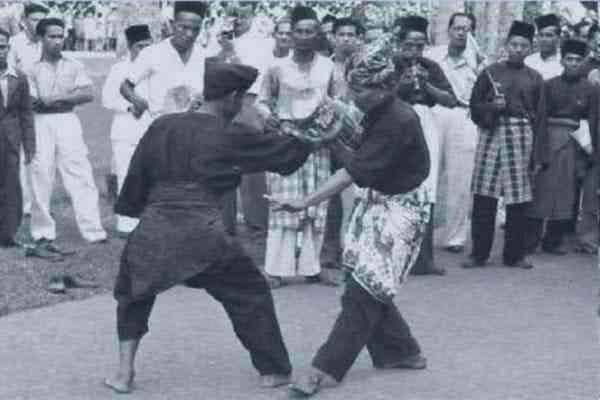
The dance of Silat is both a cultural messenger and a martial art hiding in plain sight. It is not a sport like other commercial systems. It is a lethal combat art inside music and movement.
The art grew in times when open training was forbidden, so people learned to protect their skills by blending them into dance. This mix of culture, rhythm, and hidden technique helped Silat survive for generations.
Silat is more than a set of moves. It is a way to shape the body and mind at the same time. The dance teaches timing, breath, and awareness without looking like a fight. These habits help students stay calm under pressure and react with purpose. This is why the dance is still used today. It trains the whole person while keeping the art safe inside the culture.
Martial art hiding in plain sight
The dance of Silat was practiced to the sound of Gamelan music. The movements looked like dance, not combat. Outsiders saw a show, not a threat, which gave students space to settle themselves and learn without fear. Training in public without drawing attention helped them stay alert in a quiet, steady way.
The traditional music is a mnemonic learning aid that encodes the applications hidden in the dance. It also helped the community stay connected to its identity during hard times, giving students a sense of direction and belonging.
Silat works as a martial art hiding in plain sight because the culture and the combat method are woven together so tightly that neither can be separated.
This difference is not an accident. The dance protected the art, and the art shaped the dance of Silat, teaching people how to stay ready without showing their readiness.
Commercial systems vs. Silat
Commercial systems of karate, like taekwondo, use straight lines, fixed stances, and robotic movements. These systems are easy to see and easy to judge. They look sharp, and the moves are clear, predictable, and meant to be performed the same way every time.
Most systems branded as martial or self-defense are really sports. Sports have rules. There are rules in boxing, karate, and wrestling. Even MMA, which allows for wrestling as well as kicking and punching, still has rules of engagement. You are not permitted to eye gouge, hit the groin, use a knee when someone is on the ground, twist the neck, strike the spine or back of the head, or slap the ear.
Silat is the opposite. It trains specifically to take advantage of all these vital areas. So, training must be done with extreme care and control, and students learn early that responsibility matters as much as technique.
Why the dance of Silat is called dirty boxing
Silat is often called “dirty boxing” because it uses moves that are not allowed in sports. These moves are made for real danger, not for points. They include strikes to weak areas, fast sweeps, sudden drops, and quick changes in direction. They also include close‑range tactics that require calm judgment and precise timing.
These methods are simple and direct. They help a person respond under pressure without freezing. Silat also teaches students to use anything around them. A stick, a cloth, or even a shift in rhythm can become an advantage. This trains the mind to stay resourceful instead of rigid.
The dance hides these moves in plain sight. Silat looks ugly compared to traditional self-defense systems. The practitioner is slapping their arms. Its movements are not consistent. It highlights jerky movements and direction changes. Some movements are circular but switch to straight lines.
The shifting rhythm lets students train a martial art hiding in plain sight without revealing the purpose behind each movement.
Chinese influence and the birth of kun tao
Silat did not grow alone. Chinese traders and settlers brought their own arts to the islands. These arts included soft turning, coiling steps, and smooth power from the center of the body. Over time, these ideas blended with local systems.
This mix created kun tao. Kun Tao uses spirals, circles, and sudden bursts of force. It teaches the body to stay relaxed until the moment of impact. It also teaches how to change direction without warning. These ideas fit naturally into Silat, which already uses hidden angles and deceptive timing.
Some Silat styles look soft and flowing because of this influence. Others look sharp and direct. Many use both. Some combine all methods. The dance holds all of it together, helping students understand how different ways of moving can support the same purpose.
The teacher’s responsibility
Silat teachers are careful about who they train. The art is powerful. A student must show respect, patience, and good character. A teacher looks for someone who will use the art wisely. This protects the student, the teacher, and the community.
A wise teacher knows that skill without control is dangerous. This is why emotional balance is part of the training. Students learn to stay steady, centered, and aware. A teacher watches for signs of anger, fear, or pride. Only students who can handle the art are allowed to learn the deeper parts. This careful selection helps students understand that the art is carried with intention, not impulse.
Never teach a monkey to use a hand grenade. You never know what they will do with it. ― Guru Tua
The three keys of the dance of Silat
1. Peripheral vision and eye control
Silat uses a wide, steady gaze. This helps control the sympathetic nervous system, preventing the activation of the fight, flight, or freeze response, the 3F response.
This is an automatic survival response that is triggered in stressful, dangerous situations. The body releases adrenaline and prepares for immediate action. Blood is shut off from the higher thinking centers of the brain, which can be damaged by these neurochemicals.
The 3F response gives us strength and blocks pain receptors, but it also prevents us from activating the higher thinking centers, which can respond more accurately and efficiently in an ever-changing confrontation.
Using the peripheral vision stare prevents the activation, enabling a more accurate response. This is the core element of the dance of Silat.
2. Controlled breathing
Slow breathing keeps the body steady. Some teachers use sounds or short words to guide the breath. These sounds match the rhythm of the moves. The breath becomes part of the dance and helps the student stay focused.
3. Gamelan rhythm as memory
The rhythm of Gamelan music becomes part of the training. Students learn to “hear” the music even when it is not playing. The rhythm helps the body remember the technical applications. It also helps the mind stay relaxed and ready, giving the student a sense of timing that feels natural instead of forced.
When these three elements are combined, the practitioner can move on time and respond with the right action because they are still using the higher brain function.
Training that looks like dance
Silat uses drills that look like dance but teach real skills. These drills help students learn timing, balance, and awareness. Silat practitioners do not have separate forms and a different strategy for combat. Silat practitioners fight with the dance— that’s the essence of a martial art hiding in plain sight.
Some examples include:
- Water is thrown at the face to test steady vision
- Calling out the move while doing it, like “Piting Kapala!”
- Moving in a line during the Dragon Dance
- Weaving in and out of partners to learn teamwork
The Dragon Dance is a group drill. Students follow a leader and move as one. They weave in and out, change direction, and shift pace together. This teaches how to stay aware of the whole group, not just one person. It also teaches how to protect others while staying balanced and calm. The drill builds trust, timing, and shared awareness, helping students feel how their movement affects the people around them.
Healing inside the tradition
Silat also has a healing side. The art of Pejut uses touch, breath, and gentle pressure. It is related to other healing arts like Reiki and Shiatsu. The same focus that helps in training also helps in healing. Students learn to calm themselves and help others do the same.
The healing art and the fighting art come from the same roots. Both use rhythm, breath, and awareness. Both teach the student to stay centered. Both help the community stay strong, reminding students that the purpose of the art is protection, not harm.
Summary
The dance of Silat is a cultural shield and a martial art hiding in plain sight. It teaches the ethical use of lethal response by staying calm under stress. It also teaches teamwork, healing, and respect.
Silat shows how culture can protect knowledge. It also shows how rhythm, breath, and awareness can shape the mind. The dance is more than a dance. It is a complete system built from cultural survival, practical dirty boxing, Chinese influence, Kun Tao, and inner control working together.
References
- Silat: Martial Arts of Southeast Asia, Donn F. Draeger.
- Malay Magic: Being an Introduction to the Folklore and Popular Religion of the Malay Peninsula, Walter William Skeat.
- The Krav Maga of Southeast Asia: Exploring Pencak Silat, National Library of Medicine.
- Traditional Martial Arts and Cultural Identity, National Institutes of Health.
- Motor Learning and Skill Acquisition in Martial Arts, National Institute of Neurological Disorders and Stroke.
- Stress Response and Fight-or-Flight Mechanism, National Institute of Mental Health.
- Breathing Techniques and Autonomic Nervous System Regulation, National Institutes of Health.
- Music, Rhythm, and Memory Encoding, National Library of Medicine.
- Martial Arts, Stanford Encyclopedia of Philosophy.
- Pencak Silat, Wikipedia.
About this project
The Seeker Project 4 Spiritual Exploration (SP4SE) is a project of Americans In Alliance. The mission of SP4SE is spiritual education. The mission of Americans In Alliance is environmental conservancy. Click the links below to learn more and support our efforts.