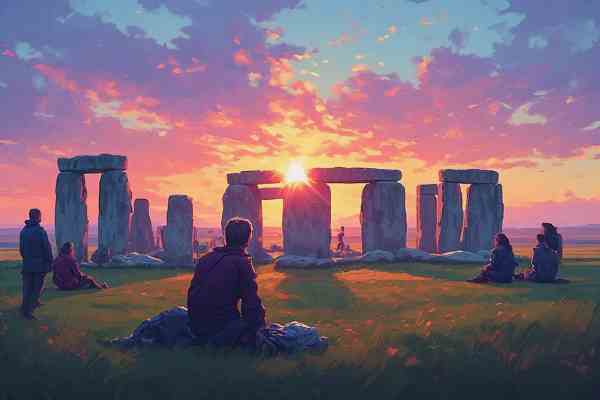
The sunrise and sunset create the twilight windows. During this short time, the light is softer, the world feels calm, and the sky becomes easier to look at. Many people use this moment for safe sungazing practice. A time for reflection and simple spiritual practice.
Every day there is a shift between night and day. If it is not cloudy, we witness the change of colors in the sky as light and darkness change places. It is more than a change in light; the air changes there are noticeable differences in wildlife habits. These twilight windows are the safe times to gaze at the horizon for a sunrise or sunset. Many people enjoy these moments because it feels peaceful and it helps them slow down.
Safe sungazing practice
Sungazing is a simple practice done only during sunrise or sunset. You do not stare at the sun. You use a soft gaze or peripheral vision to look near it. This helps you stay safe while still enjoying the warm colors and calm feeling of the sky.
It involves attention training without pressure, which helps people notice small changes. The practice builds focus in a gentle way. You do not need to do this for a long time. Even a short moment can help you notice more. You begin to see how the light changes day by day.
the twilight windows and magnetic alignment
Twilight is the short time between night and day. It is a natural moment of change—light shifts. Shadows move. The world feels quiet and balanced. Many cultures see this time as a doorway between energies. Some call it Yin and Yang. Others call it the meeting of light and dark.
What’s really going on is the response to the magnetic body alignment, which occurs during the twilight windows. Magnetic body alignment research shows that many animals naturally line up their bodies with Earth’s magnetic field, and this alignment shifts around sunrise and sunset. This behavior appears strongest in migratory songbirds and may help them calibrate their internal compass.
Birds align before sunset, then shift to a northeast–southwest alignment afterward. This shift suggests they are integrating magnetic cues with changing light cues at twilight. Researchers believe these times help birds calibrate their magnetic compass, because the sky’s light patterns and magnetic cues change together.
So, the change in perception and mood may be related more to the magnetic change rather than the visual aspect.
Twilight also carries symbolic meaning. It is the moment when light and dark meet, and the world feels balanced for a short time. Many people describe it as a “thin moment,” when it becomes easier to reflect or feel connected to something larger than themselves. The balance of light and dark creates a sense of harmony, which is why sunrise and sunset have been used for quiet rituals and simple spiritual practices across many cultures.
How cultures use these events
People across history observed the twilight windows. They helped to mark important days of the year. They used the sun to mark time and honor nature. Here are a few examples:
- Stonehenge lines up with the summer solstice sunrise
- The Intihuatana stone at Machu Picchu marks the equinox
- The pyramid of Kukulkan creates a serpent shadow during the equinox
- Many countries celebrate sunrise or sunset festivals during the year
These events show how humans have always paid attention to the sun’s movement. When a culture takes the time to encode these alignments in architecture, then it must have been very important.
Western traditions also honor these moments. Easter sunrise services bring people together to welcome the first light of the day, using the rising sun as a symbol of renewal and hope. The summer solstice is another example.
Modern Druids and other groups still gather at Stonehenge to watch the sun rise in perfect alignment with the ancient stones. These gatherings show how meaningful these moments were to the people who built these structures and how the meaning continues today.
Safe sungazing practice steps
Here is a simple way to use the twilight windows to practice sungazing safely:
1. Practice within safe limits — first hour after sunrise, last hour before sunset.
2. Peripheral Vision — soft gaze, slightly below or beside the sun.
3. Eye Protection — optional filters for sensitive eyes.
4. Slow Start — begin with seconds, increase gradually.
5. Stop if uncomfortable — safety is non‑negotiable.
Safety always comes first. Never look directly at the sun.
No single “right way” to do it, other than the cues for safety. Some people reflect, some just watch. It can be quiet, social, or creative. The personal meaning comes from the person, not the method.
Safe sungazing practice does not need strict steps. You can sit, stand, or walk. You can think or just watch.
Optional add‑on enhancement practices
You can add simple practices to deepen your experience:
- Mindful breathing to stay calm and aware
- Barefoot grounding on grass or sand
- Slow movement, stretching, or gentle yoga
- Visualization, such as imagining warm light filling your body
- Short affirmations to support a positive mindset
These steps help you stay present and relaxed.
Why people still engage in this practice
People enjoy sungazing because it helps them slow down. It brings a sense of peace and balance. The colors of the sky can lift your mood.
The quiet moment can help you think clearly. Many say it helps them feel connected to nature and to themselves. The twilight window makes the world feel softer and easier to understand.
Conclusion
Safe sungazing practice is a simple way to feel calm and centered. The sunrise and sunset create a natural window that supports reflection and balance. When you follow safe steps and use a soft gaze, the practice becomes a gentle daily ritual. It is an easy way to reconnect with yourself and the world around you.
References
- Solar Retinopathy and Eye Safety, National Eye Institute.
- Ultraviolet Radiation and Eye Damage, World Health Organization.
- Light and Circadian Rhythms, National Institute of General Medical Sciences.
- Effects of Natural Light Exposure on Mood and Health, National Institutes of Health.
- Magnetoreception in Animals, National Library of Medicine.
- Biological Rhythms and Environmental Light Cycles, National Institutes of Health.
- Stonehenge and Solar Alignments, English Heritage.
- Archaeoastronomy: Ancient Astronomy and Cultural Practices, National Aeronautics and Space Administration.
- Circadian Rhythm, Stanford Encyclopedia of Philosophy.
- Sun Gazing, Wikipedia.