Choosing a religion has lifelong consequences. That is why this decision should be handled like buying a hat. Come and see how and why you should use this process now.

Seeker Project 4 Spiritual Exploration (SP4SE)
Techniques for exploring consciousness
How beliefs form, what religions teach, and how faith shapes lives. Includes God, prayer, the afterlife, and leaving or choosing a religion.
Choosing a religion has lifelong consequences. That is why this decision should be handled like buying a hat. Come and see how and why you should use this process now.
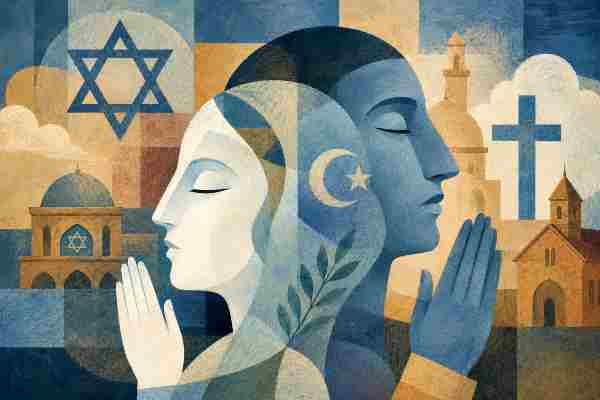
Religious extremism appears in many cultures and belief systems. The Abrahamic traditions of Christianity, Islam, and Judaism are built on extremist philosophies. They inspire movements that use religious authority to divide people, control public life, or excuse harm. Comparing them reveals patterns that reach beyond any one religion.
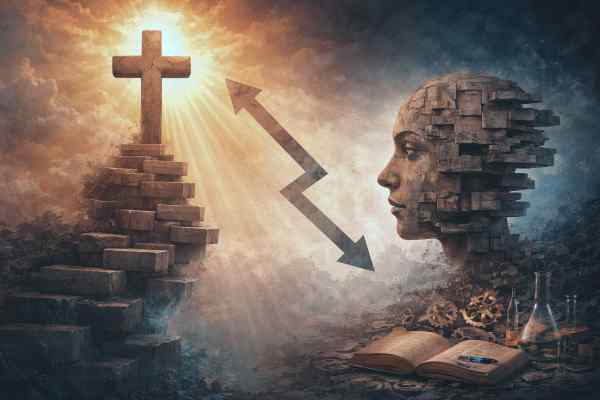
Faith and critical thinking serve different purposes. When they are used to judge the same factual claim, they do not follow the same rules. The inverse relationship shows how protecting an answer through faith can reduce the power of evidence to test it.
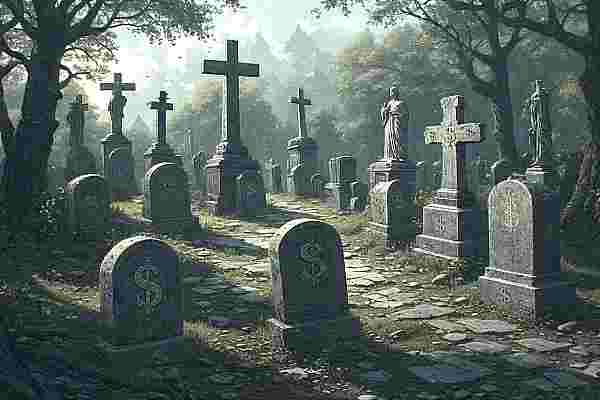
Fear is a powerful motivator. Few fears are stronger than the fear of death. Every culture has developed beliefs about what happens after life ends. Selling heaven and hell by monetizing fear is the focus of some religions, which makes it worth exploring in more depth.
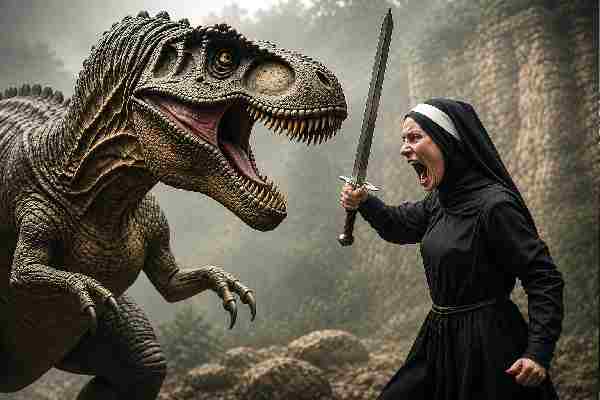
It might be hard to imagine a conflict of dinosaurs against nuns, but I was there to witness it firsthand. I learned that facts do not always win just because they are true. Sometimes personal growth begins when evidence meets authority.
Most people think their choices come from careful reasoning. Yet much of the time, our minds are guided by feelings, habits, and social pressure. Are you really aligning beliefs with objective truth or subjective truth?

Learning how faith shapes reasoning helps us separate faith from knowledge. Faith can offer hope, meaning, and comfort. Knowledge depends on facts that can be checked. Both can shape real choices.
Are your beliefs helping you grow, or are they keeping you trapped in guilt, shame, and fear-based beliefs? Religious cognitive distortions happen when normal thinking errors become attached to spiritual beliefs. Overcoming fear-based beliefs takes inner work and patience. See how it’s done.
People confuse religion and spirituality. But they are not the same thing. So it’s hard for most to see how being spiritual without being religious is possible. But understanding this difference matters now more than ever.

Half the world follows one of the Abrahamic traditions of Western organized religion. But few realize these faiths grew out of the ancient mystery religions. Once you see the connections, these faiths look very different.