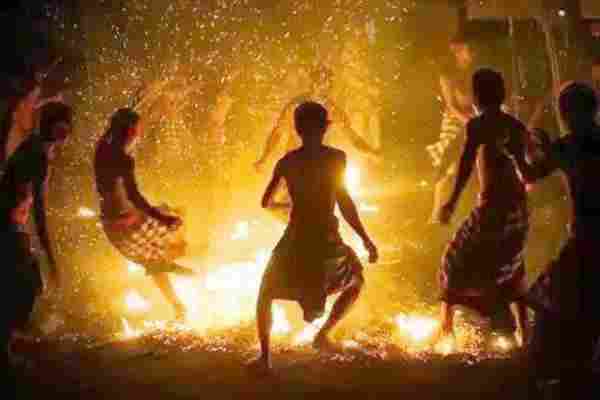
The circle, campfire, and rhythm are key elements. They are the cultural building blocks that provide the structure for society. Their practical effects came first. Then, ritual and symbolic meanings developed around them later.
Long before people had formal meeting places, they gathered around campfires. They used songs and rhythms as cultural building blocks. These tools provided ways to teach, remember important lessons, and settle problems. They also sought methods to mark significant events and explore their inner experiences.
These early gatherings did more than bring people into one place. They created ways to organize people. They shared knowledge. They built traditions. They made sense of shared experiences.
How cultural building blocks work together
Imagine people gathering before there were chairs, stages, classrooms, or meeting halls. Sitting or standing in a circle allowed them to see one another and share the same space. No one needed to sit behind everyone else, and there was no natural front of the group.
When darkness came, a campfire gave the gathering warmth and light while also creating a natural center. People could see faces, follow movement, and remain together after sunset. The fire helped hold attention without requiring one person to direct everyone.
Rhythm added another part to the system. Drums, rattles, chanting, clapping, and repeated movement gave people shared timing. Rhythm could bring people into dance, support learning and memory, guide ritual, and help attention turn inward.
These cultural building blocks worked because each one did a different job. When combined, they can change a simple gathering. It can be a space for teaching. It’s also for making choices. You can share stories and hold ceremonies. You can perform dances or explore spirituality.
The circle creates shared structure
The circle is often seen as the most important aspect of cultural building blocks. The circle changes how people take part simply by changing where they sit or stand. In rows, most people face the same direction, usually toward someone or something at the front. In a circle, people face one another and share the same center.
This arrangement changes group behavior in several ways. People become more visible to one another, while leadership is less tied to a physical position at the front. The circle does not remove differences in status or influence, but it changes the setting in which they operate.
The shape itself begins to organize behavior before rules or beliefs are added.
| Circle mechanism | What it changes | What it makes easier |
|---|---|---|
| Attention alignment | Focus turns inward toward the group | Listening and shared activity |
| Status leveling | No fixed position of authority | Reduced posturing |
| Turn-taking control | Interruptions become visible | Orderly participation |
| Boundary creation | Clear inside and outside | Containment and safety |
| Participation pressure | Presence is publicly acknowledged | Engagement and responsibility |
| Shared memory formation | Repeated structure reinforces continuity | Culture and identity |
These effects help explain why circles became useful in so many kinds of gatherings. Their practical value also helps explain why people later gave the circular shape deeper meanings.
How the circle creates sacred space and containment
One of the circle’s most important effects comes from something very simple. It creates an inside and an outside.
That boundary shows who is taking part and where the shared activity is happening. This creates containment. It’s important when people face strong emotions, rituals, or self-exploration. The group can know where the activity begins, who is involved, what is expected, and when it is over.
This practical boundary also helps explain sacred space. A space does not become useful just because spiritual symbols are placed inside it. Clear limits, repeated actions, and shared rules first create a place that can hold the activity taking place there.
When the same space is used again and again for important events, people can begin to connect it with trust, purpose, and meaning. In this way, sacred meaning can grow around a space that has already been set apart and contained.
The campfire strengthens the center
A circle can organize a group without a fire, but the campfire makes the shared center much stronger. Fire provides warmth, light, and protection, while the changing flames give everyone a natural point of focus.
People around the fire can see each other’s movements and expressions while remaining close enough to hear one another. The environment helps hold the gathering together instead of leaving that job to one person.
Watching the fire can also slow the pace of interaction. People can sit quietly without the silence feeling empty because the flames continue to move. This leaves room for listening, storytelling, reflection, and longer conversations.
The campfire gives culture more time
Before artificial lighting, darkness placed a strong limit on what people could do after sunset. A fire gave them more time together after the work needed for survival was finished.
People could tell stories while others listened. Skills could be explained or shown. The group could discuss what happened, plan what to do next, and talk about things that mattered to everyone.
This helped culture grow because knowledge did not have to remain with one person. It could be shared, repeated, and passed forward.
Fire gained spiritual meaning over time. Those meanings did not create its value as a gathering point. They grew around something people already knew was important.
Rhythm transforms the gathering
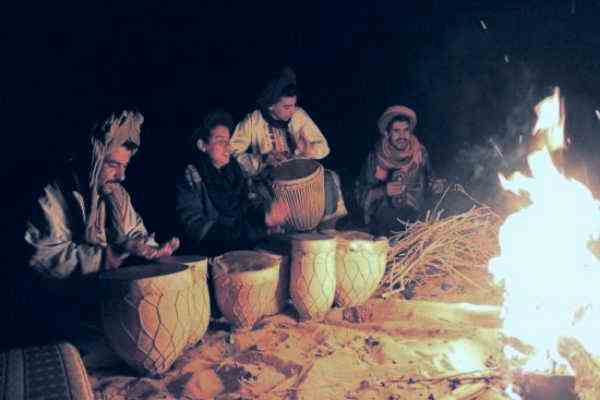
Rhythm is not simply something added to make a gathering more interesting. It changes what people can do inside the circle by adding shared timing, repeated movement, and sound. Rhythm is a fundamental aspect of cultural building blocks.
Drums, rattles, chanting, clapping, stamping feet, and other repeated sounds give people a beat they can follow together. This can transform a gathering into a dance, ceremony, learning system, or ritual.
Rhythm coordinates the group
A steady beat can turn walking into a procession, movement into dance, and separate voices into a chant or song.
Rhythm can also change the pace of an activity. Faster beats boost energy and movement. In contrast, slower rhythms help maintain calm and focus. Changes in tempo can signal that one part of an event is ending and another is beginning.
This becomes especially important during ritual dance. The circle contains the movement, the campfire may provide the center, and rhythm gives the body a pattern to follow. People moving with the same beat become part of one shared event.
Rhythm works with the body and attention
A steady beat can also affect breathing, attention, and the pace of the body. As people follow the same rhythm, their movement and timing may begin to settle into a shared pattern. They are no longer only sitting in the same place. They are beginning to act in the same time.
Rhythm can also work inwardly. When a drum, rattle, chant, or repeated movement goes on, attention sticks to the pattern. This makes outside distractions feel less important.
This is an important connection between cultural gathering and shamanic practice. Shamanic traditions include drums, rattles, chanting, and dance. These elements are key during rituals and shamanic journeys. Some people may dance while others drum, sing, watch the fire, or follow the rhythm inward.
Rhythm gives the gathering a tool to focus inward and reach altered states. However, not every rhythmic gathering will create this experience.
➡ For More See: Shamanic Journeying Sounds and Rhythms.
Rhythm becomes a memory and learning system
Rhythm also helped people preserve knowledge before writing became common. Songs, chants, stories, and dances use patterns that help us learn and remember.
This helped early cultures carry:
- Family and community histories
- Practical skills
- Warnings and lessons
- Rules and values
- Seasonal knowledge
- Religious teachings
- Spiritual traditions
A story tied to a song is easier to repeat, while a lesson tied to movement can become part of a dance or ceremony. A chant can preserve words because many people learn the same pattern.
This is a mnemonic learning system. Mnemonic simply means that something helps memory. Instead of depending on one person’s memory, the group can help carry knowledge from one generation to the next.
The effects of combining cultural building blocks
The circle, campfire, and rhythm become most powerful when they support one another. The gathering is easier to manage. People share a space, a focus, and a sense of timing.
This also makes the system flexible. A council, funeral, celebration, initiation, or shamanic ritual can all take place in the same basic setting. The building blocks provide the setting, while the purpose of the gathering determines how it is used.
Healing as repair of connection
Healing can also emerge from this system, but that does not mean the circle or rhythm automatically heals a person. The more basic effect is the repair of connection.
Someone who feels alone, sad, rejected, afraid, or distant can reconnect with others by sharing attention and joining in. Being seen, listening, moving, singing, or simply sitting with others can restore a sense of belonging.
In this context, healing might mean fixing a broken bond between a person and the group. It’s not just about addressing private psychological issues. The shared activity lets a person join in again. That’s why healing can happen during the gathering, even if it’s not the main goal.
Cultural roles built around the circle
Once the basic system was established, cultures could use it for many different needs. The activity changed, but the same cultural building blocks kept doing much of the work underneath it.
| Role | What the circle is solving | What makes it work |
|---|---|---|
| Leadership and decision-making | Group coordination and authority | Visibility and witnessed decisions |
| Justice and conflict resolution | Harm, responsibility, reintegration | Turn-taking and shared standards |
| Teaching and storytelling | Passing knowledge without writing | Attention and shared memory |
| Mourning and loss | Continuity after death or change | Boundary and structured participation |
| Ritual and ceremony | Marking time, seasons, and transitions | Boundary plus shared focus |
| Initiation and personal change | Status shifts and readiness | Rules, containment, and witness |
The purpose changes from one gathering to another, but the underlying structure remains useful.
Intention gives the circle direction
A circle does not decide what it is for. The same structure can serve different purposes depending on intent. The circle can become a council, funeral, teaching circle, ritual dance, or a shamanic practice. It is the unspoken aspect of cultural building blocks that gives gathering purpose.
Intention gives the gathering its direction by shaping who takes part, what is allowed, how rhythm is used, and when the activity begins and ends. When people understand the purpose, they also have a clearer idea of what they are there to do.
Ritual turns intention into structured action
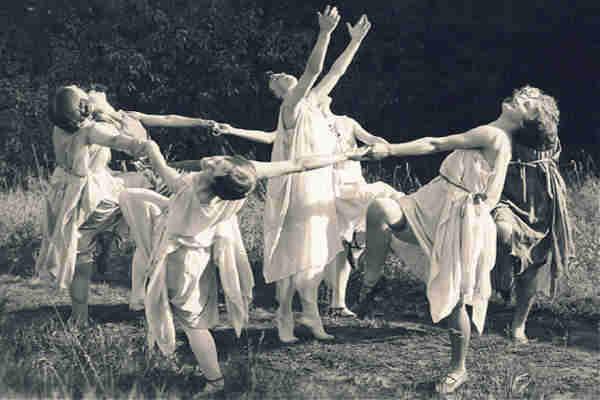
Ritual begins when a shared purpose is carried out through repeated actions. People can come together in one spot. They light a fire in a familiar way. They start with the same drum beat. They repeat certain words and move through a known dance. They often end with the same action.
These repeated steps give the gathering an order that people can learn and follow. A mourning ritual may use quiet movement and repeated remembrance. An initiation may use boundaries, witnesses, and a set order of actions. A shamanic journey may use repeated drumming to help attention turn inward.
These are examples of how the cultural building blocks take physical form within ritual. The larger ritual mechanism is covered separately.
➡ For More See: The Ritual Mechanism: From Meaning to Action.
Inner circle dynamics shape influence
A circle may look equal, but the influence inside it is rarely equal. Some people know the traditions well. Others may be leaders, elders, teachers, healers, family members, or trusted helpers. These relationships can create an inner circle within the larger group.
This is not automatically a problem. Experienced individuals may organize the gathering. They maintain boundaries, teach newcomers, and protect traditions. They also step in when issues arise.
Problems begin when influence becomes hidden control. A small group may choose who can speak, who fits in, what questions are okay, or which ideas everyone should accept. Support can change to pressure, and respect for experience can lead to obedience.
Removing a physical front does not remove human hierarchy. The circle might hide some signs of rank, but relationships and power still matter inside it. This is especially important in spiritual and ritual settings. Here, a leader guides attention, movement, emotion, and the meaning people find in an experience.
How function becomes meaning and symbolism
Once the circle, campfire, and rhythm were accepted, people could add functions. It became a place for important gatherings; people began adding stories and meanings to them. The function came first. Meaning grew from the experiences these cultural building blocks created.
A circle that repeatedly brings people together becomes a symbol of unity, wholeness, cycles, or belonging. Fire could become linked with life, knowledge, cleansing, sacrifice, or change because of the role it played in the gathering. Rhythm links to life, spirit, ceremony, and cycles. It unites people. This happens through movement, memory, ritual, and looking inward.
Different cultures developed different symbols from these experiences. Medicine wheels use circular forms to map directions and cycles. Hindu and Buddhist mandalas use circles to show order and support focused attention. Stone circles were used for ceremonies. The Zen enso and the Christian halo use circles in different symbolic ways.
These traditions should not be treated as if they all came from one source or held the same belief. They show instead how people in many places could build different meanings around similar forms and experiences. But at their core are the same cultural building blocks.
Symbols and stories helped those meanings live on and pass to future generations.
➡ For More See: How Myth And Symbolic Stories Shape Culture.
Modern use of cultural building blocks
These cultural building blocks still appear in modern life. Even when there is no campfire or drum, the pattern is still there. People sit in circles during support groups. They also gather in classrooms, community meetings, religious events, retreats, and ceremonies. A table, speaker, altar, stage, screen, or another object may replace the campfire as the shared center.
Rhythm can be found in music, chanting, repeated slogans, and coordinated movements. It’s also present in clapping and group responses. The tools may look different, but parts of the old structure are still being used.
Problems can appear when people copy the shape without understanding the structure behind it. A group may sit in a circle but have no clear boundaries, purpose, rules, or way to handle influence. Another group may understand those tools very well and use them to increase pressure or control.
The cultural building blocks themselves do not decide whether the outcome is healthy or harmful. Their effects depend on the purpose of the group and the way power is handled.
When shared attention and belonging stop questions or independent thinking, it’s a bigger problem. This issue isn’t just about the event; it also involves social conditioning.
➡ For More See: Mental Conditioning and Social Programming: Layers of Influence.
Conclusion: why cultural building blocks endure
The circle, campfire, and rhythm will endure. These basic tools are cultural building blocks. They help people create a safe space. It is a combination of tools for gathering, learning, and remembering. They help people act together and explore their inner experiences.
Over time, boundaries helped create contained and sacred spaces. Intention gave gatherings meaning. Repeated actions made some of them rituals. Shared experiences created stories and symbols. These helped later generations remember the meaning of those gatherings.
References
- Embers of Society: Firelight Talk Among the Ju/’hoansi Bushmen. Polly W. Wiessner. Proceedings of the National Academy of Sciences.
- Earliest Evidence of Making Fire. Nick Ashton et al. Nature.
- Classroom Ecology. Robert Sommer. The Journal of Applied Behavioral Science.
- The Spatial Factor in Face-to-Face Discussion Groups. Bernard Steinzor. Journal of Abnormal and Social Psychology.
- Rhythm in Joint Action: Psychological and Neurophysiological Mechanisms for Real-Time Interpersonal Coordination. Peter E. Keller, Giacomo Novembre, and Michael J. Hove. Philosophical Transactions of the Royal Society B: Biological Sciences.
- To Be in Synchrony or Not? A Meta-Analysis of Synchrony’s Effects on Behavior, Perception, Cognition and Affect. Reneeta Mogan, Ronald Fischer, and Joseph A. Bulbulia. Journal of Experimental Social Psychology.
- Music and Social Bonding: “Self-Other” Merging and Neurohormonal Mechanisms. Bronwyn Tarr, Jacques Launay, and Robin I. M. Dunbar. Frontiers in Psychology.
- Memory in Oral Traditions: The Cognitive Psychology of Epic, Ballads, and Counting-Out Rhymes. David C. Rubin. Oxford University Press.
- Oral Tradition as History. Jan Vansina. University of Wisconsin Press.
- The Ritual Process: Structure and Anti-Structure. Victor Turner. Aldine Publishing Company.
- Ritual and Religion in the Making of Humanity. Roy A. Rappaport. Cambridge University Press.
- The Elementary Forms of Religious Life. Émile Durkheim.
About this project
The Seeker Project 4 Spiritual Exploration (SP4SE) is a project of Americans In Alliance. The mission of SP4SE is spiritual education. The mission of Americans In Alliance is environmental conservancy. Click the links below to learn more and support our efforts.