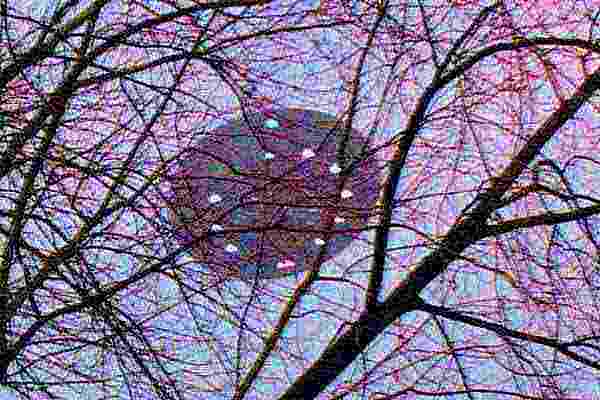
Many people experience metaphysical and unusual events. They see lights in the sky, figures in the corner of a room, sudden feelings of presence. These moments feel real, but interpreting non-ordinary experience is not simple. What you think you experience depends heavily on what you already believe.
When we believe something, the mind doesn’t just passively observe—it actively interprets. It compares what is happening to what it already knows, and then selects the closest match. If you expect angels, you may see an angel. If you expect aliens, the same light becomes a UFO. If you expect nothing unusual, you may dismiss or forget the event entirely.
This is not about the event changing. It’s about the mind organizing unfamiliar input into a familiar pattern so it can make sense of it.
Metaphysical experience is not just about what happens. They are about how the mind filters what happens.
The mind reframes experience to align with what it already accepts as real.
Before we look at specific types of unusual events, we need to understand why these moments are so hard to interpret in the first place.
Interpreting non-ordinary experience
When we encounter moments that do not match their expectations, the mind searches for a previous pattern to make sense of the experience. The mind has to decide whether the event matters.
If the mind cannot quickly connect the experience to something known, it often gets ignored. If it feels important—especially if it triggers fear or curiosity—it gets held onto and examined more closely.
What stands out is not always what is most real. It is what the mind cannot easily place.
When something resists easy explanation, the mind starts working harder to resolve it. That effort is what turns a fleeting moment into a meaningful event. The act of interpreting non-ordinary experience into experiential fact cements the conclusion.
A natural next question is why two people can experience metaphysical events in the same environment and walk away with completely different conclusions. This leads us to the belief filter.
The belief filter: how the mind frames unusual events
Every person carries a set of assumptions about how the world works. These assumptions are built over time—from family, culture, media, and personal experience. They act as a filter, shaping not just what we believe, but what we are able to recognize in the first place.
When something unfamiliar happens, the mind does not start from scratch. It reaches for the closest available explanation and uses it to stabilize the experience.
Two people can witness the same event, but each will interpret it through a different internal framework. The result is not disagreement about what happened—it is a difference in how it was made meaningful.
To understand how these filters work, we need simple terms for the kinds of events people try to explain.
What it means to experience metaphysical events
Interpreting non-ordinary experience falls into broad categories:
- Paranormal: outside what is considered normal.
- Supernatural: framed as beyond the natural world.
- Metaphysical: involving questions of reality, perception, time, space, and causality.
These labels do not explain the event. They help contain it.
When something does not fit into everyday categories, we create new ones or borrow existing ones to give it a place. Naming an experience does not resolve it, but it reduces uncertainty enough for the mind to move forward.
Once we define the types of events, we can look at the most important factor: the person having the experience.
The observer matters more than the event
Most investigations focus on the phenomenon itself. But the observer’s mindset, expectations, and emotional state shape the entire experience. The same sensory input can produce different interpretations depending on who is interpreting it.
Part of this is internal—what you notice, what you ignore, what feels important. Part of it is learned. In many environments, people are shown how they are “supposed” to interpret unusual events. Over time, those expectations become automatic.
This means that interpretation is not just perception. It is perception guided by prior learning.
These personal filters do not appear out of nowhere. They come from the cultural stories we grow up with.
The stories we use to explain the unknown
Cultures provide ready-made explanations for interpreting non-ordinary experience. Some rely on religious stories, others on folklore, and others on scientific reasoning. These narratives act as templates that people draw from when they encounter something unfamiliar.
A culture that teaches angels will produce angel sightings. A culture that teaches extraterrestrials will produce UFO encounters. A culture that teaches skepticism will produce misidentifications or dismissals.
People are not inventing experiences out of nothing. They are interpreting them using the tools they have been given.
Culture shapes interpretation, but so does the emotional state of the observer. Stress changes how we notice and explain the unknown.
Stress, fear, and heightened perception
During periods of stress or uncertainty, reports of unusual experiences increase. When the system is under strain, attention becomes sharper and more reactive. The mind becomes more sensitive to anything that feels out of place.
In that state, the threshold for meaning drops. Small or ambiguous inputs can feel significant, even threatening. When the mind cannot fully resolve what it is seeing, it fills in the gaps using whatever explanations are most available.
This is why the same environment can feel ordinary one day and charged or uncanny the next.
When these interpretations spread through a group, they can turn into shared stories that feel true, even without evidence.
When interpretation becomes accepted folklore
Interpreting non-ordinary experience becomes powerful when they are shared. A single unexplained experience, when repeated and reinforced, can become a story that others adopt. Over time, those stories gain stability—not because they are verified, but because they are familiar.
Folklore, superstition, and cultural myths grow this way. The more a story is told, the more it feels like an explanation rather than an interpretation.
The problem is not the experience itself. The problem is the story we attach to it—and how quickly that story becomes fixed.
All of this leads to one final point: your worldview shapes what you can see.
Conclusion: what your worldview lets you see
Interpreting non-ordinary experience, metaphysical and unusual events, is not about proving or debunking these sightings. It is about understanding how the mind handles what it does not immediately understand.
Your worldview determines what counts as meaningful, what gets ignored, and what explanation feels correct. It shapes perception before you are even aware that interpretation is happening.
You may be surrounded by non-ordinary moments, but you will only recognize the ones your mind knows how to explain.
References
- The Believing Brain: From Ghosts and Gods to Politics and Conspiracies—How We Construct Beliefs and Reinforce Them as Truths, Michael Shermer.
- Why People Believe Weird Things: Pseudoscience, Superstition, and Other Confusions of Our Time, Michael Shermer.
- Hallucinations, Oliver Sacks.
- The Varieties of Religious Experience, William James.
- Cognitive Bias and Decision Making, National Institute of Mental Health.
- Perception and Attention, National Library of Medicine.
- Stress Effects on the Brain, National Institutes of Health.
- Pattern Recognition and the Brain, National Institutes of Health.
- Apophenia, Wikipedia.
- Confirmation Bias, Wikipedia.