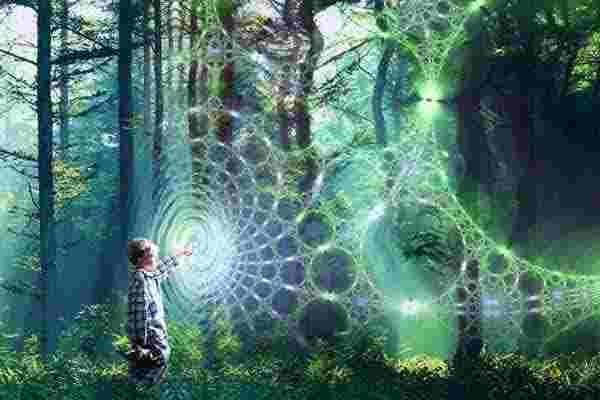
Most people have heard the phrase spiritual gifts. Every religion has a different definition, and most don’t make sense. Let’s explore another possibility. What if spiritual gifts are capacities of awareness? An intuitive intelligence that is our ancestral inheritance? That would change how we see these gifts.
The term spiritual gifts is a part of our cultural lexicon. Religious traditions connect spiritual gifts with roles and abilities that serve a community. Other views use the term with intuition, perception, and inner wisdom. We suggest a new model. It views them as capacities for awareness and intuitive intelligence. These spiritual gifts are a part of our ancestral inheritance.
Emotional Readiness Gate:
This article questions familiar ideas about spiritual gifts, intuition, and ancestral inheritance. If these ideas touch your faith, family history, or sense of identity, you may feel defensive or unsettled. Pause and return when you feel steady enough to consider the ideas and evidence.
The spiritual gifts as ancestral inheritance
There are several ways to define spiritual gifts. Some systems treat them as assigned roles, learned abilities, or qualities of character. Our proposed model sees the gifts of the spirit as elements of awareness and ancestral inheritance. Sometimes these meanings can overlap, but they do not describe the same thing.
Teaching, leadership, healing, and other useful abilities can benefit people and communities. This article does not question their value. Instead, it asks whether these abilities should be seen from a different perspective.
The working idea is that spiritual gifts may be latent capacities of intuitive intelligence. The word latent means that something is present but not yet fully expressed or recognized. These abilities can become clearer through awareness, reflection, and good judgment. This is a different way to understand spiritual gifts, instead of as an established explanation of a belief system.
How religious definitions shape the meaning
Western religion defines spiritual gifts as roles and skills that support faith. These include teaching and preaching, leading recognized forms of worship, and healing. In a religious setting, these roles give people purpose. They also provide valuable services to others.
The concern is not that these skills are useless. It is that defining spiritual gifts through roles can leave other experiences out. Some people may have a natural ability to recognize patterns. They might reflect on personal experiences or sense relationships that aren’t immediately clear. If that ability does not fit an established list, the person may not think it has a place in the discussion.
A religious tradition can describe what it recognizes as a spiritual gift. That does not mean its list explains every possible human capacity. To explore the subject more fully, we must also ask what people experience beyond the roles their institutions recognize.
➡ For more, see: How Institutions Spread Beliefs and Defend Doctrine
Three different dimensions of human development
Talents, virtues, and intuitive awareness can all shape a person’s life. They may work together, but each points to a different part of human development. Knowing these differences helps us not treat every useful skill or good quality as the same gift.
Talents and learned abilities
Talents are abilities that may come more easily to some people than to others. They can also grow through practice, instruction, and repetition. A person might have a natural feel for music, for example, but still need years of practice to play an instrument well. The natural ability and the learned skill work together.
Talent describes what someone can do and how that ability develops. It does not, by itself, show that the person has a spiritual gift. Anyone can become a great musician with talent and practice. There’s no need to rely on intuition or inner wisdom. Separating these ideas lets us describe abilities clearly. This way, we avoid giving them meanings they don’t actually have.
Virtues of the spirit
Virtues are qualities of character that shape how people think, respond, and act. Patience, kindness, honesty, and courage are examples. These qualities influence how someone treats others and handles difficult situations.
Virtues differ from talents because they concern character and conduct rather than performance. This differs from our research, which frames spiritual gifts as intuitive intelligence. A person may develop strong virtues while learning a skill or exploring intuition. However, they are not interchangeable with latent abilities we own through ancestral inheritance.
➡ For more, see: Living the Virtues of the Spirit.
The new model for spiritual gifts
If we break down intuitive intelligence and capacities of awareness in practical terms, you can see how they align with ancestral inheritance.
Intuitive intelligence and inner wisdom
We use the term intuitive intelligence to describe a range of natural abilities. These abilities include:
- The ability to notice hidden patterns in complex systems
- Recognize relationships between things and people
- Reach an insight without relying entirely on formal instruction
- Sense the mood of a room or a conversation before anyone names it
- Notice when something is missing, not just when something is present
- Know when the timing is right to speak, act, or wait
- Become aware of your own reactions as they arise, before they turn into actions
- See a connection between ideas that seem to belong to different subjects
Sometimes, a person senses that two events are connected before they can explain why. After looking more closely, they may find a pattern they had not noticed before.
Sensing what is not being said
A friend says, “I’m fine,” but something about the pause before the words, or the way they look away, tells you otherwise. You did not reason your way there step by step. You simply noticed. A gentle question later may confirm that your friend was upset. It may also show that they were only tired. The awareness was real either way. What it meant still had to be discovered.
Knowing something is off before you know why
An experienced nurse may feel that a patient is getting worse even when the numbers on the monitor look normal. A mechanic may hear a small change in an engine’s sound that others miss. In both cases, years of experience have trained attention to pick up tiny signals. The feeling arrives first, and the explanation comes later. A careful nurse still checks the patient, and a careful mechanic still opens the hood.
The answer that arrives after you stop trying
Many people have worked hard on a problem, given up for the night, and then found the answer while walking, showering, or waking up. The mind seems to keep working in the background and bring the pieces together when we stop forcing it. That sudden “aha” can feel like a gift from somewhere else. It is still worth testing the answer to see if it actually works.
Noticing your own inner signals
Before you agree to something, you may feel a tightening in your stomach or a sense of hesitation. This kind of self-awareness can point to a concern you have not yet put into words. It can also be an old fear that no longer fits your life. Pausing to ask, “What is this reaction about?” turns a vague feeling into something you can examine.
Sometimes, a person senses that two events are connected before they can explain why. After looking more closely, they may find a pattern they had not noticed before.
An experience like this can feel immediate and convincing. However, a strong feeling does not always mean the conclusion is correct. Intuition helps us spot things worth exploring. It can be shaped by our expectations, past experiences, fears, or incorrect assumptions.
So, intuitive awareness isn’t proof of special knowledge. The useful question is whether the impression holds up when we examine it. We will explore intuitive intelligence along with self-observation and discernment to see how it works.
Capacities of awareness
Intuitive intelligence is about what we notice and understand. Capacities of awareness are about how we notice. They describe the ways we can pay attention to the world, to other people, and to ourselves. These capacities include:
- Focused attention: holding the mind steady on one thing without drifting
- Open awareness: taking in the whole scene at once instead of one detail
- Presence: being fully in the current moment rather than lost in the past or future
- Self-observation: watching your own thoughts, feelings, and actions as they happen
- Body awareness: sensing what is happening in the body, such as tension, ease, or fatigue
- Emotional awareness: recognizing and naming feelings as they rise and fall
- Awareness of thinking: knowing that a thought is a thought, not a fact
- Noticing assumptions: catching the beliefs that quietly shape how we see things
- Empathic awareness: sensing what another person may be feeling or needing
- Perspective-taking: seeing a situation from more than one point of view
- Awareness of connection: sensing how people, events, and nature relate to one another
- Awareness in altered states: staying aware during dreams, deep meditation, or reflection
These capacities can grow with practice, like a muscle. They also support intuitive intelligence. The more clearly we can observe, the better we can tell a real insight from an old habit or fear.
What ancestral inheritance may contribute
Inheritance can mean different things, and those meanings should not be confused. Some characteristics pass through biology. Family life, shared knowledge, customs, stories, and our upbringing all influence us. These pathways can all affect a person’s development, but they do not work in the same way.
Biological inheritance and individual tendencies
Biological inheritance passes traits from parents to children. It does this through genes and various biological processes. Inherited differences affect how people grow, learn, and react to their environment. Yet many human traits develop through a mix of biology, experience, and environment.
It’s too simple to say that a complex skill like intuitive insight is just one clear inherited trait. Some people have natural abilities. However, this doesn’t explain why they exist. The capacity can be shaped by many factors. These include biological traits, learning, and personal experiences.
The idea that ancestral inheritance may influence intuitive intelligence is worth exploring. It’s not a fact just because it seems natural. We need to separate what can be observed from what we believe may explain it.
Family experience and cultural transmission
Families pass down more than physical characteristics. Children learn from those around them, often before they can explain it. They might learn how to speak, solve problems, express emotions, or figure out what’s safe and important. Stories, customs, and shared beliefs can also shape how they understand the world.
These influences can continue across generations. A family may pass down useful knowledge, strong values, fears, or ideas about how life should be lived. This is cultural and social transmission, not the same process as biological inheritance. Both influence a person’s growth. One comes from learning and shared experiences. The other involves biological pathways.
Recognizing this difference helps us ask better questions about the past. A belief that has been passed down for generations may hold valuable knowledge, but its age does not make it true. We can respect family history while still examining the ideas and habits we inherit.
➡ For more, see: Questioning the Cultural Narrative: The Invisible Operating System.
Inherited burdens and learned conditioning
Not everything passed from one generation to another is helpful. Family members can grow up with fear, conflict, or harmful habits. These things can limit their choices. People learn these patterns in different ways. They watch others, face stress, or hear the same messages often. These experiences may influence how they respond to situations later in life.
The effects of difficult experiences can reach later generations through several pathways. Family behavior and shared stories may pass along ways of reacting to the world. Stressful environments can also affect development. Biological influences can affect some outcomes. However, these processes aren’t just a simple form of inheritance.
It is just as important not to assume that all ancestral influence is harmful. Families can pass down practical knowledge, care, resilience, and useful traditions as well. The point is to examine what we receive rather than label it automatically as either a burden or a gift. Knowing the pathway helps us see what’s useful, what needs more focus, and what we shouldn’t accept unquestioningly.
Discerning inherited from those you have accumulated may require inner work.
➡ For more, see: The Heavy Burdens and Emotional Baggage We Carry
How the model connects spiritual gifts and inheritance
The model suggests that spiritual gifts of the spirit arise out of ancestral inheritance. Biological traits, family background, cultural experiences, and experience also cultivate these abilities.
Some of these influences are established forms of transmission. We know that biological characteristics can pass between generations. We also know that people learn from their families, friends, and cultures. But this does not prove that spiritual gifts only come from ancestral inheritance. The proposed model connects these capacities as a way to explore human potential. It does not propose a single cause for intuitive experiences.
This distinction is important. A person can have an ability but not know its source. Careful observation lets us explore an experience. It helps us avoid making a possible explanation a certainty.
Recognizing a capacity without assuming its origin
Someone may notice that they have a natural ability to recognize patterns, or that they reach insights by reflecting. Another person may have a knack for spotting details that others miss. These tendencies may feel natural, especially if the person has had them for a long time. They might ask if these abilities come from family history, inherited traits, personal experiences, or a mix of these factors.
Noticing a capacity is the first step. Explaining its origin is a separate task. Just because an ability feels natural doesn’t mean it came from an ancestor. Similarly, a family tradition doesn’t prove that someone inherited that ability biologically. Several explanations may fit what we observe.
Rather than settling on the most appealing explanation, we can remain curious. We can examine when the ability appears, how it evolves with experience, and if other explanations fit. This approach allows us to explore ancestral inheritance. It leaves room for discussion without overstating what the evidence supports.
Distinguishing insight from conditioning
Self-observation and critical inquiry help us examine intuition without misjudging. An intuitive feeling may point toward something worth noticing. But it can also reflect an old fear, a learned belief, or an expectation we have not questioned. The goal is to understand the experience before deciding what it means.
Start by noticing the perception or reaction without rushing to explain it. Look at the circumstances in which it appears and ask what may have influenced it. Think about other explanations. Then, find evidence that supports or disputes your first idea. If new information appears, be willing to revise your view.
This process does not require rejecting intuition. It means treating intuition as a starting point for inquiry rather than a final answer. The more we separate our experiences from our thoughts about them, the better we can decide if an insight is useful.
Why prescribed lists cannot define every capacity
Spiritual gift lists help religious traditions explain their teachings and the roles they value. In a specific tradition, this list shows how members can grow and help others. The list is useful for explaining that tradition’s view.
However, a list reflects the beliefs and purposes behind it. It does not automatically describe the full range of human abilities or experiences. Some people notice types of awareness that don’t fit standard categories. Others see familiar experiences in new ways. A fixed list can’t answer every question about what people can feel or how those feelings grow.
At the same time, being left off a traditional list does not prove that an experience is a spiritual gift. An unusual feeling or strong impression still needs careful examination. The goal is to let people ask questions. We shouldn’t view every new experience as special or supernatural.
This brings us back to the main point: classification is different from discovery. A tradition can highlight its values, but people can explore their experiences with curiosity, care, and good judgment.
➡ For more, see: Mystical Gifts: A Blessing, Burden, or Both?
A working definition of spiritual gifts
The proposed model defines spiritual gifts as abilities transmitted by ancestral inheritance. These latent capacities of intuitive intelligence can be expressed through awareness and experience.
Their development and expression can be shaped by personal history. They are also influenced by inherited traits, family experiences, and cultural learning. Self-observation and discernment let us see our abilities clearly. They help us separate these from trained skills, virtues, or religious roles.
This definition makes three distinctions. Talents are abilities that can grow through practice and instruction. Virtues are qualities of character that shape how people think and act. Spiritual gifts, as proposed here, refer to possible capacities for intuitive awareness. A person may show all three, but each describes a different part of human development.
This is a working framework, not a universal definition accepted by all traditions. It also does not prove that intuitive capacities pass from ancestors to descendants. It lets you explore the question. It keeps known forms of inheritance apart from ideas that still need proof.
Conclusion
Should an authority assign, train, or recognize spiritual gifts to give them meaning? Religious roles, learned skills, and virtues are all important. They highlight different parts of human growth. There is another way to think about these spiritual gifts. When seen as capacities of intuitive awareness, it frees us to seek and develop them.
The idea of ancestral inheritance adds another question. Biological traits, family experiences, cultural lessons, and personal history all shape development. However, these influences are not the same process. Don’t assume that an intuitive experience shows an ancestral source. Also, not every inherited influence is a gift or a burden.
The lesson is simple: pay attention to what you see. Question your assumptions. Then, look for evidence before deciding what an experience means. Curiosity leaves room for discovery. Discernment helps us avoid mistaking a possible explanation for a proven one.
References
- Spiritual Gifts. The Oxford Handbook of Evangelical Theology. Oxford University Press.
- Conditions for Intuitive Expertise: A Failure to Disagree. American Psychologist.
- Logic, Fast and Slow: Advances in Dual-Process Theorizing. Current Directions in Psychological Science.
- The Cognitive Neuroscience of Self-Awareness: Current Framework, Clinical Implications, and Future Research Directions. WIREs Cognitive Science.
- Towards a Common Conceptual Space for Metacognition in Perception and Memory. Nature Reviews Psychology.
- How Do You Feel? Interoception: The Sense of the Physiological Condition of the Body. Nature Reviews Neuroscience.
- Neural Systems Supporting Interoceptive Awareness. Nature Neuroscience.
- The New Genetics of Intelligence. Nature Reviews Genetics.
- Meta-Analysis of the Heritability of Human Traits Based on Fifty Years of Twin Studies. Nature Genetics.
- A Critical View on Transgenerational Epigenetic Inheritance in Humans. Nature Communications.
- The Neural and Computational Systems of Social Learning. Nature Reviews Neuroscience.
- Beyond DNA: Integrating Inclusive Inheritance into an Extended Theory of Evolution. Nature Reviews Genetics.
About this project
Seeker Project 4 Spiritual Exploration (SP4SE) offers resources for exploring consciousness. It also helps with awareness and self-observation. It is a project of Americans In Alliance.
- Support SP4SE to help maintain and develop its educational resources.
- Visit Americans In Alliance to learn more about the parent organization.