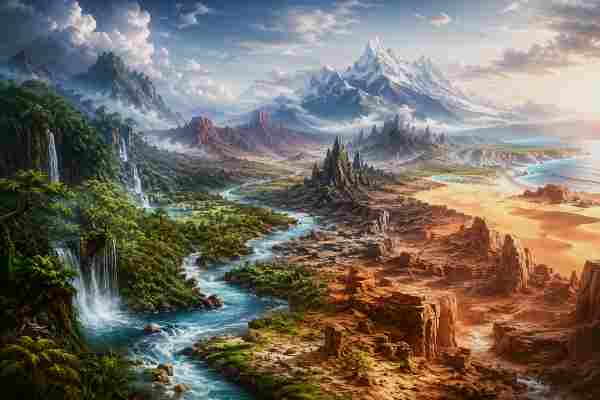
Shamanic visualization is one of the core skills used in the shamanic journey. Breath calms the body. Rhythm shifts awareness. But it is visualization that shapes the journey. It builds an inner space. Here, symbols, guides, and meaningful experiences can appear.
Many people assume visualization is simply seeing pictures in the mind. In reality, it is much more than that. Shamanic visualization involves imagination, memory, sensation, emotion, and symbolic awareness. It allows the mind to organize experience into a form that can be explored and understood.
This article focuses on how shamanic visualization works. Shamanic visualization is the primary tool for creating the inner landscape where the journey unfolds. Rather than teaching the journey process, it explains how visualization works in the shamanic process.
What is shamanic visualization?
Visualization is a natural ability of the human mind. Every day, people use it without realizing it. When you remember a favorite place, imagine a future event, recall a familiar face, or mentally rehearse a conversation, you are using visualization.
Research shows that imagining experiences activates the same brain systems as real ones. When you picture walking through a forest, your mind begins processing that image in ways that resemble actually being there. This is one reason visualization is used in athletics, education, therapy, and many spiritual traditions.
In shamanic practice, visualization serves a specific purpose. It creates the symbolic environment where the journey unfolds. Instead of merely imagining an object or scene, the practitioner enters a landscape that can be explored. Paths appear. Rivers flow. Mountains rise in the distance. Animals, symbols, and guides may emerge within the environment.
This does not mean the goal is to create a perfect mental movie. Some journeys are vivid while others are subtle. What matters is not how detailed the imagery becomes but whether it provides a meaningful space for exploration.
The inner landscape acts as a bridge between ordinary awareness and symbolic experience. It shapes ideas, feelings, questions, and insights that can be hard to grasp with just regular thinking.
Why visualization is more than seeing pictures
One of the biggest misconceptions about visualization is the belief that it only involves sight. People often assume that if they cannot create bright, detailed images in their minds, they are bad at visualization. This is rarely true.
The mind communicates through many channels. Some people experience clear visual images. Others notice sounds, movement, emotions, sensations, or a strong sense of presence. Some people may not see much at all but still know exactly where they are within the journey.
Imagine standing beside a river. One person may see every detail of the water and shoreline. Another may hear rushing water and feel cool air without seeing much. A third may simply know they are standing at a crossing point. All three experiences can be equally valid.
Shamanic visualization often combines several forms of awareness at once. Images may blend with emotions. Sounds may accompany symbolic impressions. A landscape may feel familiar even when it cannot be clearly described. The experience becomes a mixture of perception, imagination, and intuition working together.
This is one reason comparing your journey to someone else’s can be misleading. Every mind processes imagery differently. Some people naturally think in pictures. Others think in feelings, movement, or relationships. The goal is not to force yourself into a particular style but to become aware of how your own inner experience unfolds.
When people stop worrying about whether they are “seeing enough,” they often discover that visualization has been working all along. They simply expected it to look different.
How visualization turns rhythm into a journey
Rhythm and visualization work together, but they perform different jobs during shamanic practice.
Rhythm helps focus attention. Whether it comes from a drum, rattle, chant, or repetitive sound, rhythm creates a steady pattern that can help quiet ordinary thought. Many ancient traditions of consciousness research use rhythm. It helps with focus and shifts attention from daily distractions.
By itself, however, rhythm does not create a journey.
A person may feel relaxed, focused, or deeply calm while listening to a drumbeat without experiencing any imagery at all. Visualization is what gives that altered awareness form. It transforms a change in consciousness into an experience that can be explored.
As attention settles, the mind begins organizing experience into symbolic space. A path may emerge. A cave may appear. A river may come into view. The practitioner is no longer simply listening to a rhythm. They are moving through an inner landscape.
This is why visualization plays such an important role in shamanic work. It bridges the gap between altered awareness and meaningful experience. Rhythm helps create the conditions. Visualization creates the environment.
For a deeper exploration of rhythm, drumming, and sound, see:
➡ Shamanic Rhythms and Instruments: Sounds for Shamanic Journeying
How the mind builds symbolic space
The inner landscape does not appear from nowhere. The mind builds symbolic space using material it already understands.
Memory, emotion, imagination, and dreams all help create the landscapes we see in visualization. Personal experiences and nature also play a big role. The mind uses familiar elements to create symbolic settings. These settings can express deeper meanings.
This is why certain images appear so often in shamanic traditions. Rivers, mountains, caves, forests, storms, animals, and trees have been part of human experience for thousands of years. They carry emotional and symbolic weight that most people understand instinctively.
A mountain may suggest distance, effort, or perspective. A river may suggest movement, transition, or crossing from one state to another. A forest may evoke mystery, exploration, or discovery. These associations help the mind communicate ideas that would be difficult to express through words alone.
Emotion also shapes the inner landscape. A person carrying fear sees the world differently than someone who feels hopeful or curious. The landscape becomes part of the symbolic language through which the mind communicates.
Memory contributes as well. Familiar places sometimes appear because they already hold emotional significance. A childhood trail, a favorite riverbank, or a remembered forest may become the starting point for a symbolic experience. The mind often begins with something known before expanding it into something larger.
This process does not make the journey less meaningful. It explains how symbolic experience takes shape. The mind naturally works through images, stories, and symbols. Shamanic visualization gives those symbolic processes a space to unfold.
Why creating the inner landscape matters
Symbols rarely appear in isolation. They appear within a setting, and that setting helps shape their meaning. A central role of creating the inner landscape is providing context. It provides the structure for symbols, guides, and meaningful encounters.
A wolf standing quietly beside a forest path creates a different impression than a wolf blocking a narrow bridge. An owl perched on a tree branch feels different from an owl circling above a storm. A river that invites crossing feels different from a river that seems impossible to pass.
The surrounding environment provides context.
This is one reason simple symbol dictionaries often fail to capture the full meaning of a journey. A symbol does not have one universal interpretation. The significance of an image depends on what is happening around it and how it relates to the larger experience.
The landscape helps answer important questions. Where did the symbol appear? What happened before it arrived? What happened afterward? Did the environment feel welcoming, challenging, mysterious, or protective?
These details often reveal more than the symbol itself.
The landscape is not merely background scenery. It is part of the message. It creates the conditions that allow symbols to communicate meaning in a richer and more complete way.
For a deeper exploration of symbolic animals, guides, and nature imagery, see:
➡ Shamanic Spirit Allies and Nature Guides
Why landscapes change
One of the most interesting aspects of shamanic visualization is that the landscape often changes during the journey.
A narrow path may open into a wide valley. A forest may give way to a mountain. A river may appear unexpectedly. Weather may shift from calm skies to heavy storms. New features may emerge while familiar ones disappear.
These changes are worth paying attention to.
The landscape often changes as the experience itself changes. A shift in scenery may signal a transition, a new challenge, a change in perspective, or a deeper layer of understanding. Sometimes the change reflects movement toward the intention that inspired the journey in the first place.
The important thing is not to rush toward interpretation. During the experience, focus on observation. Notice what changes and how it changes. Pay attention to the sequence of events. The relationship between different images is often more meaningful than any single image by itself.
A doorway that suddenly appears may matter. A bridge that collapses may matter. A storm that clears may matter. These changes become part of the symbolic language of the journey.
Meaning often becomes clearer later through reflection. During the journey, your task is simply to notice.
The difference between forcing and allowing images
Many beginners assume that successful visualization requires complete control. In reality, too much control can interfere with the process.
Forcing images happens when a person tries to dictate every detail of the experience. They decide what should appear and reject anything that does not fit their expectations. Instead of observing the landscape, they attempt to manufacture it.
This often creates tension.
Allowing images works differently. You begin with focus and intention, but you remain open to what develops. Rather than writing a script, you pay attention to what unfolds naturally.
Think of it like listening to a conversation. You participate, but you do not control every word that is spoken. The exchange develops through interaction.
Shamanic visualization benefits from the same balance. The practitioner focuses on both attention and intention. This gives the symbolic process space to respond. Unexpected images often hold great meaning in a journey. They show us new insights beyond our expectations
Allowing does not mean becoming passive. It means remaining engaged without trying to control every outcome. The strongest journeys often emerge from this balance between focus and openness.
What to do with unclear imagery
Not every journey begins with vivid images. In fact, many meaningful experiences start with impressions that seem small or incomplete.
A person may notice a color, a feeling, a sound, or a sense of movement before a recognizable image appears. Others may experience only fragments of a landscape at first. This does not mean the visualization is failing.
The best approach is to work with what is present rather than focusing on what is missing.
Instead of saying, “I saw nothing,” ask what was actually experienced. Was there a mood? A sensation? A direction? A feeling of openness or confinement? A sense that something was nearby?
Small impressions often become the foundation for larger images. A vague sense of movement may develop into a path. A feeling of pressure may become a cave. A color may become water, sky, or light.
Patience is important. Visualization often grows gradually. People who learn to notice subtle impressions often find that their inner landscapes become much richer over time.
The goal is not dramatic imagery. The goal is awareness.
Guided journeys and personal journeys
Beginners often find guided exercises helpful. They make creating the inner landscape easier. A guide can help maintain focus by describing an entrance, a landscape, or a path to follow. This provides structure and reduces the pressure of creating the entire experience on your own.
Guided journeys are helpful for learning shamanic visualization. They teach you to hold an inner landscape in your awareness. The practitioner can stop worrying about what comes next. Instead, they should focus on observing the imagery and getting comfortable with the process.
Over time, however, many practitioners move beyond guided experiences. Making your own path helps your inner world grow naturally. It also allows for more personal symbols, surprises, and unique expression. Rather than following someone else’s map, you begin exploring the landscape that emerges from your own experience.
Neither approach is right or wrong. Guided journeys offer a solid base. Self-directed journeys, on the other hand, give more freedom and personal growth. Many practitioners use both at different stages of their development.
Is it imagination or something more?
One of the most common questions people ask after a shamanic journey is whether the experience was “real” or simply imagination. The question makes sense. Visualization uses the same mental skills we use in dreams, stories, memories, and creative thinking.
Imagination is key in shamanic visualization. However, this doesn’t make the experience meaningless. The mind naturally uses imagery, symbols, and stories to organize experience. Dreams often communicate through images rather than direct explanations. Stories use symbols to express ideas that would be difficult to describe in literal language. Shamanic visualization works through many of these same processes.
Different traditions explain the experience in different ways. Some view the journey as contact with spiritual realities. Others see it as exploration of the deeper layers of the mind. Many practitioners are comfortable holding both possibilities at the same time. No matter how someone interprets the experience, a more useful question is often not where an image came from but what role it plays in the journey.
A recurring image, a meaningful encounter, or a strong symbol can be worth reflecting on. This holds true whether you see it as spiritual communication, symbolic insight, or a mix of both. The value of an experience often comes from what it shows us. It can change our awareness and help with understanding, balance, or personal growth.
The goal is not blind belief or automatic dismissal. The goal is thoughtful reflection. Recording experiences helps us find patterns over time. Comparing imagery to real-life events often offers better insight. This is often more useful than quickly proving what is real or not.
Strengthening shamanic visualization
Like any skill, shamanic visualization improves through practice. Spending time in nature helps you relax. It also sharpens your observation skills. Writing down your dreams can improve memory. Greater self-awareness makes it easier to notice symbols in your life.
For deeper exploration, see:
➡ The Path to Presence Through Mindfulness and Grounding
➡ The Memory Palace Method: Learning Enhancement System
➡ The Architecture of Journaling as The First Tool
➡ The Perceptual Shift From Ego Identification to Observer Awareness
Recording and reflection
The value of shamanic visualization often becomes clearer after the journey has ended. Recording your experience over time gives you a diary of your inner development.
For a complete process covering recording, reflection, interpretation, and integration, see:
➡ Step-By-Step Shamanic Journey Guide
Putting it together
Shamanic visualization is the process that gives form to the inner journey. It transforms a shift in awareness into a landscape that can be explored, remembered, and understood. Through visualization, symbols gain context, emotions gain expression, and meaningful experiences take shape.
The images that emerge may be vivid or subtle. They may arrive through sight, sound, sensation, memory, emotion, or symbolic knowing. What matters most is not the intensity of the imagery but the ability to remain present with it.
Breath helps steady the traveler. Rhythm helps shift awareness. Shamanic visualization creates the inner landscape where the journey unfolds. In that landscape, symbols and insights can appear. They offer chances for reflection, growth, and better understanding.
Learning to work with that inner landscape is one of the central skills of shamanic practice. It links altered awareness to meaningful experience. With time and practice, the journey’s symbolic language becomes clearer.
References
- Shamanism: Archaic Techniques of Ecstasy, Mircea Eliade.
- The Way of the Shaman, Michael Harner.
- Cave and Cosmos: Shamanic Encounters with Another Reality, Michael Harner.
- Man and His Symbols, Carl G. Jung.
- The Archetypes and the Collective Unconscious, Carl G. Jung.
- Memories, Dreams, Reflections, Carl G. Jung.
- The Hero with a Thousand Faces, Joseph Campbell.
- The Power of Myth, Joseph Campbell & Bill Moyers.
- Inner Work: Using Dreams and Active Imagination for Personal Growth, Robert A. Johnson.
- The Interpretation of Dreams, Sigmund Freud.
- Altered States of Consciousness, Charles T. Tart (ed.).
- The Varieties of Religious Experience, William James.
- The Neuroscience of Mental Imagery, National Institutes of Health.
- Mental Imagery and Human Cognition, National Library of Medicine.
- Visualization, Encyclopedia Britannica.
About this project
The Seeker Project 4 Spiritual Exploration (SP4SE) is a project of Americans In Alliance. The focus of SP4SE is spiritual education. The mission of Americans In Alliance is environmental conservancy. Click the links below to learn more and support our efforts.