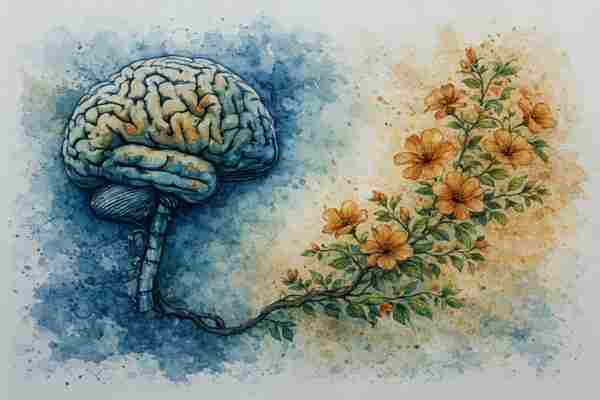
The topic of fitness usually focuses on the body, but mind and brain fitness are just as important. When you understand how the brain and mind functions differ and how to exercise each, you can train each one with the right tools.
The brain uses physical mechanisms to process information. The mind uses mental capacities to interpret experience. Understanding this difference helps you create a full mental fitness plan. This plan supports clear thinking, emotional balance, and overall well-being.
The brain and the mind are often treated as the same thing, but they work on different layers of human experience. The brain is physical, measurable, and biological. The mind is interpretive, experiential, and abstract. The functions differ and have unique tasks, but converge with the same goals.
When you separate the two, you gain the ability to train each system with precision instead of relying on vague ideas about “mental health.” This makes it easier to know what kind of exercise you need and why it helps.
The distinction that shapes mental fitness
Brain and mind functions are designed to work together, but they operate in different ways. The brain uses physical mechanisms to process signals, store memories, and control the body.
The mind uses mental capacities to interpret experiences, shape emotions, and create awareness. When you understand this difference, you can train or exercise each system with the right methods.
You can strengthen the brain’s physical abilities and refine the mind’s interpretive abilities. Training both systems supports clear thinking, steady emotions, and overall well‑being.
What the brain does
The brain handles the physical side of thinking. It manages attention, memory, pattern recognition, and problem‑solving. It processes sensory information, builds neural pathways, and adapts through repetition and challenge.
Every skill you learn, every pattern you notice, and every problem you solve leaves a physical trace in the brain’s structure. These traces help you think faster and more clearly over time.
Because the brain is physical, it responds to physical and cognitive stimulation. It grows through novelty, challenge, and repetition. When you train the brain, you are reshaping its structure and building stronger connections. This is why brain exercises feel like “work” — the brain is using its mechanisms to grow and change.
What the mind does
The mind handles the experiential side of thinking. It is the home of thoughts, feelings, imagination, intuition, and self‑reflection. The mind interprets experiences, assigns meaning, and shapes your sense of identity. While the brain processes signals, the mind decides what those signals mean to you. It influences how you feel about your life and how you respond to the world.
The mind is not limited by physical structure. It is shaped by awareness, emotional clarity, introspection, and the stories you tell yourself. Training the mind means refining perception, stabilizing emotion, and building presence. When you train the mind, you strengthen your ability to stay calm, understand yourself, and make thoughtful choices.
How brain and mind functions differ and influence
The brain’s physical activity affects your mental state. Fatigue, stress, nutrition, and neural efficiency all influence how you think and feel. When the brain is tired or overwhelmed, your thoughts and emotions can feel scattered or heavy.
The mind’s interpretations also reshape the brain. Thoughts, emotions, and habits can build up or break down our brain’s pathways over time. This means your mindset and habits can physically change your brain.
This two‑way influence means you cannot fully train one without affecting the other. A complete mental fitness plan works on both layers deliberately so you can think clearly and feel balanced.
How to exercise the brain
Focus: physical mechanisms, cognitive load, structural change.
The brain responds best to exercises that challenge its physical mechanisms. These activities improve memory and attention. They help with pattern recognition and problem-solving, too. They reshape neural pathways by using repetition and new experiences. The table below groups these exercises clearly. This way, you can see how each one supports the brain’s structure and processing abilities.
| Ten ways to exercise the brain | |
|---|---|
| Exercise | Description |
| Learning and memory expansion | |
| 1. Learn a new skill | Trying something new—like cooking, knitting, or playing an instrument—creates new pathways in the brain. |
| 2. Use the memory palace method | This technique strengthens memory by placing ideas inside a mental map of familiar locations. |
| 3. Learn a new language | Language learning forces the brain to make new connections and improves memory and processing speed. |
| Analytical and logical training | |
| 4. Build analytical skills | Math, logic, coding, and science experiments strengthen problem‑solving and pattern recognition. |
| 5. Play strategy and puzzle games | Chess, Sudoku, and card games improve planning, memory, and strategic thinking. |
| Sensory and creative stimulation | |
| 6. Use music to activate the brain | Listening to or playing music lights up multiple brain regions and improves thinking. |
| 7. Use all your senses | Activities like cooking use sight, smell, touch, taste, and hearing to build new neural pathways. |
| Focus and cognitive control | |
| 8. Meditate to improve focus | Meditation helps the brain calm down, learn better, and recover from stress. |
| 9. Teach someone a skill | Teaching strengthens your own understanding and builds deeper neural connections. |
| Physical support for brain health | |
| 10. Exercise your body | Physical activity increases blood flow to the brain and supports the growth of new neurons. |
How to exercise the mind
Focus: experiential capacities, emotional clarity, awareness.
The mind improves through practices that build awareness, emotional stability, and self‑understanding. These exercises focus on perception and reflection. They help you manage the stories you tell yourself, so you can stay calm and grounded. The table below shows these practices based on the mental skills they boost. This way, you can pick the ones that suit your needs.
| Ten ways to exercise the mind | |
|---|---|
| Exercise | Description |
| Awareness and presence | |
| 1. Practice mindfulness meditation | Mindfulness teaches you to stay present without judging yourself and helps reduce stress. |
| 2. Practice mindful breathing | Slow, steady breathing helps calm the mind and improve focus. |
| 3. Use grounding techniques | Noticing your surroundings or walking barefoot helps you stay present and reduce stress. |
| Emotional processing and expression | |
| 4. Use journaling to explore your thoughts | Writing helps you understand your feelings and gain clarity. |
| 5. Practice gratitude | Noticing the good things in your life builds emotional strength and positivity. |
| 6. Create art or music | Drawing, painting, or playing music helps you express emotions and reduce stress. |
| Mind‑body integration | |
| 7. Try yoga or Tai Chi | These practices combine movement, breathing, and meditation to calm the mind and improve balance. |
| Cognitive reflection and self‑perception | |
| 8. Read and reflect | Reading builds empathy, strengthens thinking, and helps you understand yourself and others. |
| 9. Use positive affirmations and visualization | Repeating positive statements and imagining success builds confidence and reduces negative thinking. |
| Social and relational well‑being | |
| 10. Build meaningful social connections | Spending time with friends and family improves emotional health and reduces loneliness. |
Where mind and brain training overlap
Many activities strengthen both brain and mind functions at the same time. Music, meditation, learning, and problem-solving all boost brain activity. They also help with emotional balance. These activities help you think clearly and feel balanced at the same time.
Because the mind and brain work interdependently, training one often improves the other. A balanced approach uses activities that challenge thinking and support emotional clarity at the same time. This helps you stay sharp, calm, and adaptable. Focusing on how to exercise each will strengthen the mind-body connection.
Conclusion
Training the brain and training the mind are not the same thing, but both are essential for mental fitness. The brain grows through challenge, repetition, and physical stimulation. The mind grows through awareness, emotional clarity, reflection, and meaning‑making. When you work with both systems, you build a stronger foundation for thinking, feeling, and living well.
A balanced plan strengthens the brain’s mechanisms and the mind’s capacities at the same time. The brain and mind work together, but their functions differ and create two separate layers of mental fitness.
Over time, this approach creates clearer thinking, steadier emotions, and a deeper sense of control over your inner world. When you train both systems together, you support your whole mental life — how you think, how you feel, and how you understand yourself.
References
- Damasio, A. (1999). The Feeling of What Happens: Body and Emotion in the Making of Consciousness. Harcourt Brace.
- Gazzaniga, M. S. (2018). The Consciousness Instinct: Unraveling the Mystery of How the Brain Makes the Mind. Farrar, Straus and Giroux.
- Kandel, E. R., Koester, J. D., Mack, S. H., & Siegelbaum, S. A. (2021). Principles of Neural Science (6th ed.). McGraw-Hill.
- Doidge, N. (2007). The Brain That Changes Itself: Stories of Personal Triumph from the Frontiers of Brain Science. Penguin Books.
- Davidson, R. J., & McEwen, B. S. (2012). Social Influences on Neuroplasticity: Stress and Interventions to Promote Well-Being. Nature Neuroscience.
- Lazar, S. W., et al. (2005). Meditation Experience Is Associated with Increased Cortical Thickness. NeuroReport.
- Tang, Y. Y., Hölzel, B. K., & Posner, M. I. (2015). The Neuroscience of Mindfulness Meditation. Nature Reviews Neuroscience.
- Gross, J. J. (2015). Emotion Regulation: Current Status and Future Prospects. Current Opinion in Psychology.
- Baumeister, R. F., & Vohs, K. D. (2016). Strength Model of Self-Control as Limited Resource. Advances in Experimental Social Psychology.
- Sternberg, R. J., & Sternberg, K. (2017). Cognitive Psychology (7th ed.). Cengage Learning.
- Csikszentmihalyi, M. (1990). Flow: The Psychology of Optimal Experience. Harper & Row.
- Ratey, J. J. (2008). Spark: The Revolutionary New Science of Exercise and the Brain. Little, Brown and Company.
- Siegel, D. J. (2012). The Developing Mind: How Relationships and the Brain Interact to Shape Who We Are (2nd ed.). Guilford Press.
- Vago, D. R., & Silbersweig, D. A. (2012). Self-Awareness, Self-Regulation, and Self-Transcendence in Meditation. Frontiers in Human Neuroscience.
- American Psychological Association. (2020). Building Your Resilience. APA.org.