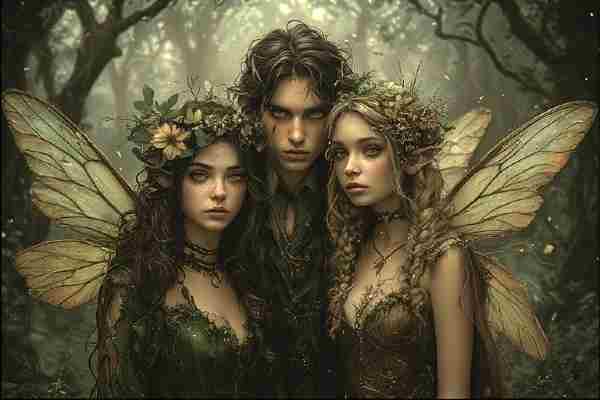
The ancient fairy tales and folklore myths were the first graphic novels of humanity. These stories use vivid images, symbolic characters, and packed meanings. Long before people had written documents that were available to the masses, communities shared these tales. They passed down memories in ways that were easy to remember and hard to forget.
These stories endure because they speak in symbols instead of arguments. A wolf, a witch, a fairy, a shapeshifter, and a mysterious helper —these figures bypass logic and go straight to our emotions. They stay in memory the way dreams do, carried by archetypes, fear, wonder, and repetition.
As fairy tales, folklore, and myths spread, they become part of the culture itself. They shape how people understand danger, virtue, identity, and the unknown. Their characters show up in modern films, comic books, spiritual ideas, and political tales. This proves we still live within these old symbols.
The world is full of magic things, patiently waiting for our senses to grow sharper. — W. B. Yeats
Why the ancient fairy tales persist
Legends, myths, and tales remain vibrant in culture because they employ strong psychological hooks. Their strong images, characters, and imaginary landscapes trigger emotions. They evoke strong reactions quickly, often before we can explain why. These stories do more than entertain; they hold memory, meaning, and shared human experiences.
Ancient fairy tales are not just stories; they are symbolic maps of how the psyche organizes fear, hope, danger, and transformation.
Their imagery has a lasting impact. An enchanted object or archetypal figure can capture a whole worldview. This form stays in the imagination easily. Fairies and other mysterious helpers serve as emotional shortcuts. They skip analysis and settle into memory like dreams.
These patterns change to fit cultural motifs. Each retelling alters surface details but keeps the emotional core. A forest may change to a city; a witch can become a manipulative leader; a magical helper might turn into a mentor. These symbols change over time. They evolve and take on new meanings in different cultures.
The language of symbolism
Symbolism is the operating system of all legends and tales. These stories show ideas through powerful images. They carry deep emotional and psychological meaning. A single object or figure can hold a whole worldview, making the tale memorable long after the details fade.
Symbols compress meaning.
A key, a mirror, or a ring can represent power, truth, or identity without any explanation.
Symbols bypass analysis.
They reach the intuitive mind first and shape understanding before logic arrives.
Symbols adapt easily.
Their meaning survives even when the imagery changes across cultures or eras.
This symbolic flexibility lets the ancient fairy tales and folklore myths to be reshaped to fit the need. A witch can turn into a corrupt leader. A forest can shift to a digital landscape. A magical helper may show up as a mentor or an unexpected ally. The surface changes, but the emotional logic remains clear. This gives the stories a form of psychological portability.
Archetypes and emotional memory
Archetypes add psychological depth to the ancient fairy tales. They are more than just characters; they are patterns of experience. These figures mirror the inner struggles people face in life.
In stories, we see:
- A hero facing uncertainty.
- A trickster bringing chaos.
- A monster endangering safety.
- A wise guide offering direction.
They reflect shared emotional truths across cultures.
Archetypes last because they imprint themselves on memory. A listener may forget the plot, but the feeling of the wolf, the witch, or the helper remains. These figures turn into emotional guides. They influence how people see new situations, even after the story is gone.
As cultures evolve, archetypes change their outward appearance but keep their core function. A giant can turn into a faceless institution. A shapeshifter might show up as a tricky persona. A magical helper could be a mentor or an unexpected ally. Their emotional logic connects with each new era.
Cultural transmission and collective memory
All of the ancient fairy tales and folklore myths spread through culture like seeds in the wind. They are carried by repetition, reshaped by each storyteller, and take root where they touch hearts. As they travel, they collect different interpretations. They become part of a community’s shared memory instead of belonging to one storyteller.
What a culture repeats becomes what a culture remembers; what it remembers becomes what it assumes.
Through this repetition, the stories create patterns that outlast their original contexts. They teach who is dangerous, who is trustworthy, what a test looks like, and how transformation unfolds. Even when details change, the emotional logic remains steady. It helps people interpret events, even after the original story is lost.
This is why fairy tales feel familiar across eras. A medieval forest turns into a modern city. A witch becomes a manipulative leader. A magical helper transforms into a mentor or an unexpected ally. The symbols change with new environments, but their core structure remains. This lets ancient patterns live on in modern stories.
Moral encoding and social instruction
Fairy tales teach through implication rather than direct instruction. Their lessons flow with the story—tests, temptations, helpers, dangers, and twists. This way, the listener understands the meaning without feeling lectured. The emotional logic of the tale carries the moral logic, making the lesson felt rather than stated.
| Story Element | Function in Moral Encoding |
|---|---|
| Trials | Reveal the cost of growth and the necessity of courage. |
| Villains | Personify danger, deception, or misplaced trust. |
| Helpers | Model discernment, guidance, and the value of unexpected aid. |
| Transformations | Show that identity evolves through challenge, not comfort. |
Because the lessons are carried by imagery instead of doctrine, they stay flexible across eras. A principle stated directly can become dated; a principle embedded in symbolism can be reinterpreted again and again. Ancient tales and legends still influence behavior and expectations. This happens even after their original cultural context has faded.
Spiritual subtext and the metaphysics of story
Fairy tales often carry a spiritual undercurrent that runs beneath the plot. Even if the stories seem secular, they still show older themes. They often include a descent into uncertainty. Then, there’s a confrontation with the unknown. This leads to transformation through trial. Finally, the story ends with a return and a new understanding. These movements mirror the inner shifts people experience when they face fear, loss, or change.
The spiritual dimension shows itself through forces bigger than daily life. These can be mysterious helpers, prophetic dreams, enchanted objects, or unexpected twists of fate. These elements give shape to experiences that feel meaningful but resist simple explanation. They suggest that the visible world is only part of the story, and that unseen influences shape the path a person walks.
What if the “magic” in these tales is simply a symbolic language for the moments in life that feel guided, uncanny, or strangely timed?
Because this subtext is metaphorical rather than doctrinal, it becomes a part of new stories. What used to look like angels or forest spirits can now show up as intuition, synchronicity, or psychological insight. The imagery changes, but the deep feeling stays. Folklore myths connect to parts of our experience that logic can’t fully capture.
The evolution of villains and helpers
Villains and helpers form the structural backbone of fairy tales. They represent opposing forces—threat and guidance, deception and insight, chaos and order. These figures endure not because of their costumes but because of the psychological roles they play. They give shape to the dangers and support a person encounters while moving through uncertainty.
Villains challenge the protagonist’s judgment.
Helpers show what the protagonist can do, even if they don’t realize it yet.
As cultures shift, these roles mold to fit the narrative. The old forest witch turns into a manipulative authority. The wolf becomes a predatory stranger. The magical helper transforms into a mentor, a wise friend, or an unexpected ally. The surface imagery changes, but the underlying dynamics stay recognizable. Each generation reshapes these figures to reflect its own fears and hopes, keeping the emotional logic of the tale relevant.
Cultrually relevent archetypes live in these legends. They aren’t fixed characters. Instead, they are flexible patterns. These patterns show up when people need to understand threats, seek guidance, or explore transformation.
Adaptation, reinvention, and modern media
Fairy tales stay culturally relevant because they adapt to new mediums. As stories move from oral tradition to print, film, and digital platforms, their symbols change a bit. They adapt to feel modern but still keep their emotional depth. A forest may turn into a dystopian city. A witch can become a manipulative institution. A magical helper often shifts into a mentor or an unexpected ally. The imagery changes, but the core patterns remain familiar.
Modern media speeds up this process. Films, comic books, video games, and streaming series draw on mythic structure because they give an immediate sense of meaning. Audiences may not consciously see the connection, yet they feel the pull of familiar archetypes beneath the surface. New stories often reflect old ones. This happens because our emotions are rooted in shared imagination.
Reinvention is not dilution. Each retelling shows what a culture fears, values, or hopes for at a given moment. Storytellers update symbols to reflect today’s issues. This keeps the tales psychologically relevant. These flexible patterns keep the tales and legends living stories instead of old artifacts. They are structures that can take in new anxieties. At the same time, they keep the emotional truths that made them special.
The shadow side of folklore myths
The darker elements of fairy tales are not decoration; they are essential. Beneath the magic and wonder lies a landscape shaped by fear, abandonment, envy, hunger, and the threat of being unprotected. These stories give form to emotions that children feel but cannot name, and that adults carry but rarely admit.
Shadow figures externalize danger.
Wolves, witches, and curses turn internal fears into visible adversaries.
Shadow settings create thresholds.
Forests, towers, and night journeys mark the crossing into uncertainty.
Shadow trials reveal resilience.
The protagonist learns to move through threats rather than avoid them.
Modern retellings often tone down these elements. However, taking away the shadow weakens the transformation central to the story. The stakes matter because the danger feels real, even when the imagery is fantastical. The characters in the stories show vulnerability but don’t fall into despair. They provide a way to face fear, not avoid it.
Transformation, trials, and the hero’s inner journey
Transformation is the central movement of many legends and tales. Below the surface, the protagonist faces fear, uncertainty, and their own limits. The trials they face aren’t just random. They are symbolic thresholds. These moments reveal what must change inside for the story to progress.
Fairy tales distinguish between what happens to the hero and what happens inside the hero.
Each challenge reflects an inner struggle: self-doubt, naivety, misplaced trust, or the urge to quit. When the protagonist wins, it’s not just against an outside enemy. They also conquer an inner struggle. The story shows how danger and challenges help someone grow. They become more capable, clear, and brave.
This inner journey is what gives fairy tales and folklore myths their lasting resonance. People see themselves in confusion, unexpected help, moments of insight, and returning with a new identity. The stories last because they reflect the emotional ups and downs of growth. It’s messy, nonlinear, and truly transformative.
Why these patterns still matter
Fairy tales endure because they mirror the emotional architecture of human experience. Their symbols, trials, and archetypes show us how to understand uncertainty. They also reveal desire, danger, and change. Even as imagery shifts over time, the core patterns remain clear. This allows each generation to see its own challenges in familiar shapes.
These stories matter not for their age, but because they still shed light on life’s inner workings. They illustrate how people face fear, seek help, challenge deception, and grow from tough times. The tales don’t tell us how to act; they show the mental paths we all navigate.
In a world full of information, fairy tales stand out. They provide a clear meaning that connects with our intuition. Their simplicity is deceptive. Below the surface is a map of emotional truths. These truths stay important, even as the world outside changes. The stories persist because they continue to express what it feels like to be human.
Conclusion: Fairy tales and folklore myths
Legends, folklore, and tales last not from preservation, but from their ongoing evolution. Their symbols change, their settings evolve, and their characters face new cultural pressures. But the emotional core stays the same. These stories help us grasp fear, courage, loss, desire, and transformation. They do this without needing long explanations. They use images that the mind instantly recognizes, even as the world around them shifts.
In this way, fairy tales function less as artifacts and more as living structures. They absorb new anxieties and reinterpret old patterns. They also reveal the psychological terrain that each generation must navigate. Their endurance isn’t just about nostalgia; it’s about relevance. They still shed light on the inner workings of human experience clearly and precisely.
Fairy tales survive because they evolve, and they evolve because they speak to something in us that does not change.
References
- The Hero with a Thousand Faces. Joseph Campbell, 1949.
- Morphology of the Folktale. Vladimir Propp, 1928.
- The Uses of Enchantment: The Meaning and Importance of Fairy Tales. Bruno Bettelheim, 1976.
- The Archetypes and the Collective Unconscious. Carl G. Jung, 1959.
- The Golden Bough: A Study in Magic and Religion. James George Frazer, 1890.
- Folklore. Encyclopaedia Britannica.
- Myth. Stanford Encyclopedia of Philosophy.
- What Is Folklife? Library of Congress American Folklife Center.