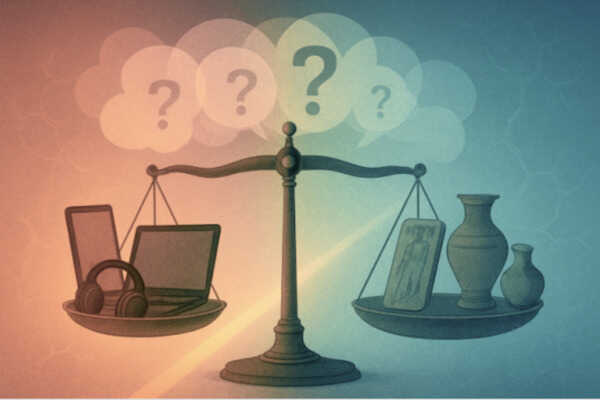
Understanding what underlies our judgments is essential to maintaining a healthy mindset. The first step in the process for challenging assumptions is the culture values test. Are you ready to uncover the intent behind your beliefs and values?
We can adopt distorted ideas that become part of our worldview. There are several sources of unhealthy ideas in our culture; social media tops the list. Our families, friends, popular culture, religion, and politics can all contain harmful beliefs. These sources compete with one another to control how we make choices.
The more people expose themselves to harmful sources, the more likely they are to adopt distorted ideas. Once a bias or prejudice is accepted, people will defend it with violence if necessary. One way to expose this thinking is through a questionnaire that reveals the hidden intent of our beliefs and values.
What The Cultural Values Test Reveals
Perceptions and assumptions are closely connected. They both shape how we think and interpret our surroundings.
The process for challenging assumptions helps us see things in new ways. When we question what we believe to be true, we can discover better solutions to problems. This process encourages creativity and innovation, allowing us to think outside the box and generate fresh ideas.
One way to identify harmful programming is by uncovering our core beliefs and values. We can do this using a questionnaire.
Forced-Answer Cultural Questionnaire
A forced-answer test is simple. You are forced to pick one of two answers that most closely align with your thinking. Don’t overthink the choice. Your first choice is the most honest and accurate representation of your worldview. The cultural values test will reveal core beliefs and values, as well as distorted perceptions.
| # | Question | Option A | Option B | Weight A | Weight B |
|---|---|---|---|---|---|
| 1 | Family Identity | Shared religious beliefs define my family. | My family is defined by ancestry or shared household. | -10 | +10 |
| 2 | Family Composition | A family should consist of a man and a woman. | A family can consist of any mix of genders. | -10 | +10 |
| 3 | Family Leadership | Men should lead the family. | Men and women should be equal partners. | -10 | +10 |
| 4 | Belief Certainty | My beliefs are correct and unchangeable. | I’m open to changing my beliefs based on evidence. | -10 | +10 |
| 5 | Morality Source | Religion is necessary for living a moral life. | Morality does not require religion. | -10 | +10 |
| 6 | Law and Religion | Laws should be based on religious texts. | Laws should be based on fairness and reason. | -10 | +10 |
| 7 | Religious Identity | I follow the religion passed down through my family. | I am spiritual or nonreligious by choice. | -10 | +10 |
| 8 | Impact of Religion | Religion improves the world. | Religion causes many societal problems. | -10 | +10 |
| 9 | Trust in Leaders | I trust the advice of religious or spiritual leaders. | I am skeptical of religious authority. | -10 | +10 |
| 10 | Information Sources | I rely on religious and social media sources. | I question religious and media information critically. | -10 | +10 |
| 11 | Religious Freedom | I fear losing my right to religious expression. | Religion should not influence public policy. | -10 | +10 |
| 12 | Religion and Violence | Defending religious beliefs with violence is acceptable. | Violence is never justified by religion. | -10 | +10 |
| 13 | Mind-Body Practices | Meditation, yoga, and similar practices are spiritually dangerous. | Mind-body practices are healthy and beneficial. | -10 | +10 |
| 14 | Decision-Making | Religious teachings guide my decisions. | I make decisions based on evidence and reasoning. | -10 | +10 |
| 15 | Learning and Growth | I prefer studying my religious texts. | I seek knowledge beyond my religious comfort zone. | -10 | +10 |
| 16 | Life Guidance | Religion teaches me everything I need to know about life. | I explore many tools and ideas to improve my life. | -10 | +10 |
| 17 | Spiritual Practice | I prefer religious devotion and leaders. | I explore spiritual tools like meditation or mindfulness. | -10 | +10 |
| 18 | Cultural Diversity | I’m most comfortable with people who share my background and beliefs. | I enjoy engaging with diverse people and beliefs. | -10 | +10 |
| 19 | Religious Pluralism | Only my religion holds the whole truth. | Many religions may hold partial or symbolic truths. | -10 | +10 |
| 20 | Personal vs Group Faith | Faith only has meaning when practiced in a religious group. | Spirituality can be deeply personal and individual. | -10 | +10 |
| 21 | Afterlife Beliefs | My view of the afterlife is based on religion. | My afterlife beliefs are personal and differ from religion. | -10 | +10 |
| 22 | Belief Origins | My beliefs come from family or culture. | I formed my beliefs independently. | -10 | +10 |
| 23 | Secularism | Religion should influence government and public life. | The government should remain secular. | -10 | +10 |
The Process for Challenging Assumptions
The culture value questions show the relative health of your values based on their potential effects on society. On one side of this continuum is a worldview based on harmful bias and prejudice. On the other side is the freethinker.
This score is not the end. You can use this data to create healthier values and a worldview. Here are the steps we recommend.
Step 1: Calculate Your Score
Each answer on the cultural values test is weighted: Option A = -10, Option B = +10.
1. Add up your weights across all 23 questions.
2. Interpret your score:
-
- +230 → Freethinker (open, evidence-based worldview)
- Around 0 → Mixed values (some biases, some openness)
- -190 or lower → Strong traditional/religious bias
- -230 → Religious extremism (high risk of harmful bias)
Step 2: Identify Patterns
Look at which questions you answered with negative weights (Option A). These indicate areas where your thinking may be rigid, biased, or based on assumptions rather than evidence.
Example: If you scored -10 on “Belief Certainty,” you may resist changing beliefs even when presented with facts.
Step 3: Diagnose Unhealthy Values
Unhealthy values often share these traits:
1. Rigid thinking: My beliefs are correct and unchangeable.
2. Exclusivity: Only my religion holds the whole truth.
3. Authority dependence: I trust religious leaders without question.
4. Violence justification: Defending beliefs with violence is acceptable.
Ask:
- Does this belief limit my ability to learn, empathize, or coexist peacefully?
- Does it create fear, prejudice, or hostility toward others?
Step 4: Challenge Assumptions
The process for challenging assumptions requires honest self-reflection.
For each negative-weight answer:
- Question the origin: Did this belief come from family, culture, or personal reasoning?
- Seek evidence: What do science, history, and diverse perspectives say?
- Test flexibility: Can you imagine scenarios where your belief might be wrong?
Step 5: Replace with Healthy Alternatives
Healthy values are:
- Inclusive (respect diversity)
- Evidence-based (open to change when facts emerge)
- Nonviolent (reject harm in the name of ideology)
- Autonomous (formed through critical thinking, not blind tradition)
Example correction:
- Original: “Laws should be based on religious texts.”
- Healthy alternative: “Laws should be based on fairness and reason to serve everyone.”
Step 6: Create an Action Plan
- Engage in Healthy Spiritual Practice: Seek activities that promote positive growth.
- Read widely: Explore philosophy, science, and other cultures.
- Practice empathy: Engage with people who hold different beliefs.
- Reflect regularly: Ask, “Is this belief helping me and others thrive?”
Final Thoughts
The process for challenging assumptions with the cultural values test is deep inner work. Learning how culture and tradition shape our human experience can be emotionally intense. Traditions are often linked to our identity. When traditions have strong links, they can be challenging to change.
Traditions aren’t all bad. They connect us to the past and enrich our lives today. However, some traditions may contain harmful biases and prejudices. We see evidence of this in the racism and prejudice in alt-right ideologies.
We should take action to preserve and promote positive cultural practices and traditions. We must learn to distinguish between positive and negative ones. By doing so, we can help create a more diverse, tolerant, and sustainable world.
To determine the positive and negative influences on one’s beliefs, one must examine culture and society. The cultural values test is a tool that helps us ask hard, probing questions. It underscores the importance of challenging assumptions.
References
- Perception and Misperception of Bias in Human Judgment.
University of California, San Diego (UCSD) - How to design a questionnaire.
- Creatively and Critically Challenge Assumptions. SpringerLink
- Good Questions to Ask People, Unbranded News