You may know more about the five stages of hypnosis and deep hypnotic induction techniques than you realize. Western religious indoctrination uses these techniques. Once you learn how they work, you will know why you need to avoid their influence.
The indoctrination tactics of religion are an accepted part of culture. However, these techniques contain powerful mind-control methods. We accept them as something normal when, in fact, they are not. It’s one reason they are so difficult to spot.
Here’s the good news and the bad news. All hypnosis is self-hypnosis. The good news is that all forms of hypnotism require some degree of willing participation. The bad news is that your willingness can be passive acceptance. You accept the hypnotic suggestion through prolonged exposure or by being in a heightened emotional state.
The good news is that you can avoid these scripts by not participating in events where these tactics are used. The bad news is that hypnosis is often disguised. You may not realize that you are being exposed to suggestive scripting. The good news is that if you recognize it, you can avoid its effects. Otherwise, you may be under its influence and not realize it. The final bad news is that these scripts are found everywhere, from advertising to religion.
Exploring The Hypnotic Trance State
Hypnosis is a term derived from the Greek word “hypos,” meaning “sleep” or “sleeping while awake.” It’s the hallmark of a hypnotic state. The hypnotic state makes the mind pliable and susceptible to suggestions. It’s a way of circumventing our ability to use our critical thinking skills. You are awake but unaware of the programming that overrides your rational thinking. [1]
Hypnosis induces a trance-like state that opens access to the subconscious. In this state, the mind is vulnerable to suggestions and programming. It can be used to induce people to do things they would not normally do.
Some people are more susceptible than others. A good hypnotist can use peer pressure and the need to belong to persuade those who are less likely. This phenomenon is known as groupthink manipulation or mob mentality. When people around you respond to stimuli in a certain way, it persuades you to join in.
Light to Deep Hypnotic Induction Techniques
It’s essential to recognize the different degrees of the hypnotic trance state. Hypnosis can be a subtle technique that takes you through the process without your realizing it. A skilled hypnotist can make the process appear effortless.
You don’t need to be in a catatonic state to be controlled by hypnotic suggestion. It is often possible to be fully conscious when the hypnotist inserts the suggestion. You can be aware of the suggestion but still respond to the stimuli without conscious control. There are three stages of hypnosis.
1. In a light hypnotic trance, your body starts to relax, but you’re still awake and aware. Your breathing becomes slower and deeper. Your muscles feel loose, especially in your arms and legs. Your eyelids may feel heavy, and you may even blink slowly.
Your heart rate may slow down unless you are engaged in movement. Your attention is focused on one thing, like a voice or an idea. Your critical thinking skills are distorted.
- Example: A Sunday sermon in a calm, meditative church environment. You’re seated in a pew, relaxed by soft music and the pastor’s rhythmic voice. The sermon says, “God has a plan for your life. Trust in Him, and you’ll find peace.”
You feel comfortable because of the calm setting. Your critical thinking skills are intact, but you may not have time to think about what is being proposed. Due to peer pressure, you may accept the proposal even if it conflicts with your values.
- How it works: You’re open to gentle persuasion but still maintain some intellectual distance. It’s similar to light trance suggestion—calm, emotional language opens you to ideas, but you’re not fully immersed.
2. Medium hypnotic state: At this level, you are in a deeply relaxed state, and you may experience a sense of heaviness or numbness in your body. You may still be aware of your surroundings. The hypnotist is controlling your attention and awareness.
- Example: A charismatic revival meeting with group chanting and emotional buildup. After an hour of singing, clapping, and group prayer, your body is tired and still. A preacher says, “Let the Holy Spirit enter you. Let go of doubt. Don’t think—just feel Him inside you.”
You feel emotionally swept up. You’re not analyzing the logic anymore—you’re just going along. Your attention is locked on the preacher’s voice. You feel what they tell you to feel.
- How it works: Your critical thinking is bypassed by rhythm, emotion, and group energy. You’re more suggestible, and messages like “Doubt is sin” get planted without conscious resistance.
3. Deep hypnotic trance state: At this level, you live in a highly suggestible state. You may experience delusions and feelings of time distortion or altered perception. At this point, your subconscious mind is fully accessible to the hypnotist or leader. You are likely subjected to deep hypnotic induction techniques daily.
- Example: Long-term exposure in a high-control religious group or cult. Over time, you hear the same messages again and again. You become isolated from outside views. Rigid routines take over your life, and you face intense emotional practices. These can include confession, fasting, or all-night vigils.
You start to believe that “The outside world is evil.” You accept that “Our leader speaks for God.” “Disobeying doctrine means damnation.” These beliefs feel like the ultimate truth, not just ideas. If questioned, you respond with emotional certainty rather than rational inquiry.
- How it works: Being exposed daily means you are living in a continual state of hypnotic suggestion. Your entire identity is shaped by suggestion. You don’t even question the doctrine because your subconscious has fully accepted it as reality. You’ve become completely programmed.
Summation of Deep Hypnotic Induction Techniques
These stages illustrate how religious systems influence thinking. They use a range of methods, from mild persuasion to overt emotional conditioning. These tools enable profound psychological restructuring, also known as mind control. It can change rational people into cult followers. It depends on how often they are exposed, the way the message is delivered, and the emotional and social settings.
The key to the deep hypnotic trance state is learning to build upon successive levels of indoctrination. The subject may only reach a light level with the first exposure. Each successive session deepens the trance state and the hypnotist’s control. The more exposure, the greater the success of the hypnotic script. It enables the person in control to elicit extreme behaviors.
How Religious Indoctrination Uses Hypnosis
Hypnotic suggestion is a technique used to plant ideas or beliefs in a person’s subconscious mind. The more deeply hypnotized a person is, the more receptive they may be to hypnotic suggestions. The more you expose a person to the technique, the more the hypnotist can shape the values and beliefs of their subject. [2]
Religious indoctrination incorporates subtle and overt forms of hypnosis. It is used in group hypnosis, or groupthink manipulation, in Western organized religion. Engaging in repeated sessions enables the hypnotist to override common sense and our moral compass. [3]
You believe in a book that has talking animals, wizards, witches, demons, sticks turning into snakes, burning bushes, food falling from the sky, people walking on water, and all sorts of magical, absurd and primitive stories, and you say that we are the ones who need help? ― Mark Twain
Even if you have never been on stage as a volunteer, you may have been subject to these techniques as an unsuspecting subject, parishioner, or mark. Review the following steps or stages to see if this feels familiar. If you belong to an Abrahamic faith, you may spot some similarities between stage hypnotists and your religious leaders. They both understand and use deep hypnotic induction techniques. [4]
Organized religions use a continual system of indoctrination. Religious belief is self-hypnosis. It is the acceptance of myths as if they were facts. Are you subjecting yourself to this programming?
The Five Stages of Hypnosis Trance Induction
Hypnotic suggestion is a process divided into three to seven steps or stages. Understanding these stages is the key to spotting them. It prevents someone from using them without our knowledge. It also helps us use this mind-control process for personal growth or therapy.
Stage 1 — The Induction: Obtaining Permission, Setting Authority
The hypnotist seeks permission to engage the subconscious. This step removes resistance to the process. To do this, the hypnotist will ask them to agree to be hypnotized. It gives them the authority to program scripts into the subconscious.
They can get permission directly by asking, “Do I have permission to start?” However, the hypnotist can also get it indirectly, without you even knowing. For example, they might say, “I’m sure you agree that we’re all here tonight to learn something important,” or “We’re all gathered here together.” These phrases can subtly open your subconscious mind to the hypnotic power of religious self-hypnosis.
Religious Indoctrination
Religious self-hypnosis is the repetition of prayers, songs, or beliefs to produce a suggestive trance. These are passive but effective ways, such as nodding the head. A common tactic is to make eye contact and nod; most people will nod back in response. They have you in control. The five stages of hypnosis and deep hypnotic induction techniques depend on getting permission.
Another tactic is to blame someone or something. Let’s say you lost your job because of downsizing. There may be no evidence that someone or something is behind the loss of your job. But if you have someone or something to blame, this provides an outlet for your anger.
Powerful emotions, such as hate, are anchors for the hypnotist. Belief is a form of self-hypnosis in which phrases or gestures can trigger a response. The Nazi salute is an example of a gesture that can trigger a subconscious response of pride, hate, and belonging simultaneously.
Here, you galvanize the attention of the person or group. Use a series of emotionally charged questions to hold their attention. They can use positive statements. For example, the hypnotist will say, “You want to stop smoking.” Or they can use negative comments like, “We know XYZ is behind the loss of jobs.”
Practical Applications of Hypnosis
A typical post-hypnotic suggestion to stop smoking could be when the desire to smoke arises; it will make you feel ill. The taste of tobacco that used to be pleasurable is now distasteful. This kind of suggestion lacks a failsafe to terminate the program. The intent is for it to run continually to break the chain of addiction.
You may not want to quit smoking. You like it, but your spouse wants you to stop. So, you agree to the programming even though you are not entirely in agreement. Get them to focus on the positive result instead of fulfilling the immediate desire to smoke.
Stage 2 — Access The Subconscious Mind
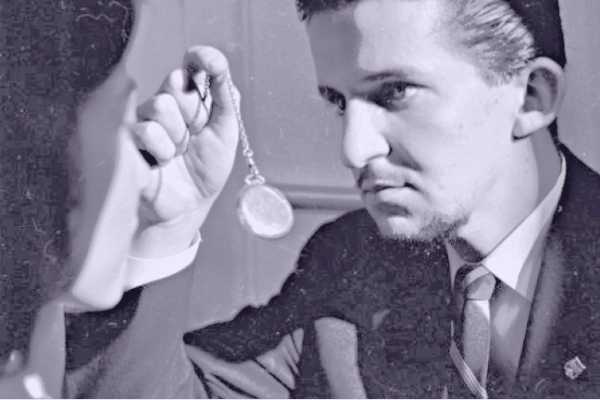
With the permission to proceed, the hypnotists can bypass our critical thinking faculties. They are free to install any suggestion script in the subconscious. This step is facilitated by getting the candidate to focus on a specific task or object. They can use a candle flame, the swinging of a pendulum, or a pocket watch.
Leveraging Emotion in Post-Hypnotic Suggestion
In a religious setting, the leader encourages people to focus on a single idea by employing three primary methods. First, they repeat the words or messages again and again. It causes the brain to stop thinking about other things. Second, they evoke strong emotions, such as fear, guilt, or love, to elicit a profound emotional response in people. That makes the message stick. Third, they speak with authority, as if they know all the answers. When people trust the speaker, they stop asking questions and just listen. It makes the mind focus on one idea and believe it more easily.
The hypnotist will use phrases to block out distractions. They will say, “All you hear is the sound of my voice.” A common tactic in group situations is to get people to follow simple directions. They may say, “Let’s close our eyes and pray.” At this point, the mind is pliable and susceptible to suggestion. Belief is self-hypnosis when it overrides our common sense.
The hypnotist will often test to ensure the subject or subjects are ready to accept a subliminal suggestion. They will ask for a response, such as, ‘Do you feel rested?’ Or, can we agree that this or that is bad? Once the hypnotist confirms that the rational mind is asleep, they can then insert a subconscious response.
When the hypnotist works with one person or a small group, they will ask for agreement and say things like, “You are now asleep, isn’t that right?” They will look for subtle responses, such as people nodding their heads.
Using Catchphrases as Mental Hooks
The hypnotist will often use catchphrases to elicit group responses in larger groups. The phrase may not be accurate. It does not matter. The catchphrase does three things to solidify the script.
1. First, a focal point unites the group. When others around you agree, you are likely to go along. It is a proven response in groupthink manipulation. Even those on the fringe who disagree can get caught up in shouting a slogan or catchphrase.
2. Second, when people have a powerful emotional attachment to the issue, they are more vulnerable to suggestions. If the subconscious programming is strong enough, it will create a powerful emotional directive. Under this suggestion, people will act in ways that violate their moral compass and perpetrate violent acts. They have no conscience.
3. Third, those affected believe that the suggested outcome is their idea. Those under these mind-control techniques will not realize what is driving their actions. They may not even be aware that they are doing it. It’s as if you are watching someone else do it.
Stage 3 — Insert Post-Hypnotic Trance State Suggestion
Program the unconscious response. Subliminal programming can take many forms. We can see how people react when someone does something on stage, such as barking like a dog. We don’t see the subliminal suggestion of someone who decides they don’t like the taste of smoking.
Groupthink Manipulation, and Hypnosis
The tools of religious groupthink manipulation integrate “hypnotic suggestion” into their tactics. They prove their effectiveness whenever you hear about a religious extremist committing violence. We also see how some politicians use it to drive extremist ideologies and laws. We should not underestimate the hypnotic power of religious self-hypnosis indoctrination. Religion and politics use less subtle scripts, such as “Lock her up” or “Vote for Trump.” Once you hear these phrases 10 times in an hour, the suggestion is set.
Hypnotic Script Failsafe
It’s essential to incorporate a failsafe mechanism to counteract the post-hypnotic suggestion. Even temporary hypnotic suggestions should include a failsafe to remove the hypnotic response. Adding a failsafe is the responsibility of the hypnotist. Without a failsafe to stop the post-hypnotic suggestion, someone might bark like a dog at odd times forever.
We see what happens when falsesafe is intentionally omitted. It results in deeply held hatred and bias. All someone knows is that they hate someone or some group. They don’t realize this response was programmed, and the rationale for their hatred is irrational and baseless.
Step 4 — Test and Activate the Post-Hypnotic Response
Test the pre-conditioned response. It is a step in the hypnosis process to reinforce the programmed response. It makes it harder for the subject to resist the programmed stimuli. If the hypnotist gets resistance or a lack of response, they might return to the start. They will return to step one, reinstall the programming, and test again. They want to ensure that the subject follows the voice or visual cues.
For example, the programmed response is for the subject to hand over their wallet when a specific keyword is spoken. You say the keyword, and the person will automatically reach into their pocket and pull out their wallet. But then their natural self-preservation instinct signals that something isn’t right.
If the subject hesitates, they have their wallet in their hand but are unsure they want to give it away. An experienced hypnotist will recover by returning to step 1. They will ask questions like, “Aren’t you supposed to do something after you take out your wallet?”
A religious hypnotist checks how people respond to familiar words, actions, or messages. He observes their reactions to things they’ve heard many times before.
In an individual setting, they might say a familiar phrase, ask a question, or use a symbol that the person has been trained to respond to. They check how a person reacts. Do they agree quickly, or do they show the proper emotion? These responses ensure that the script has taken hold.
In a group setting, the hypnotist watches how the crowd reacts to gestures and messages. They watch for signs of agreement. These include shouting, clapping, nodding, crying, or exhibiting other strong emotions. It tells the hypnotist that the group has been conditioned to respond the way they want.
Stage 5 — The Emergence
The final stage of a hypnotic trance state is called emergence. Here, the individual is brought out of their hypnotic state. At this stage, the hypnotist gives positive affirmations. This helps strengthen the suggestions from the earlier suggestion stage.
The hypnotist activates the program by bringing the subject back to a state of conscious awareness. However, the process isn’t over. The hypnotist asks several questions to ensure the subject or mark is ready. They ask how they feel and what they remember. The person hypnotized should not feel disoriented or sick. Ideally, they will have no memory of the session or the post-hypnotic suggestion installed.
A common sign of a successful hypnotic session is when the subject tells the hypnotist that they are ready to be hypnotized. They do not realize the process has already taken place; they are under the control of “hypnotic suggestion.”
A religious hypnotist induces responses by repeating familiar catchphrases. They look for the proper response. It’s known as call and response, and is used often in religious rituals. They praise people who agree and follow the rules, and they show disapproval to those who ask questions or don’t follow along.
They also use group pressure. When everyone else is saying the same thing or acting the same way, it’s easier to join in. Sometimes, they use signs or actions—like standing, clapping, or raising hands—to connect the message to what people do.
By repeating this process over and over, the hypnotist ensures the message sticks. People start to believe it, feel it, and follow it without needing to be told.
If Belief is Self-Hypnosis, What Can Go Wrong?
Con artists of all kinds, from religious and political leaders, use hypnotic suggestion to control thinking. They use religious beliefs as a hook to gain your confidence.
A skilled con artist will utilize fundamental emotional drivers, such as fear, anger, or greed, to manipulate their targets. They will ask questions to get you to say yes, and before you know it, they will have your confidence and trust.
The next thing you know, you are driving home in a used car you didn’t set out to buy. Or you realize you’ve joined a Church or given your life savings to a political con artist. But in these cases, you think it’s a good thing, and you don’t know why you feel good about it. That’s the power of hypnotic suggestion.
Removing a Post-Hypnotic Suggestion
Let’s say you realize you’ve bought a car you didn’t want. The five stages of hypnosis trance are hard to overcome. Perhaps your bank account is empty because you gave a political con artist all your money. You can’t get it back, but you want to stop yourself from giving more.
The process of removing an unwanted post-hypnotic suggestion is the same as the one used to install it in the first place. If you have a friend, they can lead you through it, or you can do it on your own. Sorry to tell you, but if you have a long-standing hypnotic script, it may take you several sessions to overcome it. You’ll need to break it with repetition.
Chances are, the political con artists or preachers did not include a failsafe in the script to prevent it from ending. That’s how they keep control. For optimal results, reprogramming should be done as frequently as possible. The average time to break subliminal programming scripts is 90 to 120 days.
Avoid exposure to indoctrination. This includes going to religious services or engaging with religious social media.
We urge caution with the use of hypnosis. Just remember, if even you reprogram, the original script may remain dormant in the subconscious. Be mindful of urges that trigger the harmful script.
In Conclusion
Once you understand how deep hypnotic suggestion works, you can see how religion uses it to shape your thoughts without you knowing. These tools may look harmless, but they are powerful. They work by repeating messages, using strong emotions, and instilling trust in the leader without question. Now that you know how this works, you can protect yourself. You don’t have to fall for the tricks. You can learn to think for yourself and choose your own path.
References
- Hypnosis. The Open Encyclopedia of Cognitive Science
- Hypnosis: Medical, Scientific, or Occultic? – Martin & Deidre Bobgan.
- What is hypnosis, and how might it work? National Library of Medicine.
- Mechanisms of Hypnosis. National Library of Medicine.