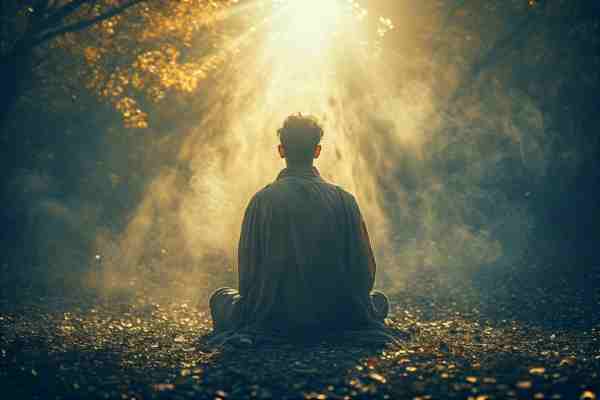
Most people equate religion with spirituality, which is incorrect. They are two separate things. So, why do so many people use these terms interchangeably, and what are the consequences? Let’s explore why this distinction is more important now than ever.
Religion is a dominant social force in our modern world. The validity of religion often goes unchallenged. Even those who do not follow a major religion are still influenced by it.
Politicians use religious beliefs to rise to power and control. Is being spiritual without being religious possible? We think the answer is yes! See how and why you should become spiritual rather than religious.
Different Points of View on Spirituality
Defining the elements of religious versus spiritual helps us understand the differences.
Spiritual refers to the aspect of awareness that cultures call the spirit. It is the identity of the observer of our experience. So, spirituality is personal, experiential, and fluid. It emphasizes connecting with the transcendent without the framework of religious dogma.
This approach is known as independent spiritual exploration. Spiritual exploration is the use of processes to explore consciousness (spirit). It does not require belief in an imaginary friend or joining a religion.
Before the emergence of organized religions, indigenous cultures explored consciousness. They followed a standard method to enter altered states by using rhythm to control heart rate and breathing. They used sound and visualization to explore the inner world. This practice, known as the shamanic journey, is found in many cultures worldwide.
Religion is a set of beliefs and practices focused on worshiping a higher power. It often includes rituals, sacred texts, and a community of followers.
Let’s delve further into the different points of view on spirituality, from organized religion to those who pursue their own path.
Religious Versus Spiritual
Philosophically, religion tends to define truth through established doctrine and metaphysical assertions. Spirituality, by contrast, is more concerned with individual experience and personal meaning. Being spiritual without being religious reflects a personal search for meaning.
Science can now validate many spiritual practices. It demonstrates how meditation, breathwork, and gratitude have a positive impact on mental health. They also support brain function and emotional regulation, regardless of the religious context.
Sociological sciences observe a growing trend in spirituality that is distinct from religion. This change reflects a culture that prioritizes personal freedom over traditional beliefs. It shows a desire to connect with the divine through close, lively, and direct experiences.
Religious versus spiritual can be summed up this way. Religion is the belief in myth and superstition. When someone is spiritual, they engage in spiritual exploration.
East Versus West: Being Spiritual Without Being Religious
Eastern religious traditions explored consciousness with mental and physical tools. Mantras, sutras, and affirmations were mental tools based on energy rather than meaning. Mantras were combined with breathwork, sound, and movement. Breathing techniques, the use of musical instruments, singing bowls, kambagan, and tai chi are examples of these methods.
Eastern traditions used stories to explain the concept of consciousness. They showed its processes and layers of symbolism. Oral traditions became codified into texts to communicate the knowledge. These stories often used anthropomorphic beings to symbolize the energy and functions of the mantras.
Therefore, Indigenous and Eastern religious traditions emphasize the exploration of consciousness (or spirit). This focus contrasts with Western traditions.
Western organized religion is based on the belief in myths and superstitions that come from an assortment of ancient texts. Western traditions do not see the symbolism of these stories as analogies and metaphors for ideas. Instead, it upholds that these stories are factual. Mistaking myths for facts is the underlying error of all Western theology.
Western religion is also called the Abrahamic traditions. These traditions are Christianity, Islam, and Judaism. Here is a list of the central tenets shared by the Abrahamic religions:
- Monotheism. The belief in one, all-powerful, personal God.
- Revelation. God reveals His will through prophets and sacred scriptures.
- Moral Responsibility. You are accountable to God for your actions and must follow divine law as interpreted by each sect.
- Prayer and Worship. Regular communication with and devotion to God are essential.
- Covenant or Faith Commitment. Affirmation to follow the direction of religious leadership.
- Afterlife. Belief in judgment, heaven, and hell, or a continued existence after death.
- Sacred Texts. Each religion has a foundational scripture (Torah, Bible, Qur’an).
- Prophethood. God sends prophets to guide humanity (e.g., Abraham, Moses, Jesus, Muhammad).
- Ethical Conduct. The leadership of the sect determines acceptable behavior. The sect indoctrinates followers to protect it with violence if necessary.
- Community and Ritual. Communal identity and religious observance are essential. Key practices include hourly prayers, the Sabbath, sacraments, and Ramadan.
- Discourage Critical Thinking. Exploring different points of view is considered heresy.
In contrast, spirituality has no laundry list of imperatives. What you choose to believe or not believe is up to the individual. Choosing individual spiritual exploration provides the freedom to create your own path.
Religion is for people who are afraid of going to hell. Spirituality is for those who’ve already been there. — Vine Deloria Jr.
Spirituality does not come from religion. It comes from our soul. — Anthony Douglas Williams
Now that we see the different points of view between being spiritual and being religious, let’s explore their effects.
How Religion Shapes Lives
Community and Belonging. Religion promotes social ties, support networks, and rituals. These aspects connect people in both joyful and difficult times. Sociologists point out that religious institutions have always acted as anchors for communities.
Tradition and Structure: Religious frameworks set clear moral boundaries and guide life paths. Rites of passage, like baptism, marriage, and funerals, provide continuity across generations.
Authority and Doctrine: Religious systems utilize sacred texts and leaders to establish truth and guide their followers’ actions. It can offer clarity but also raise concerns about conformity and control.
Religious versus spiritual paths can lead to vastly different life experiences. Participating in a religion takes a considerable amount of time and resources.
The function of religion is not to answer all questions, but to cultivate awe. — Abraham Joshua Heschel
Religion is excellent stuff for keeping common people quiet. — Napoleon Bonaparte
A church is a place in which gentlemen who have never been to heaven brag about it to those who will never get there. — H.L. Mencken
Some research shows that religious participation has some positive effects on culture. It helps lower rates of depression, addiction, and suicide. These positive effects are attributed to a strong community and shared purpose. However, these studies do not account for other factors that reduce these rate. Socioeconomic status, governmental programs, etc all contribute to these positive effects.
Kierkegaard and other philosophers warned that religion would hinder genuine spirituality. It can do this by stifling doubt and personal insight. It eliminates different points of view to maintain control.
From a spiritual standpoint, religion is a path, but not the only path. The danger lies in mistaking the form for the essence. Some say religious beliefs are harmless. But many disagree. Let’s look at the consequences of religious belief.
The Harmful Consequences of Western Organized Religion
Western organized religion has provided meaning and community to many. But it has also caused significant harm. Old traditions, strict rules, and power structures create problems. They lead to discrimination, violence, and emotional pain. Here are some of the main ways organized religion can cause harm.
These religions often promote intolerance, calling other beliefs false or evil. This has led to forced conversions, torture, and even death. Religious teachings have sometimes backed racism. They have suggested that some cultures are superior. This has caused great harm to Native peoples and enslaved Africans.
Many Western religions put men in charge and treat women as inferior. This has led to unfair treatment, violence, and harmful practices like forced marriage or even genital mutilation. LGBTQ+ people have also faced judgment, rejection, and lost rights because of religious teachings.
Religion has been used to start wars, excuse genocide, and hide abuse. Some churches have covered up child abuse instead of helping victims. Others have taught kids to feel ashamed of their bodies or question themselves.
Critical thinking and independent spiritual exploration are discouraged. Science and facts are ignored, especially when they contradict religious dogma. Religion is also used in politics to take away rights or control others. These ideas can cause stress, fear, and lasting emotional harm.
Some beliefs even treat the Earth as unimportant, leading to pollution and the destruction of nature. When people think the world will end soon, they may stop caring about protecting it.
These adverse consequences show different points of view from what is projected by organized religion. History shows how Western organized religion causes damage. It’s important to ask questions about these consequences regardless of what you believe.
Learn to think for yourself, and look at what helps or hurts others. True spirituality should bring kindness, understanding, and personal growth, not fear or control. Time now to contrast spirituality outside of organized religion.
How Spirituality Plays Out in Contrast to Religion
Independent Spiritual Exploration: Spiritual seekers explore consciousness and personal development. Exploring different points of view and different paths is encouraged. Spiritual exploration uses tools such as meditation, the shamanic journey, and journaling. These tools help them attain altered states of consciousness to find personal truths. Practices such as mindfulness meditation have been adopted in corporate environments. It shows the blending of spirituality with everyday professional life.
Freedom and Flexibility: Without institutional constraints, people can combine practices from other traditions. They are free to invent new rituals that feel meaningful.
Inner Authority: The spiritual path encourages reliance on critical thinking and intuition. Many people struggle with the religious versus spiritual tension in daily life.
Your sacred space is where you can find yourself again and again. — Joseph Campbell
The spiritual journey is individual, highly personal. It can’t be organized or regulated. It isn’t true that everyone should follow one path. Listen to your own truth. — Ram Dass
To understand the immeasurable, the mind must be extraordinarily quiet, still. — Jiddu Krishnamurti
Psychologists like Carl Jung saw spiritual exploration as key to individuation. It is the journey to becoming one’s true self. Neuroscience shows that spiritual practices light up the brain in areas related to compassion and unity. From a sociological perspective, this reflects postmodern pluralism. So, no single worldview holds all the truth. This mindset values authenticity over dogma, presence over pretending, and transformation over tradition.
The Path of Independent Spiritual Exploration
The individual path teaches that all life is connected, which leads us to care about the planet, animals, and each other, not out of fear, but from love. It is a personal way to feel connected to something greater.
It doesn’t need rules, buildings, or leaders like many organized religions do. Instead, it comes from inside. They find their own path and follow what feels true in their heart.
Independent spiritual exploration allows for the use of many methods. It uses tools like meditation, journaling, breathing exercises, or walking in nature. These help them feel calm, think clearly, and grow as a person. It’s not about following rules. It’s about listening, learning, and feeling connected.
The independent path is open to everyone. It doesn’t matter where you’re from, what you believe, or what you look like. There are no groups to join, no right or wrong answers. Just a journey to become more loving and aware.
You can practice spirituality anywhere. It doesn’t need a church, special clothes, or ceremonies. It can happen while watching a sunset, sitting still, or even while washing dishes. It’s about being present and paying attention to life.
Many people use spirituality to heal from past pain. This includes pain caused by religion. Simple practices like breathing, quiet time, or gentle movement can help people feel better and more whole.
In the end, spirituality is about being true to yourself. It’s about growing, healing, and living with purpose. You don’t have to be perfect. You just have to be present.
Cultural Shifts and Generational Change
People today are changing how they connect with the sacred. Millennials and Gen Z are leaving traditional religions in large numbers. They seek different points of view that encourage personal growth. Still, they seek answers to spiritual questions. They explore astrology, energy healing, plant medicine, eco-spirituality, and mindfulness. These are modern ways to find connection and meaning.
We are not human beings having a spiritual experience. We are spiritual beings having a human experience. — Pierre Teilhard de Chardin
Spirituality is no longer confined to ancient temples or quiet monasteries. It has moved into yoga studios, online communities, and therapy rooms. — Unknown
The old paths are fading, and yet the longing remains. — Mirabai Starr
Now, science is looking at practices once seen as fringe. Breathwork and sound healing are being studied for their effects on both the body and mind.
Philosopher Charles Taylor says we have shifted from a time when religious belief was normal to one where it is just one choice among many options.
This shift encourages inclusivity and new ideas. However, it might cause a lack of depth or cohesion without solid frameworks.
In media and pop culture, spirituality is now marketed as a lifestyle. This lifestyle promotes wellness, empowerment, and self-care. However, this commercialization raises big ethical questions. Is spiritual practice still sacred if it’s branded and sold? Sociologists say we are seeing a new form of religiosity. This new spirituality is fluid, experimental, and global.
The Benefits and Challenges of Both Paths
Religion provides a strong cultural tradition and community. However, it can also be rigid, hierarchical, or exclusive.
Spirituality via independent spiritual exploration promotes freedom, personal growth, and authenticity. Yet, it may lack structure, mentorship, or a sense of community. Being spiritual without being religious questions traditional beliefs.
In religion, faith is a virtue. In spirituality, faith is an experience. — Unknown
Religion is belief in someone else’s experience. Spirituality is having your own experience. — Deepak Chopra
All religions are fingers pointing to the same moon. — Zen proverb
The tension between these paths shows the classic debate of belonging versus freedom.
Psychologically, religion offers certainty and a sense of identity. In contrast, spirituality fosters inner reflection and emotional healing.
Scientifically, both paths can boost well-being, compassion, and resilience when practiced sincerely.
New hybrid models are appearing. We see spiritual communities without rigid beliefs. New belief systems are embracing mysticism. Others are focusing on wellness spaces that combine science and tradition. Some even combine all these approaches. These shifts reflect a cultural desire for both stability and change, reason and mystery, as well as ritual and freedom.
Final Thoughts: Finding Your Own Path
We have looked at the different points of view from organized religion to the path outside the control of myth and superstition. Being spiritual without being religious means embracing independent spiritual exploration. It’s about finding a genuine connection to the sacred. This journey invites you to explore life’s mysteries on your terms. You do not just accept what you inherit. You can meditate in silence, worship with others, or stroll alone in nature. The goal is to reach beyond the ego, awaken your heart, and live meaningfully.
When the soul lies down in that grass, the world is too full to talk about. Ideas, language… even the phrase each other doesn’t make any sense. — Rumi
Truth is one; the wise call it by many names. — Rig Veda
At the center of your being you have the answer; you know who you are and you know what you want. — Lao Tzu
As William James observed, the essence of spiritual experience lies in the “immediate luminousness” it brings. Religion may provide the lamp; spirituality is the flame. In our increasingly pluralistic world, the lines between the two are not fixed, but porous. And perhaps that’s where real wisdom begins: not in choosing one over the other, but in learning to honor the truth each can offer. Social trends show a sharp increase in being spiritual without being religious.
The difference between religion and spirituality is not just academic. Religious beliefs influence our culture. These backward, biased, and prejudiced concepts shape culture. They often dictate how life is lived, how spirituality is viewed, and how truth is experienced. Today, old institutions are crumbling. New paths are emerging. The cultural tension of religious versus spiritual is essential to understand. These different points of view are worlds apart.
Being spiritual without being religious means stepping beyond inherited beliefs. It challenges us to engage directly with the mystery of existence. This path requires courage, curiosity, and authenticity. Tradition can offer wisdom, but it should never replace personal insight. The challenge is to go beyond religious labels. Question everything. Reflect honestly. Look within. Seek your own answers. As society evolves, the dialogue between spirituality and religion will likely continue to shift. We will need to rethink our connections to tradition, community, and personal belief systems.
References
- The underlying neurobiology of meditation. Brain Research Bulletin.
- The neural correlates of religious and nonreligious belief. PLOS ONE.
- Religious and spiritual factors in depression. Depression Research and Treatment.
- Spirituality and positive psychology. Psychology Research and Behavior Management.
- Religious attendance and cause of death. International Journal of Psychiatry in Medicine.
- The role of spirituality in health care. Southern Medical Journal.
- The rise of the Nones. Sociology of Religion.
- Decline of Christianity in the U.S. Pew Research Center.