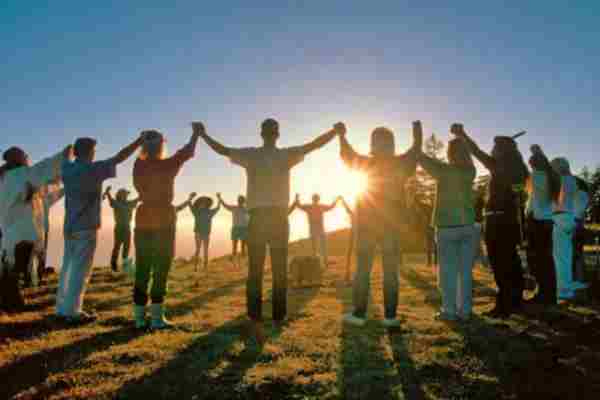
Throughout the ages, cultures have gathered in circles. The shape affects how groups gather, make decisions, and recall events. It’s seen in campfires, councils, rituals, and courts. Modern talks often call circles “healing,” but their history shows many uses. This article examines how various cultures use this shape and why it is important.
This article examines the many roles of the circle. These roles show how the shape is a shared human structure rather than a single practice type. People have used circles in many ways throughout history. They serve functions such as leadership, justice, teaching, ritual, mourning, and spiritual reflection. The shape serves various purposes depending on the cultural context and social norms.
This article describes how groups used circles to organize social life. It does not aim to produce emotional insight or psychological change. Circles are not used at random. They activate a small set of repeatable social mechanisms that shape how groups behave. These mechanisms appear in many settings, even when beliefs and traditions differ.
Core Social Mechanisms Activated by Circles
- Attention Alignment
Sitting in a circle directs attention toward the group and shared activity.
- Status Leveling
Circles reduce visible hierarchy by removing front and back positions.
- Turn-Taking Control
Visibility makes interruptions and dominance harder to sustain.
- Boundary Creation
The circle clearly separates group space from the outside world.
- Participation Pressure
Being seen discourages withdrawal and passive disengagement.
- Shared Memory Formation
Repeated circle gatherings reinforce group memory and tradition.
To clarify these differences, the article organizes the information by category. Each section groups circles by their similar roles. It also provides examples from various cultures and historical periods. Each category in this article shows how different cultures used similar methods for various reasons.
The Many Roles of the Circle
People from many cultures and time periods have gathered in circles. This is a function of necessity, providing light and warmth. It is one of the main factors that gave rise to society long before modern governments or written laws. This shape recurs because it facilitates effective collaboration.
When people sit or stand in a circle, everyone can see each other. There is no front-of-room presence and no built-in leader. This facilitates listening, speaking, and maintaining focus. It also helps people feel included in the group.
People use circles for various purposes. Some people use them to make decisions. Others use them to teach stories or pass down knowledge. Some cultures use circles in ceremonies, funerals, or other important life transitions. They are venues for resolving disputes or for guiding community rules.
The historical use of the circular format is often misunderstood. The modern perception is that the primary purpose of circles was for “healing” practices. In fact, most have practical purposes. They help groups remain organized, share responsibilities, and manage important tasks.
The Circle as a Shared Structure
The round shape is more than a symbol. It is a simple structure that solves common group problems. People found that gathering in a circle changed their interactions.
One important feature of a circle is visibility. Everyone can see everyone else. This makes it harder to conceal and easier to detect. It also supports turn-taking, since no one is physically placed above the group.
One of the many roles of the circle is to create a clear boundary. There is an inside and an outside. This helps mark the space as different from everyday activity. In many traditions, stepping into a circle meant following a different set of rules or expectations.
Circles in cultural practice are often linked with wholeness and cycles. Many cultures used circular shapes to represent seasons, time, or continuity. These meanings varied, but the shape often helped people focus on shared purpose rather than individual status.
At the social level, circles influence behavior. People tend to listen more carefully and speak more thoughtfully when speaking directly to others. Circles were useful for discussions, ceremonies, and times when cooperation was key.
Circles were also used in large structures designed for mass participation. The Roman Colosseum is one example. Its circular design lets large crowds share a common focus. This shape helps organize attention, reduce confusion, and create shared experiences. Even in large spaces, the circle guides movement, focus, and collective awareness.
Circles change how people behave. Facing others encourages listening and turn-taking. Shared space makes it harder to withdraw or dominate without being noticed. Circles help support dialogue, coordination, and participation in many cultures. They are used even when the group’s goals vary.
The following sections look at different types of circles worldwide. Each example shows how the circle was used, its origin, and its cultural significance. By comparing these practices, we can see why the circular shape is a universal human structure.
The Use of Circles in Cultural Practices
People use the circular shape in many ways, depending on their needs and traditions. The same shape served different purposes across time and place. Below are the main ways circles have been used, grouped by their primary role.
Each of these categories reflects a different use of the circle. In the sections that follow, individual examples are examined in greater detail. Knowing where they originate and how they were used helps us select the best one for our needs.
1. Leadership and Decision-Making
Many societies use circles in cultural practice. It is a practical approach to governing groups and making decisions. These circles were working meetings, not symbolic gatherings. They were used to manage land, resources, disputes, and community rules.
- Tribal council circles were common in Indigenous cultures worldwide. Elders, chiefs, or selected leaders met in a circle to discuss matters affecting the group. Speaking was guided by custom, such as age, role, or the use of a talking object. Decisions carried authority because the community witnessed them.
- Elder councils relied on experience rather than force or written law. These circles focused on long-term stability, cultural memory, and guidance for younger leaders. Elders reviewed disputes, preserved traditions, and advised on major decisions.
- Village and community circles in cultural practice handle everyday governance. Members gathered to organize shared labor, manage food and water, and address local problems. These meetings were direct and task-focused.
- Consensus circles aimed to reach agreement without voting. Discussion continued until a solution emerged that most members could accept. This approach was common in small or interdependent groups where unity mattered. Cultural traditions frequently reference the many roles of the circle to symbolize unity.
- Quaker meetings for business used quiet discussion rather than debate. Members spoke when necessary and listened carefully. Decisions were recorded once the group reached shared clarity.
Cultures worldwide employ leadership circles for group discussions and community decision-making.
2. Justice and Conflict Resolution
Some cultures used circles to address conflict and rule violations within the group. These gatherings followed established customs and were overseen by recognized leaders or elders.
- Peacemaking circles brought together those in conflict, along with witnesses or mediators. Participants spoke one at a time and shared their actions. The purpose was to clarify the events and identify fitting consequences based on community standards.
- Restorative justice circles focused on responsibility and obligation rather than punishment alone. Outcomes often included restitution, public acknowledgment, or changes in behavior.
- Community mediation circles handled disputes over land, resources, or conduct. These meetings aimed to prevent escalation and maintain group stability.
In these contexts, circles served as a structured method for maintaining order and enforcing shared rules.
3. Ritual and Ceremony
Many cultures leveraged the many roles of the circle in ceremonies and rituals. These gatherings had strict forms. They often linked to seasonal cycles, social roles, or shared traditions.
- Campfire circles were common in shamanic and tribal cultures. People gathered around a central fire for storytelling, instruction, ritual, and decision-making. The fire served as a focal point, while the surrounding space organized attention and participation. These gatherings often combined practical discussion with symbolic action. The circle and fire together helped mark the space as separate from daily life and supported shared focus.
- Ceremonial circles were used during planting, harvest, or communal festivals. The circular arrangement helped coordinate group movement and attention during formal activities.
- Initiation circles marked changes in social status, such as entry into adulthood or leadership roles. Participation was usually limited and governed by tradition.
- Ancestral and remembrance circles acknowledged lineage, history, or shared identity. These gatherings reinforced continuity between generations.
In ritual settings, the circle defined a shared space where formal actions were carried out according to custom.
4. Teaching and Storytelling
Circles have long been used to pass down knowledge, skills, and history. Before written records, many societies relied on spoken stories and direct instruction.
- Storytelling circles allowed elders or chosen speakers share myths, lessons, and cultural memories. Sitting in a circle helped listeners stay engaged and remember details.
- Teaching circles were used to train younger members in practical skills, values, or social rules. Instruction was often interactive, with questions and discussion guided by custom.
- Apprenticeship circles supported learning through observation and repetition. Learners acquired knowledge by observing experienced members in a shared space.
In these settings, the circle supported attention, memory, and participation. It helped ensure that knowledge was shared openly and preserved across generations.
5. Mourning and Loss
Some societies used circles to formally acknowledge death or loss within the community. These gatherings followed established customs. They marked changes in social structure caused by absence or transition.
- Grief circles provided a public setting for speaking about loss according to cultural rules. Participation was structured, and silence often played a central role.
- Memorial circles honored individuals or groups who had died. These gatherings reinforced shared memory and historical record.
- Lamentation circles appeared in traditions where vocal expression was culturally defined and regulated.
These circles did not aim to change personal experience. They served to recognize loss and maintain continuity within the group.
6. Spiritual or Contemplative Practice
In some traditions, circles were used for formal spiritual or contemplative activities. These practices followed established rules and were often part of broader systems of training or belief.
- Meditation circles supported collective stillness and discipline. The circle helped organize posture, spacing, and shared timing.
- Prayer and chanting circles coordinated speech or sound across participants. The circular form allowed participants to maintain rhythm and alignment.
- Contemplative circles emphasized restraint, silence, and repetition rather than discussion.
In these settings, the circle helped organize practice instead of focusing on specific outcomes.
7. Initiation and Personal Change
Some cultures used circles during formal rites of passage. These gatherings marked changes in role, responsibility, or social recognition.
- Initiation circles often followed periods of preparation. Participation was limited, and actions within the circle were carefully defined.
- Vision-related circles appeared alongside fasting, isolation, or instruction. These practices were overseen by elders and followed strict rules.
- In historical European witchcraft and ceremonial magic, circles were used as a symbol for boundaries. Practitioners believed the circle separated ritual space from the outside world. These circles were carefully constructed and followed strict rules. Their purpose was not group discussion, but containment, protection, and focus during ritual acts. Understanding these circles requires historical context rather than modern interpretation.
These circles signal readiness or change in a cultural system. They do not promote open-ended personal exploration.
8. Modern and Adaptations
In modern settings, many traditional circle forms have been adapted for new purposes. These adaptations often combine elements from different historical traditions.
- Support circles are used in community groups, workplaces, or educational settings. They focus on discussion, shared experience, or mutual support.
- Discussion and dialogue circles are used to explore social issues or improve communication. These gatherings often emphasize equal participation and respectful listening.
- Modern “healing” circles borrow language and structure from older traditions. However, they are often separated from the cultural rules and preparation that supported earlier forms.
These adaptations vary greatly. Their function depends on the context, support, and participant expectations. Understanding their historical roots helps clarify both their possibilities and their limits.
Conclusion
The circle has served as both a practical and symbolic form, not a one-size-fits-all answer. Its meaning varied based on its use, the participants involved, and the rules in place. Sometimes, circles helped organize leadership and justice. Other times, they were used for teaching, rituals, mourning, or spiritual reflection.
These traditions don’t promise transformation. Instead, they offer a shared understanding of structure. The circle focused attention, encouraged participation, and fostered responsibility. It helped groups handle tough social tasks, celebrate key moments, and stay connected.
Studying the history of circles shows their importance in early cultures. It also explains why modern uses can differ. Looking at circles from a wider view helps us see the differences in structure, symbols, and expectations. This helps us recognize the circle as a tool shaped by context rather than by belief.
References
- The social organization of space. Man (Royal Anthropological Institute).
- Collective attention and shared intentionality. Frontiers in Psychology.
- Ritual, symbol, and social structure. American Anthropologist.
- Visibility, equality, and participation in group settings. PLOS ONE.
- Consensus and decision-making in small-scale societies. Current Anthropology.
- The neuroscience of social norms and shared rules. Nature Reviews Neuroscience.
- Restorative justice and peacemaking circles. Law & Society Review.
- Group rituals and social cohesion. Trends in Cognitive Sciences.
- Oral tradition, memory, and storytelling circles. Journal of Anthropological Research.
- Turn-taking, attention, and cooperative behavior. Cognitive Science.
- Mourning rituals and social continuity. Ethnology.
- Collective identity and shared space. Proceedings of the National Academy of Sciences.
- Sacred space and boundary formation in ritual practice. History of Religions.
- Spatial arrangement and group behavior. Environmental Psychology.
- Architecture, crowd focus, and collective attention. Journal of Roman Studies.