
Imagine waking up in a society where questioning authority is a crime. Your personal choices are being closely monitored. Is true freedom and autonomy possible when extremists rule society? Are we already on that path? Let’s examine this in greater detail.
Politics, religion, and social media flood our culture with messages. Many of these messages are deceptive. They try to control how we think and what we believe. They do this in the name of “truth,” “faith,” “patriotism,” or “morality.”
To answer the question, “Is true freedom and autonomy possible when extremists rule society?” We need to understand these things:
- What freedom and autonomy really mean
- How spiritual deception and extremist rule work together
- How can people resist and protect their minds, even under pressure
- Does freedom depend on whether your beliefs match those of the people in power?
If at any point this material feels overwhelming, pause, take a few slow breaths, and orient yourself to your immediate surroundings before continuing.
This Article references several critical psychological mechanisms. The focus is on Critical Evaluation, Cultural Frameworks, Values Alignment, and Social Tools.
What Are Freedom and Autonomy?
Before we talk about extremism, we need clear definitions.
Freedom means you can make choices and act without being controlled by others. It includes things like:
- Speaking your mind
- Choosing your beliefs
- Deciding how to live your life
Autonomy is the capacity to make independent decisions and to manage one’s own life and relationships. It is not just having rights on paper. It has the absolute power to choose what you do with your body, your time, your voice, and your future.
The key difference is that freedom is the right to choose. Autonomy is the capacity to choose and act on those choices.
The only real boundary on freedom and autonomy is this: you should not use your freedom to harm others.
Freedom and autonomy are not just political issues. They are also spiritual, emotional, and moral issues. They touch how we see ourselves, how we treat others, and how we live our values.
Here we see how beliefs and values alignment are key to understanding extremism.
Why These Freedoms Matter So Much
Freedom and autonomy are core to human dignity. Without them, people cannot grow, think clearly, or live honest lives.
When people are free and autonomous, they can:
- Question harmful beliefs
- Resist unfair rules
- Make moral choices based on their values
- Create art, ideas, and communities that reflect their true selves
Even in strict or fearful systems, people who maintain their inner freedom retain a sense of self. They are harder to control. That is why extremists always try to weaken these freedoms first.
So what happens when extremists take control of culture, law, or religion?
As the article progresses, you may experience an increase in emotional impact. Grounding yourself in the present moment can help prevent feelings of helplessness.
Spiritual Deception: The Oldest Tool of Control
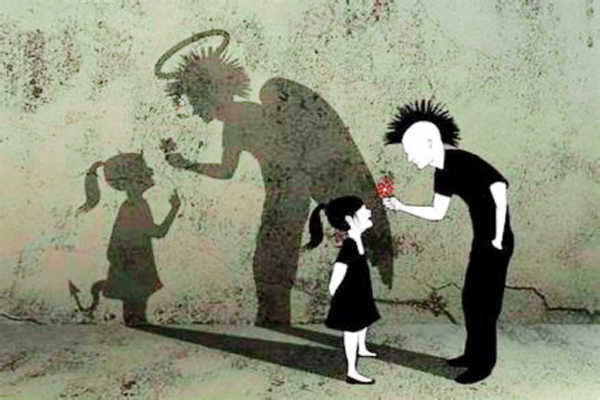
To understand extremist rule, we have to talk about spiritual deception, because the tactics are the same.
Spiritual deception uses faith, belief, and emotion to mislead people. It makes false ideas feel true and safe. It often comes from leaders who claim special access to God, truth, or enlightenment.
No one wants to admit they’ve been misled. It is hard to admit we were wrong. It feels like a failure. Our ego doesn’t like being exposed. We fear social judgment. So once we accept a belief, we tend to defend it, even if it is harmful.
Nearly half the world adheres to some form of organized religion. If you ask many believers what “spiritual deception” is, they will point to other religions. They will say, “Their beliefs are false, mine are true.” They rarely ask, “What if my own beliefs are deceptive?” Their personal identity depends on those beliefs being right.
This is where deception becomes powerful: when belief and identity fuse.
Here, analytical authority is established through critical evaluation and recognition of cultural frameworks.
The Highest Form of Deception
The highest form of deception is when the person being deceived is unaware of it. They are so deep in the belief system that they help spread it. They recruit others. They enforce the rules. They become both victim and tool.
What turns someone into such a willing victim? Extremist ideologies — in both religion and politics.
These systems use:
- Fear (“You will be punished if you question”)
- Urgency (“Time is running out — act now”)
- Flattery (“You are chosen, special, smarter than others”)
- Group pressure (“Everyone here believes this. Why don’t you?”)
They make people feel unsafe unless they obey.
Observer Awareness is the conceptual hinge that enables feeling empowered to think critically rather than feeling attacked.
Charismatic Leaders and False Spiritual Authority
Spiritual deception at the highest level requires a compelling leader. They may call themselves guru, pastor, prophet, apostle, or enlightened guide. They may be a political figure who wraps their ideology in religious language.
They use charisma to create trust. They stage miracles or “signs.” They brag about spiritual gifts or authority. They may perform tricks, show “healings,” or tell people they can see into their souls.
On the surface, they seem wise, loving, or powerful. But behind the mask is a drive for control.
They often:
- Use gaslighting to make followers doubt their own minds
- Play the victim and the hero at the same time
- Demand absolute loyalty
- Use groupthink to silence questions
- Exploit followers for money, sex, status, or power
When challenged, they may respond with anger, threats, shame, or even violence.
This section can bring up strong emotional reactions for some readers.
Dualism, Exclusivity, and Fast‑Food Spirituality
Spiritual deceivers love dualism — “us vs. them,” “saved vs. lost,” “holy vs. evil.” Dualistic thinking makes the world look simple. It forces people into sides. It obscures nuance and stifles curiosity.
They also promote exclusivity. They claim, “Our path is the only true one.” This blocks people from exploring other ideas or questioning core beliefs.
In our fast‑paced world, many people seek quick spiritual answers. Deceivers sell:
- Instant enlightenment
- Magical healing
- Paid “certifications” and “coaching”
- Spiritual products and experiences like fast food
This fast‑food spirituality is easy to consume but has no depth. It keeps people distracted rather than doing substantive inner work.
Note: symbolic systems shape perception, whether or not claims are “true.”
Misusing Holy Texts and the Age of Misrepresentation
One of the most powerful tools of spiritual deception is the misuse of sacred texts. Texts that may have once held wisdom are now used to justify:
- Control
- Division
- Hatred
- Violence
Many treat these texts as perfect, even though they have been copied, edited, and translated for thousands of years. Literal interpretation leads to cherry‑picking — choosing only the verses that support one’s agenda and ignoring the rest.
Some passages about love and compassion are twisted to support prejudice and oppression. This creates an “us versus them” mentality. It feeds extremist thinking.
When people are told they hold the “absolute truth,” they are often discouraged from critical thinking. They are told not to question. Not to read outside sources. Not to explore other views. That is where spiritual deception and extremist rule blend.
Note: Historical transmission is used to justify claims within Cultural Frameworks.
From Spiritual Deception to Extremist Rule
The same tools that deceive individuals spiritually can be used to control entire societies.
When extremists rule society, they don’t just want your outer obedience. They want your inner agreement. They want your thoughts, your beliefs, your loyalty.
In such a society, essential freedoms become the privilege of a favored group. Everyone outside that group loses rights — sometimes slowly, sometimes all at once.
Laws, cultural norms, and social pressure all work together to:
- Restrict freedom of thought
- Limit self‑expression
- Control personal choices
- Punish dissent
Democracies can erode quickly when authoritarian beliefs take hold, and people stop paying attention.
Note the transfer of mechanisms from the individual to the societal level.
The Traits of Extremist Rule
Extremist rule shows up in several key ways.
The following is descriptive rather than predictive. It is the highest emotional and politically sensitive section. Observer Awareness, Critical Evaluation, and Grounding and Centering are needed to maintain emotional equilibrium.
Restrictive Laws
Legal systems are used to enforce the ruling ideology and punish dissent. In some theocratic countries, expressing a different belief can lead to prison or execution. Even in supposed democracies, laws can be written to:
- Limit who can vote
- Punish protest
- Restrict access to health care or education
- Silence specific groups
Censorship
Information is tightly controlled. Media, the internet, and social platforms are monitored. Only “approved” narratives are allowed. Books are banned. Teachers are told what they can and cannot say. Young people are kept from learning about history, race, gender, or sexuality in honest ways.
When people don’t have access to diverse ideas, they can’t think freely.
Surveillance
Authorities, corporations, or both monitor behavior, communications, and movement. Data is collected about:
- Location
- Finances
- Social networks
- Online activity
When people know they are being watched, they often censor themselves. They stop saying what they really think. This kills honest conversation and weakens autonomy.
Political Oppression
Power becomes concentrated in a single party, leader, or belief system. Activists, journalists, and minority groups are harassed, jailed, or worse. “Law and order” becomes an excuse to crush dissent.
We have seen this in places like Taliban‑controlled Afghanistan and in many other authoritarian regimes. But we are also seeing signs of it in the United States.
Psychological Effects When Extremists Rule Society
The impact of extremist rule is not just external. It also changes how people think and feel.
Fear of punishment or exclusion leads to self‑censorship. Many people conform outwardly, even if they disagree inside, to stay safe. This weakens personal autonomy because you can no longer act honestly in accordance with your beliefs.
Over time, this fear builds an inner wall. People become trapped in cycles of obedience and resignation. They may feel hopeless and stop trying to change anything. This is exactly what extremists want.
Remember, use grounding and centering to prevent triggering negative feelings.
Cultural and Societal Constraints
Extremists don’t just use laws. They also use culture. They decide what beliefs are allowed, how people should behave, and what topics are off‑limits. Art, education, and media are reshaped to support a single viewpoint.
Over time, this changes how people see themselves and the world. They may no longer regard certain beliefs as “extreme” because the surrounding culture has normalized them.
Legal and Political Barriers
When extremists rule, they use the legal system to lock their power in place. They pass laws to:
- Restrict speech
- Ban opposing parties
- Penalize protest
- Limit who can participate in elections
Autonomy is crushed when people risk imprisonment—or worse—for simply exercising basic rights like speaking, organizing, or voting.
Historical Echoes
History is full of examples where extremist rule destroyed freedom: fascist Europe, many Cold War dictatorships, and religious regimes that control every part of life.
These examples show how quickly freedoms can vanish once people stop defending them. They also show how long it can take to rebuild trust and autonomy after such systems fall.
Contemporary Examples in the United States
The question “Is true freedom and autonomy possible when extremists rule society?“ becomes urgent when we look at what is happening now. These examples are illustrative, not exhaustive.
Far‑right Christian nationalism.
This movement works to impose a narrow religious ideology on government and law. It pushes for restrictions on reproductive rights, LGBTQ+ freedoms, and what can be taught in schools. It tries to define one religious view as “normal” and everything else as wrong or dangerous.
Cancel culture.
Cancel culture is the misuse of social media and cultural pressure to target people who speak out or hold unpopular views. Some people face harassment, career damage, or even threats for what they say. This creates fear around open discussion and leads to self‑censorship.
Mass surveillance and data privacy.
Corporations and governments hold vast amounts of personal data—social security numbers, financial records, location data, and more. This is often justified as “security” or “convenience,” but it has a cost. When people know they are being watched, they are less free to explore, ask hard questions, or dissent.
Book bans and education restrictions.
School boards and lawmakers in many states are banning books and restricting topics such as race, gender, and history. This is not about protecting children. It concerns controlling what young people are permitted to know. If you can control what people learn, you can shape what they think.
Restrictive voting laws.
Laws that restrict early voting, mail-in voting, or impose strict ID requirements tend to disproportionately harm marginalized groups. These measures are often sold as “election integrity,” but the effect is to limit who gets a real voice in democracy.
Policing protest and dissent.
Protests, such as Black Lives Matter demonstrations or environmental protests, are often met with harsh policing, new restrictive laws, and smear campaigns. When the government treats dissent as a threat instead of a right, it moves closer to authoritarian rule.
The tide of oppression in the USA started by using the legal system to silence unpopular groups and views. It has targeted minorities and movements that challenge power. Once the rule of law is twisted for this purpose, all liberties are under threat.
Ethical and Philosophical Questions Under Extremism
Freedom is not a simple concept. It is both a high ideal and a daily struggle.
Some people believe freedom should be an absolute human right — no coercion, no censorship, no interference. By that standard, extremist rule makes true freedom impossible.
Others see freedom as contextual. Even in oppressive systems, people can still use their autonomy in small but powerful ways:
- Private thoughts
- Quiet acts of kindness
- Hidden resistance
- Honest talks in safe spaces
This view says freedom can shrink but never fully die.
Living under extremist influence creates hard moral questions:
- Is it more moral to stay silent to protect your family, or to speak out and risk everything?
- Do you lose your autonomy if you decide not to resist, just to survive?
- When does staying quiet become a form of support for the system?
These are not abstract questions. Journalists, teachers, activists, and ordinary people face them in real life.
There is also a paradox of freedom. Choosing survival over open resistance may appear to entail a loss of freedom, yet the act of choosing remains an expression of autonomy. Freedom is not clean or simple. It exists in shades, and it is always fragile. Different moral choices reflect different risk thresholds, not moral failures.
Is True Freedom and Autonomy Possible Under Extremist Rule?
The honest answer: not in the full, ideal sense. Extremism is about controlling thoughts, behaviors, and beliefs. It narrows what you can do, say, and even think.
But that doesn’t mean freedom disappears completely.
History shows that even under dictatorships and cults, people:
- Think for themselves in secret
- Form underground communities
- Create art that carries hidden messages
- Share banned ideas quietly
- Help others behind the scenes
These are micro‑freedoms. They do not match the grand ideals in philosophy books, but they are real. They show that autonomy can survive even in the harshest systems.
The question then becomes:
- How much freedom is left?
- How much autonomy are we willing to fight for?
- How far will we let extremists go before we say “enough”?
Paths to Protecting Freedom and Autonomy
Even when extremists dominate culture and law, people still find ways to keep and grow their freedoms.
Resistance Strategies
Resistance is not only about violent revolt. It can be quiet, steady, and thoughtful. There are legal organizations such as the American Civil Liberties Union (ACLU) and the Southern Poverty Law Center (SPLC). They fight for rights in courts, schools, and public policy.
Grassroots movements like Black Lives Matter or Moms Demand Action push back against injustice. They raise awareness, organize protests, and support targeted individuals.
These efforts don’t fix everything, but they slow down the spread of extremism and give people hope.
Micro‑Freedoms
Even in restrictive environments, people can carve out spaces of autonomy. For example:
- Choosing what information you consume
- Supporting independent media
- Using encrypted tools like Signal or ProtonMail
- Speaking your mind in trusted circles
- Voting when you can
- Refusing to repeat lies, even if you stay quiet in public
These actions might seem small, but they matter. They keep your inner life from being fully controlled.
Community and Solidarity
No one maintains autonomy alone. Communities are vital for protecting freedom. Local groups, neighborhood networks, online forums, and interfaith coalitions can provide:
- Emotional support
- Safe dialogue
- Shared learning
- Collective action
When people know they are not alone, it is easier to resist pressure and think for themselves.
How to Avoid Spiritual and Political Deception
If you want to avoid spiritual deception and resist extremist rule, you must work on both your inner life and your outer choices.
Unmask the players.
Question leaders who demand loyalty, brag about power, or use fear and guilt to control.
Use critical thinking.
Look for evidence. Study history. Compare different sources. Join study groups that welcome real questions.
Trust your intuition.
If something feels off, pay attention.
Intuition can alert you to lies, even before you know why.
Repair harmful beliefs.
Examine long‑held ideas. Ask where they came from and who they benefit. Let go of beliefs that fuel hate, fear, or blind obedience.
Protect your inner compass.
Reflect on your values. Make choices that align with compassion, fairness, and truth, not merely comfort or approval.
Promote diversity and inclusion.
Genuine spirituality and healthy democracy both embrace diversity. They do not need everyone to be the same to feel strong.
Challenge “us vs. them” thinking.
Extremists need enemies. Don’t hand them that power by buying into their divisions.
Conclusion: Freedom Survives Only If We Guard It
The question “Is true freedom and autonomy possible when extremists rule society?” does not have a simple yes-or-no answer.
In an ideal sense, extremism is grounded in control, fear, and obedience. It attacks freedom at its root.
But in another sense, yes — because freedom is not just outside laws. It lives in how we think, what we choose to believe, how we treat others, and whether we dare to question.
Freedom does not vanish on its own. It fades when people stop guarding it.
To protect freedom and autonomy, we must:
- Question authority
- Look for deception
- Support those who resist
- Build communities that value truth
- Refuse to surrender our right to think, choose, and live honestly
Ultimately, freedom survives only when we guard it — relentlessly. Not just in theory, but in our daily choices, in our communities, and in our willingness to say, “No, I will not be deceived.”
Freedom endures through critical evaluation, values alignment, and social support.
References
- The psychological causes and societal consequences of authoritarianism. NCBI, U.S. National Library of Medicine.
- Of course, people can reject democracy: psychological perspectives—frontiers in Social Psychology.
- Evidence of Psychological Manipulation in the Process of Violent Radicalization. NCBI, U.S. National Library of Medicine.
- In Search of Autonomy: Dancing With Rules. Frontiers in Psychology.
- Grassroots Autonomy: A Layperson’s Perspective on Autonomy. NCBI, U.S. National Library of Medicine.
- Rethinking Freedom for Contemporary Psychology. Aalborg University (open-access PDF).
- Self-Determination Theory (autonomy as a basic psychological need). Wikipedia.
- Psychological Features of Extremism. Wikipedia.
- Asch Conformity Experiments (group pressure, dissent, autonomy). Wikipedia.