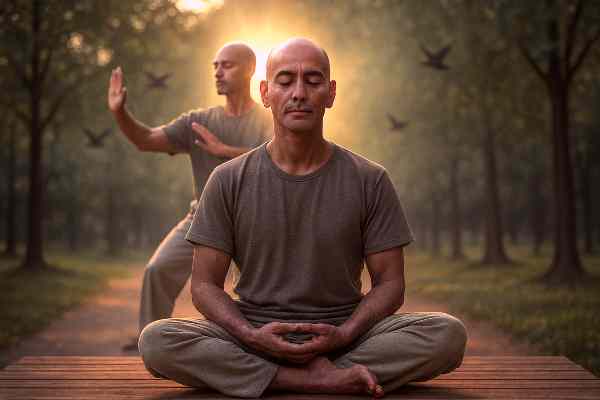
Once you master the Two-Step Meditation process, you are ready to move on to the next progression. The next step is seated and moving mindfulness meditation practices. These tools reduce stress and promote intellectual and spiritual growth.
The mind is a marvelous instrument capable of so much more if we learn to expand its capacity and functionality. Expanding awareness and perception has several benefits. Not only can we do more, but we can also do things with less stress. Let’s explore the tools that can provide the next level of growth.
What are Mindfulness Meditation Practices?
The concept of mindfulness begins with cultivating the ability to remain present. It teaches us to observe without distraction or judgment. It promotes a mindset that experiences reality as it is, without filters or preconceived notions.
The process comes from the Vipassana Meditation tradition. This method emphasizes expanding perception and gaining internal insights. As a practice approach, it helps us pay attention to everyday tasks, thoughts, and surroundings. It brings a new level of awareness and joy to life.
Mindfulness isn’t so difficult we just need to remember to do it. ― Sharon Salzberg
What the Practice Entails
The progression of mindfulness teaches you to become aware of your thoughts, your body, and your breath. Then, take the grounding of this holistic mindset into activity.
Mindfulness starts by bringing awareness to the body. Your awareness expands to include both the internal and external worlds. It’s the mindset we are designed to inhabit. You can attain this wonderful mindset with a bit of practice.
Seated and moving mindfulness meditation practices train the mind to stay calm, open, and steady, no matter what is happening. You learn how to observe your thoughts and feelings without getting pulled away by them. You also learn how to take that inner stillness into motion—so peace is not limited to a quiet room.
Think of this as expanding your awareness from “I am calm when sitting” to “I can be calm anywhere.
Having established the foundational aspects of mindfulness, let’s delve into the specifics of the practices.
Exploring Seated and Moving Mindfulness Meditation
The mind is like a wild horse. The best way to train your mind is to befriend it, not to break it. Mindfulness practices guide the mind gently to places that it naturally enjoys. In return, you get expanded awareness of your internal and external worlds.
These practices work together:
-
- Seated mindfulness teaches you how the mind works when the body is still.
- Moving mindfulness teaches how to maintain heightened awareness during action.
- Alternating Stillness and Action is the ability to shift states without losing awareness.
When you combine them, you build a powerful life skill. You can use them every day— during stress, while walking, and even while doing chores. This is the step where meditation becomes part of your daily behavior, not just something you do once in a while.
Stage 1: Seated Mindfulness Meditation
This is the natural next step after Two-Step Meditation. The two-step is the building block that teaches the mind to observe the body and the breath. The next step is to become mindful by increasing the bandwidth of awareness to include thoughts, emotions, and sensations.
How to Practice
1.Sit comfortably and begin with the Two-Step process:
-
- Notice your body.
- Notice your breath.
2. After you settle, expand your attention to your thoughts. Continue to hold awareness of your body and breath.
-
- Watch your thoughts like passing cars or floating clouds.
- You don’t follow them. You don’t judge them. You just notice them.
3. Next, add emotions to your awareness.
-
- See your emotions as clouds floating by.
- Don’t get caught up in them.
Ask yourself, “What is happening in my mind and body right now?”
4. Continue with the practice for at least 2 to 3 minutes. This is stage one of seated mindfulness.
If your attention wanders, gently return to the practice. Observe your posture, breath, thoughts, and emotions. It may seem like a lot at first, but your mind was designed to live in this space, fully engaged.
What You Are Training
-
- You are expanding your awareness and the mind’s capabilities.
- You learn to witness your thoughts and emotions rather than get trapped in them.
- You create space between feelings and reactions.
- You develop the “inner observer,” the part of you that stays calm even when life is not.
This seated practice is the foundation for moving mindfulness.
Reflect On The Practice
Self-reflection is a way to normalize and solidify what your mind has learned to do.
-
- Use a journal to record your experience.
- Recall what you were feeling and thinking.
- Explore any memories that arose.
Stage 2: Moving Mindfulness Meditation
Once you are comfortable being aware while sitting, the next challenge is staying aware while moving. This practice teaches you to be mindful during everyday activities, such as walking, stretching, and simple tasks. It also shapes the mindset for advanced practices such as martial arts and extreme sports. These activities require top mental and physical performance.
How to Practice
1. Practice seated mindfulness for at least one minute, then open the eyes slowly. Engage all your other senses, hearing, smelling, and even tasting. Keep your awareness on the body, breath, thoughts, and emotions.
2. Stand slowly, feel your balance. Make sure to retain stage one mindfulness as you move.
3. Take one step. Then, begin walking at a slow pace. Let the breath connect the inner and outer worlds.
4. Notice your surroundings without losing awareness of your body—the sound of your steps, the movement of air, and the feeling of each weight shift.
5. When thoughts appear, observe them and return to the motion.
What You Are Training
-
- You learn to stay calm while the world moves around you.
- You carry the stillness from seated meditation into daily life.
- You build emotional balance in real-world conditions.
Reflection To Stabilize
Document your practice daily. If you are doing this as a separate practice, for yoga, martial arts, or other practice, be sure to pause and reflect at regular intervals. In this way, you will spot incremental growth or unhealthy thinking patterns. This mindset allows the subconscious to problem-solve and for intuitive insights to emerge. Listening to what’s happened and what’s happening after the practice can surface solutions and moments of clarity.
Explore the Theory and Advanced Variations
Expand your understanding of seated and moving mindfulness meditation practices.
Try This ➡ The Benefits of Tree Grounding Exercises and Tree Grounding Techniques. →
Try This ➡ Connecting With Nature — Restorative Forest Bathing Activities →
Explore the Theory ➡ The Importance of Energy Grounding Rituals for Self-Development →
Stage 3: Alternating Stillness and Action
Here is where the two forms of mindfulness merge into one seamless skill. You practice moving back and forth between stillness and motion with the same calm, aware state of mind. This is known as “finding stillness through movement.”
The body benefits from movement, and the mind benefits from stillness. — Sakyong Mipham
How to Practice
- Start with 2–3 minutes of seated mindfulness.
- Stand up slowly and move into walking mindfulness.
- Walk mindfully for 2–3 minutes.
- Sit back down and return to seated mindfulness.
- Repeat this cycle 2–4 times.
Try this alternating practice with other methods like yoga, tai chi or tai ka.
What You Are Training
- The ability to shift states without losing awareness
- A steady, grounded mind in both quiet and activity
- Emotional resilience
- Mental clarity
- A deeper connection to your environment
This blended approach teaches you that mindfulness is not a “place,” but a state of being you can carry anywhere.
Why This Combined Method Works
- Strengthens your ability to stay present.
- Helps you spot unhealthy thinking patterns, beliefs, and values.
- Interrupts automatic habits and reactions.
- Trains your mind to stay grounded during stress.
- Prepares you for advanced practices.
Most importantly, this step turns your mindfulness meditation practices into a life skill rather than just a ritual.
Common Challenges (And Simple Fixes)
1. My mind won’t stay still.
It isn’t supposed to. It’s like a wild horse that wants to run free. Just observe what it does.
2. I forget to stay mindful while walking.
That’s normal. Use the breath as your anchor.
3. I feel awkward walking slowly.
Walk at your natural pace. Mindfulness is about awareness, not slowness.
4. I get bored.
Your mind wants stimulation. Returning to the breath trains it gently.
For More help with meditation:
➡ Meditation Troubleshooting Guide: When the Mind Acts Like a Wild Horse →
Call to Action: Your Next Step
You now have the whole sequence of seated and moving mindfulness meditation. All you need to do is begin:
- Two-Step Meditation — Build stillness.
- Seated Mindfulness — Observe your thoughts.
- Moving Mindfulness — Bring awareness into action.
- Blend them to create full-spectrum mindfulness.
References
- Experimental effects of brief, single bouts of walking and meditation on mood profile in young adults. Gin et al., PMC (2018).
- Effects of Mindfulness Training and Exercise on Cognitive Function in Older Adults: A Randomized Clinical Trial. Pavlakis et al., JAMA Network Open (2023).
- Meditation Programs for Psychological Stress and Well-Being: A Meta-analysis / Review. Goyal et al., NCBI Bookshelf (2014).
- How Mindfulness Improves Cognition: Evidence of brief mental trag. Zeidan et al., Consciousness and Cognition, 2010.
- Effects of Mindfulness Meditation Duration and Type on Well-being: an Online Dose-Ranging Randomized Controlled Trial. Fincham, Mavor & Dritschel, Mindfulness (2023).
- Mindfulness and Meditation: Treating Cognitive Impairment and Reducing Stress in Dementia – A Review. McCutcheon et al., PubMed (2018).
- Mediational pathways of meditation and exercise on mental health and perceived stress: A randomized controlled trial. Jang et al., Journal of Health Psychology (2018).
- Interoception Underlies The Therapeutic Effects of Mindfulness Meditation for PTSD: EEG Study. Kang, Sponheim & Lim, 2020.
- Defining Meditation: Foundations for an Activity-Based Phenomenological Classification System, Frontiers in Psychology.
- Meditation Handbook, Yale University.
- Effects of Mindfulness on Psychological Health: A Review of Empirical Studies. National Library of Medicine.
- The Benefits of Mindfulness Meditation, American Psychological Association.