
Half the world follows Christianity, Islam, or Judaism—the Abrahamic faiths. But few realize these faiths grew out of older mystery cults and pagan traditions. Once you see the connections, religion looks very different.
Even if you don’t believe in them, these religions still shape your world. They drive laws, politics, and culture. To understand their influence, we need to look at their hidden origins.
Your life is still influenced by these religions, even if you do not believe in them. They are major social and political forces in society. As such, they command the power to determine the laws that govern many cultures.
Let’s examine the origins of the ancient mystical cults and religions. The process of defining the Abrahamic traditions will reveal some surprising connections.
The Ancient Mystery Religions and Cults
Paganism and the Abrahamic religions seem worlds apart, but they actually have a lot in common. Their symbolism, practices, and even their holy texts share common ancestors. Most followers of the Abrahamic faiths are unaware of these origins. They believe their texts to be accurate translations of divinely inspired documents. In truth, these writings are a compilation of myths, legends, and superstitions from many ancient cultures.
What are the ancient mystery religions and cults? These are the belief systems of early civilizations in the Mediterranean region. This includes ancient Assyria, Babylonia, Egypt, and Persia.
The Importance of Religious Texts and Beliefs
The similarities between pagan and Abrahamic ideologies are not a coincidence. Outside of religion, these coincidences are known as plagiarism. The Abrahamic faiths have tried to keep these truths from being exposed. They fear it would affect their membership base. But the information age has made this more complicated. Thanks to the Internet, this information is more readily available.
While each tradition has its sacred texts, there are striking similarities between them. The same stories and teachings are in the Torah, Tanakh, New Testament, the Quran, and other holy texts. Interpreting sacred texts provides a window into the past. Side by side, the comparison of myths and legends shows us how these stories have traveled far and wide.
By deciphering these texts, scholars reveal the historical roots of the Abrahamic faiths. For example, the doctrines of a Mother Goddess are prominent in many pagan religions. Some scholars suggest that the veneration of Mary echoes earlier goddess traditions.
Evidence Versus Myth
Historical evidence shows that the Abrahamic religions aren’t original. They rebrand older traditions. In the 1800s, the deciphering of hieroglyphs and cuneiform revealed parallels that had long been hidden. Writers like Kersey Graves (1881) popularized these ideas. They argued that a lack of knowledge of history and science leads to religious mistakes.
The Rosetta Stone and Behistun Inscriptions
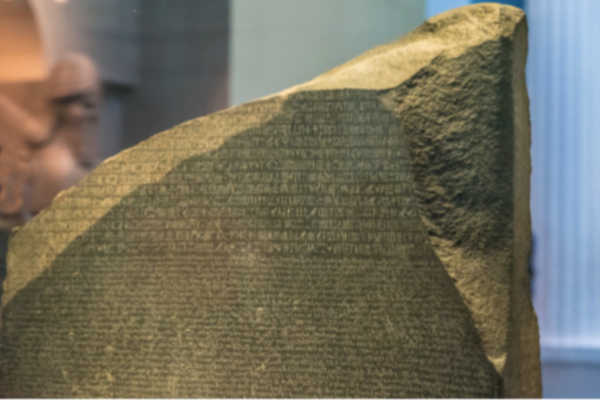
The Rosetta Stone (1799) and the Behistun Inscriptions in Iran were important discoveries. They enabled scholars to decode hieroglyphs and cuneiform. These breakthroughs showed links between Abrahamic texts and older pagan traditions. These discoveries made it harder to dismiss parallels between their teachings and older pagan myths.
Myths and Superstitions Revealed
The Church had destroyed any sources that connected its doctrines to paganism. But many hieroglyphs and cuneiform artifacts were in private collections and museums. Thus, outside the reach of the Church.
When they began being deciphered in the 1800s, they brought the origins of the Abrahamic faiths to light. The Abrahamic faiths had to explain away the similarities with other indigenous and pagan beliefs and practices.
They attacked this problem in three ways. First, they claimed the pagan texts were preconceived forgeries by the Devil. However, this explanation creates another problem. It conveys the trait of omniscience to the Devil. Only God can know everything.
Another tactic is to discount the accuracy and authenticity of the translation. Lastly, Western theology justified its right to plagiarize. Defining the Abrahamic traditions as superior to the previous cultures was the right of the Church. Here’s an example of how they address their assimilation of pagan ideology.
The Church has borrowed without hesitation from the common stock of significant actions known to all periods and to all nations. In such matters as these, Christianity claims no monopoly or originality. — The Catholic Encyclopedia and International Work, 1909
Why Christianity Denies Its Origins
The Abrahamic traditions are the result of one of the first large-scale efforts. The ancient mystical cults and religions became the new Universal Religion—Catholicism. So, they do not want their followers to know these origins.
Researchers exposed the origins of the Abrahamic faiths. Why did these religions keep their histories secret? The answer is easy. They don’t want this to be public knowledge. The truth destroys the credibility of the divine origins of their ancient texts and teachings. When a system that is entrenched in the culture is in danger, it can take drastic measures to protect its membership base.
Major Concepts of the Ancient Mystical Cults and Religions
Ancient mystery religions and cults were central to the cultures of many societies. Every civilization, from the Assyrians to the Persians, assimilated these myths into its core beliefs. These cults promoted esoteric knowledge and rituals. Initiates would undergo ceremonies rich in symbolism. These rites centered around ritual sacrifices intended to connect them with the supernatural.
The Dying-God Cults
These cults were secretive and exclusive belief systems. They promised access to prosperity and salvation in the afterlife. These religions were often centered around a mythical figure known as the dying God. This figure would undergo a symbolic death and resurrection, symbolizing the cycle of life, death, and rebirth. This concept foreshadows later avatar versions of Mithra and Jesus.
In Assyria, the cult of Tammuz revolves around the story of a God who dies and is reborn each year. This mirrors the cycles of nature. In Babylon, the worship of Ishtar involved rituals surrounding the death and rebirth of the goddess Ishtar.
Moving to Egypt, the cult of Osiris was one of the most prominent mystery religions. It was a cult focused on the death and resurrection of the God Osiris. This entity symbolized renewal and fertility. Followers of Osiris believed in the promise of eternal life through their devotion to God.
Persia is home to the dying-God Mithra. This cult spread throughout the Roman Empire and gained a following among soldiers and merchants. Mithraism emphasized sacrifice and salvation, though it did not include a resurrection story. The cult of Mithra emphasized loyalty, courage, and sacrifice. It had rituals involving symbolic feasting and initiation ceremonies. He, too, is sacrificed for the sins of others and is reborn afterward.
All the dying-God sects of the Mediterranean share a common doctrine. The cults of Adonis, Dionysus, and Orpheus focus on salvation, rebirth, fertility, and renewal. These religions were an integral part of ancient society. They provide a sense of comfort and hope in the face of the unknown. All of their beliefs were assimilated into Christianity under the rule of the Roman army.
The Ancient Mystery Religions and Cults Are Reborn
The ancient mystical cults and religions are not dead. They are core doctrines defining the Abrahamic traditions. They live on in all manner of doctrines, symbols, rituals, and beliefs. Uncovering their history gives you a new perspective. It helps you to understand your quest for meaning and connection to the divine.
Oneness is another common element of these ancient mystical teachings of paganism. This is the idea that everyone is interconnected and part of the divinity of creation. Oneness is central to the beliefs of many pagan religions. This concept is the foundation for the monotheistic traditions of the Abrahamic tribes. The notion that all living beings are connected is a fundamental aspect of Indigenous and Pagan practice.
There is no doubt that the ancient mystery religions laid the groundwork for the Abrahamic traditions. The concepts of prayer and purification through ritualistic cleansing are another common thread. The Abrahamic faith uses the same symbolism in its ceremonies. These concepts were borrowed from pagan beliefs.
These religious texts and beliefs are the legacy of earlier pagan practices. They were assimilated and rebranded in the new belief systems of the Abrahamic faiths.
The ancient mystical teachings of paganism are clearly evident in the Abrahamic faiths. A historical perspective provides insight into the psychological tools used. You will see how mythology and greed can be leveraged to create cash flow. The ancient mystery religions and cults are indeed still alive and well. Their doctrines continue to shape the understanding of religion.
Interpreting Sacred Texts
Divinely inspired texts are the foundation for many religions. The Abrahamic faiths are no exception; they use them to validate their existence. These texts have shaped the beliefs, values, and cultures around the world. The vast number of different interpretations gives us hundreds of different sects.
Historians and scientists disagree with religious authorities. They offer different perspectives and conclusions. One side sees these as archaeological artifacts, while the other sees them as the undisputed words of God.
Interpreting sacred texts is not limited to religious documents. All ancient texts are sacred historical treasures.
One of the most famous sacred texts of the Middle East is the Epic of Gilgamesh. This poem, the oldest text written in ancient Mesopotamia, dates back to 2100 BC. Some scholars see the story as a quest for immortality, while others see it as the inevitability of death. The differing interpretations of the story highlight the complexity of ancient texts.
Interpreting sacred texts gives us insight into the development of religion. As you weigh the different arguments for these texts, you can see how they affect the culture.
The Sacred Texts Defining The Abrahamic Traditions
The Bible, Torah, and Quran are the sacred texts of Christianity, Judaism, and Islam. These documents validate the doctrines of these religions. They aren’t the only ones they use, but these are often seen as the most authoritative.
The Bible encompasses both the Old and New Testaments. It is a compilation of stories from the ancient mystery religions. These books contain religious teachings, moral guidelines, and historical accounts. The Torah is the foundational text of both Christianity and Judaism. It comprises the first five books of the Hebrew Bible. Muslims believe the Quran to be the teachings of God, as revealed to the Prophet Muhammad. Let’s take a closer look at the fascinating history behind these ancient scriptures.
Because these religions emphasize love and peace, you’d think they would welcome a way to unite. Unfortunately, this isn’t the case. They share religious texts and beliefs, but this does not unite them. Each sect believes its interpretation is the only correct interpretation.
The Septuagint
The Septuagint is a Greek translation of the Hebrew Torah, produced in Alexandria around the 3rd–2nd century BCE. It became the bridge between Jewish scripture and the later Christian New Testament.
This version is more than a translation; it shows cultural influence. Pagan traditions show up in symbols, divine beings, and images. They reflect polytheistic ideas. For example, the Psalms describe nature—the earth, sea, and sky—as sacred forms of the divine, similar to pagan respect for the elements.
The Septuagint also includes extra books, known as the Apocrypha or Deuterocanonical texts. These books are part of the Catholic tradition but are absent from the Hebrew canon. Some passages, such as certain laws in Leviticus, resemble ideas found in Hammurabi’s Code. The Code of Hammurabi is a set of laws from ancient Babylon. Some see the laws as harsh and punitive, like an eye for an eye. Others argue they are a deterrent against crime.
The authors use changes in names, characters, and book lengths to cement the connection between the Old and New Testaments.
The New Testament
The New Testament is the second part of the Christian Bible. It contains the teachings and beliefs of Jesus Christ and his early followers. It is written in Greek and includes the four Gospels, the Acts of the Apostles, the Epistles, and the Book of Revelation. Christians consider the New Testament to be divinely inspired and authoritative.
The books in this collection echo the dying-God sects. They blend many different and contradictory accounts of the fictional lives of the avatar-dying God. The collection includes a creation story of the logos, or the power of words, which is found in many pagan religions. The oldest proof texts date to the 4th century (Codex Sinaiticus), or 400 years after the events are believed to have occurred. The 27 books of the New Testament were canonized in the Council of Hippo in 393 CE.
Many texts used for centuries by different groups in the sect were left out of official use. Among the books not included was the Gospel of Jesus. It is an autobiography that portrays his life in a significantly different light. In this version, he wasn’t tortured. Instead, he won the debate with Pontius Pilate, got released, and married Mary Magdalene.
The Torah, Tanakh, and Talmud
The Torah is a Hebrew text also known as the Pentateuch. It contains the first five books of the Hebrew Bible: Genesis, Exodus, Leviticus, Numbers, and Deuteronomy. These books are the foundational texts of Judaism.
For Jewish communities, the Torah and Tanakh hold unparalleled religious significance. These ancient texts are the foundation of Jewish faith and practice.
The stories in the Torah can be traced to ancient Mesopotamian legends. Here, we find the Babylonian creation myth of Enuma Elish. This mirrors the story of Noah in the Book of Genesis of the Great Flood and the Epic of Gilgamesh.
The Tanakh is the name for the canonical collection of Jewish scriptures. It consists of three sections: the Torah, the Nevi’im (Prophets), and the Ketuvim (Writings). The Talmud contains contemporary interpretations of the Torah and Tanakh.
The Quran
The Quran is the holy book of Islam, believed to be the word of God revealed to the Prophet Muhammad. Written in Arabic and divided into 114 chapters, or surahs, it guides Muslims in all aspects of life.
The Quran appears to be monotheistic, but it also shows influences from earlier pagan traditions in pre-Islamic Arabia. Before Islam, the Kaaba in Mecca was a sacred site. Pagan Arabs performed rituals and made offerings there. The Islamic Hajj pilgrimage kept these practices, though in a modified way.
The Quran reflects pagan themes like intercession through prophets and angels. It shares stories, such as the Garden of Eden, that resemble older Mesopotamian myths. Symbols, like the crescent moon, are linked to pre-Islamic deities. References to jinn and charms show a connection to older folklore.
Islam, like other Abrahamic faiths, also absorbed ideas from ancient mystical cults and religions. It didn’t emerge in isolation from its pagan roots.
Final Thoughts on The Legacy of the Ancient Mystery Religions
Half the world still follows the Abrahamic faiths. But behind their holy books lie the echoes of forgotten cults, dying gods, and pagan myths. Understanding these origins changes not only how we see religion, but how we see ourselves.
It’s crucial to understand where these systems come from. By defining the Abrahamic traditions, you will see how they control many cultures. The ancient mystery religions and cults still exist today, albeit under new names within the Abrahamic faiths. The fact that they have lasted so long shows how strong the power of shared beliefs can be. It’s strong enough to ignore facts, logic, and science.
References
- The Archetype of the Dying and Rising God in World Mythology. Mythlore
- Ancient Dying and Rising Gods: An Analysis of Physicality, Similarity. Liberty Theological Review.
- Mystery Religions and their Influence on the New Testament and Early Christianity. E-Journal of Religious and Theological Studies (ERATS).
- The Influence of the Mystery Religions on Christianity. Martin Luther King Jr. Papers at Stanford.
- Greco-Roman mysteries. Wikipedia.
- Interpretatio Christiana. Wikipedia.
- Mithraism. Wikipedia.
- Hermeticism. Wikipedia.
- Disciplina arcani. Wikipedia.