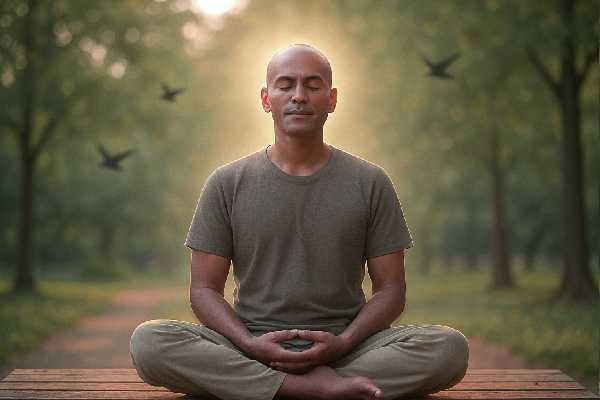
Want to learn how to become a spiritually enlightened person? You’re not alone. Enlightenment is not special; it is a natural progression of growth. You can learn practical methods to increase both intellectual and spiritual awareness.
Many seekers desire enlightenment but aren’t sure where to begin—or how to know if they’re making progress. It can sound like some unreachable mystical state reserved for monks or sages. But the truth is far more grounded.
Enlightenment isn’t about escaping the world. It’s about understanding it more clearly. It’s about raising your awareness, building inner peace, and becoming more compassionate. Let’s explore what enlightenment means, why it’s more common than people assume, and how you can recognize it in your own life.
Understanding the Essence of Enlightenment
Enlightenment isn’t one fixed thing. It appears differently depending on how you view it. Spiritually awakened individuals can be found in all walks of life. Each group presents a different aspect of enlightenment.
Religious and Spiritual. From a spiritual perspective, enlightenment is not special or extraordinary. To become a spiritually enlightened person is like waking up from a deep sleep. It’s about waking up your awareness. It is awakening from the slumber imposed by the culture and seeing yourself and the world through calm, compassionate eyes. Religiously, it’s understanding that sacred stories are metaphors meant to guide us beyond dogma. One brings peace within; the other encourages growth beyond tradition.
Science and Psychology. Scientifically, enlightenment uses logic and evidence to help us see more clearly. Psychologically, it’s about turning that light inward to observe our thoughts and emotions. Both help us live with greater awareness.
Philosophical and Sociological. Sociological enlightenment deepens our sense of justice and equality. Philosophical enlightenment pushes us to question long-held beliefs and think more critically. One reshapes our world; the other refines our mind. Together, they enrich our understanding of the essence of enlightenment.
Cultural and Education. Culturally, enlightenment arises when we examine and outgrow old patterns. Educationally, it’s about learning to think freely and ask meaningful questions. These tools help us question the world—and reshape how we live in it.
Historically and Artistically. Historically, enlightenment meant breaking away from blind tradition and turning toward reason. Artistically, it reveals itself in beauty and expression, helping us feel more deeply. Whether through logic or emotion, both give us a richer view of reality.
Economic and Political. Economically, enlightenment means using resources wisely and ethically. Politically, it supports fairness, equity, and shared power. These perspectives ground our spiritual ideals in real-world practice.
Understanding the essence of enlightenment is not just about knowing definitions—it’s about how you live, see, and care. Once you begin waking up, you start noticing where these perspectives show up—or don’t—in your own life. The more you align with them, the clearer your life reflects what it means to be awake.
By exploring different perspectives, we move closer to understanding the essence of enlightenment. Each perspective of enlightenment serves as a yardstick to help us gauge the health of our minds and our culture. Before you read on, take a moment to jot down your thoughts about these perspectives. Which resonates with you? What perspectives do you see that are lacking positive growth?
Hey, Enlightenment Is Not Special
To be enlightened is to be free from the illusion of separateness. It’s not about escaping life—it’s about showing up for it, fully aware and authentically present. Enlightened people don’t live in blissful trances; they live in full participation.
Being enlightened doesn’t mean you’ll be happy or that you’ve escaped life’s challenges. It doesn’t make you better than others. It doesn’t give you superpowers. What it does give is a sense of connection with yourself, others, and the world, as well as a civic responsibility to care for others.
You don’t need to know everything about it to begin. Understanding the essence of enlightenment involves peeling back layers of illusion. As you shed those layers, your mind becomes clearer and your heart more open. You no longer chase after rules or titles. Enlightenment isn’t reserved for monks or mystics. It’s available to anyone living with awareness.
True awakening means letting go of the ego’s need to feel special. Enlightenment waits patiently behind the automatic responses of the ego. It is the observer behind your thoughts and within your breath. It’s quiet, not flashy. It’s not a reward; it’s the state beneath striving.
Do not think that enlightenment is going to make you special — it’s not. —
And it’s not a permanent state you “get” once and keep forever. Awakening happens again and again—each moment is an opportunity to see more clearly. You can speed this process by engaging in healthy spiritual practices. Many spiritual teachers emphasize that enlightenment is not special. It is simply the result of the growth of consciousness.
This path brings highs and lows. It makes you confront your fears but also offers moments of profound clarity. The goal isn’t to become extraordinary—it’s to become fully human.
Spiritual and intellectual growth doesn’t depend on belief. Growth comes from honest self-inquiry and a deep connection to the universe. Awakening means expanding awareness, compassion, and empathy. Enlightenment is not special—it’s simply part of our potential.
When we cling to our awakening like a badge of honor, we fall into pride. That’s just the ego playing dress-up. True awakening is humble, grounded, and rooted in reality.
Our culture often sells us ego-driven substitutes for fulfillment. But the ego can’t be satisfied—it only distracts. Awakening means seeing through this and choosing a path of depth and clarity. Spiritual growth begins by understanding that the essence of enlightenment involves daily practice.
How to Become A Spiritually Enlightened Person
Start where you are. You don’t have to go to a mountaintop or a monastery. Your spiritual enlightenment path begins in the life you’re already living. It starts with self-reflection, inner calm, and curiosity. Ask yourself:
- What am I chasing, and why?
- What am I avoiding, and what does that say about me?
- What happens when I stop seeking something more?
This is the path of spiritual exploration. It’s not about adding more; it’s about removing illusions. It’s about discovering your true self beneath the noise. You can learn many healthy spiritual tools here on this website for free.
- Practice mindfulness meditation.
- Journal your emotional shifts.
- Reflect on your triggers and judgments.
- Cultivate inner peace through breath and presence.
- Spend time in silence without distractions.
- Learn the “best practices” for seeking tools and teachers that provide tools.
Daily Practice is the Key
Becoming more awake and aware is a destructive process in which we dismantle old beliefs and values and install newer ways of thinking. It is the inner quest to be better today than yesterday. It’s about asking yourself hard questions about what you believe and why you believe it. There are several methods and processes to help us in this endeavor. We refer to them as spiritual technologies and categorize them into four distinct groups.
— Analytical Tools
— Meditation
— Awareness Tools and Techniques
— Natural Healing Modalities
We look forward to those Eureka experiences when awareness grows in leaps and bounds. But these aren’t a common occurrence. Most of our growth is incremental and gradual. So, the path to enlightenment isn’t special; it is the dedication of our efforts to the goal of being a better person.
If you feel special in any way, then enlightenment has not occurred. I meet a lot of people who think they are enlightened and awake simply because they have had a very moving spiritual experience. — Adyashanti
These practices enhance your personal growth by expanding consciousness and awareness. What does enlightenment look like, and is it worth the effort? Here are some qualities to consider.
Qualities of Spiritually Awakened People
Enlightened people rarely declare themselves enlightened. They don’t need to. Their actions speak louder than their words. They move through the world with calm, kindness, and quiet strength. In a noisy world, they may go unnoticed, but their presence is felt.
Enlightenment doesn’t remove problems or emotions. It simply changes your relationship with them. You respond with awareness instead of compulsion. The ego, fear, or automatic reactions no longer rule you. When the ego fades, we realize that enlightenment is not special; it just reveals who we are.
This shift usually begins with presence. You stop living on autopilot. You start noticing life as it unfolds: the rhythm of your breath, the feel of sunlight, and the space between your thoughts. With presence comes empathy. You begin to feel the emotions of others more clearly. You care more deeply about people, animals, and the Earth.
From empathy grows compassion: the ability to act with kindness, without judgment. You become slower to criticize and quicker to understand. You stop needing to be right. Humility takes root. You realize you don’t have all the answers—and that’s okay.
Letting go becomes easier. You stop gripping so tightly to what should be. You accept life as it is, even as you work to make it better. Forgiveness follows because you no longer want to carry the weight of resentment.
You also become more open. You listen to new perspectives. You ask better questions. You admit when you’re wrong. You become curious instead of defensive.
Authenticity becomes natural. You stop pretending. You live in alignment with your values, and it feels like a relief. Gratitude bubbles up, not just in good times, but in ordinary ones. Clarity sharpens, helping you see through your ego’s tricks and illusions.
Patience develops. You trust in slow growth. You don’t rush your healing or your becoming. And with that, joy sneaks in—not loud or showy, but steady and honest. You feel connected to something bigger than yourself.
Lastly, you access the virtues of the spirit. These qualities of spiritually awakened people are considered by many to be the most valuable treasures of humanity. You have access to them if you just follow your instincts and engage in some type of healthy spiritual practice. One must also avoid the harmful groupthink tactics of religion and right-wing politics.
Frequently Asked Questions About Spiritually Awakened People
Q: What does it mean to be spiritually enlightened?
A: It means understanding yourself and the world better. It’s seeing that being enlightened is not something special—anyone can do it by paying attention and being aware.
Q: Is enlightenment something magical or special?
A: No. Enlightenment is not magical or only for special people. It’s just realizing the way things are without extra ideas or stories in your mind.
Q: Do I need to follow a religion to be enlightened?
A: No. You don’t need religion or special rules. Enlightenment relates to our intellectual and spiritual understanding. It has nothing to do with following any group or belief.
Q: What is the most important part of enlightenment?
A: The most important part is seeing things clearly, just as they are, without adding extra thoughts or worries.
Q: Can I learn how to become a spiritually enlightened person?
A: Yes! It’s easy. Start by paying attention to your thoughts and feelings. Learn to meditate and practice being calm and asking questions. It takes practice and time.
Q: What do spiritually awakened people act like?
A: They are calm, kind, open-minded, and caring. They don’t get stuck on being right or having all the answers.
Q: Can I stay enlightened all the time?
A: Yes. Being enlightened is a way of living, not just one moment. You can practice it every day by staying aware and calm.
Conclusion
Enlightenment is not special. It’s not rare. It’s what happens when you begin to live honestly, listen deeply, and act with love. If you’re already seeing these signs in yourself—even faintly—you’re on the path. Keep going.
You’re becoming who you’ve always been beneath the noise.
References
- Adyashanti at adyashanti.opengatesangha.org
- The Science of Enlightenment. Lion’s Roar.
- What Is Enlightenment?. Greater Good Magazine.
- Spiritual Awakening: Transform Your Life. Verywell Mind.
- Enlightenment: A Controversial Psycho‑Spiritual Experience. Psychology Today.
- Enlightenment Is Not What You Think. Adyashanti.
- What Does It Mean to Be Enlightened? Lion’s Roar.
- Two Kinds of Lion’s Roar. The Daily Enlightenment.
- What Is Enlightenment? Magazine — About. EnlightenNext.
- What Is Enlightenment? Magazine — Issue 34. EnlightenNext.