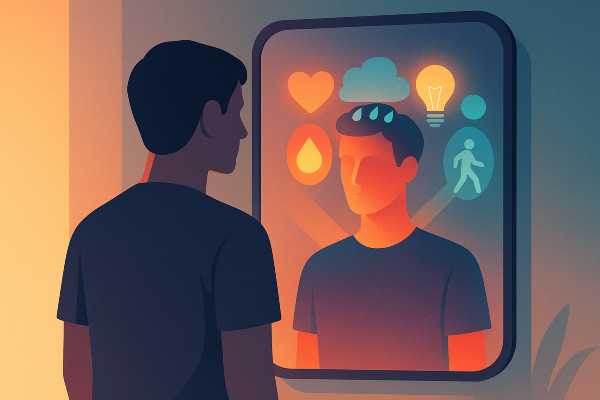
Learning to identify triggers, thought patterns, and emotions that become actions is important. This thought-to-action chain drives our behavior. Imagine if you had more emotional control and the ability to stop harmful thinking. You can. Come and see how.
This article gives you a template to improve your mind. We’ll show how triggers influence thoughts and emotions. Then, we’ll review the techniques you need to handle them along with the benefits they provide.
In our minds, there is a complex dance between triggers, thoughts, and emotions. These elements shape our lives. We want to discuss the psychological concepts behind this process. Understanding this formula gives us the ability to change the trajectory of our lives.
Our ideas have a ripple effect with far-reaching consequences. So, ask yourself, “Are your thoughts generally positive or negative?”
Most people want their lives to produce positive value for themselves and others. You may have more influence than you realize. Everything you believe affects you and everyone in your circle of influence, and this chain reaction doesn’t stop there.
How Triggers Influence Thoughts and Emotions
Our thought and emotional chain reaction begins with a trigger. These triggers can be internal or external elements.
Internal Triggers:
- Things that originate within you—physically or mentally.
- Physical sensations (e.g., fatigue, hunger, racing heart).
- Memories (especially trauma-related).
- Random intrusive thoughts.
- Mood states (e.g., feeling down, irritable).
- Dreams or flashbacks.
An example would be: Sudden tightness in the chest leads to the thought, “I might be having a heart attack.” It triggers the emotion of panic. The action results in rushing to the ER.
External Triggers:
- Things that happen outside your body or mind.
- Social interactions (e.g., when someone criticizes you).
- Environmental cues (e.g, a smell, sound, location).
- Stressful events (e.g., traffic, deadlines, financial stress).
- Sensory inputs (e.g., noise, light, pain).
- Media exposure (e.g, news, social media posts, ads).
Example: A friend cancels plans. We have the thought, “They must not like me.” It also triggers the emotion of sadness; as a result, our coping mechanism is to withdraw and isolate.
Summation of Internal and External Triggers
When we identify triggers, thought patterns, and emotions that become actions, we learn how we make decisions. This triangle of elements—thoughts, emotions, and actions is different for everyone. We have thought of scripts that can trigger unstoppable chain reactions. But we can learn to reprogram them.
If your thinking is tainted, your reactions will reflect these anomalies. Your memory plays a crucial part as it stores a host of connections between these elements. Your thinking is affected by the weight of these elements. Even if you are not in touch with your emotions or do not observe your thoughts, your thinking is still affected. We tend to underestimate the weight of emotional attachments.
Once we have an emotional attachment to something, we want to defend it. Our thinking is based on the assumption that we are correct. We want to support our conclusions. And that’s why what we believe is important. Identify triggers, thought patterns, and emotions, and you will illuminate these attachments.
The greater the emotional charge attached to the idea, the greater our motivation to act. People use propaganda to trigger fear and anger. These are two of the most potent motivators. They make us react and do things without considering the consequences. It’s a process that is an unstoppable behavioral chain reaction.
We are choice-makers, and every choice is affected by this thought-to-action chain. Learning how triggers influence thoughts and emotions gives us control to change them. We need to know what changes are needed and how to implement them.
Identifying Triggers. Removing and Repairing Them
To find the unhealthy thoughts and thought triggers is easy. They are beliefs and values that cause harm. Here’s a short list of harmful thoughts, when they manifest in behavior or collective attitudes:
Violence:
Harmful beliefs can make people hurt others. This can happen in personal relationships or larger conflicts.
Prejudice:
Negative thoughts about certain groups always lead to harm. It promotes racism, sexism, or unfair treatment based on identity.
Discrimination:
When thoughts lead to actions that exclude or mistreat people.
Bullying and harassment:
Harmful thoughts can lead some to insult, threaten, or intimidate others.
Extremism:
Idologies that promote preferential treatment for some groups, while harming others. These ideas are often based on racial or religious superiority. It results in radical actions or backing dangerous movements.
Social division:
These ideas can divide communities. They can also raise mistrust and make teamwork more difficult.
Neglect of shared responsibilities:
Harmful thinking can cause people to ignore important issues. They look to conspiracy theories to explain climate change, poverty, or public health.
One must have the awareness to want to change. You can have all the tools at your disposal, but if you don’t use them, they are of no use. Keep this in mind as you read the list of tools. The process to do is simple:
Process For Repairing Harmful Thought Scripts
1. Identify the Harmful Script
Notice The Pattern:
Pay attention to when harmful thoughts show up—what situations, people, or feelings seem to trigger them? Write them down in your journal.
Use a Spiritual Journal:
Journaling helps make your thoughts visible and shows patterns in how you react.
Try this: Write down the trigger, your thoughts, and how you felt afterward—daily for a week.
Practice Automatic Writing:
Let your thoughts flow without editing to uncover hidden feelings.
Try this: Set a timer for 10 minutes. Start with “Right now, I feel…” and keep writing.
Use The Repetitive Question Exercise:
Dig deeper by asking the same question multiple times to uncover the root cause.
Try this: Ask “Why did that bother me?” and repeat with new answers 5–7 times.
Explore Your Enneagram Type:
Learn how your personality reacts to stress and triggers.
Try this: Take a free test online and read about your type’s emotional patterns.
Use Comparative Analysis:
Compare your beliefs with other viewpoints to challenge assumptions.
Try this: Pick a belief and ask, “Where did I learn this?” “Is it helping me?” “What would I believe if I were raised differently?”
Track Thoughts with CBT worksheets:
Break down stressful moments to see how thoughts lead to emotions and actions.
Try this: Create a 4-column chart:
- What happened?
- What did you think?
- What did you do?
- How do you feel now?
Do Mindful Body Check-ins:
Notice physical sensations and connect them to emotions and thoughts.
Try this: Pause once or twice a day and ask:
- What’s happening in my body?
- What emotion might this be?
- What thought just ran through my mind?
2. Replace Harmful with Healthy Scripts
Remove or Reduce the Source:
Distance yourself from toxic environments. Remove yourself from extremist right-wing religious and political groups. Remove or reduce relationships that feed harmful thoughts.
Repair Harmful Self-Talk:
After identifying harmful thoughts, beliefs, and values.
Challenge Beliefs and Values:
Ask: Is this thought true? Is it helpful? What’s the evidence for and against it?
Reframe Thoughts:
Replace harmful thoughts with more balanced ones.
Example: “Imagratants are the cause of our problems.” → “Immigrants contribute to our communities in many positive ways. Our challenges are complex and not caused by any one group.”
Practice Self-Compassion:
Speak to yourself the way you would to a friend.
Try this: “It’s okay to feel this way. I’m doing my best.”
Use Affirmations:
Repeat positive, realistic statements to reinforce healthier beliefs.
Try this: “I am worthy of love and respect.”
Eliminate exposure to triggers:
Reduce time spent with toxic religious or political propaganda. Eliminate all harmful media, environments, or people that feed harmful thinking.
Seek Support:
Talk to a therapist, coach, or trusted friend to help process and reshape your thoughts.
Build Healthy Habits:
Replace harmful thought loops with grounding practices. Explore seated and moving meditation, mindfulness, and forest bathing. Use tools like journaling, mindfulness, and therapy to stay grounded and aware.
Check in Regularly
Review your progress and adjust your approach as needed.
Techniques for Identifying Triggers, Thought Patterns, and Emotions
The trigger is often the element in the thought-to-action chain that causes an automatic thought or emotion. It is common for this to trigger our survival instinct; the fight, flight, or freeze reaction (3F response).
Once this is activated, the brain shuts off activity to the parts of the brain that house our critical thinking abilities. We react instinctively, not rationally. If we can control the tiggers, then we take back control of our lives.
The process to identify triggers, thought patterns, and emotions that become actions is called inner work. The following list only gives a short description. We have detailed articles on each. You can find out more about each by following the links with each tool.
1. Journaling
The spiritual journal is the first tool for every spiritual explorer. Journaling is writing about your day, your feelings, and your thoughts. It is a powerful tool for identifying incremental growth and showing which areas need improvement.
How it helps:
- Makes invisible thoughts visible.
- Shows patterns in how you react.
- Helps you to slow down and reflect.
Try this:
Write down what happened (the trigger), what you thought about it, and how you felt afterward. Do this daily for a week.
2. Automatic Writing
Writing without planning or editing will help you connect with your subconscious. You just let your thoughts flow onto the page.
How it helps:
- Brings out buried thoughts and feelings.
- Helps you bypass mental blocks or overthinking.
Try this:
Set a timer for 10 minutes. Start writing with the sentence “Right now, I feel…” and don’t stop until time’s up. No need to make sense—just keep going.
3. The Repetitive Question Exercise
Asking yourself the same question over and over helps us to delve deeper into our thought processes and decisions. It helps identify triggers, thought patterns, and emotions. You can use it with other inner work tools, like the Enneagram.
How it helps:
- Break through surface-level answers.
- Helps uncover hidden thoughts or beliefs.
Try this:
- Ask yourself: “Why did that bother me?”
- Answer it.
- Then ask again: “Why does that matter to me?”
- Find a different answer.
- Keep going 5–7 times. You’ll likely hit the real root.
4. The Enneagram
The Enneagram is a personality tool that shows how different people react to life based on deep fears and motivations.
How it helps:
- Gives insight into your default triggers.
- Shows common thought and emotional patterns.
- Helps you spot stress points and blind spots.
Try this:
Take a free Enneagram test online. Then read about your type’s common emotional triggers and stress habits. It’s not perfect science, but it’s a great mirror.
5. Comparative Analysis
Comparative analysis is a structured method of comparative religious studies. Use it to compare different concepts, belief systems—religious, philosophical, or personal.
How it helps:
- Helps you examine your beliefs from new angles.
- Shows where your thoughts come from.
- Can reveal inner conflicts or assumptions.
Try this:
Pick a belief you hold (like “I have to earn love”) and compare it to what different sources say—religions, books, or even opposing opinions. Ask:
- “Where did I learn this?”
- “Is it helping me?”
- “What would I believe if I were raised differently?”
6. Thought-Tracking Worksheets (CBT Tools)
It is a simple worksheet that helps you break down a stressful moment.
How it helps:
- Shows how a trigger leads to a thought, then an emotion, then a behavior.
- Helps you catch distorted thinking.
Try this:
Create a chart with four columns in your journal.
1. What happened?
2. What did you do about it?
3. What did you do?
4. How do you feel now?
The first column is the situation or what happened.
The second column is your feelings or thoughts about the situation.
The third column is what you did about it.
The fourth column is how you feel or think now that you have reviewed the incident.
Example:
1. A Friend canceled plans.
2. I felt like they didn’t care about me. I felt sad and rejected.
3. I isolated myself and stopped replying.
4. I see now that I was overreacting to the situation. In the future, I will work through my feelings before acting.
7. Mindful Body Check-Ins
Pausing to notice what’s happening in your body and mind.
How it helps:
- Helps you catch feelings early, before they take over.
- Connects physical sensations with emotional states.
Try this:
Once or twice a day, stop. Direct your awareness to your body, then ask:
- What’s happening in my body right now?
- What emotion might this be connected to?
- What thought just ran through my mind?
Why Using These Techniques Matters
When you can see what sets off your thoughts and emotions, you can choose how to respond instead of reacting automatically. These tools don’t fix everything overnight, but they give you power—and that’s a strong place to start. What happens when you use these tools? What are the benefits?
Benefits of Using Techniques for Identifying Triggers

When you take time to understand what sets you off, your thoughts, and how you are feeling, you gain more power over your life. It does not mean controlling everything—it means not being controlled by everything. Here are 11 real-life benefits of doing this kind of inner work:
1. Identify Triggers, Thought Patterns, and Emotions
The key benefit of these processes is to uncover the triggers behind pre-programmed responses. Once we can “see” them, then we can change those that create harmful reactions such as hate and anger.
Example:
By using the inner work tool and asking a repetitive question, you find a hidden thought script tied to a childhood incident. You had not even thought about it in years, but now you realize it is prompting feelings of misplaced anger that you can take the time to resolve.
2. Control Thought Patterns and Emotions that Become Actions
Recognizing what bothers you in the moment helps you pause. This way, you can avoid acting impulsively, hurting others, or sabotaging yourself. This turns raw emotion into a chance to choose your response. You’re not a robot stuck on autopilot anymore—you have options.
Example:
Instead of snapping at your partner for being late, you realize, “I’m feeling anxious because I thought they might forget about me.” You take a deep breath and talk about it calmly.
3. Clearer Thinking and Better Decisions
Thoughts that go unchecked—especially negative or distorted ones—can lead you down the wrong path. But when you slow down and examine your thought patterns, you can separate fact from fear. It keeps your decision-making grounded and rational, even in emotional moments.
Example:
You didn’t get a text back, and your mind jumps to “They must be mad at me.” But when you recognize that as a thought—not a fact—you remind yourself, “They might just be busy,” and don’t spiral into overthinking.
4. Healthier Relationships
When you understand your emotional triggers and thought habits, you are better at handling conflict. It helps you set boundaries and express your needs without blaming others. You show up more honestly and listen more fully. That makes relationships safer and stronger.
Example:
You realize you feel rejected when a friend doesn’t text back right away. Instead of lashing out or ghosting them, you give them space and talk about it later.
5. Fewer Breakdowns and Blowups
Stress doesn’t hit all at once—it builds. When you know your warning signs, you can respond early and prevent emotional overload. It helps you stay grounded during challenging times instead of crashing or exploding.
Example:
You feel your jaw tightening and your patience shrinking. You recognize this as a warning sign and take a walk before things get worse.
6. Personal Growth
You grow faster when you stop repeating the same patterns. Understanding your thoughts and emotions helps you see where you are stuck, what’s driving your choices, and how you want to change. It gives you a roadmap for becoming the version of yourself you want to be.
Example:
You notice that you shut down every time someone criticizes you. You realize this goes back to childhood, and you start working on not taking feedback personally.
7. More Peace
Life is still messy, but when you understand your emotions, they don’t feel so overwhelming. You are no longer confused by your reactions or haunted by feelings you can’t name. This creates a steady inner calm—even when things on the outside are chaotic.
Example:
Instead of feeling overwhelmed by sadness, you can say, “I know why this hurts. It makes sense.” That brings relief, even in hard times.
8. Break Old Habits
Many habits, such as avoiding tough talks, grabbing comfort food, or zoning out with screens, are ways we react to stress or pain. When you understand what you are trying to avoid or soothe, you can deal with the root cause, not just the symptom.
Example:
You notice, “I always eat junk food when I feel rejected,” and try something healthier instead—like a walk or a phone call.
9. Increased Self-Awareness
Self-awareness means knowing who you are, what you care about, and why you act the way you do. When you track your thoughts, feelings, and triggers, you become more connected to your inner world—and more aligned with what matters to you.
Example:
You realize, “I get anxious every time I’m asked to speak up—not because I’m shy, but because I fear being judged.” That knowledge helps you grow.
10. Greater Empathy for Others
When you understand your emotional patterns, it’s easier to imagine what others are going through. You stop taking things personally and start seeing behavior in context. This deepens your compassion and helps you treat others with patience and care.
Example:
You notice a friend acting distant, and instead of getting defensive, you think, “Maybe they are overwhelmed, not angry with me.” That’s empathy.
11. A Stronger Conscience
Being aware of your thoughts and feelings helps you see when you act out of fear, guilt, or selfishness. It also shows you when you act according to your values. This strengthens your inner compass and helps you live in a way that feels honest and ethical.
Example:
You might catch yourself thinking something harsh and choose not to say it. Not out of fear—but because it doesn’t match who you want to be.
Bottom Line
Learning how triggers influence thoughts and emotions helps us understand our minds. We stop being run by old patterns—and start making choices that truly fit what we want.
In Conclusion
When we identify triggers, thought patterns, and emotions that become actions, we always benefit. All it takes is some inner work using the tools we mentioned. Read the list of tools and start with any one that resonates with you. Each tool helps to identify different aspects of your psyche. The more tools you use, the greater your understanding and control you will have.
References
[1] Cognitive Model: Automatic Thoughts, Emotions & Behaviors in CBT. NCBI Bookshelf (StatPearls)
[2] The CBT Model of Emotions: Thoughts, Feelings & Behaviors. Cogbtherapy.com
[3] Behavioral Chain Analysis: Breaking Down Trigger‑Thought‑Emotion Chains. Palo Alto University Concept Blog
[4] Habits in Everyday Life: Thought, Emotion & Action Connections. University of Southern California (Wood, Quinn & Kashy, 2002)
[5] Network Analyses of Emotion Components: Appraisal to Action Link. Current Psychology (Springer Open Access)