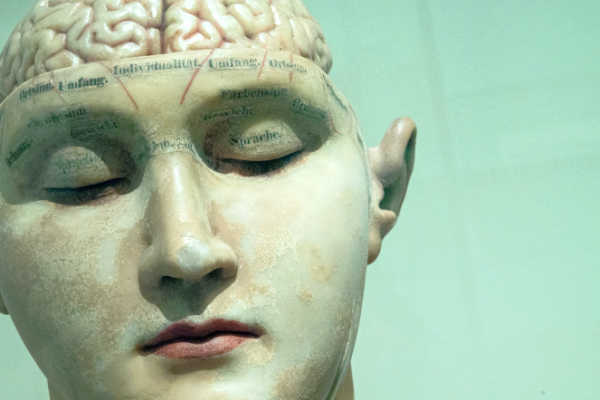
The mind is like an iceberg. The conscious mind is the small part above the waterline. The bigger part, the subconscious, lies beneath the surface. Subconscious mind exercises and techniques enable us to access the hidden power of the mind. Are you ready to learn how to do it?
The subconscious is the part of the mind that works without conscious awareness. It affects your thoughts, feelings, habits, and actions automatically. It’s the background software that runs your mind.
Subconscious Mind Programming Techniques
Before discussing the techniques for reprogramming the mind, let’s look at the landscape. We need to understand the terrain we are dealing with.
The subconscious stores automatic functions (like breathing, blinking). Houses learned behaviors and habits (like riding a bike or driving a familiar route). Stores memories, emotions, and links, particularly those not in your active awareness. Influences impulses, dreams, intuition, and gut reactions. Filters information, such as confirmation bias, emotions, or quick judgments.
Where is the Subconscious Located?
Scientists don’t fully agree on what the subconscious mind is or where it is located. We can’t see it directly. But we notice its effects in behavior, cognitive science, and experimental psychology. Here are the main lines of evidence:
1. Freudian Theory:
Sigmund Freud popularized the idea of the unconscious. This concept is similar to what we call the subconscious. He suggested that hidden desires and memories affect our conscious behavior. While much of Freud’s theory is outdated, the main idea remains relevant. Some mental processes occur outside our conscious awareness.
2. Automaticity in Behavior:
We do many things without consciously thinking about them:
- Typing without looking at the keys.
- Finishing someone’s sentence instinctively.
- Reacting emotionally to something before processing it logically.
Our automatic behavior shows that mental processing happens outside of our awareness.
3. Priming Experiments:
These tests show how your thoughts can be shaped without your knowing. Psychologists, hypnotists, religious teachers, and politicians use these tools to influence behavior. For example:
- Participants exposed to words related to aging (like “slow,” “gray,” “wrinkle”) changed their behavior. They walked more slowly afterward without realizing why.
- Seeing images of money beforehand made people act more selfishly in games.
- Repeating phrases, like “lock her up,” drives negative judgments.
These show subconscious associations altering behavior.
4. Implicit Bias and Implicit Association Tests (IAT):
People can hold attitudes or stereotypes of which they are unaware. IATs measure how quickly someone associates concepts. For example, equating Black faces with “bad” or White faces with “good.” Results show implicit biases often contradict conscious beliefs and values.
5. Subliminal Perception:
Even stimuli that are too brief for conscious recognition can influence. Subliminal images can affect mood, preferences, and even decisions. Advertising often uses subtle, subconscious cues to create emotional associations.
6. Split-Brain Experiments:
In patients who have had their brain hemispheres surgically separated:
- One half of the brain (e.g., the left hemisphere) could verbalize a decision.
- The other half (e.g., the right hemisphere) made choices without being able to explain why.
This research shows that parts of the brain work without us knowing. Still, they shape our behavior.
7. Dreams and Freudian Slips:
Dreams often reveal symbolic or emotional content. Sometimes this represents things we do not deal with consciously. Freudian slips—accidentally saying something revealing—are “subconscious leakage.” For example, saying “I’m mad to see you” instead of “glad.”
8. Neuroscience and Brain Imaging:
Functional MRI (fMRI) and EEG provide valuable insights. They show that the brain activates before a conscious decision is made. In decision-making studies, brain activity predicted the person’s choice seconds before they were aware of it. This suggests the subconscious “decides” before we think we are choosing.
Summary of Evidence:
A variety of studies support the idea of the subconscious. Researchers have found strong evidence that a lot of our mental activity takes place out of our conscious awareness. Cognitive psychology experiments show that people do things without realizing how. They can make decisions and solve problems without being aware of how it was done.
Studies on priming show certain stimuli influence behavior and choices without conscious recognition. Neuroscience adds further weight. Brain imaging has shown that regions of the brain activate in response to stimuli before a person becomes consciously aware of them.
Implicit memory, automatic behaviors, and emotional reactions reveal that a lot of mental work happens out of sight. This is what we call the subconscious.
So What Does This Mean?
The subconscious isn’t a spooky or mystical force—it’s the mental engine room. It’s the set of processes that keeps you functioning smoothly. It filters your perception, automating responses and managing emotional patterns.
As a result, decision-making is faster than your conscious mind ever could. We don’t see it, but we see its fingerprints everywhere in how we act, react, and decide. It is that part of the iceberg we do not often see, but know that it exists. Furthermore, science has validated the techniques for reprogramming the mind.
Memory and the Subconscious
Memory is the bridge between the conscious and the subconscious mind. While we may not know precisely where memories reside, we know they exist and influence our thoughts and behaviors. Testing memory is one way to assess cognitive health and how effectively we access subconscious data.
Our lives are a diverse collection of memories which is a powerful force. They can make us prisoners of the past or fuel innovations for living a more fulfilling present and future. — Guru Tua
Conscious and Unconscious Memory
Memory operates through two systems: conscious and unconscious.
- Conscious memory involves recalling data—ideas, images, sensations, and words.
- Unconscious memory shapes our preferences, instincts, and personality. Though we are unaware of these influences, they guide our thinking and behavior.
Consciousness acts as a link between these systems, making memory a dynamic blend of past events, dreams, and imagination. These elements often overlap, making it difficult to separate them.
How Imagination, Emotion, and Time Affect Memory
The subconscious mind constantly reprograms itself, reorganizing data through imagination and emotion. The question is: do you want to take control of this process?
Imagination isn’t only for kids. It’s a strong tool for creativity, solving problems, and making changes. Visualizing outcomes engages our subconscious. This helps us manifest our desires and change reality.
Imagination Reprograms Memory
Imagination also alters memory. It fills in gaps and reshapes events based on emotional intensity. This explains why eyewitness accounts vary and change over time. The more emotionally charged an event, the more likely the memory will evolve.
Memory is fluid, not fixed. It’s shaped by emotion, imagination, and new experiences. Dreams can overlay memories, and each time we recall an event, we subtly modify it. This allows us to adjust emotional intensity, clarity, and even the timeline of events.
This ability to reshape memory is especially valuable for healing trauma. Freud saw this and built his psychotherapy model on dreams and memory for change.
Subconscious Mind Exercises and Techniques
Techniques for reprogramming the mind tap into the connections between three key elements of the mind. They unlock the paths between memory, imagination, and emotion. These three elements of the mind are the keys to solving problems and achieving success.
The proper exercise can unlock the subconscious and enhance these connections. When we enhance the connections, we become more consciously aware of them. Awareness gives us control to edit them.
Change is a destructive process. It means letting go of unhealthy beliefs and removing outdated programming to make room for new, empowering beliefs.
Examples of Techniques for Reprogramming the Mind
1. Exploring Memories
All subconscious mind exercises and techniques share a common thread: they engage with memory. Exploring memories helps us find patterns. It shows how our past shapes the present. Sometimes, what we believe to be a real memory may turn out to be a dream or a scene from a movie. This process helps clarify what is real and what is imagined.
Our memories form the foundation of our identity. Delving into them is meaningful inner work—and it can be emotionally intense. You may discover how imagination, dreams, or negative programming have influenced your recollections. This is one of the techniques for reprogramming the mind that is used in counseling. It comes to us via several spiritual traditions. To navigate this process effectively, consider the following steps:
Steps for Exploring Memories
1. Set a Time and Focus:
Dedicate up to two hours for each session. Use a journal to record memories or fragments. Choose a specific timeframe (e.g., early childhood) or a theme (e.g., moments of joy or love). Starting with positive memories helps build emotional resilience. Journaling is one of the simplest subconscious mind exercises and techniques for uncovering thought patterns.
2. Conduct Emotional Check-ins:
Pause every 15 minutes to assess your emotional state. This helps maintain balance and ensures you’re not overwhelmed. If a memory feels too intense, it’s okay to stop and return later.
3. Practice Self-Care:
After each session, take time to rest and reflect. Insights may continue to surface afterward, so allow space for integration. Self-care is essential for emotional recovery and clarity.
4. Use a Spiritual or Reflective Journal:
Write down key points and leave space to expand later. If you uncover difficult memories, you may need time to research or reflect further. New details often emerge after the exercise.
Suggested Questions for Memory Exploration
Start with positive memories before moving to more emotionally charged ones. Here are some prompts to guide your journaling:
- What childhood memory makes you feel happy?
- What is your earliest positive memory? How does it make you feel?
- Describe a memory you associate with love.
- What childhood experience brings you joy?
- Recall a positive memory involving nature.
- What memory do you associate with family warmth or connection?
Review your notes after each session. You may notice new insights or recall forgotten details. Some memories may appear on multiple lists, revealing deeper connections. The more you explore, the more you’ll understand the transformative power of memory.
2. The Repeating Question
Repetitive questioning is a powerful method for accessing deeper layers of memory. By asking the same question repeatedly, we move past surface-level responses. We can drill down and uncover core values and subconscious patterns.
This exercise works best with a partner who can ask the questions and time the session. However, it can also be done solo by speaking the question aloud and recording your responses.
Guidelines for Practice
- Duration: Use one question for a 5-minute session. Though it may seem long, the time passes quickly once you begin.
- Honesty: Each time the question is asked, respond with a new answer. Avoid repeating previous responses.
- Environment: Choose a quiet, private space. If working with a partner, select someone you trust or don’t know well to maintain objectivity.
- Confidentiality: Whether solo or partnered, keep the session non-judgmental and confidential.
- Solo Practice: Use a timer and a journal. After each 5-minute round, pause to write down insights before starting the next session. Aim for at least four rounds.
How It Works
Initially, your mind will offer familiar, ego-driven answers. But as repetition continues, then deeper truths begin to surface. This process strengthens your connection to subconscious memory. In turn, it helps reveal hidden beliefs and emotional patterns.
3. Find and Adjust Emotional Triggers
Emotional triggers often lie at the root of phobias, self-sabotage, and harmful habits. Subconscious mind exercises and techniques, like this one, identify these triggers and pave the way for healing and personal growth.
Steps to Work with Emotional Triggers
1. Identify Emotional Triggers:
Start by locating emotionally charged memories. These are memories that trigger strong emotions. Tools like Exploing Memories, the Repeating Question, and the Enneagram can help uncover these “hot buttons.
2. Break the Chain of Negative Memories:
Once identified, reduce or break the emotions tied to it. This often involves reprogramming your inner critic and shifting self-talk. The Enneagram is especially effective for revealing and transforming these patterns.
3. Adjust or Remove Emotional Links:
As you explore memories, you may find some that have both positive and negative associations. This duality can distort how we experience similar events in the present.
For example, let’s say you have a memory of a parent that you love, but you have a memory of them that gives you extreme physical or emotional pain. Thus, the emotional dilemma.
The key to healing is learning to adjust or remove the emotional links that color these memories.
To do this, we recommend finding a coach or counselor to help you in separating the good from the bad. Some find the shamanic journey helpful in healing these types of complex memory and emotional issues. The typology of the shamanic journey enables you to visualize and separate them. It is another one of the subconscious mind programming techniques from spiritual traditions.
4. Amplify Positive Memories:
After lessening the effect of negative memories, boost positive ones. Use affirmations to “turn up” the emotional volume of happy experiences. This helps strengthen empowering beliefs.
Important Notes
- Don’t skip steps: Amplifying positive memories without addressing negative ones can backfire. Acknowledge and soften negative emotions like guilt, fear, and anger first. This is essential before reprogramming can take hold.
- Balance is the key. Emotional healing needs both release and reinforcement. Let go of what doesn’t help you and embrace what uplifts you.
Why Emotional Links Matter
Memory is powerful—it shapes how we perceive reality. Over time, emotionally charged memories can shift, especially when tied to strong feelings like betrayal, guilt, or joy. Changing the emotional association with a memory helps break its negative influence.
Example: A marriage ceremony may start as a joyful memory. But if a past relationship ended in betrayal, that same memory can become tainted, affecting how you view all future relationships. To heal, you must consciously break the link between the event and the negative emotion.
Steps to Adjust Emotional Links
1. Recognize the Emotional Association:
Identify the emotion tied to the memory. Acknowledge how it influences your current perspective.
2. Decide to Break the Link:
This is a conscious choice. You are not erasing the memory—you are reducing its emotional impact. This decision is the first step toward healing.
3. Reassign the Emotion:
Shift the negative emotion away from the event and toward its true source (e.g., the person or situation responsible). This helps restore clarity and emotional balance.
4. Conduct an Emotional Check-in:
Pause and assess your emotional response every round or sooner if you have strong feelings come up. Ask, “Is this memory still affecting me emotionally?” If so, start over at step one.
Adjusting Emotional Volume
Once you’ve softened the negative associations, it’s time to amplify the positive ones. Use affirmations and keywords to bring uplifting memories into focus. This simple practice helps reinforce empowering emotions and reshape your subconscious programming.
Tip: Incorporate positive memories into your daily affirmations. Speak them aloud using trigger words that evoke joy, love, or peace. This strengthens the emotional impact and helps rewire your subconscious.
In Conclusion
Subconscious mind exercises are powerful tools. The more you use them, the more effective they become. You will gain momentum, turning the power of memories to your advantage. This will increase your positive outlook on life. Because they are tools of change, they often reveal conflicting programming, harmful beliefs, and values. So, one must pause regularly for an emotional check-in while engaging with these tools.
References
(1) The Unconscious Mind. The National Library of Medicine
(2) Memories may not be in the brain. Scientific America
(3) Conscious and Unconscious Memory. The National Library of Medicine
(4) Wisdom of the Enneagram, Internet Archive