Some teachings genuinely help you grow. Others only look bright while pulling you away from the truth. This article points out the common red flags for false teachings. Understanding the false light in spirituality is something everyone needs.
Seeker Project 4 Spiritual Exploration (SP4SE)
Techniques for exploring consciousness
Spiritual exploration is the centerpiece topic linking many of the technologies for exploring consciousness.
Some teachings genuinely help you grow. Others only look bright while pulling you away from the truth. This article points out the common red flags for false teachings. Understanding the false light in spirituality is something everyone needs.

Determining truth requires more than belief. It requires weighing claims carefully, examining how they are supported, and accepting uncertainty when evidence is incomplete. This article explores how people decide what is true by comparing truth grounded in faith with truth grounded in facts.

Belief mimics facts in many spiritual systems. It is the result of taking metaphor and analogy at face value, rather than as a tool to describe concepts. This article looks closely at how faith operates as truth, examining how belief itself is used to justify what is accepted as true.
Seeking truth beyond religion often begins when beliefs no longer make sense. Living without certainty makes the individual responsible for their decisions. It begins when inherited beliefs no longer match reality.

The impact of evidence-driven decisions is sometimes overlooked. We make choices every day that reshape the world. When decisions are tested against outcomes and corrected when they fail, progress accumulates. What if decisions for humanity were implemented by what they produced for humanity rather than profit?

The social cost and systemic harm of organized religion appear in laws, education systems, family structures, and public policy across the world. This article examines those costs at the system level, focusing on repeated outcomes and measurable harm rather than personal belief, private faith, or individual morality.

What you face when you leave a religion isn’t just about changing beliefs. Doubt triggers fear, identity loss, and social consequences that are deeper and more disruptive than expected. What looks like an intellectual shift often becomes a personal and relational upheaval that touches every part of life.

The concept of a higher power or God carries enormous weight for many people. Some people believe God is a literal being, while others see God as a metaphor. To complicate it further, there are many variations on the idea of God or Gods. These differences create tension in relationships and in society.

The spiritual context of inward and outward disciplines differs depending on the system that uses them. Most people practice some version of these methods without naming them. This article offers a clear map of the major types of disciplines and how different systems apply them.
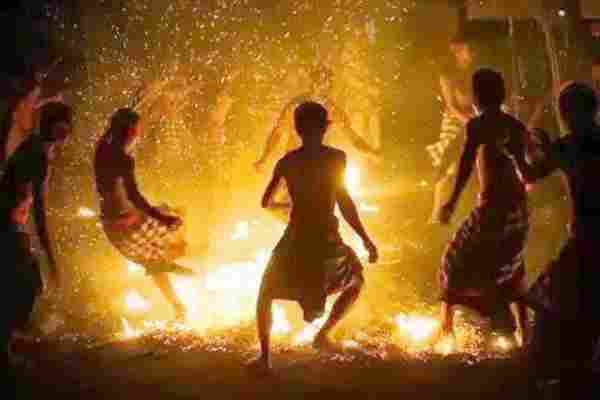
The circle, the campfire, and rhythm are not symbols added later to culture. They are the building blocks of culture that shaped how we gathered, learned, remembered, healed, and governed. These elements provided the focal points around which early civilizations formed.