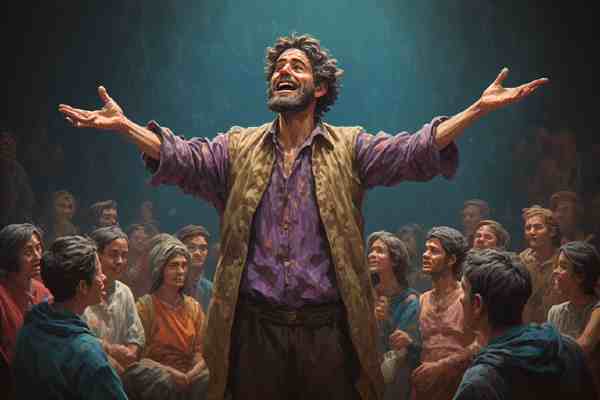
This article explains the second layer behind beliefs — the narrative structure as a mechanism. Narratives are far more than storytelling devices. They are one of the mind’s primary mechanisms for organizing experience, assigning meaning, and stabilizing belief.
People do not store raw data; we store stories. Those stories become the scaffolding for the beliefs we adopt and the ideologies we eventually defend. Beliefs may begin as simple ideas, but they do not remain isolated. People organize them into stories that explain the world and give meaning to events. This process is how beliefs become ideologies.
Humans are meaning‑seeking creatures. Narrative structure transforms isolated events into a meaningful arc. Beliefs grow out of that arc because it provides purpose, direction, and a sense of “why things happen.” This mechanism is not just cognitive—it is existential.
Narratives can make plausible explanations out of false assumptions. They tell how the world works, why events happen, and what people should value.
Stories help turn personal beliefs into shared systems of thought.
This article is the third installment in a seven-part series that examines how ideas take hold in the human mind, organize into shared systems, and eventually shape culture over time. Each article explores a different stage in that process and how those stages connect to one another. Return to the hub overview of the series.
The first layer of belief formation begins as a means to meet basic psychological needs. It is these aspects of human nature that create the conditions that make certain ideas appealing. Narratives give those ideas a form that the mind can understand and remember. In this way, stories transform simple beliefs into systems of meaning that groups can share.
The Narrative structure of storytelling
Storytelling is one of the oldest tools humans use to pass knowledge from one generation to another. Long before written language, people used stories to teach survival skills, explain natural events, and pass on cultural traditions.
Stories are powerful memory tools. A story is easier to remember than a list of rules or ideas. Because of this, cultures often teach important lessons through narrative rather than simple instruction.
The mind seeks order, even when reality is chaotic. Narrative structure provides a beginning, middle, and end—a sense of cause and effect that makes events feel predictable. Once a narrative takes shape, beliefs form around it like sediment around a frame. The story becomes the template through which new information is interpreted.
Stories compress complexity. Instead of analyzing every detail, the mind uses narrative shortcuts—heroes, villains, conflicts, resolutions—to make sense of events quickly. This efficiency is adaptive, but it also makes people vulnerable to oversimplified or manipulative narratives that exploit these shortcuts.
Myths and legends also help shape cultural identity. They explain where people came from, what they believe about the world, and what values they should protect.
Stories often carry moral lessons as well. Through characters and events, narratives show what behavior is praised and what behavior is condemned. In this way, storytelling becomes a method of teaching values.
Myths become beliefs and beliefs become ideologies
Ideologies often grow from myths and superstitions in shared narratives. These narratives organize beliefs into a structured explanation of reality.
Myths bind emotion to information. When a myth is embedded in a narrative, it becomes easier to remember and harder to challenge. Emotion acts as the adhesive, and narrative structure is the container that holds it. This is why emotionally charged stories often override factual evidence: the narrative feels true because it feels meaningful.
Many belief systems begin with origin stories. These stories explain how the world began, how a group formed, or how a movement started.
Narratives also include moral codes. These rules define what behavior is considered right or wrong and guide how members of the group should live.
Some narratives focus on the future. Prophecies and visions describe what the future may hold and what role the group will play in shaping it.
Historical stories also shape identity. They describe past victories, struggles, and injustices that define how a group sees itself and others. People use stories to define who they are and where they belong. When a narrative aligns with someone’s identity, it becomes a psychological anchor. Beliefs that fit the personal or group narrative feel “right,” even when they contradict observable reality. The structure of the story becomes the structure of the self.
Beliefs become ideologies when a group begins promoting them. Widespread acceptance is not required; group cohesion alone can sustain them.
The three narrative archetypes
Many belief systems rely on a few common narrative patterns.
One pattern is the “chosen one” identity narrative. In this story, a group believes it has a special role or mission in the world. This narrative strengthens unity and pride within the group.
Another pattern is the enemy narrative. In this story, an outside group is blamed for threats, injustice, or social problems. The enemy becomes a symbol of what the group must resist.
A third pattern is the salvation or restoration narrative structure. This story promises that problems will eventually be solved. It often describes a future time when justice will be restored or the group will triumph.
These three narrative patterns appear across many belief systems, from religious traditions to political movements.
Repetition builds acceptance, and acceptance is how beliefs become ideologies.
How narratives simplify complex reality
The world is complicated and often confusing. Narratives help simplify this complexity by organizing events into clear stories. Shared narratives create shared realities. Groups use stories to transmit values, justify norms, and reinforce boundaries.
Once a narrative is established, the mind selectively interprets new information to fit the existing storyline. This is narrative confirmation bias. The structure itself becomes self‑protecting: anything that contradicts the story feels wrong, and anything that supports it feels right. Narratives act as a filter that shapes perception.
The narrative structure provides a template that individuals internalize, making the group’s worldview feel natural. This mechanism explains why collective beliefs can harden into ideologies: the story binds the group together.
Stories often divide the world into moral categories. People and events are placed into roles such as good and evil, hero and villain, right and wrong.
These simple roles make it easier to understand conflict and struggle. They help people quickly decide who to support and who to oppose.
Narratives also provide explanations for suffering and injustice. When something bad happens, the story offers a reason that fits the larger belief system.
Evolution of story to doctrine
Over time, important stories often become formal teachings. When a narrative becomes widely accepted, groups may begin to define the story in more precise terms.
Beliefs may be written down in sacred texts, political manifestos, or ideological documents. These texts preserve narratives that make it easier to teach to future generations.
As belief systems grow, questions about meaning and interpretation often arise. Different leaders or groups may claim authority to explain the true meaning of the narrative.
This process turns stories into doctrine. Narratives become a structured system of belief that guides behavior and social organization.
Transition to the next layer
There is no question that beliefs become ideologies. This transition happens when a storyline connects with a basic human need. Beliefs survive across generations because they are preserved, taught, and defended.
In the next article, we will examine how institutions emerge to preserve these narratives and reinforce belief systems across generations.
References
- Narrative, Stanford Encyclopedia of Philosophy.
- The Role of Narrative in Human Cognition, Psychology of Learning and Motivation.
- Stories and the Brain: The Neuroscience of Narrative, Frontiers in Human Neuroscience.
- Myth, Encyclopaedia Britannica.
- Ideology, Encyclopaedia Britannica.
- The Cultural Transmission of Beliefs and Practices, Philosophical Transactions of the Royal Society B.
- Social Learning Strategies in Humans and Animals, Philosophical Transactions of the Royal Society B.
- Archetype, Encyclopaedia Britannica.