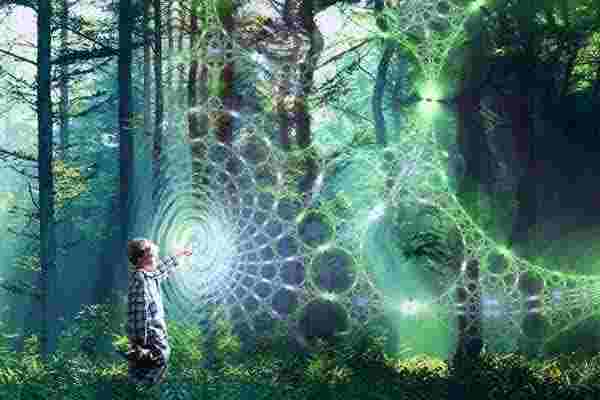
Rethinking the gifts of the spirit, or spiritual gifts, is overdue. In truth, both refer to inherited capacities of awareness we already possess. The problem is not that we lack gifts. The problem is that we have been misled on how to uncover them.
If we want to study anything to do with spirituality, we must separate religious dogma from the real mechanisms involved. The term we are dealing with contains words that have a wide breadth of application, yet a vague meaning. Gifts and spirit carry wide linguistic meanings. This adds to the confusion that we will dispel.
Inner Work Gate: This practice may increase discomfort before resolution. Emotional stability should be established first.
Rethinking the gifts of the spirit
Spiritual gifts are inherited capacities of awareness. They are forms of intuitive intelligence carried within our ancestral inheritance. They are not roles assigned by institutions or skills developed through training. They are natural potentials of perception that awaken as we align with our deeper nature.
They may appear as a natural ability to sense patterns that others overlook. It can manifest as an intuitive understanding of people. Or, perhaps, it is recognizing the truth beneath surface appearances, or holding steady clarity in moments of confusion.
The problem with the traditional definition
Language shapes how we think. When a system defines a term, it does so to utilize it. Religions, in particular, claim domain over terms to brand them.
The word faith is an example of a term that has been adopted by organized religion; it uses the term to refer to its dogma. This is different from the non-religious meaning, which means to have confidence in something. This didn’t happen overnight.
Over time, the meaning of the phrase shifted and became an accepted part of cultural meaning, just like the term faith.
That shift matters.
When gifts are defined by what helps the institution, the focus moves outward. Spiritual development becomes tied to participation, performance, and approval.
The terminology around spiritual gifts has been claimed and rebranded by organized religion. Western tradition defines these gifts as abilities that support the structure itself. These usually include things like:
- Teaching within the church
- Preaching or speaking roles
- Leadership positions
- Administrative oversight
- Organized forms of healing or ministry
Notice what these have in common:
- They operate inside the institution
- They serve the needs of the group
- They can be trained and improved
- They are recognized by authority
There is nothing wrong with these abilities. They can be helpful and meaningful.
But when these are labeled “spiritual gifts,” something subtle happens. Spiritual growth becomes tied to function. Inner awakening becomes confused with outward role. Rethinking the gifts helps us to recategorize them in a new light.
The result is quiet but powerful. People begin to believe that if they do not hold a visible position, they must not have a gift.
That is the problem.
Spiritual gifts are reduced to assignments. Insight is replaced by performance. And the deeper question — what is awakening inside the individual — gets pushed aside.
Why the confusion persists
The blending of skills, virtues, and the gifts of the spirit is not accidental.
If it were simply a misunderstanding, it would have been corrected long ago. The terminology has existed for centuries. Scholars have debated it. Theologians have refined it. Yet the confusion remains.
That tells us something.
When a system benefits from blurred definitions, it has little incentive to clarify them. By merging talents, virtues, and inner awakening under one label, several things happen:
- Institutional roles gain spiritual authority
- Trainable skills appear divinely assigned
- Moral behavior becomes proof of spiritual gifting
- External validation replaces inner discovery
The result is subtle but powerful. People look outside for validation of something that is to be discovered within. To untangle this, we must separate three very different dimensions of growth.
Talents and learned abilities
Talents are capacities that improve with practice. Some people have natural advantages, but repetition strengthens performance.
Basketball is a simple example.
Michael Jordan did not become extraordinary because someone declared he had a spiritual gift. He became exceptional because he practiced relentlessly and loved the game. His ability grew through discipline and repetition.
That does not diminish his talent. It clarifies it.
Talents share common features:
- They improve with training
- They respond to discipline
- They can be measured by performance
- They are visible to others
Talents are important. But they are cultivated abilities, not latent spiritual inheritance.
Virtues of the spirit
Virtues are nine qualities of character. They describe the predilections of our personalities, not what we perform.
You cannot force a plant to grow by shouting at it.
You cultivate soil, remove weeds, and water consistently.
They include qualities such as gratitude, serenity, and mindfulness. Virtues are expressions of maturity. They represent the refinement of our inner life.
Unlike talents, virtues are not about performance. They are about alignment and integrity.
Psychometric tools can help us identify which virtues are strongest in our personality structure. Inner work helps us strengthen the weaker ones. Over time, the goal is to bring all nine virtues into a healthy governing hierarchy within the personality.
Virtues shape the quality of our character.
But virtues are not the same as spiritual gifts. Virtues can be cultivated with inner work. Gifts are discovered through alignment with our inner wisdom and intuitive intelligence.
Inner wisdom and intuitive intelligence
Inner wisdom is like a violin. A violin does not create music until it is tuned. The strings are already there. The instrument already has capacity. But if it is out of tune, the sound is distorted.
Inner wisdom includes what we can call intuitive intelligence. This is the ability to perceive meaning, patterns, and truth without formal instruction. It is not learned in the same way as a talent. It is not developed in the same way as a virtue.
It feels older.
This intuitive intelligence is what links us to our deeper inheritance. It is the bridge between personal development and ancestral awareness.
We can observe how inner wisdom and intuitive intelligence are linked. In some families, children can sit at a piano and find harmony without formal training. The ear was shaped long before the lesson. Intuitive intelligence is similar. It recognizes patterns because the capacity was carried forward.
That inheritance is what we will examine next.
The nature of ancestral inheritance
The inheritance from our ancestors is the total pattern passed from one generation to the next. It is not limited to physical traits. It includes every layer of transmission that shapes a human life.
This inheritance includes:
- Biological traits such as eye color, body type, and nervous system sensitivity
- Temperament patterns and emotional tendencies
- Innate capacities and learning strengths
- Family skill tendencies, such as generations of musicians, craftsmen, or healers
- Cultural beliefs, shared myths, and religious narratives
- Customs, rituals, and social practices
- Unresolved trauma and collective historical wounds
We inherit more than appearance. We inherit orientation.
Some families pass down music.
Some pass down business instincts.
Some pass down spiritual sensitivity.
Some pass down fear patterns shaped by war or displacement.
All of this becomes part of the human template we are born into.
Spiritual gifts are not separate from this inheritance. They are one expression of it.
A child born to musicians might have a natural sense of rhythm. Similarly, someone born into a family of deep thinkers may have an instinctive awareness. The capacity feels natural because it is familiar to the lineage.
But inheritance is not always light.
Trauma can also be transmitted. Suffering and oppression can lead to stress. This can cause fear, hypervigilance, or emotional constriction. These, too, become part of what we carry.
This means ancestral inheritance contains both:
- Latent wisdom
- Unresolved distortion
The task is not to accept everything unquestioningly. The task is to discern what wisdom is and what conditioning is. Rethinking the gifts of the spirit enables us to link them properly with the wisdom stream of inheritance. They are the refined capacities carried forward through generations of lived experience.
But they do not reveal themselves automatically.
They must be uncovered.
Revealing spiritual gifts
Alignment turns you toward your inheritance. Inner work clears what obscures it. If ancestral inheritance carries both wisdom and distortion, then something important follows.
Not everything we inherit is meant to govern us.
We inherit strengths.
We inherit tendencies.
We inherit insight.
We also inherit fear, conditioning, and unresolved patterns.
Spiritual gifts do not rise automatically to the surface. They remain dormant in these inherited patterns until awareness expands.
Inner work is the process of separating wisdom from conditioning.
This requires:
- Self-observation without denial
- Honest reflection on emotional patterns
- Questioning inherited beliefs
- Developing awareness beyond reactive behavior
As conditioning loosens, intuitive intelligence becomes clearer.
Intuitive intelligence is not imagination.
It is not wishful thinking.
It is not emotional impulse.
It is quiet perception.
It allows you to sense patterns without being taught.
It allows you to recognize truth without external approval.
It allows you to discern inherited wisdom from inherited fear.
This is why spiritual gifts are revealed, not acquired.
You do not build them from scratch.
You uncover them by clearing what obscures them.
When inherited distortion is reduced, the deeper capacities begin to surface naturally.
What once felt hidden becomes obvious.
What once felt distant becomes familiar.
What once felt uncertain becomes steady.
Revelation is the result of alignment and clarity.
Inner work does not create spiritual gifts. It removes the obstacles that keep them buried.
Why prescribed lists fall short
Everyone’s latent gifts of inherited wisdom are unique and manifest in different degrees.
The problem with fixed lists becomes obvious: lists belong to systems.
Inheritance belongs to living experience.
Religious traditions often publish official lists of spiritual gifts. These lists create order. They make teaching easier. They help leaders organize communities.
But they also reduce something living into something manageable.
A list assumes:
- Gifts are limited to predefined categories
- Every person must fit into one of those categories
- Recognition comes from agreement with the system
- What is not named does not exist
That framework works well for administration. It does not work well for awakening.
Ancestral inheritance is not uniform. It is layered, personal, and shaped by countless variables. Biology, temperament, culture, trauma, insight, and experience are unique. The expression of spiritual gifts will therefore vary just as widely.
Two people may share the same lineage and express wisdom differently.
One may express insight through language.
Another through silence.
One through structured teaching.
Another through pattern recognition and quiet discernment.
A fixed list cannot account for this range. Lists also encourage comparison.
When people search for themselves on someone else’s chart, they begin measuring instead of observing. They ask, “Which one am I?” instead of asking, “What is emerging in me?”
Spiritual gifts are not discovered through classification.
They are recognized through awareness.
The better you grasp your inheritance and the more you engage in inner work, the less you rely on others to tell you who you are.
A clear definition
After separating skills, virtues, and inherited awareness, we can now define the term more precisely.
Spiritual gifts are latent capacities of intuitive intelligence carried within ancestral inheritance. They are expressions of accumulated human insight transmitted across generations. They become visible when inner work clears inherited distortion and personal conditioning.
They are not:
- Trainable technical skills
- Institutional roles or religious titles
- Moral character traits or virtues
- Abilities granted by organizational approval
They are inherited potentials of perception.
They allow a person to recognize meaning, patterns, and truth without relying solely on formal instruction. They often feel natural, familiar, or quietly obvious when they emerge.
Unlike talents, they are not strengthened primarily through repetition.
Unlike virtues, they are not qualities of behavior.
They are capacities of awareness.
Spiritual gifts are:
Revealed through alignment.
Clarified through inner work.
Expressed uniquely according to each person’s inheritance.
Conclusion
The phrase “gifts of the spirit” has been stretched and blurred over time. It has been used to describe church roles, trained abilities, and even moral behavior. But when everything is called a gift, the meaning disappears.
Spiritual gifts are not assigned.
They are not earned.
They are not granted by approval.
They are inherited.
They arise from the accumulated insight carried forward through generations. They express themselves through intuitive intelligence. They become clear when conditioning is examined, and distortion is reduced.
This understanding changes the focus.
Instead of asking, “Which gift do I have?”
The better question becomes, “What is already present in me that has not yet been uncovered?”
Instead of seeking recognition from a system, the work becomes internal. Awareness replaces comparison. Discernment replaces performance.
Each person carries both inheritance and responsibility.
Inheritance provides the potential.
Inner work reveals it.
Expression makes it real.
It is not about acquiring something new.
It is about uncovering what was always yours.
References
- Intuition. Encyclopædia Britannica.
- Intergenerational Transmission of Stress and Trauma. Frontiers in Psychiatry.
- Intuition: A Social Cognitive Neuroscience Approach. Frontiers in Psychology.
- Epigenesis. Stanford Encyclopedia of Philosophy.
- How Language Shapes Thought. Scientific American.
- The Legacy of Trauma: How It Is Passed Down Generations. American Psychological Association.
- Implicit Learning and Pattern Recognition. Trends in Cognitive Sciences.
- Epigenetic Mechanisms of Inheritance. Nature Reviews Genetics.