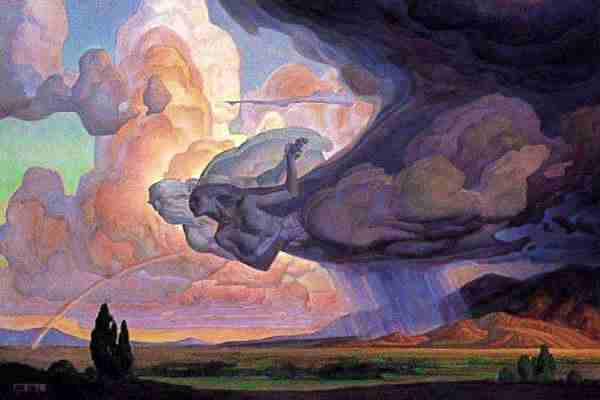
The concept of a higher power or God carries enormous weight for many people. Some people believe God is a literal being, while others see God as a metaphor. To complicate it further, there are many variations on the idea of God or Gods. These differences create tension in relationships and in society.
This article examines the idea of a higher power. It discusses how literal beliefs can lead to magical thinking. It also explores how cultures form divine imagery and how institutions use these symbols to shape behavior through fear.
Historically, people have used the idea of God to explain creation, suffering, morality, and fate. Sometimes the language stayed symbolic. Sometimes it hardened into codified doctrines that become laws. In essence, belief becomes fact in that culture.
Inner Work Gate:
This article engages belief systems that may be deeply tied to identity, culture, or emotional safety. It may increase discomfort, uncertainty, or resistance before clarity emerges. Emotional stability and self-regulation should be established before engaging deeply.
What is God? Fact or metaphor?
To explore this subject, the article unfolds around four core concepts:
1. God as a metaphor, not a literal being. God’s stories, symbols, and images come from efforts to explain the unknown. They are not eyewitness accounts of supernatural events.
2. Mistaking metaphors for facts leads to magical thinking. When people treat symbolic stories as historical fact, belief loses its grounding in evidence. When belief become fact then beliefs are easier to manipulate.
3. Cultures generate metaphors to explain the unknown. Every society shapes its own images of God. These can be sun gods, creator gods, or destroyer gods. Some see God as a father figure or cosmic energy. Each image shows what people fear, value, and their surroundings.
4. Religions use metaphors to control. Fear is the main tool for motivating believers. When metaphors become literal, they turn into tools of power. Examples include divine punishment, eternal reward, holy war, and moral surveillance.
Why metaphors matter
Metaphor is one of the oldest technologies of thought. It allows the mind to take something familiar and use it to illuminate something unfamiliar.
Metaphors matter because they are the bridge between the physical world and our abstract thoughts. They allow us to understand complex ideas—like time, love, or logic—by comparing them to simple things we can see and touch.
Beyond just being descriptive, metaphors act as mental frameworks that shape how we solve problems. For instance, seeing an argument as a “war” makes us want to win, while seeing it as a “dance” makes us want to cooperate. By changing the metaphor, we can literally change how we think and act.
They are mental shortcuts. They help us communicate quickly, learn better, and connect with others. They turn hidden feelings into shared experiences.
1. God as a metaphor, not a literal being

The idea of God did not begin as a literal description of a supernatural entity. It began as language—a cognitive tool humans used to map the unknown onto the known.
Early cultures often lacked tools to measure or explain nature. So, they used metaphor. Storms showed divine anger, while sunlight symbolized a sky-god’s glow. Life and death cycles were viewed as actions of hidden forces. These metaphors weren’t errors; they were ways to grasp a vast and mysterious world. Knowing how god explains the
When people describe God as a shepherd, a father, a judge, a rock, or a source of light, they are not describing a being—they are describing a relationship. Each metaphor links human experience to something beyond human comprehension.
How belief becomes fact
The concept of God or Gods is a metaphor that can be traced to the ancient idea of animism. Animism is simply the idea that all living things have a spiritual essence. The idea of animism or God started as a simple way to explain things people could not understand. Early humans used stories to make sense of storms, seasons, life, and death. These stories were never meant to be taken as literal events. It was shorthand for forces, fear, and mysteries we cannot fully explain.
Over time, these stories hardened into beliefs. People began treating metaphors as facts. When this happens, belief becomes fact. The meaning behind the story gets lost. Instead of learning from the metaphor, people cling to the image and miss the message.
God — the linguistic placeholder
God serves as a word for things that are hard to explain. This involves the universe’s beginning, what consciousness is, the certainty of death, moral order, and the expanse of time. The word functions as a conceptual container for mystery itself. It is a way of naming uncertainty without resolving it.
The persistence of the higher power metaphor is not surprising. The universe is still vast, still mysterious, still filled with unanswered questions. The word God offers a way to gesture toward that immensity without having to define it. It compresses uncertainty into a single, culturally loaded symbol.
Here is where things get tricky. Metaphors are meant to explain meaning, not mechanics. When stories meant to help people face fear or mystery are treated like literal facts, confusion sets in. Questioning feels risky. Belief drifts away from evidence. What started as a way to understand life slowly turns into a set of rules that must be followed.
2. Mistaking metaphor for fact leads to magical thinking
Magical thinking is the idea that metaphors, myths, and symbols show real events or supernatural things. It assumes that stories of gods, miracles, curses, and blessings are not just imagination. Instead, they are seen as factual accounts of reality. In this view, metaphor acts as a mechanism, and narrative serves as evidence.
Metaphor becomes fact
But when metaphors are mistaken for historical truth, they distort the message. They turn symbolic narratives into rigid doctrines. They transform imaginative language into claims about supernatural events. This shift—from metaphor to literalism—is the root of magical thinking. It is what allows myths to be treated as evidence, and what enables institutions to wield fear, guilt, and divine authority as tools of control.
Recognizing the metaphor returns language to its core purpose: to inform, not to confuse. It lets us see spiritual stories as reflections of human life. They show our experiences, not just cosmic mechanics. And it opens the door to a more honest, less fearful exploration of meaning.
Understanding God as a metaphor does not diminish its power; it clarifies it. When metaphors are recognized as metaphors, they reveal meaning. They help us interpret stories, rituals, and symbols as attempts to communicate insight rather than literal fact.
Every culture builds its own picture of the divine. Some imagine sun gods or creator gods. Others imagine judges, loving parents, or invisible energy flowing through everything. These images are not random. They reflect the environment people lived in, the dangers they faced, and the values they cared about most. The images change, but the job stays the same: making the unknown feel less overwhelming.
The consequences
The consequences of mistaking metaphor for fact are profound:
1. Psychological dependence on divine intervention. People often turn to a higher power. They think that prayer, rituals, or devotion can influence natural processes.
2. Misinterpretation of natural events as divine acts. Floods, earthquakes, plagues, and personal misfortunes are seen as punishments, tests, or signs from a higher power.
3. Vulnerability to manipulation by religious authorities. When metaphors are treated as literal truths, those who claim to speak for the metaphor gain extraordinary power. Fear becomes a tool of control.
Ask yourself this:
If everyone agrees the metaphors are different, why do we fight as if only one can be true?
Problems begin when these stories are frozen and enforced. When symbolic language is treated as absolute truth, it becomes a tool for control. Fear of punishment, hope of reward, and claims of divine authority only work when metaphors are taken literally. Once that happens, belief stops being personal and starts being enforced.
Seeing God as a metaphor does not strip away meaning. It sharpens it. Metaphors help us see how people think, what they fear, and what they value. When understood clearly, they guide reflection instead of demanding obedience.
What is your experience with the concept of a higher power? Are your beliefs rigid or can you change them when you obtain new information?
3. Cultures create metaphors to explain the unknown
Every culture generates its own metaphors for creation, destruction, morality, and fate. These metaphors aren’t random. They stem from religion, politics, fears, and the hopes of the people who shape them. Divine imagery acts as a map of human psychology. It reveals our inner thoughts instead of just describing supernatural beings.
Comparative Metaphor Systems
Different traditions express the divine through distinct metaphorical frameworks:
- Christianity: God as Father, Shepherd, Rock—images of protection, authority, and stability.
- Hinduism: Vishnu is the preserver, and Shiva is the destroyer. Brahman is seen as the ocean of consciousness. These figures symbolize cosmic cycles and unity.
- Islam: Allah as Light, Merciful, Guide—emphasizing clarity, compassion, and direction.
- Judaism: Judge, Shepherd, Covenant‑maker—reflecting law, guidance, and communal identity.
- Buddhism: Dharma as a map, Buddha as a mirror—tools for self‑understanding rather than depictions of a deity.
- Paganism: Earth, Sun, seasons, cycles—metaphors rooted in nature’s rhythms and the sacredness of the physical world.
Metaphors diverge because cultures diverge. Geography shapes how we see the divine. In deserts, people picture a powerful sky-god. In forests, they imagine spirits in every tree. Climate, political structure, and social hierarchy influence whether the divine is portrayed as a king, a parent, a judge, or a force of nature.
Metaphors reflect the world that produced them. Divine metaphors may differ, but they often connect through common human experiences. These include death, suffering, and universal desires like protection and justice.
4. Religions use metaphors to control
Once metaphors are treated as literal truths, they become powerful tools for regulating behavior. Fear is the mechanism that makes this possible. When people see divine punishment as real and unavoidable, obedience shifts from a moral choice to a survival strategy. Religious institutions have long understood this dynamic. By literalizing metaphor, they transform symbolic stories into systems of control.
When facts cannot be challenged, that is the moment belief becomes fact.
Leveraging fear for profit and control
Fear is one of the most effective behavioral regulators in human history. When people think a divine being watches them, they start to follow the rules. They feel judged for their thoughts and fear punishment for disobedience. This makes them comply from within. Eternal consequences like hell, damnation, and divine wrath make questioning risky. In this setting, obedience gets rewarded. The threat of punishment extends beyond this life, making the stakes infinite and the fear perpetual.
Religious traditions deploy a consistent set of narrative tools to reinforce this fear:
- Floods, plagues, and divine wrath present destruction as a moral lesson.
- Sacrifice stories, like Abraham’s choice to sacrifice Isaac, make obedience seem normal. This happens even when it goes against our natural instincts.
- Apocalyptic imagery, like in Revelation, shows the world as a fight between cosmic forces. It warns that eternal torment awaits those who disobey
These stories are not neutral. They are designed to evoke awe, dread, and submission. When taken literally, they become psychological weapons.
Institutional incentives
Religious institutions have strong incentives to maintain the literal interpretation of these metaphors. Literal belief supports hierarchy. If God demands obedience, those who represent God gain authority. Fear becomes a structural asset. It discourages dissent, reinforces loyalty, and protects the institution from scrutiny.
Metaphor, when understood as metaphor, invites interpretation. Literalism, by contrast, demands compliance. Institutions choose the latter because it preserves power.
Historical consequences
The fusion of metaphor and fear has shaped some of the most violent chapters in human history:
- The Crusades were seen as a holy war by many. They believed they had God’s support, which led to real violence and bloodshed.
- Extremists have used violent interpretations of jihad to sanctify political violence.
- Moral surveillance means “God is watching.” This idea has been used to control behavior, silence dissent, and push for conformity.
These examples show how easily symbolic language can be used as a weapon. This happens when institutions demand literal belief.
How the four ideas interlock
The four core ideas work together. They explain why the concept of *God* is powerful across cultures and time. What starts as a simple metaphor for the unknown becomes a system of belief, fear, and authority. This change is not random. It results from how people use language, how institutions gain power, and how cultures pass on meaning.
The metaphor gains momentum
At the foundation lies the simple fact that God begins as a metaphor. Early humans used symbols to explain things they couldn’t measure. These included storms, seasons, birth, death, consciousness, and morality. These metaphors were cognitive tools—ways of mapping the unknown onto the familiar. But over time, the metaphor hardened. Stories meant to illuminate became stories meant to obey.
When a metaphor becomes literal, it loses its power as a tool for understanding. Instead, it turns into a statement about how the universe truly operates. This shift creates magical thinking. People believe myths show real history, that rituals affect cosmic forces, and that divine beings play a role in everyday life. Magical thinking thrives because it offers certainty in the face of uncertainty. It promises order, meaning, and protection—even when those promises are unfounded.
The metaphor is exploited
Institutions quickly learn to exploit this magical thinking. When people see metaphors as literal truths, those who speak for them gain great authority. Fear drives compliance. Beliefs in divine punishment and eternal consequences make obedience seem safer than doubt. The metaphor turns into a mandate, and that mandate forms a hierarchy.
The culture then reinforces this system. Every society creates its own divine images. They have fathers, shepherds, destroyers, judges, lights, oceans, and seasons. These metaphors reflect cultural values, political structures, and environmental realities.
But once embedded, they also reinforce the authority that depends on them. The culture shares the metaphor. The metaphor sparks fear. Fear strengthens the institution. The institution upholds the literal belief.
The result is a feedback loop:
Metaphor → literal belief → magical thinking → fear → authority → cultural reinforcement → renewed metaphor.
Each stage strengthens the next. Each generation inherits not only the stories but also the emotional weight attached to them. The metaphors that once helped humans understand the world now shape how they behave within it.
Understanding this loop does not diminish the symbolic power of the divine. It shows how belief is built. It reveals the language used, the psychology involved, the institutions that back it, and the cultural trends that help the idea of God thrive. Seeing the loop helps us step outside of it. This lets us view the metaphor clearly. We can engage with spiritual language without it controlling us.
If your beliefs about reality and your identity are tied to this metaphor, how can you stop this loop? Here is where inner work is necessary to repair thinking.
➡ For More See: The Core Process For Repairing Harmful Thinking, Beliefs, and Values →
Reclaiming the Metaphor
The idea of *God* has always held great cultural significance, but this comes from metaphor, not metaphysics. The idea that belief becomes fact is a fallacy of magical thinking. When we reclaim the metaphor, we can think clearly about our stories and the systems they create. Understanding God as a metaphor does not lessen spirituality; it enhances it. This view frees the concept from literalism, fear, and control. It allows God to serve as it was meant to: a symbolic way to explore mystery, meaning, and the human experience.
Clarity matters. When metaphors are recognized as metaphors, they illuminate rather than intimidate. They invite curiosity instead of demanding obedience. They encourage compassion instead of fueling division. They let us dive into human experience. We do this without giving up our control to supernatural ideas or strict authorities.
Compassion matters. Viewing God as a symbol of love, justice, creativity, or connection promotes empathy instead of exclusion. It shifts the focus from divine surveillance to human responsibility. It replaces fear with understanding and replaces dogma with dialogue.
Intellectual honesty matters most of all. A society that can distinguish symbol from fact is harder to manipulate. It is less open to fear-based control and less likely to support violence in the name of divine orders. Also, it can build ethical systems based on human values instead of supernatural threats. Recognizing metaphors as metaphors is not an attack on spirituality; it is a defense of sanity.
When we reclaim the metaphor, we reclaim our freedom to interpret, to question, and to grow. We find spirituality in awareness, not superstition. It’s about meaning, not magical thinking. And we gain a culture that can honor its stories without being ruled by them.
References
- Cognitive Science of Religion. Stanford Encyclopedia of Philosophy.
- Metaphor. Stanford Encyclopedia of Philosophy.
- Magical Thinking and Belief Formation. Frontiers in Psychology.
- Why the Brain Believes in Gods and Superstition. American Psychological Association.
- The Cognitive Science of Belief: Heuristics and Biases. Frontiers in Psychology.
- Symbolism. Encyclopaedia Britannica.