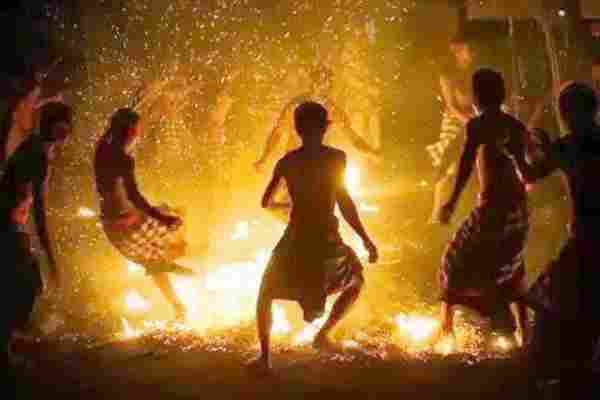
The circle, the campfire, and rhythm are not symbols added later to culture. They are the building blocks of culture that shaped how we gathered, learned, remembered, healed, and governed. These elements provided the focal points around which early civilizations formed.
In nature, circular forms appear everywhere—from cells to trees to the iris of the eye. This shape is stable, efficient, and deeply familiar. It’s no surprise that humans adopted it early as a practical way to organize themselves.
This article is explanatory and does not provide or infer guidance.
The Building Blocks of Culture
Before culture had names or rules, people gathered in circles. They did this to tackle basic issues like visibility, coordination, and shared attention. Fire provided light. A circle provided a focal point. The drum rhythm created the mood. These elements created a strong place for gathering, communicating, and acting together.
This structure did not arise from belief or symbolism—it emerged because it worked. Circles clarified behavior, reduced unchecked dominance, and focused attention on a shared center. Fire and rhythm amplified these effects. Together, they formed the framework for the building blocks of culture.
What do you notice when you sit in a circle? What changes occur as you become visible to others?
The Universal Use of The Circular Shape
The circle is one of six universal shapes and has long symbolized balance, unity, and the cycles of nature. The Greeks saw it as a sign of divine order, expressed through symbols like the Ouroboros. Their understanding of geometry drew from Egyptian sources such as the Rhind Papyrus. Hermetic traditions describe the universe as governed by circular and spiral motion.
This shape’s influence appears worldwide. Circles and spheres symbolize harmony, continuity, and life’s connections. Different cultures adapt them for spiritual and practical uses.
Native American medicine wheels map the cycles of life and the four directions. Hindu and Buddhist mandalas depict cosmic order and support meditative focus. Celtic stone circles align with celestial events and ritual use. African tribal circles reinforce community and the rhythms of life. Zen Buddhism’s enso stands for enlightenment and imperfection. In contrast, the Christian halo shows divine radiance.
Circles are also used to focus and channel energy. Many traditions create circular spaces for ritual, healing, or protection. Drawing a circle on the ground sets a clear boundary for intention, and nested circles support more complex work.
The Social Mechanisms Activated by the Circle
When you sit in a circle, certain changes happen right away. Everyone is now in your view, so your attention spreads across the group instead of toward one person or a single point. The shape creates a shared space where focus stays inside the boundary.
Visibility is the first driver. Being seen changes how people act. Interruptions stand out. Silence carries weight. It becomes harder to dominate without being obvious and harder to withdraw without being noticed. These shifts happen on their own, even without rules.
The circle also softens authority. Without a “front of the room,” influence comes from participation, not position. Turn‑taking becomes easier because everyone can see when someone speaks or waits. Over time, meeting in the same shape builds shared memory and a sense of group identity.
The campfire and rhythm can strengthen these effects. But the circle itself creates the basic structure that organizes behavior.
| Circle mechanism | What it changes | What it makes easier |
|---|---|---|
| Attention alignment | Focus turns inward toward the group | Listening and shared activity |
| Status leveling | No fixed position of authority | Reduced posturing |
| Turn-taking control | Interruptions become visible | Orderly participation |
| Boundary creation | Clear inside and outside | Containment and safety |
| Participation pressure | Presence is publicly acknowledged | Engagement and responsibility |
| Shared memory formation | Repeated structure reinforces continuity | Culture and identity |
These mechanisms work independently, but factors like fire and rhythm greatly boost their effects.
If these mechanisms arise from structure alone, what happens when the environment begins to reinforce them?
Environmental and Sensory Amplifiers
The Campfire as a Central Organizing Technology
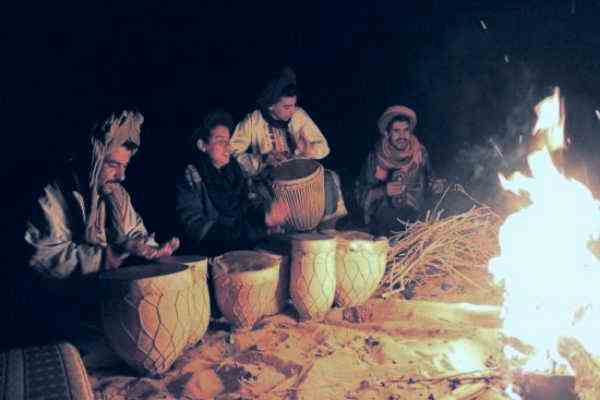
Fire was the first force to amplify what the circle already offered. Its practical gifts of light, warmth, and protection are valuable. It proves the ability to stay active after dark—people gather longer and work together more closely. The glow formed a natural boundary. Faces were clear, and movement was easy to see. This drew attention to the center without anyone needing to direct it. The environment itself supported presence and cohesion.
Fire also changed how people perceived and interacted. Watching flames slows down thought and focuses attention. This makes groups more open to stories, learning, and working together. This effect is physiological, not symbolic. It’s a clear response to a strong, changing stimulus in a group. Before fire had ritual meaning, it helped stabilize gatherings. It improved coordination by changing how people focused their attention.
Fire does part of the work for the group by holding focus, revealing faces, and slowing the pace of interaction.
Remove the symbolism, and fire still works. Remove the fire, and the circle loses one of its strongest stabilizers.
Drum and Rhythm as Biological Regulators
Rhythm strengthens the circular gathering in a different way than fire. While fire anchors attention, rhythm regulates timing. Repeated beats influence breath and heartbeat, helping bodies sync without effort. As timing aligns, agitation drops and cohesion rises. This effect works beneath language. A fast tempos lift energy, steady ones calm it, and shifts in volume or pace change the group’s state before anyone interprets what’s happening.
When you add rhythm to the circle, coordination improves naturally. Speech smooths out, movement becomes more fluid, and people begin to act as a single system rather than separate individuals.
- Rhythm synchronizes breath and heartbeat
- Tempo regulates energy and emotional state
- Shared timing increases group cohesion
Drum Circles as Mnemonic Learning Systems
Rhythm does more than regulate the group—it also carries memory. In cultures without writing, chants, songs, and movement became reliable ways to store and recall knowledge. Skills, stories, values, and practical teachings came alive through sound and motion. This made learning both physical and lasting. Repetition helped preserve this knowledge across generations.
When rhythm joined fire and the circle, learning became a shared experience. Knowledge was witnessed, repeated, and reinforced by the group rather than passed on privately. In this way, rhythm acted both as a stabilizer in the moment and as a long‑term carrier of tradition. These three elements together are the building blocks of culture.
When attention is anchored by fire and timing is shaped by rhythm, what tends to arise in the group without anyone forcing it?
Emergent Outcomes of Combined Structure
When the circle structure is stable and its amplifiers are present, certain outcomes tend to arise without being forced. These outcomes are not guaranteed, and they are not always the stated purpose. They emerge because attention, timing, and social behavior are being regulated at the same time.
Healing as Repair of Connection
In this framework, healing is not a method or a promise. It is something that can occur when the system is working. When the circle holds attention and fire steadies it, rhythm helps synchronize. Breathing slows. Hypervigilance drops. Remaining present becomes easier. These shifts are situational responses, not individual therapeutic outcomes.
This shift supports social reintegration rather than private processing. People are not repairing themselves in isolation. They are re-entering shared timing with others. Seeing each other, moving and sounding as one, helps bring back a sense of belonging that’s hard to find alone.
What is being repaired is “connection.” Connections to the group, the shared rhythm, and the environment. Healing happens when presence is felt, and timing is right, not just when we label it as an objective.
Healing is not something a circle does. It is what can emerge when connection is restored and maintained.
The Campfire and Rhythm = Circle Synergy
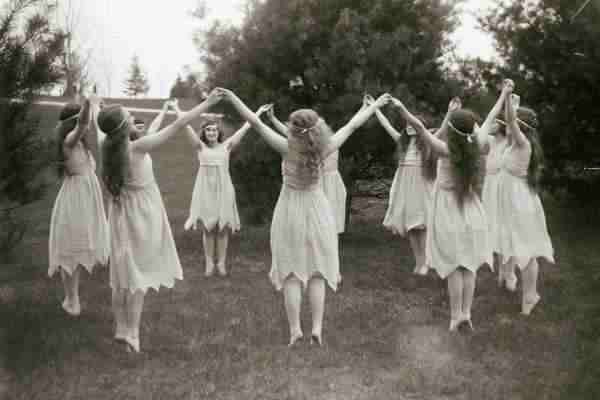
Campfire drum circles have long been used as community focal points for healing and community-building gatherings.
A circle sets boundaries and offers visibility. Fire draws focus. Rhythm influences timing and how we feel in our bodies. Each element reduces the effort needed by the others. This makes the system more stable and easier to maintain. Focusing on the fire helps us follow the rhythm. As the rhythm connects our bodies, the circle stays steady. People naturally stick to the shared beat.
As these elements integrate, the whole becomes stronger than the parts. Cohesion grows when timing is shared. Learning deepens as attention is held. Bonding increases through synchronized and shared experiences. Synergy doesn’t add new forces—it simply lets the existing ones move with less resistance.
The circle and the campfire are used in rituals around the world:
- Firewalking in India, Greece, Rome, and Polynesia showed bravery and devotion. The science behind it—low heat transfer from wood coals—makes quick steps possible.
- Hindu Yajna uses sacred fire, offerings, and chants to link the earthly and spiritual.
- Shamanic fire rituals use flame and drumming to connect with nature’s forces.
- Buddhist fire ceremonies symbolize releasing negative karma.
The campfire and rhythm work together to create spaces for courage, clarity, and spiritual renewal.
Cultural Systems Built on Circles
Once the circle, its amplifiers, and its emergent outcomes are understood, the ways cultures used the system become easier to see. These uses were not symbolic inventions. They were practical responses to recurring human needs.
The same structural system was applied again and again because it works. It organizes attention, behavior, timing, and participation. What changed from context to context was not the circle itself, but the rules, expectations, and boundaries placed around it.
Historical Roles of Circles
Cultures use circles wherever groups need to coordinate, remember, decide, or repair. Leadership and governance relied on visibility and witnessed decision-making. They are used to ensure accountability, manage turn-taking, and aid reintegration after harm.
Teaching and storytelling depended on shared attention and memory, often reinforced by rhythm. Mourning and loss required containment and collective presence to maintain continuity during disruption. Circles marked transitions in status and responsibility during initiation and rites of passage. This made changes clear and recognized by society.
These roles appear different on the surface, but they draw from the same underlying mechanics. Each role reflects a different problem being solved with the same structural tool.
When you understand the mechanism, the role becomes a design choice.
| Role | What the circle is solving | What makes it work |
|---|---|---|
| Leadership and decision-making | Group coordination and authority | Visibility and witnessed decisions |
| Justice and conflict resolution | Harm, responsibility, reintegration | Turn-taking and shared standards |
| Teaching and storytelling | Passing knowledge without writing | Attention and shared memory |
| Mourning and loss | Continuity after death or change | Boundary and structured participation |
| Ritual and ceremony | Marking time, seasons, transitions | Boundary plus shared focus |
| Initiation and personal change | Status shifts and readiness | Rules, containment, witness |
Sacred Space and Containment
In many contexts, the circle also functioned as a container. Containment is not symbolic protection. It is the practical creation of an inside and an outside. Boundaries made it clear who was participating, what behavior was expected, and what would not be allowed to enter the space.
This containment protected focus and safety. Emotional intensity, conflict, grief, or transition could be managed without overwhelming the group. This was possible because limits were clear and enforced. Fire, rhythm, and repeated actions helped keep focus and timing steady.
When a circle functioned as a sacred space, it did so because it reliably held people inside shared rules and expectations. Sacredness emerged from stability and trust, not from decoration or belief.
If the same circle system can serve many roles, what determines which role it takes on in a given gathering?
Intentional Structuring
Circles do not aim themselves. Structure and amplifiers set the stage for coordination and connection. But direction comes from careful choices. Intentional structuring is how circles are guided rather than left to chance.
Ritual as Structured Action
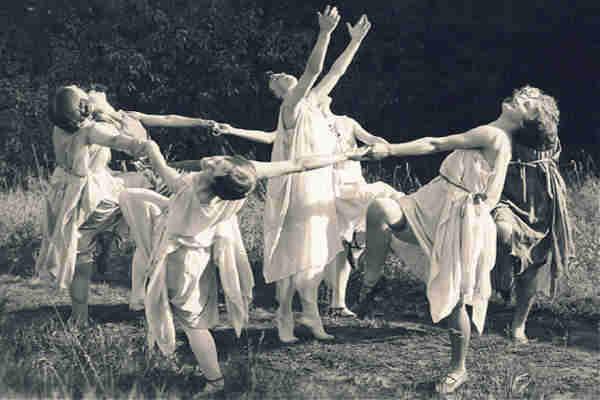
Ritual is the mechanism that turns intention into shared behavior. It is not performance or belief, but repeated action with purpose. By doing the same things in the same order, a group establishes continuity across time and reinforces what matters.
Repetition stabilizes expectations. Participants learn when to speak, when to listen, where attention belongs, and how transitions occur. These patterns lower uncertainty and simplify participation. This is especially true during times of strong emotions or social pressure.
- Repetition anchors behavior across gatherings
- Shared actions reinforce rules and values
- Continuity builds trust and reliability
Intention and Direction in Circles
Intention determines how the structure is used. Purpose shapes rules, etiquette, and emphasis, directing attention toward what the group is there to do. Without clear intention, energy scatters. With it, participation aligns.
Direction does not require authority. It requires clarity. When purpose is visible and consistently reinforced, the circle becomes easier to hold. Drift decreases because expectations are shared rather than negotiated in the moment.
Structure holds the group, but intention tells it where to go.
Inner Circle Dynamics
Even in circles designed for equality, influence exists. Inner circles form wherever trust, familiarity, or responsibility is concentrated. These dynamics can encourage accountability and care. But if ignored, they may distort participation.
Managing inner circle dynamics requires boundaries and consent. Support must not become pressure. Influence must not become control. When these dynamics are addressed openly, inner circles boost the larger group instead of weakening it.
- Inner circles can provide support and accountability
- Influence exists even without a formal hierarchy
- Clear boundaries protect consent and participation
Once purpose, rules, and inner dynamics are in place, how do people explain and preserve what the circle does across generations?
Meaning-Making and Symbolism
Once the circular format had proven itself as a reliable structure for organizing people, attention, and behavior, meaning began to accumulate around it. Symbolism did not create the shape. It emerged as people tried to explain, remember, and transmit a structure that continued to work across time.
Humans do not preserve practices through mechanics alone. They preserve them through stories, images, and shared metaphors. Symbolism allowed the round shape to be carried forward even when the original conditions that gave rise to it were no longer consciously understood.
Symbolic and Archetypal Meanings of the Circle
In many cultures, the disc or round shape became associated with ideas of wholeness, continuity, and order. These interpretations reflected lived experience. Sitting in a circular format feels different from sitting in rows. Attention is shared. Presence is mutual. Beginnings and endings blur into cycles rather than lines.
Symbolism did not enable the circle to work. Symbolim formed because the shape had function. .
Over time, these associations expanded. Cycles of seasons, life stages, and celestial movement were mapped onto spheres and circular shapes. Spiritual and cosmological meanings grew around a structure that already embodied continuity and return. Symbolism gave language and image to effects people could feel, but it remained downstream of the structure that produced them.
Modern Context and Responsibility
When the circle, fire, and rhythm show up in modern settings, the system shifts but stays. Without its original conditions, the structure can weaken or distort. It may also amplify effects in surprising ways. What follows are not critiques of intention but observations of consequence.
Modern Adaptations and Limitations
In contemporary use, circles are often adopted for their appearance rather than their mechanics. The shape is kept, while the rules, boundaries, and amplifiers that made it effective are softened or removed. This leads to wide variation in outcomes.
These limitations do not mean circles no longer work. They mean the system is being partially engaged. When key elements are missing, the circle becomes a gesture rather than a functioning tool.
Ethical Use of Collective Synergy
Because circles amplify attention, emotion, and timing, they also amplify intent. This amplification is neutral. It can support learning, repair, and cohesion, or it can intensify manipulation, pressure, and harm.
The circle does not choose outcomes. It magnifies whatever purpose is placed inside it.
Ethical use depends on responsibility. Facilitation, clear purpose, consent, boundaries, and accountability all matter. When collective energy is directed without care, the same forces that bond groups can also distort judgment and suppress dissent. Using these building blocks today means understanding what the system does, not just how it looks.
The risk of misuse is real. Any structure that strengthens collective focus can help or harm. Knowing how this shape works is the minimum requirement for using it responsibly.
Given that circles amplify attention and intent today, what does responsible use require from the people holding it?
Conclusion: Why These Building Blocks Endure
The circle, the campfire, and rhythm last because they align with how we perceive, move, and interact. They organize attention, regulate timing, and make participation visible. Culture did not invent these effects. It built on them. These elements are the building blocks of culture that endure today.
History shows that the same structural system served many practical functions for the culture. Symbolism, tradition, and ceremony came next. They helped preserve and share practices that worked well.
When these building blocks are reused today, they still operate. They still amplify focus, emotion, and coordination. The difference is whether they are understood as tools or treated as decorations. Used deliberately, they can support connection and continuity. Used carelessly, they can distort judgment and magnify harm.
The circle does not promise outcomes. Fire does not confer meaning. Rhythm does not guarantee healing. What they offer is a powerful system for shaping collective experience. What that system produces depends, as it always has, on how it is held and why it is used.
References
- The cognitive psychology of belief and disbelief. Behavioral and Brain Sciences.
- Confirmation bias: A ubiquitous phenomenon in many guises. Review of General Psychology.
- Metacognition: Monitoring and control of cognition. Trends in Cognitive Sciences.
- Mindfulness practice leads to increases in regional brain gray matter density. Psychiatry Research: Neuroimaging.
- Motivated reasoning and belief formation. Current Directions in Psychological Science.
- Meditation and attention regulation: Neuropsychological mechanisms. Frontiers in Psychology.