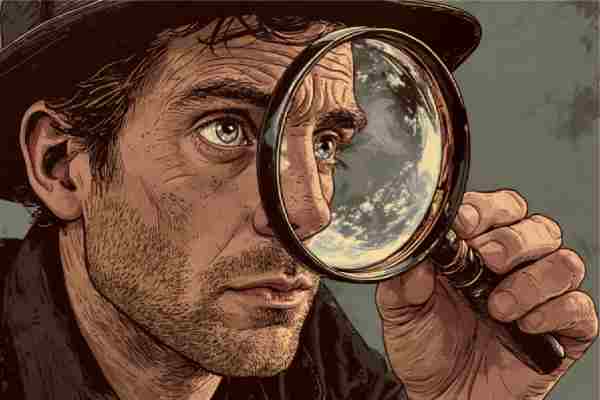
The Conflict Logical vs Illogical Thinking How the Mind Reaches Conclusions

Logical vs Illogical Thinking: How the Mind Reaches Conclusions

Thinking feels automatic, but it follows patterns. Some patterns lead to clear conclusions. Others produce inaccurate assumptions. Knowing how thinking works helps you spot unhealthy thinking. Learn when your mind is working with reality—and when it is filling gaps with assumptions.

The Benefits and Drawbacks of The Abrahamic Family Tree Religions

The Benefits and Drawbacks of The Abrahamic Family Tree Religions

Examining the benefits and drawbacks of the Abrahamic family tree religions is beneficial. This exercise helps us understand how belief shapes culture and behavior. Many people follow these systems without knowing where the ideas came from or how they work. Looking at their origins helps explain why they are so powerful and so dangerous.

The Universal Mind And The Field Behind Consciousness and Awareness

The Universal Mind: The Field Behind Consciousness and Awareness

The concept of the universal, collective shared mind is the idea that our consciousness does not originate in the brain. It is one way to explore one of the hardest unanswered questions: “What is consciousness?” Contemplating the various aspects of this may not solve this question, but it will increase your own insight.

Seeking God Approaching the Subject of a Higher Power

Seeking God — Approaching the Subject of a Higher Power

Approaching the subject of a higher power raises questions about meaning, culture, and belief. This article does not tell you what to believe. Instead, it shows four common ways people approach the subject so you can see how your own thinking takes shape.

What is True Weighing Truth by Faith and Truth By Fact

What is True: Weighing Truth by Faith and Truth By Fact

Determining truth requires more than belief. It requires weighing claims carefully, examining how they are supported, and accepting uncertainty when evidence is incomplete. This article explores how people decide what is true by comparing truth grounded in faith with truth grounded in facts.

How Faith Operates as Truth When Belief Mimics Facts

How Faith Operates as Truth — When Belief Mimics Facts

Belief mimics facts in many spiritual systems. It is the result of taking metaphor and analogy at face value, rather than as a tool to describe concepts. This article looks closely at how faith operates as truth, examining how belief itself is used to justify what is accepted as true.

Exploring The Impact of Evidence-Driven Decisions for Humanity

Exploring The Impact of Evidence-Driven Decisions for Humanity

The impact of evidence-driven decisions is sometimes overlooked. We make choices every day that reshape the world. When decisions are tested against outcomes and corrected when they fail, progress accumulates. What if decisions for humanity were implemented by what they produced for humanity rather than profit?

The Social Cost and Systemic Harm of Organized Religion

The Social Cost and Systemic Harm of Organized Religion

The social cost and systemic harm of organized religion appear in laws, education systems, family structures, and public policy across the world. This article examines those costs at the system level, focusing on repeated outcomes and measurable harm rather than personal belief, private faith, or individual morality.