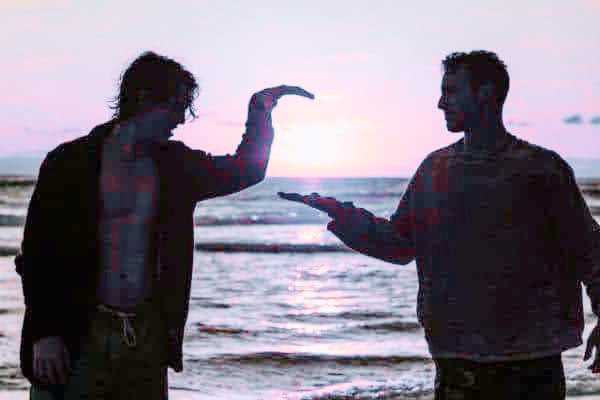
The inward quest begins when the explanations that once made sense cease to work. That moment is not a failure. It is a signal. Awareness is turning inward. You’ve started down the path of the Hero’s Journey.
Across cultures, people recognize similar symbolic elements involved in the growth cycle. It is a pattern or map that appears whenever human beings confront their limits and begin to change from the inside out.
Joseph Campbell called this universal pattern the monomyth. What is important is that he recognized it not as a story template but as a diagnostic map of inner transformation. We’ll explore the Hero’s Journey as a universal human mechanism.
This article is a gate for inner work. The process here may increase discomfort before resolution.
The archetypes and typologies described in this process are building blocks of the human psyche. The fact that it appears across cultures is not a product of imitation but of mutual discovery.
The Universal Human Mechanism
The journey is about everyone as a hero and describes how inner transformation occurs.
This is why the same underlying journey appears in radically different forms:
- Buddhism describes it as awakening from illusion and attachment.
- Hindu traditions describe it as liberation from false identity.
- Taoism frames it as returning to the natural, uncarved state.
- Christian mysticism encodes it as death, descent, and resurrection.
- Shamanic traditions see it as a quest into the underworld, followed by a return with healing.
- Modern psychology recognizes it as a breakdown followed by reintegration.
These aren’t “competing beliefs.” They are different lenses on the same inner movement:
An old orientation collapses.
A new orientation forms.
You return changed.
The underlying process of the inward quest cannot be reduced to religion, myth, or self-improvement. Religion may preserve its symbols. Myth may dramatize its stages. Psychology may describe its effects. But the journey itself is experiential. It unfolds whether or not it is understood, welcomed, or named.
Archetypes, Typologies, and Inner Forces
When the inward quest begins, it doesn’t unfold in a vacuum. It moves through recurring inner forces. These forces are often called archetypes.
Archetypes aren’t story characters. They are functions of the psyche. They appear as people, situations, inner voices, emotional states, and recurring themes in life. The mentor, the shadow, the threshold guardian, and the hero are not figures in a story. They are functions within the psyche.
Alongside archetypes are typologies. Typologies describe how your psyche is structured. They shape your style of resistance, fear, and integration. Two people can be in the same stage and have very different experiences because their internal wiring differs.
Archetypes are universal.
Typologies are personal.
Both matter if you want a map that works.
Confusing the two leads to rigid interpretations of the journey, as if there were a single correct way to awaken, descend, or return. In reality, the pattern is shared, but its expression is individual.
Recognizing archetypes allows individuals to view their lives as patterned rather than random. If we understand our typologies, we can see how our behavior is influenced by these symbols. Together, they provide orientation without turning the inward quest into dogma.
The hero’s journey is not something you follow.
It is something you begin to recognize.
Sacred Symbolism as Consciousness Technology
Symbolism is vital to the inner journey. This is because the psyche often contains complex elements that exceed language. At these depths, experience is felt, perceived, and embodied before it can be conceptualized. Symbols function as bridges between awareness and meaning. They do not explain the journey. They orient it.
Theology and psychology have unsuccessfully attempted to map this knowledge within their systems. Yet, symbolism remains the true language of our psychic structures. These symbols contain complex, unique personal meanings and emotions.
Certain symbols recur across cultures because specific inner experiences are universal.
- The spiral points to growth that recurs, each time deeper.
- The labyrinth points to initiation: one path in, one path out, no shortcuts.
- The ouroboros points to ego death and renewal: endings that become beginnings.
- The chalice points to receptivity: insight arrives when you can receive it, not force it.
- The tree shows layers of consciousness: roots (hidden), trunk (lived life), branches (expanded awareness).
Authentic inner paths are kept because each supports the other.
Symbols do not replace the stages outlined in the Hero’s Journey as a universal human mechanism . They deepen them. They provide orientation when rational understanding collapses. When practices are removed, symbols become mythology. When symbols are removed, practices become destabilizing. Authentic inward paths are preserved because each corrects the limitations of the other.
Understanding symbolism as a tool for consciousness helps us interact with it, not just interpret it. Symbols are not there to be admired. They are there to be entered.
The Hero’s Journey as a Universal Human Mechanism
People often treat this process like a storytelling formula. That approach makes it shallow. It is more useful when you treat it as a map of inner change.
You can move forward and backward. You can repeat stages. You can live parts of this journey many times in a life. The point is not “progress.” The point is honesty about what is happening now.
The stages are not “steps.” They are markers. They describe what typically occurs when awareness turns inward, and identity begins to reshape.
The journey has three phases:
- Awakening: meaning breaks and inquiry begins.
- Transforming: descent, confrontation, reorganization.
- Inspiring: integration, return, embodiment.
The twelve stages of the hero’s journey are nested within these three phases. They describe changes in orientation, perception, and relationship to reality. Each stage brings specific challenges, resistances, and opportunities for insight.
Understanding this quest as an inner process rather than a story prevents a common mistake. When the journey is treated as a myth alone, it becomes something to admire or analyze. When it is recognized as experiential, it becomes something to notice in one’s own life.
The stages are not intended to be memorized. They are meant to be recognized. Each describes a shift in experience, often without language to explain what is happening. Naming these stages does not create the journey, but it can provide orientation when confusion arises.
What matters is not moving forward through the stages, but engaging honestly with whatever stage is present. Attempting to skip stages or to imitate later phases results in distortion. The inward quest cannot be rushed. It unfolds according to its own internal logic.
The hero’s journey remains relevant because it does not prescribe belief. It describes experience. The stages do not tell you what to think. They point to what typically occurs when awareness turns inward and is allowed to change.
First Phase — Awakening
1. Aware to Awake
This is the ordinary world stage. Life looks normal, but it feels wrong inside. You sense a mismatch. You feel restless. Or numb. Or quietly dissatisfied. Your usual comforts stop comforting. You may still be successful, but something essential is missing.
This stage is not awakening itself. It is the beginning of the capacity to awaken. You begin observing your own thoughts, roles, habits, and beliefs rather than living within them. (meta-awareness)
Many people stay here for a long time. They attempt to alleviate discomfort through distraction, consumption, or superficial self-improvement. That rarely works. It often deepens the gap.
The discomfort is a signal.
Awareness has outgrown its old container.
2. Hearing the Call
The call to adventure is often misunderstood as a dramatic or mystical event. The call arrives as a question you can’t shake. It may be triggered by loss, illness, addiction, betrayal, failure, or deep questioning. It can also arrive after success, when you realize that the achievement did not deliver meaning. This stage marks the beginning of conscious inquiry. Awareness no longer assumes that inherited beliefs or social roles are sufficient.
The call usually sounds like:
- Why am I doing this?
- What is real?
- What am I avoiding?
- What if my whole life is built on assumptions?
3. Refusal of the Call
Resistance emerges as soon as the call is heard. Identity senses a threat. To question deeply is to risk losing certainty, belonging, and self-definition.
Refusal can look like:
- clinging to rigid beliefs
- doubling down on a role
- staying busy to avoid feeling
- turning spirituality into an aesthetic
Refusal often produces counterfeit paths. These paths offer certainty without descent. They offer answers that close the inquiry. They feel safer than the unknown.
Refusal is a protective response.
It reveals the extent of uncertainty you can tolerate.
4. Meeting the Mentor
When resistance softens, guidance appears. This can be a person, a book, a practice, a new discipline, or a moment of insight. The mentor does not exist to hand you beliefs. The mentor exists to help you see. Over time, the mentor function shifts:
External guidance becomes internal discernment.
Borrowed authority becomes direct knowing.
This completes the awakening phase. The journey is now pointed inward.
Second Phase — Transforming
5. Crossing the Threshold
Crossing the threshold is the point of no return. Your old worldview cannot contain what you now see. The questions are no longer theoretical. They touch your life directly. You begin to change how you choose, how you relate, and what you tolerate. Outer changes often follow, and relationships shift, priorities reorder, and routines break.
It often means making concrete changes. It may involve withdrawing from familiar routines, altering relationships, or restructuring daily life. These outer shifts reflect an inner reality. Awareness has committed to transformation, even though the destination is unknown.
This stage is uncertainty made real.
You step into the unknown.
6. Tests, Allies, and Enemies
After crossing the threshold, the inward quest reveals its complexity. Awareness encounters resistance not only from the outside world, but from within. Patterns that once operated invisibly now surface as obstacles.
inner enemies appear:
- fear of losing identity
- shame and guilt
- self-doubt and the inner critic
- avoidance, addiction, distraction
At the same time, allies appear:
- practices that stabilize awareness
- insights that arrive at the right moment
- people who tell the truth
- symbols, dreams, synchronicities
This stage teaches discernment. We learn to tell the difference between resistance that helps growth and resistance that keeps us stuck. The journey cannot be successful without this skill.
7. Approaching the Innermost Cave
This stage narrows your path. Distractions stop working.
The “innermost cave” is the place you avoid. It is where core fear lives. It is where your deepest wounds and oldest beliefs hide.
Here you meet:
- Your foundational stories about worth and belonging
- The emotional material you suppressed to survive
- The hidden contracts you made with authority
- The parts of you you learned to exile
Cultures refer to this as “the descent.”
- Shamanic traditions speak of underworld journeys
- Christian mystics speak of surrender and stripping.
- Buddhism speaks of seeing through illusion.
- Psychology speaks of confronting the unconscious.
Different languages. Same movement.
This is not an intellectual process. It is experiential. Awareness is drawn inward toward what must be seen, felt, and integrated. Avoidance becomes increasingly costly.
8. The Ordeal
The ordeal is “the center” of the journey. Identity collapses. Not awareness — identity. Meaning may dissolve. You may feel emptiness, grief, disorientation, or silence. The old ways of stabilizing yourself no longer work. This is why mystics call it initiation.
This is also why counterfeit paths fail here. Beliefs cannot sustain ego dissolution. Only engagement can.
This stage is known as:
- The Dark Night of the Soul
- Death of the ego
- Initiation
- Spiritual crisis
Without tools, the ordeal overwhelms.
With tools, it reorganizes.
Without tools, this stage can become overwhelming. With appropriate practices, it becomes transformative. The ordeal strips away what is false, habitual, or defended. What remains is a more direct relationship to reality.
The ordeal is not punishment. It is an initiation.
Third Phase — Inspiring
9. The Reward
The reward of the inward quest is often misunderstood. It is not ecstasy, certainty, or permanent transcendence. It is clarity.
What was once sought through belief, identity, or achievement is recognized as unnecessary. The compulsion to explain, defend, or prove oneself weakens. Perception becomes simpler and more direct.
This stage is sometimes described as insight, awakening, or realization. What is realized is not a new idea, but a shift in relationship to experience. Awareness recognizes itself as distinct from thoughts, emotions, and conditioned patterns. This recognition does not remove difficulty, but it removes confusion about its source.
The reward is quiet. It does not announce itself. It is felt as a deepening of presence rather than an acquisition.
10. The Road Back
Returning to ordinary life tests whether insight can be lived rather than held. The world has not changed, but the way awareness meets it has. Old roles, relationships, and expectations may no longer fit.
The world hasn’t changed. You have.
This stage often brings friction. Others may not recognize the change that has occurred. Social structures built on shared assumptions can feel constraining. It’s tempting to pull back, focus on the spiritual, or find places that reflect the new mindset instead of blending it in.
This stage tests integration. Can you embody clarity inside ordinary life?
11. Resurrection
The resurrection stage represents final integration. Old patterns attempt to reassert themselves, often in subtle ways. The pull of familiar identity returns, not as a crisis, but as a habit.
What distinguishes this stage from earlier challenges is awareness. The struggle is no longer unconscious. Choices are made with greater clarity. Integrity replaces effort.
This is not a return to who one was before the journey. It is the emergence of a more coherent self, aligned with direct perception rather than inherited narratives. Awareness and action begin to move together.
12. Return with the Elixir
The final stage is not about teaching or saving others. It is about presence.
The elixir is not information. It is the capacity to meet life without distortion. This may manifest as service, creativity, leadership, or quiet participation in the world. The form varies. The essence does not.
Those who return with the elixir do not announce themselves as heroes. They live differently. Their way of being carries insight without requiring explanation. In this sense, the journey completes itself not through proclamation, but through embodiment.
Counterfeit Paths and Why They Persist
Counterfeit paths exist because real transformation is destabilizing. Most people want relief. Most systems want stability. The inward quest threatens both. A counterfeit path keeps the appearance of transformation while blocking the mechanism.
Organized religion provides a clear example. Early religious traditions emerged from mystical insight and initiatory experience. Over generations, these experiences were encoded into stories, rituals, and moral frameworks. Eventually, the emphasis shifted from transformation to obedience. Inner authority was replaced by external authority. Salvation narratives replaced inner reorganization.
Counterfeit spirituality also appears outside of religion. Self-help systems that offer quick enlightenment or easy awakening. These claims are similar to those made by religion with afterlife rewards. Their sales pitches offer certainty of success with only anecdotal proof. They claim growth without confrontation, and identity upgrades without ego dissolution.
This is why institutions often preserve symbols but remove the practices that activate them.
Counterfeit paths tend to share features:
- Rigid belief that discourages questioning
- External authority replacing inner discernment
- Fear, guilt, or reward as motivation
- Future salvation or status replacing present transformation
- Symbolic language disconnected from lived experience
This is not a reason to attack religion or self-help systems. It is a reason to develop discernment. Any path can become counterfeit if it closes inquiry and replaces practice with belief.
The inward quest demands openness.
Counterfeit paths sell certainty.
The danger of counterfeit paths is not that they are false in every respect. It is that they halt development. By closing inquiry too early, they prevent awareness from passing through the stages that lead to integration.
Understanding counterfeit paths is not about criticism. It is about discernment. The inward quest requires the courage to remain open when certainty is most tempting.
The Inward Quest as Healing and Integration
The inward quest is often described in spiritual or mythic terms. The inward quest heals by integrating what has been split. Still, its effects are deeply practical. Aspiritual crisis is often the mind adjusting. It’s creating a more honest link to reality.
Healing in this context does not mean eliminating pain or achieving a permanently positive state. It means restoring the relationship with the self. Emotions are allowed to move. Thoughts are observed rather than obeyed. Sensations are felt without interpretation. Awareness learns to remain present without needing to control what arises.
This is why the inward quest cannot be separated from psychological integration. Spiritual insight that bypasses emotional reality leads to imbalance. Psychological work that avoids questions of meaning stagnates. Integration occurs when insight, emotion, body, and action are allowed to inform one another.
Fragmentation happens when parts of you are pushed away to maintain a stable identity. Emotions are suppressed. Needs are denied. Questions are avoided. Inner conflicts are hidden under roles.
These strategies work until they don’t.
The journey brings what was hidden into awareness. This can feel spiritual, psychological, or both. But the function is practical: integration.
You feel what you feel.
You see what you think.
You notice what you do.
And you stop building your life on avoidance.
Integration occurs when insight, emotion, body, and action work together rather than fight one another.
Why Methods and Practices Are Essential
Understanding alone will not carry you through the journey. Healthy traditions kept methods because methods stabilize transformation. Tradition aligns with the universal human mechanism.
Practices train awareness. They also protect you during descent.
Methods include:
- meditation to reduce identification with thought
- journaling and inquiry to reveal patterns
- movement practices to anchor insight in the body
- symbol work to engage deeper layers of the psyche
- shadow work to integrate what you avoid
- critical thinking to prevent false certainty
No one tool fits every stage. What you need in awakening is not what you need in the ordeal. Practices must evolve as the journey evolves.
Methods do not “cause” awakening.
They make awakening workable.
They help insight become embodied.
The Journey Is Cyclical
The Hero’s Journey does not happen once. It repeats.
Each pass reveals subtler layers of conditioning. Each return brings a different kind of clarity. Each descent strips away a different illusion.
This is why “Arrival” is a trap. It leads to spiritual pride or stagnation. The healthier stance is engagement: keep returning to what is real.
The spiral is the right symbol for the inward quest.
You return to the same themes, but never at the same depth.
Conclusion
The Hero’s Journey as a universal human mechanism is not the property of any culture, religion, or philosophy. It emerges wherever human beings encounter the limits of identity and allow awareness to change. The typology endures because it describes this process with remarkable fidelity.
Symbols preserved their shape. Practices preserved their function. Myths preserved their memory. But the journey itself must be lived.
The path is inward.
The pattern is ancient.
The work is ongoing.
References
- The Hero with a Thousand Faces. Joseph Campbell – Princeton University Press.
- Man and His Symbols. Carl Jung – Dell Publishing.
- Psychology and Religion. Carl Jung – Yale University Press.
- The Varieties of Religious Experience. William James – Harvard University Press.
- The Dark Night of the Soul. St. John of the Cross – Christian Classics.
- The Power of Myth. Joseph Campbell – Doubleday.