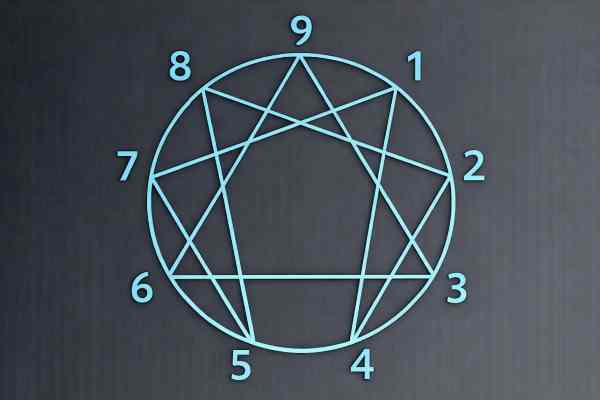
Most discussions about the Enneagram personality types focus on group typing and behavior. What’s often missing is a clear look at the underlying mechanisms behind the Enneagram that shape these patterns. That is what we want to reveal.
The Enneagram personality types describe nine core personality patterns. Each type is a steady way of dealing with life, shaped by early habits, ongoing motivations, and the ways we learn to manage our inner world. Your results include your dominant type, your wing, your center, and the deeper mechanisms that keep your pattern running.
The name of each personality type is simply a way to describe the overall pattern. But the traditional approach focuses on the pattern itself. It does not explain what drives it.
The patterns within the Enneagram personality types exist because certain mechanisms give them structure.
These underlying mechanisms behind the Enneagram do not describe personality—they run it. A personality type is a repeating system. These mechanisms shape what you notice, how you manage your emotions, how you frame your sense of self, and how you act in a steady, predictable way. Each cycle produces similar results, and those results reinforce the next round.
Over time, this repetition settles into what we call a personality pattern.
The Enneagram types exist because these mechanisms operate in different configurations. What we see as personality is the visible surface of a system that is always running.
The Enneagram Personality Types
Each Enneagram type is described through five underlying mechanisms that show how the pattern operates.
The Attention Mechanism describes what your awareness naturally focuses on and what stands out first in your environment.
The Emotional Regulation Mechanism explains how you manage internal discomfort or tension when something feels off.
The Identity Mechanism shows how you maintain a consistent sense of self by reinforcing certain ways of being and rejecting others.
The Behavioral Strategy Mechanism describes how you tend to act in response to situations, based on your attention, regulation, and identity.
- Attention → what you notice
- Regulation → how you handle it internally
- Identity → what you allow yourself to be/do
- Behavior → what you actually do
- Feedback → what makes it repeat
The Underlying Mechanisms Behind the Enneagram
Below are the mechanism descriptions for the Enneagram personality types.
Type 1 — The Reformer
Attention Mechanism
Your attention jumps to what feels off—mistakes, uneven details, or anything out of place. It’s automatic, like your eyes are trained to spot what needs fixing.
Emotional Regulation Mechanism
When something seems wrong, you feel a tightness inside. You calm that tension by taking control of your actions, your surroundings, or the situation—so things feel steady again.
Identity Mechanism
This creates a strong sense of being responsible, correct, and principled. You feel aligned when you meet that standard, and you push away anything that doesn’t fit it.
Behavioral Strategy Mechanism
You move toward improvement. You correct, refine, and bring things back into order, often before anyone else even notices the problem.
Feedback Loop
When fixing something brings relief, it reinforces the habit of scanning for what’s wrong and stepping in again.
Type 2 — The Helper
Attention Mechanism
Your attention goes straight to people—how they feel, what they need, and where you can offer support. You read emotional cues quickly and naturally.
Emotional Regulation Mechanism
If you sense distance or tension, you ease it by moving closer—helping, giving, or offering comfort.
Identity Mechanism
This builds a sense of being warm, caring, and important to others. Feeling appreciated becomes central, while anything that risks rejection feels threatening.
Behavioral Strategy Mechanism
You step in to help, often before being asked. You anticipate needs and create connections through support.
Feedback Loop
When people respond with gratitude or closeness, it strengthens the habit of focusing on their needs and giving more.
Type 3 — The Achiever
Attention Mechanism
Your attention locks onto goals, results, and what counts as success. You notice what works and what earns recognition.
Emotional Regulation Mechanism
When doubt or discomfort shows up, you push through it by doing—working harder, moving faster, and staying productive.
Identity Mechanism
This forms a sense of being capable, efficient, and successful. You lean into what proves your value and avoid anything that looks like failure.
Behavioral Strategy Mechanism
You set goals, streamline your efforts, and move toward visible results with speed and focus.
Feedback Loop
When success brings praise or approval, it reinforces staying driven and performing at a high level.
Type 4 — The Individualist
Attention Mechanism
Your attention goes to what feels emotionally rich—what’s meaningful, missing, or deeply personal. You notice the emotional tone of things.
Emotional Regulation Mechanism
When you feel discomfort, you move toward it. You explore it, feel it fully, and try to understand its depth.
Identity Mechanism
This builds a sense of being unique, authentic, and emotionally honest. Anything that feels shallow or ordinary is pushed aside.
Behavioral Strategy Mechanism
You express yourself, create, and lean into what feels true or different about you.
Feedback Loop
When emotional depth strengthens your sense of identity, it keeps the focus on meaning and continues the cycle.
Type 5 — The Investigator
Attention Mechanism
Your attention moves toward information, patterns, and anything unclear. You notice gaps in understanding and want to make sense of them.
Emotional Regulation Mechanism
When life feels overwhelming, you pull back. You limit demands and protect your energy by stepping away.
Identity Mechanism
This builds a sense of being knowledgeable, independent, and self‑reliant. You avoid situations that feel intrusive or draining.
Behavioral Strategy Mechanism
You observe, think things through, and engage slowly. You want to understand before you commit.
Feedback Loop
When stepping back restores your energy and insight brings clarity, it reinforces withdrawing and seeking understanding.
Type 6 — The Loyalist
Attention Mechanism
Your attention scans for what might go wrong—risks, mixed signals, or anything uncertain. You look for what needs checking.
Emotional Regulation Mechanism
When uncertainty rises, you calm it by preparing, asking questions, or seeking reassurance.
Identity Mechanism
This builds a sense of being loyal, careful, and responsible. Acting without support or clarity feels unsafe.
Behavioral Strategy Mechanism
You test situations, look for reliability, and align with people or systems you trust.
Feedback Loop
When preparation or reassurance lowers anxiety, it reinforces staying alert and scanning for risk.
Type 7 — The Enthusiast
Attention Mechanism
Your attention jumps to possibilities—new ideas, options, and exciting paths. You see what could happen next.
Emotional Regulation Mechanism
When discomfort or limits appear, you shift away from them. You reframe, plan, or move toward something more uplifting.
Identity Mechanism
This builds a sense of being open, upbeat, and free. Feeling trapped or stuck is something you avoid.
Behavioral Strategy Mechanism
You explore, plan, and keep things moving. You stay engaged with multiple options to keep life open.
Feedback Loop
When staying positive reduces discomfort, it reinforces focusing on possibilities and moving forward.
Type 8 — The Challenger
Attention Mechanism
Your attention goes to power, control, and where vulnerability might show up. You notice who has influence and where strength is needed.
Emotional Regulation Mechanism
When you sense threat or weakness, you steady yourself by stepping in boldly—taking charge or confronting the issue.
Identity Mechanism
This builds a sense of being strong, independent, and hard to push around. You reject anything that feels like weakness.
Behavioral Strategy Mechanism
You assert yourself, take the lead, and push through resistance.
Feedback Loop
When taking control reduces vulnerability, it reinforces staying strong and acting with force.
Type 9 — The Peacemaker
Attention Mechanism
Your attention goes to what keeps things calm and steady. You tend to overlook conflict or anything that might disturb the peace.
Emotional Regulation Mechanism
When tension rises, you soften your response—numbing out, going along, or stepping back from intensity.
Identity Mechanism
This builds a sense of being steady, easygoing, and low‑demand. You avoid anything that might cause disruption.
Behavioral Strategy Mechanism
You accommodate others and smooth things over, helping situations continue without friction.
Feedback Loop
When avoiding conflict keeps things calm, it reinforces focusing on harmony and staying easygoing.
Conclusion
Enneagram personality types give us a starting point. But to use this knowledge well, we must understand the mechanisms underneath. The mechanisms behind the Enneagram personality types are repeating functions and structures. No function is better than any other. The psyche uses these patterns out of efficiency.
Personality is a default setting. We return to it again and again. But we can also grow beyond it through integration. Our default mode is one pattern, but as we develop, we can draw from the strengths of the other eight.
Knowing your type, wing, and triads gives you an advantage. It offers a path for growth. Understanding the mechanisms behind the Enneagram personality types gives you the key to moving past the limits of your pattern.
References
- Metacognition: Monitoring and Control of Cognition. Trends in Cognitive Sciences.
- Mindfulness Meditation and Emotion Regulation. Frontiers in Human Neuroscience.
- The Neuroscience of Mindfulness Meditation. Nature Reviews Neuroscience.
- Laozi (Lao Tzu). Stanford Encyclopedia of Philosophy.
- Taoism. Encyclopaedia Britannica.
- Circadian Rhythm. Encyclopaedia Britannica.
- Buddha. Stanford Encyclopedia of Philosophy.
- Ram Dass. Ram Dass Foundation.